

2027 Grammys Best New Artist: Biggest Contenders, Surprises and Eligibility Questions
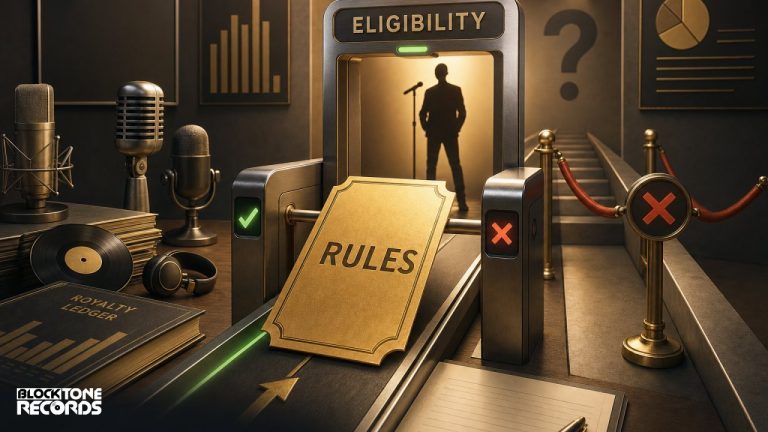
The 69th Grammy Awards are scheduled for February 7, 2027, but Best New Artist is already likely to be argued on a different timetable. The eligibility period runs from August 31, 2025, through August 28, 2026, and the Recording Academy has adjusted the category’s framework for 2027. That combination puts a premium on a visible breakthrough sustained across the window rather than a single, very late viral spike.
No 2027 nominees have been announced in the material available here, and none of the artists below should be described as nominated or eligible merely because they appear in prediction coverage. Still, the early discussion around RAYE, Ella Langley and Sienna Spiro reveals the more interesting question: how does a category built around “newness” work when an artist’s public arrival is increasingly the result of several releases, several audiences and several years of work?
The 2027 rules favor a sustained breakthrough over a debut
The Recording Academy’s own guidance makes the essential distinction. Best New Artist is not a prize for an artist’s first recording or first appearance in public. Its standard turns on whether an artist has achieved a breakthrough into public consciousness and made an impact during the applicable eligibility period. Featured-only credits and work as part of a large ensemble do not count toward qualification in the same way as a candidate’s own artist work.
For 2027, the Academy refined the category language and raised the maximum number of submission opportunities from three to four. The change is significant less as an invitation to stretch the definition of “new” indefinitely than as an acknowledgment that artist development can unfold over multiple releases and years. The old shorthand—debut act, breakout single, nomination—has never fully described the category. The new flexibility makes that shorthand still less useful.
That matters because Grammy narratives often arrive after commercial narratives have already hardened. A listener may regard an artist as established after a hit, a festival run or an online moment. The Academy’s test is more particular: it considers the scale and timing of the breakthrough, not simply how long an artist has been recording. The relevant calendar is also fixed. Releases and impact must be assessed against the August 31, 2025 to August 28, 2026 eligibility window, according to the Recording Academy’s 2027 submission guide.
In practical terms, the strongest early cases will need more than recognition. They will need a plausible account of why the artist’s defining public advance belongs to this period. The Academy’s revised rules, detailed in its 2027 category and rule updates, make room for that account to be built across four submissions rather than forcing it into a narrower release pattern.
RAYE’s multi-year ascent fits the revised logic
RAYE is the clearest early example of why Best New Artist should not be reduced to debut status. Her case, as framed by current awards discussion, combines singer-songwriter credibility, theatrical presentation and mainstream visibility. Pitchfork included “Where Is My Husband!” among its notable possibilities for the 2027 Grammys, placing her work in the broader awards conversation without claiming a nomination or confirming category eligibility.
That distinction is important. A publication’s possibilities list is evidence of critical attention, not a ballot result, voter support or an Academy ruling. Yet RAYE’s profile speaks directly to the 2027 rule adjustment: an artist can accumulate a creative identity and a substantial audience over time, then make a larger public breakthrough that crystallizes within a later eligibility period.
Her potential strength is not that she seems newly minted. It is that her path makes the Academy’s stated breakthrough standard legible. The category has to accommodate artists whose visibility arrives gradually, especially when songwriting, performance and mainstream reach reinforce each other instead of appearing all at once. RAYE’s prior Grammy profile and long-developing ascent make her a persuasive test case for the four-submission framework, assuming the Academy determines she meets the category’s qualifications.
That final qualification cannot be skipped. The Academy, not pundits or playlists, decides eligibility. But among the names circulating, RAYE most clearly exposes the gap between everyday language and the category’s actual logic. “New” can be a misleading label for an artist whose breakthrough is recent even when the work behind it is not.
Ella Langley and the General Field country question
Scale is Ella Langley’s early case. In its October prediction coverage, Rolling Stone Australia called her a likely major-category nominee and reported that her hit had become the longest-running No. 1 song in Billboard Hot 100 history. For now, that places her among the prominent contenders in press forecasting—not among confirmed Best New Artist nominees.
The category’s question is narrower than the chart story. The Academy assesses a breakthrough into public consciousness and impact during the eligibility period, not merely an extraordinary chart record or the date of an artist’s first release. Langley’s position therefore remains subject to the Academy’s eligibility process and voting.
Her candidacy also turns the country question into a General Field test. Rolling Stone Australia places the campaign against a longer period of limited country representation in those categories. If Langley is nominated, a country-facing hit will have crossed from market dominance into broad Academy attention; if she is not, the song’s reach will remain real while that separation remains visible.

Sienna Spiro and the limits of prediction-driven momentum
Sienna Spiro belongs in the early Best New Artist conversation for a narrower reason. She has appeared repeatedly in prediction discussion, including an October 2026 thread on the r/Grammys subreddit. That is enough to identify her as a possible surprise candidate with an emerging profile and a distinct individual identity. It is not enough to call her a frontrunner.
The difference is more than semantic. Fan and prediction communities can spot an artist whose momentum feels fresh before institutional consensus forms, and that instinct can prove prescient. They can also amplify a compelling narrative without access to the facts that govern the category: the artist’s submission history, the Academy’s eligibility determination and the eventual voting outcome. Reddit discussion is therefore useful as a record of speculation, not as evidence of Academy support.
Spiro’s presence nonetheless complicates a race otherwise inclined toward measurable scale. Best New Artist has room for the artist who has not posted the most conspicuous commercial totals but has generated enough enthusiasm to become a credible ballot possibility. Whether that happens in 2027 remains unknown. The supplied evidence supports surprise-candidate status, not certainty.
Olivia Dean shows why “new” is the wrong shorthand
The most useful recent comparison is Olivia Dean, precisely because she is not a 2027 contender. Dean won Best New Artist at the 2026 Grammys, as the Recording Academy’s category record confirms. Her win followed earlier independent or critically acclaimed work, illustrating that the Academy can honor a public breakthrough without pretending an artist’s past has been erased.
That precedent should restrain two opposite impulses in 2027 forecasting. It is too simplistic to rule out an artist because listeners know they have been working for years. It is equally simplistic to assume a rising name qualifies because it feels fresh online. The Academy’s stated standard remains breakthrough and impact during the eligibility period, with exclusions for featured-only credits and large ensembles; its newer four-submission allowance gives gradual development more procedural flexibility, not a guarantee of admission.
For RAYE, that logic could be an advantage. For Langley, it leaves chart power subject to a separate eligibility judgment. For Spiro, it means prediction momentum remains only momentum until the Academy acts. The 2027 race will ultimately turn not on who appears newest, but on whose breakthrough the Academy decides belongs to this particular window.