


The Great Divide by Noah Kahan Meaning and Lyrics Explained
What Is “The Great Divide” About?
Noah Kahan’s “The Great Divide” is about emotional distance between two people who once shared a life, a place, and a history, but never fully understood each other. The song looks back on that relationship with guilt, tenderness, and late-arriving clarity, as the narrator realizes that what seemed like anger or recklessness may have been pain he failed to recognize.
More broadly, the song also reflects separation on several levels at once: between past and present, home and success, faith and fear, and the person you used to be versus the person you became. That layered idea of distance is what makes the title feel larger than a single breakup or falling-out.
Background and Release Context
“The Great Divide” was released on January 30, 2026 as the lead single from Noah Kahan’s album The Great Divide, which was announced for April 24, 2026 through Mercury. (Mastercard Newsroom; Noah Kahan official album page)
Verified release data credits Noah Kahan and Gabe Simon as the songwriters, with Kahan and Simon also credited as producers on the single. The album rollout also ties the project to a wider production team that includes Aaron Dessner. (MusicBrainz release credits; Noah Kahan official album page)
Kahan described the song as coming from the growing distance he felt after the massive success of Stick Season. In interviews, he said he had been thinking about old friendships, the things left unsaid between people who grew up together, and the gap between his current life and the person he used to be. (People)
Commercially, the song opened strongly. It debuted at No. 1 on Billboard’s Hot Rock & Alternative Songs chart, later hit No. 1 on Alternative Airplay, and also charted in the UK, where Official Charts lists it with a Top 20 peak on the Official Singles Chart. (Billboard; Official Charts)
The Meaning Behind “The Great Divide”
The emotional core of “The Great Divide” is regret. The narrator is not simply missing someone; he is realizing that he misunderstood them when it mattered most. That is what gives the song its weight. It is a reckoning with the uncomfortable truth that closeness is not the same thing as understanding.
The song suggests that the other person was carrying something painful and difficult to express, while the narrator either could not see it or did not know how to respond. As the song unfolds, memory turns into self-criticism. The more he remembers, the more obvious it becomes that silence, distance, and emotional confusion were already there long before the relationship fully broke apart.
Another important layer is spiritual fear. The song does not just talk about ordinary heartbreak. It repeatedly contrasts everyday human danger with anxiety about the soul, judgment, and what comes after death. That detail makes the song feel even more intimate, because it hints that the divide between these two people may have involved religion, shame, or a deeply internal moral struggle, not just a collapsing relationship.
Lyrics Breakdown, Section by Section

Verse 1 Meaning
The opening verse presents a bond built more on shared damage than real emotional honesty. The narrator remembers reckless moments and physical signs of that closeness, but he also undercuts any nostalgia by admitting that those experiences did not automatically make them true friends. That is a painful but important distinction: they were near each other, but not necessarily known by each other.
The verse also introduces a moment of failed communication. The narrator senses that the other person is hiding something serious, tries to read it, and gets shut out. That exchange establishes the song’s central tension. The divide begins not with one dramatic event, but with a pattern of silence, discomfort, and emotional inexperience.
Pre-Chorus Meaning
The pre-chorus is the song’s first clear confession. Here the narrator openly admits that he misunderstood the other person’s life. He starts to imagine how difficult it must have been for them to carry their pain privately, and that new understanding shifts the song from recollection into remorse.
This is where the emotional perspective changes. Instead of focusing on what happened to him, the narrator starts focusing on what the other person may have been enduring all along. That move from self-centered memory to empathetic hindsight is what powers the whole song.
Chorus Meaning
The chorus sounds like a blessing, but it is full of sadness. The narrator hopes this person settles down and finds some kind of peace, yet the wording of that wish reveals how worried he still is for them. He does not just want them to be happy; he wants them to be free from overwhelming spiritual fear.
That contrast between ordinary human fears and fear for the soul is one of the song’s sharpest ideas. It suggests that the person at the center of the song may have been haunted not just by life itself, but by religious guilt, existential dread, or some sense of divine judgment. The chorus turns compassion into something very specific: a hope that life can become normal-sized again.
Verse 2 Meaning
The second verse expands the title into a full metaphor. The idea that the other person “inched” across the great divide implies a slow crossing, not a sudden break. Whatever changed in them happened gradually, while the narrator kept moving forward without fully understanding where they were emotionally or spiritually heading.
The mention of the Twin State line grounds the memory in Kahan’s New England world and reinforces the feeling of living on a border. That border is geographic, but it also mirrors the song’s emotional state. These two people are caught between connection and separation, between familiarity and estrangement, between seeing and failing to see.
The verse also suggests that music was one of the ways the other person tried to express inner truth. They seemed to hear themselves in songs, while the narrator only heard the surface. That contrast is subtle but powerful: one person is searching for meaning, while the other is not yet listening carefully enough.
Bridge Meaning
The bridge is the most direct expression of guilt in the entire song. The narrator wonders whether the other person’s anger was actually a sign that they were fading into a place he was too afraid or too unequipped to follow. This transforms earlier conflict into something tragic. What once looked like distance or hostility may have been a desperate signal he failed to interpret.
The bridge works because it stays ambiguous. It never fully explains what that “place” is, and that restraint makes the song stronger. It could point to depression, a crisis of faith, emotional collapse, or a broader sense of alienation. The song does not reduce the mystery; it simply admits that the narrator did not understand it in time.
Outro Meaning
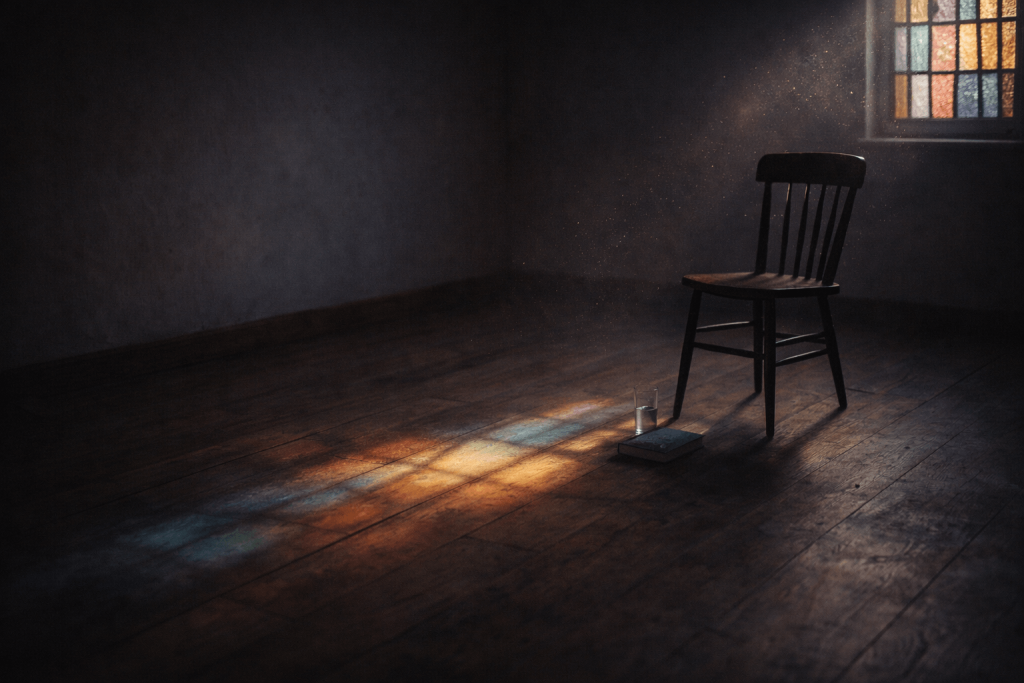
The outro brings the spiritual imagery into focus. The reference to stained glass strongly evokes church, inherited belief, and religious institutions. Wishing that the other person threw a brick through that stained glass does not read as random rebellion. It sounds like a wish that they escaped whatever system of shame, silence, or fear may have been trapping them.
The final lines continue that thought by hoping they are with someone who asks honest questions and that they are no longer losing sleep over what comes next. The ending does not resolve the relationship itself, but it does leave the listener with a final act of compassion. The divide remains, yet the closing emotion is mercy rather than blame.
Hidden Meanings, Metaphors, and Symbolism
The phrase “great divide” functions as the song’s master metaphor. On one level, it is the distance between two people whose emotional lives no longer meet. On another, it reflects the broader divide Kahan has discussed in relation to fame, home, identity, and the people who knew him before his life changed.
Several recurring images deepen that idea. Shared physical scars represent false intimacy: the sense that pain experienced together automatically creates understanding. The state-line imagery suggests border spaces and transition. The repeated contrast between earthly danger and fear for the soul introduces religion and shame into the emotional landscape. The stained glass image then seals that symbolism by connecting private suffering to spiritual architecture.
One of the song’s strongest hidden meanings is that silence can become its own form of harm. The narrator is not guilty of some spectacular betrayal. Instead, the song suggests a quieter failure: he did not ask the right questions, did not understand the signs, and did not know how to bridge the distance while there was still time.
Is the Song Based on a Real Person or Event?
There is no confirmed public statement that identifies one specific real person as the subject of “The Great Divide.” Kahan has said the song grew out of reflections on two people who grew up together and on the things he wishes he had said or handled differently, which strongly suggests real emotional experience behind it. At the same time, he has also indicated that he often blends pieces of himself and people he knows into songs rather than writing strict one-to-one portraits. (People)
The safest reading, then, is that the song feels autobiographical in emotion but should not be treated as a fully literal account of one confirmed person or event.
How This Song Fits Into Noah Kahan’s Catalog
“The Great Divide” fits naturally into Noah Kahan’s body of work because it extends themes that have defined much of his strongest writing: home, memory, guilt, small-town identity, and the long shadow of old relationships. What changes here is scale. Where earlier songs often captured the feeling of being trapped inside a place or a mood, this track feels like it comes after movement, when physical distance has been achieved but emotional resolution still has not.
That makes it a strong title track. Kahan’s own album description frames The Great Divide as a record addressed toward family, old friends, his younger self, and Vermont itself, which makes this song feel like the emotional thesis for the entire era. (Noah Kahan official album page)
Musically, the song also preserves continuity with his folk-rooted storytelling while leaning into a larger, more anthemic alternative-rock sound. Apple Music lists the album under Alternative, which fits the track’s balance of intimacy and scale. (Apple Music)
Final Thoughts
The most convincing interpretation of “The Great Divide” is that it is a song about belated empathy. Noah Kahan looks back on someone who mattered deeply and realizes that he never understood the full weight of what they were carrying. That revelation turns the song into more than nostalgia. It becomes a painful moral inventory.
What makes the track resonate is the way it combines personal memory with larger questions about shame, faith, silence, and emotional maturity. The divide in the title is not just between two people. It is also between who the narrator was then and who he is now, finally able to see what he missed.
FAQs About “The Great Divide”
What does “The Great Divide” mean in Noah Kahan’s song?
It most likely refers to the emotional and spiritual distance between two people who once shared a deep past but failed to truly understand each other. The title also connects to broader divides in Kahan’s life, including the gap between home and fame, past and present, and innocence and hindsight.
Who wrote “The Great Divide” by Noah Kahan?
The song is credited to Noah Kahan and Gabe Simon. (MusicBrainz release credits)
Who produced “The Great Divide”?
The single is credited as produced by Noah Kahan and Gabe Simon. (MusicBrainz release credits)
Is “The Great Divide” based on a true story?
It appears to be rooted in real feelings and lived experience, but Noah Kahan has not publicly confirmed that it is about one specific identifiable person. His comments suggest autobiographical emotion rather than a fully literal one-to-one story. (People)
What is the chorus of “The Great Divide” about?
The chorus reads like a blessing for someone the narrator still cares about. He hopes they are afraid only of ordinary human problems rather than being consumed by fear about their soul, judgment, or what comes after death.
What album is “The Great Divide” from?
It is the title track and lead single from Noah Kahan’s album The Great Divide. (Noah Kahan official album page)
When was “The Great Divide” released?
The song was released on January 30, 2026. (Mastercard Newsroom)
Sources Used:
- Noah Kahan official album page – The Great Divide
- People – Noah Kahan on the inspiration behind “The Great Divide”
- Mastercard Newsroom – single and video premiere announcement
- Apple Music – The Great Divide album page
- Billboard – Hot Rock & Alternative Songs chart report
- Official Charts – “The Great Divide” chart page
- MusicBrainz – release credits for “The Great Divide”
- Noah Kahan official lyric video – “The Great Divide”