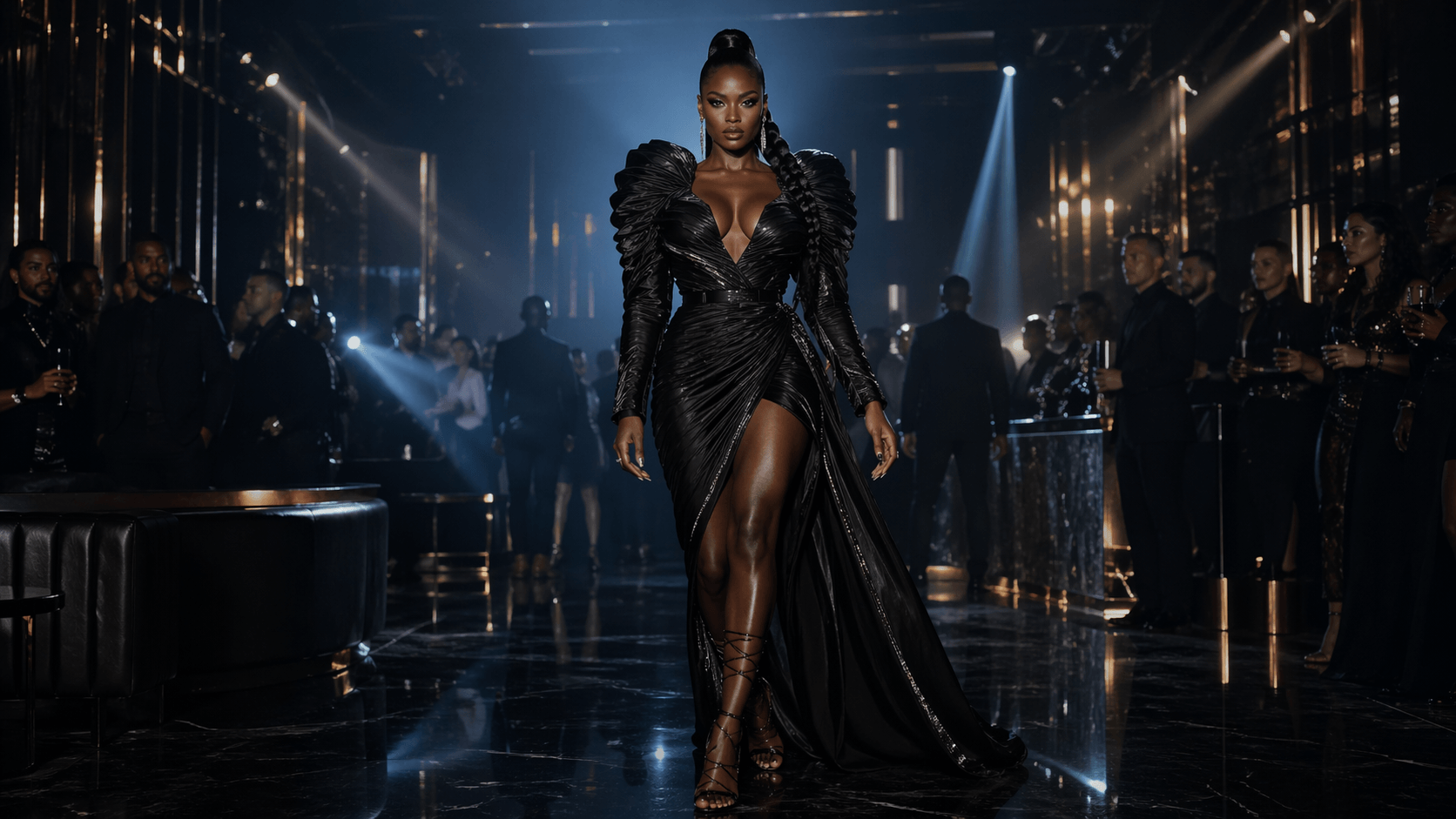
Runway by Lady Gaga & Doechii Meaning: When the Dance Floor Becomes a Stage
What “Runway” Is Really About
“Runway” by Lady Gaga and Doechii is a confidence anthem built around the image of the fashion runway. The song turns walking, posing, dancing, and being watched into symbols of self-command. Instead of treating public attention as pressure, Gaga and Doechii transform it into power.
The simplest meaning of “Runway” is this: when you know who you are, every room can become your stage. The track uses fashion language to talk about identity, visibility, self-expression, and the thrill of refusing to shrink under judgment.
The song is also tied directly to The Devil Wears Prada 2, which makes the runway metaphor especially fitting. The film’s world is built around fashion, status, performance, and the politics of being seen, while the song turns those ideas into a dance-pop statement. (Stereogum)
Release Context and Credits
“Runway” was released in April 2026 as a collaboration between Lady Gaga and Doechii for The Devil Wears Prada 2. The track had been teased in the film’s trailer before becoming available as a full single, positioning it as both a soundtrack moment and a pop event. (Billboard)
The reported songwriting credits include Lady Gaga, Bruno Mars, Jaylah Hickmon, Andrew Watt, Henry Walter, Dernst “D’Mile” Emile II, and Jayda Love. Production is credited to Bruno Mars, Andrew Watt, Cirkut, and D’Mile. Those names help explain the song’s polished, high-impact sound: it is designed to feel sleek, immediate, rhythmic, and camera-ready. (Stereogum)
Musically, “Runway” sits between dance-pop, club music, fashion-show drama, and rap performance. Gaga brings the theatrical pop architecture, while Doechii adds sharper rhythmic attitude and a more confrontational edge. The result is not just a song about glamour; it is a song about controlling the room.
The Main Meaning Behind “Runway”
The emotional center of “Runway” is confidence as movement. The song does not describe self-belief as something quiet or private. It presents confidence as something physical: how you walk, how you look back, how you enter a space, and how you handle being observed.
The runway becomes a metaphor for life under attention. On a real runway, every gesture is visible. The model is exposed, judged, photographed, and interpreted. In the song, Gaga and Doechii take that exposure and reverse its emotional direction. Being watched is no longer a threat. It becomes proof that the narrator has arrived.
This makes “Runway” more than a simple brag track. The song is really about authorship of the self. If the world is going to look at you, the song suggests, then you might as well decide what the image means. Style becomes armor. Movement becomes language. The dance floor becomes a place where identity is performed with intention.
Lyrics Breakdown: How the Song Builds Its Message
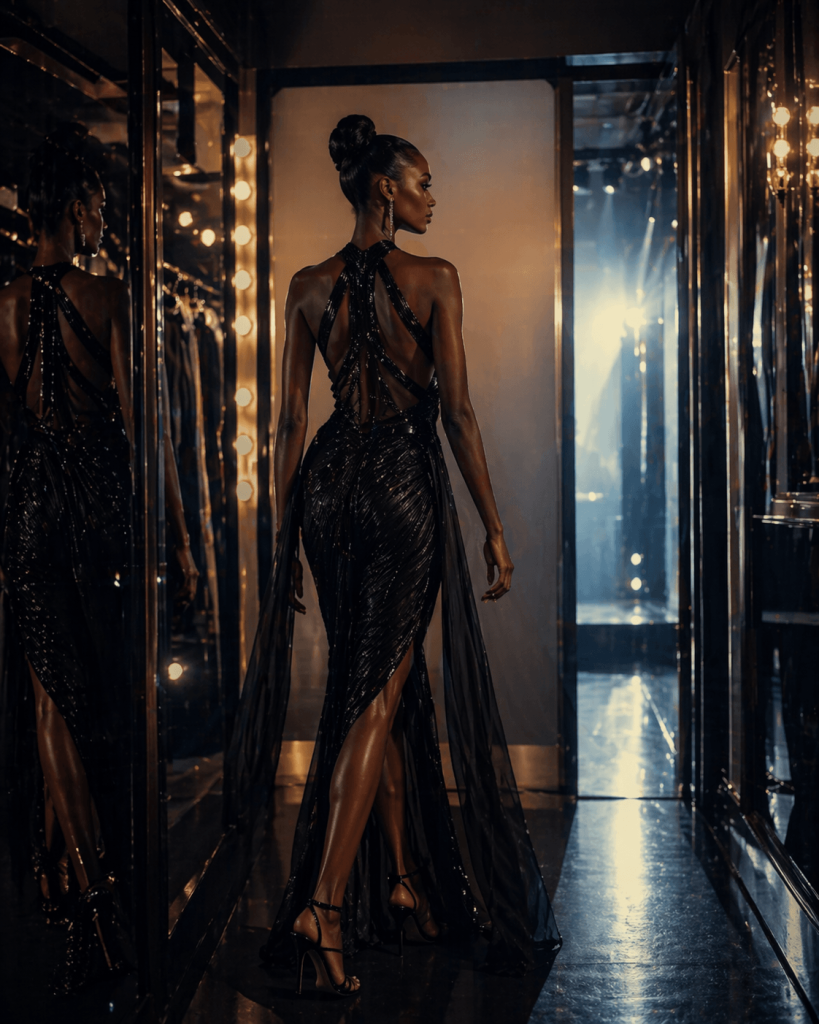
The Opening: An Entrance, Not an Explanation
The beginning of “Runway” feels like a command to step forward. The song does not open with vulnerability or backstory. It opens with presence. That choice matters because the track is not asking the listener to understand the narrator’s insecurity; it is asking the listener to witness her confidence.
Emotionally, the opening works like the moment before a catwalk begins. The body is ready, the lights are up, and the room is about to become aware of the performer. The song’s first move is not confession. It is arrival.
Gaga’s Early Section: Self-Expression as Freedom
Lady Gaga’s part frames the song’s message around self-acceptance and visual freedom. The narrator feels fabulous, free, and fully herself. This is very Gaga-coded: the body, outfit, voice, and persona all become parts of the same artistic statement.
The meaning here is not simply “I look good.” It is closer to “I know how to make myself visible without apologizing.” Gaga has built much of her career around the idea that fashion can reveal identity rather than hide it, and “Runway” continues that tradition in a bright, soundtrack-friendly form.
The Pre-Chorus: Pressure Turns Into Momentum
The pre-chorus functions like preparation. It gathers tension before the song fully opens into its central hook. This section feels like the emotional runway before the runway itself: the breath before the walk, the turn before the flash, the last second before someone chooses to be seen.
That build-up is important because confidence in “Runway” is not accidental. It is practiced. It is styled. It is choreographed. The song understands that self-possession can be theatrical without being fake.
The Chorus: The Dance Floor Becomes a Runway
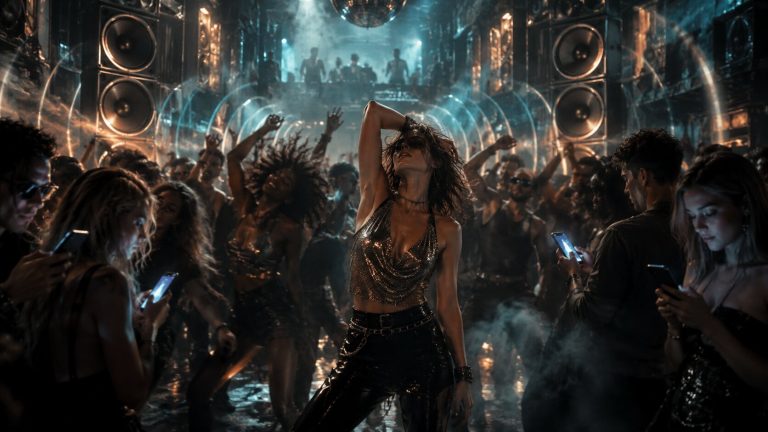
The chorus delivers the song’s clearest metaphor: the dance floor can become a runway. This is the track’s strongest idea because it joins two different worlds. The dance floor is social, sweaty, spontaneous, and democratic. The runway is curated, elite, photographed, and controlled.
By combining them, Gaga and Doechii suggest that glamour does not only belong to fashion institutions. Anyone with enough confidence can transform an ordinary space into a stage. The chorus is not just about looking stylish; it is about changing the meaning of the room through presence.
This is also why the song works so well for The Devil Wears Prada 2. In that universe, fashion is never just clothing. It is hierarchy, taste, ambition, power, and survival. “Runway” turns those ideas into a club hook.
Doechii’s Verse: The Catwalk Becomes Competitive
Doechii’s verse gives the song more bite. Where Gaga’s performance often feels expansive and theatrical, Doechii sounds sharper, quicker, and more combative. Her presence turns the runway from a glamorous image into a competitive arena.
Her delivery suggests someone who is not only being watched but watching everyone else back. That changes the emotional balance of the song. The narrator is not passively receiving attention. She is controlling it, redirecting it, and daring the room to keep up.
This verse is crucial because it prevents “Runway” from feeling too polished or decorative. Doechii brings friction. She makes the song feel less like a fashion advertisement and more like a performance of dominance.
The Bridge: Camera, Pose, and Self-Ownership
The bridge leans into the language of posing, camera attention, and fashion spectacle. This is where the song’s symbolism becomes most direct. The camera can represent judgment, surveillance, or objectification, but “Runway” turns it into a tool of self-definition.
In this context, posing is not empty vanity. A pose is a decision. It is the body saying something before words arrive. Gaga and Doechii treat that decision as powerful because it allows the narrator to shape how she is seen.
The Ending: Confidence Becomes Identity
By the end of the song, the runway is no longer just a place. It has become a state of mind. The narrator does not need a literal catwalk, a fashion show, or a room full of photographers. She carries the runway with her.
That is the final emotional transformation of the track. “Runway” begins with the act of stepping into visibility and ends with the feeling that visibility belongs to the narrator completely.
Metaphors and Symbolism in “Runway”
The runway is the song’s central symbol. It represents style, exposure, confidence, status, and performance. But the track’s deeper move is making the runway portable. It can exist anywhere the narrator chooses to move with authority.
The dance floor symbolizes freedom. Unlike a formal runway, it does not require an invitation from the fashion industry. By turning the dance floor into a runway, the song suggests that self-expression does not need permission from elite spaces.
The camera represents the public gaze. In many pop songs, being watched is exhausting or invasive. In “Runway,” being watched becomes energizing because the narrator controls the performance. The gaze does not defeat her; it confirms her presence.
Fashion functions as language. Clothes, pose, attitude, and movement all communicate identity. The song treats style as a serious form of self-authorship, not as surface decoration.
Is “Runway” Based on a Real Person or Event?
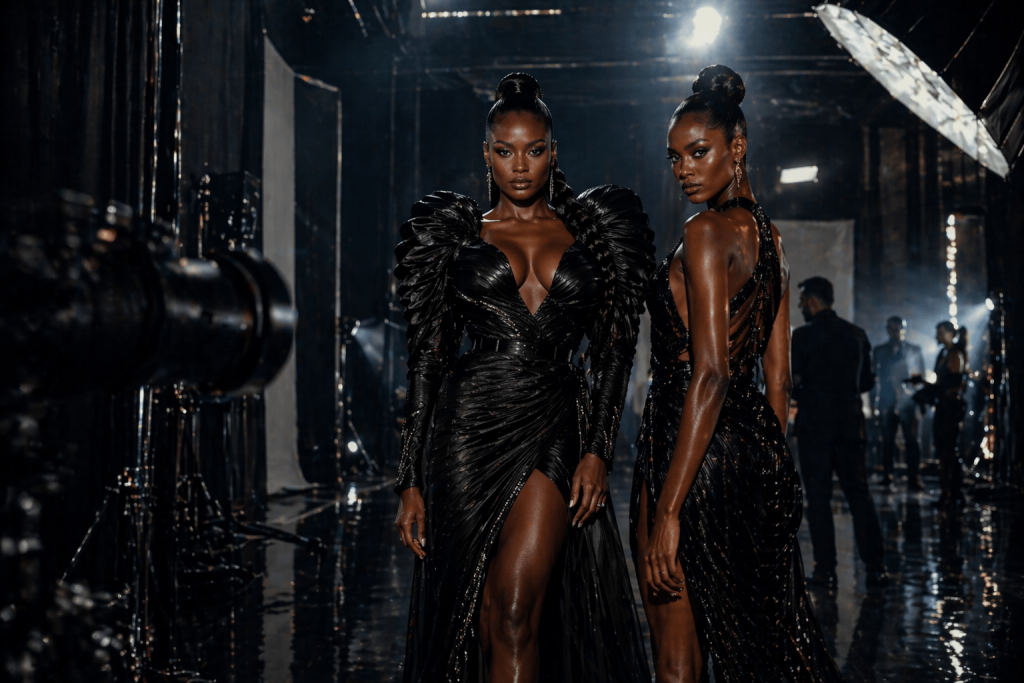
There is no confirmed evidence that “Runway” is about a specific real person, relationship, or private event. The verified context connects the song to The Devil Wears Prada 2, fashion culture, and the broader idea of confidence under public attention.
The most accurate reading is that “Runway” is a soundtrack-driven character anthem. It matches the world of the film and also fits both artists’ public identities, but it should not be treated as a personal confession unless Gaga, Doechii, or the songwriters confirm that directly.
How “Runway” Fits Lady Gaga and Doechii’s Catalogs
For Lady Gaga, “Runway” connects to a long-running artistic interest in performance, fashion, nightlife, and identity. Gaga has often used the club as a place of transformation, and this song continues that idea by making the dance floor feel like a fashion spectacle.
The track also fits Gaga’s history of turning visual style into meaning. Her work often treats image as part of the song itself: costume, choreography, attitude, and sound all become one performance system. “Runway” is direct, glossy, and soundtrack-ready, but it still belongs to that larger Gaga tradition.
For Doechii, the song highlights charisma, control, and technical presence. Her verse adds a contemporary rap charge to the track and makes the collaboration feel more dynamic. She is not simply decorating a Gaga single; she changes the song’s posture.
Together, Gaga and Doechii make “Runway” feel like a meeting between pop theater and rap precision. Both artists understand that performance is not only vocal. It is visual, physical, rhythmic, and psychological.
Final Thoughts
“Runway” is best understood as a song about turning visibility into control. Its fashion imagery is fun and glamorous, but the message underneath is sharper: when the world looks at you, you can either shrink under the gaze or decide what the gaze sees.
Lady Gaga and Doechii choose the second option. They turn the dance floor into a runway, the camera into a witness, and confidence into choreography. That is why the song works: it does not just talk about self-expression. It moves like self-expression.
FAQs About “Runway” by Lady Gaga and Doechii
What does “Runway” by Lady Gaga and Doechii mean?
Who wrote “Runway”?
Who produced “Runway”?
What movie is “Runway” from?
Is “Runway” based on a true story?
What is the chorus of “Runway” about?
How does Doechii change the song?
Sources Used