
Common Music Promotion Mistakes Independent Artists Should Avoid
TL;DR
Most music promotion mistakes happen when artists chase attention before they have a clear release plan, fan journey, or campaign message. The safest strategy is to build around real listeners: prepare assets early, avoid fake engagement, pitch selectively, measure meaningful signals, and keep promoting after release day.
Introduction
Independent artists have more access to music promotion tools than ever, but access does not automatically create momentum. You can upload a track, post a teaser, run ads, pitch playlists, email blogs, and share short-form videos without ever building a real listener base.
That is where many DIY campaigns fall apart. The problem is rarely one bad post or one missed playlist. It is usually a stack of small mistakes: rushing the release, buying attention, pitching the wrong people, ignoring analytics, or treating every platform as if it works the same way.
Promotion matters because the music market is active, competitive, and crowded. IFPI reported continued growth in global recorded music revenues in its 2025 reporting, which means artists are working inside a large but highly competitive ecosystem. Growth creates opportunity, but it also makes weak promotion easier to ignore. (IFPI – Global recorded music revenues grew 4.8% in 2024)
This guide breaks down the most common music promotion mistakes independent artists should avoid, explains why they hurt your campaign, and shows what to do instead.
Table of Contents
- Key Takeaways
- Mistake 1: Treating Promotion Like Emergency Damage Control
- Mistake 2: Sending Listeners to a Messy Artist Ecosystem
- Mistake 3: Buying Streams, Guaranteed Playlist Adds, or Fake Attention
- Mistake 4: Pitching Everyone With the Same Generic Message
- Mistake 5: Confusing Playlist Activity With Fan Growth
- Mistake 6: Posting Content Without a Repeatable Discovery Angle
- Mistake 7: Running Ads Before You Know What You Are Testing
- Mistake 8: Stopping the Campaign on Release Day
- A Simple Promotion Audit for Independent Artists
- BlockTone Records Note
- Frequently Asked Questions
- Sources Used
Key Takeaways
| Point | Details |
|---|---|
| Promotion should start before release day | Artists need time to prepare distribution, artwork, pitches, content, links, and audience messaging before the song is public. |
| Fake growth creates real risk | Paid streams, bots, and guaranteed playlist schemes can damage your profile and produce numbers that do not become fans. |
| Your campaign needs a fan journey | Do not send people only to a streaming link. Give them a reason to follow, save, subscribe, buy, or return later. |
| Analytics should guide promotion | Track saves, follows, comments, Shazams, repeat listening, email signups, locations, and audience behavior alongside streams. |
| Release day is not the finish line | A single should keep generating content, outreach, fan interaction, and data after it goes live. |
Mistake 1: Treating Promotion Like Emergency Damage Control
A common independent artist mistake is waiting until the song is already live before thinking seriously about promotion. At that point, you are not launching a campaign. You are trying to rescue one.
Music promotion works best when the release has a runway. You need time to deliver the track through your distributor, check metadata, prepare visuals, write pitches, build content, and warm up your existing audience.
Spotify’s playlist pitching guidance makes timing especially important. Artists can pitch an upcoming unreleased song through Spotify for Artists, and Spotify recommends delivering music early enough so editors have time to listen and so the track can be considered for follower features such as Release Radar. (Spotify for Artists – Pitching music to playlist editors)
What to do instead
- Finalize artwork, metadata, artist bio, press angle, and content concepts before upload.
- Submit the song through your distributor early enough for platform processing and pitching.
- Prepare short-form clips before the release instead of creating everything after the song drops.
- Write a short pitch that explains the song’s genre, mood, story, and audience fit.
- Plan post-release content before release day arrives.
The mistake to avoid is assuming the song will find people simply because it is good. Good music still needs context, repetition, and a clear path for listeners to discover it.
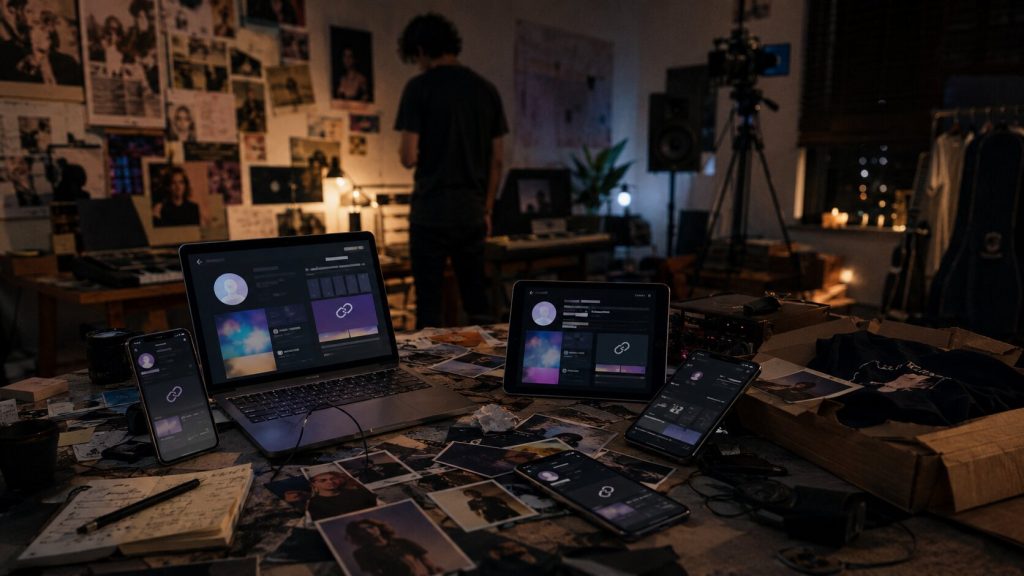
Mistake 2: Sending Listeners to a Messy Artist Ecosystem
Promotion does not begin when someone clicks. It begins when that click lands somewhere.
If your artist profile has outdated images, inconsistent names, broken links, missing bios, weak artwork, or no clear next step, you are wasting attention. A listener may like the song but still forget you because nothing around the release helps them understand who you are.
This matters across platforms. On YouTube, an Official Artist Channel can bring an artist’s subscribers and eligible content together in one place, making the artist presence easier for fans to navigate. (YouTube Help – Official Artist Channels)
Fix your foundation first
- Use a consistent artist name everywhere.
- Update your profile image and banner assets.
- Write a short bio that clearly describes your sound.
- Check that all links work correctly.
- Make the newest release easy to find.
- Pin or feature the current campaign on social platforms.
- Create a clear next step for deeper fans, such as following, joining an email list, buying on Bandcamp, or watching a video.
Think of promotion as traffic and your artist ecosystem as the venue. Sending more people to a confusing venue does not solve the problem.
Mistake 3: Buying Streams, Guaranteed Playlist Adds, or Fake Attention
This is one of the most damaging music promotion mistakes independent artists can make.
Services that promise guaranteed streams, guaranteed playlist placement, or algorithmic boosts often create low-quality or fraudulent activity. Even when the numbers look exciting, the listeners may not be real fans. Worse, suspicious activity can put your release, profile, distributor relationship, or future promotion at risk.
Spotify defines artificial streaming as activity that does not reflect genuine user listening intent and warns artists to avoid services promising paid streams, playlist placement, or algorithmic priority. (Spotify for Artists – Artificial streaming)
Red flags to avoid
- Guaranteed streams
- Guaranteed playlist placement
- Promises to “trigger the algorithm”
- Large stream packages for a fixed low price
- No clear audience targeting
- No explanation of where listeners come from
- Playlists with suspicious engagement patterns
- Pressure to pay quickly before a “slot” disappears
What to do instead
- Invest in better cover art or campaign visuals.
- Create stronger short-form video assets.
- Run small, trackable ad tests with clear goals.
- Build a direct fan list.
- Pitch relevant blogs, curators, creators, or local media.
- Improve your live content, performance clips, and storytelling.
Real growth is slower, but it gives you information. Fake growth gives you numbers that cannot buy a ticket, share a song, buy merch, join a list, or come back for the next release.
Mistake 4: Pitching Everyone With the Same Generic Message
Many artists pitch blogs, playlist curators, creators, radio shows, and influencers with one recycled message. It usually sounds like this: “My new single is out now. Please check it out.”
That is not a pitch. It is a request for attention with no reason attached.
A strong pitch answers three questions quickly: what the song is, why it fits the person receiving the pitch, and what makes it worth covering now.
A better pitch structure
- Subject: Artist name, song title, and a specific angle.
- Opening: One sentence showing why this curator, writer, or creator is relevant.
- Song context: Genre, mood, theme, and listener fit.
- Proof point: Previous support, local story, live momentum, visual concept, or fan response.
- Link: Private streaming link before release or clean public link after release.
- Close: Short, respectful, and pressure-free.
Weak pitch vs stronger pitch
| Weak Pitch | Stronger Pitch |
|---|---|
| “My new song is out now. Please check it out.” | “This is a dark alt-pop single about post-breakup insomnia, built around minimal drums and a vocal hook that fits the late-night electronic lane you often cover.” |
The stronger version gives the recipient a frame. It shows genre, mood, audience fit, and editorial relevance.
Mistake 5: Confusing Playlist Activity With Fan Growth
Playlists can help discovery, but they are not the same as fan growth.
A playlist add can generate streams without creating a relationship. A listener might hear the song passively while cooking, driving, studying, or working. That still has value, but it does not automatically mean the listener knows your name, follows your profile, saves the track, watches your video, joins your email list, or buys a ticket.
Apple Music for Artists gives artists access to performance indicators such as plays, listeners, Shazams, playlist milestones, location data, and listening trends. These types of signals are useful because they help artists look beyond raw stream count. (Apple Music for Artists – Understand your analytics)
Look beyond streams
| Signal | What It May Suggest |
|---|---|
| Saves | The song mattered enough for someone to return. |
| Profile follows | The listener wants to hear future music. |
| Repeat plays | The track has replay value. |
| Shazams | People are discovering the song in the wild. |
| Comments and DMs | The song is creating direct response. |
| Email signups | A casual listener is becoming reachable outside algorithms. |
| Merch or Bandcamp sales | Interest is turning into support. |
What to do after playlist exposure
- Post content that explains the mood or story of the song.
- Update your bio to highlight the current release.
- Create a live, acoustic, remix, or behind-the-scenes version.
- Invite listeners to follow before the next release.
- Use location data to identify cities worth targeting again.
A playlist can open the door. Your job is to give listeners a reason to walk further in.
Mistake 6: Posting Content Without a Repeatable Discovery Angle
Independent artists often post randomly: one studio clip, one artwork reveal, one meme, one performance video, one playlist screenshot, then silence.
The issue is not that any one post is bad. The issue is that the audience never gets a repeated idea strong enough to remember.
Short-form platforms reward clarity, repetition, and native behavior. TikTok for Artists focuses on artist tools, insights, and best practices, reflecting how important platform-specific discovery has become for music promotion. (TikTok for Artists)
Build content from the song’s strongest hook
- What line in the song is most quotable?
- What emotion does the chorus capture?
- What situation would make someone send this to a friend?
- What visual world matches the track?
- What story explains why the song exists?
- What performance moment proves the song works live?
Example content map
If the song is about leaving a toxic relationship, you could create a lyric-led video, a story clip explaining the inspiration, a stripped-down chorus performance, a “signs you stayed too long” concept video, a fan comment response, a production breakdown, a visualizer excerpt, and a post asking listeners which lyric hit hardest.
That is not spam. That is campaign consistency. The goal is to give the same emotional idea several different doors.
Mistake 7: Running Ads Before You Know What You Are Testing
Ads can help, but ads amplify what already exists. If the song, creative, landing page, targeting, or message is weak, paid promotion simply shows the weakness faster.
The biggest mistake is running ads with no hypothesis. “I want more streams” is not a test. It is a wish.
Better ad tests
- Test whether the chorus clip performs better than the studio clip.
- Compare two cities where organic audience signals are already appearing.
- Test whether a landing page or direct platform link creates better follow-through.
- Compare performance content against narrative content.
- Test different audience interests based on adjacent artists or genres.
Match the metric to the goal
| Campaign Goal | Useful Metric |
|---|---|
| Awareness | Video view rate, watch time, profile visits |
| Streaming action | Click-through rate, landing page clicks, saves |
| Fan capture | Email signups, Bandcamp followers, social follows |
| Market testing | Location-based engagement and listener trends |
| Conversion | Merch sales, ticket clicks, paid downloads |
Your first ad budget should buy information, not validation. If a small test shows weak response, fix the creative before increasing spend.
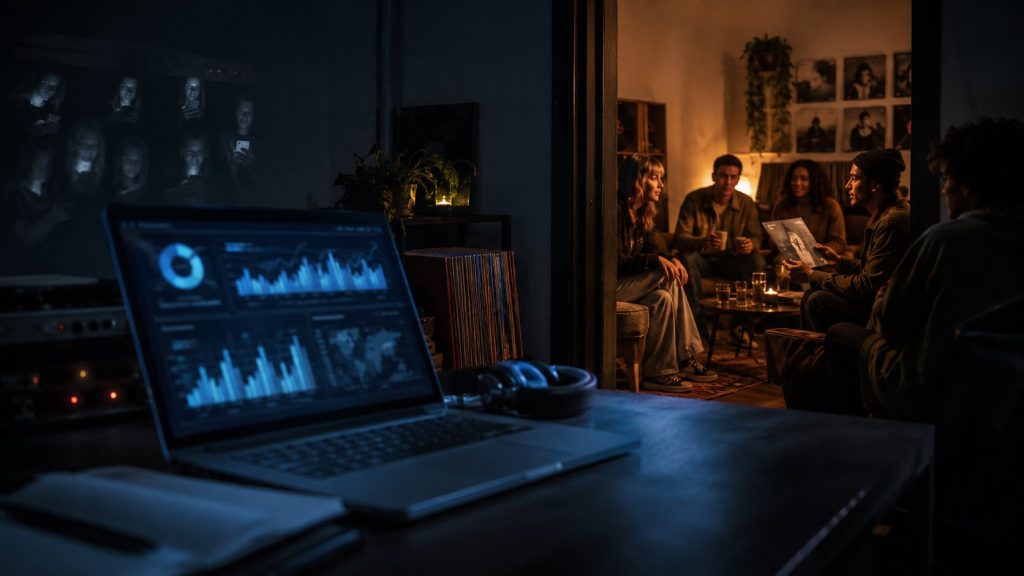
Mistake 8: Stopping the Campaign on Release Day
Release day feels like the finish line because the song is finally public. For listeners, it is often the first time they have seen it.
That mismatch causes artists to stop too early. They post “out now,” maybe share a few stories, thank listeners, and then move on. But most people will not see the first announcement. Others will need repeated exposure before they click.
Bandcamp’s artist resources highlight the value of direct fan communication, including tools that help artists reach supporters through messages and email. That matters because promotion should not depend only on algorithmic feeds. (Bandcamp for Artists)
Build a post-release arc
- Week 1: Out-now posts, performance clips, lyric moments, and release story.
- Week 2: Behind-the-scenes content, playlist updates, fan reactions, and alternate versions.
- Week 3: Deeper storytelling, live session clips, creator outreach, and local angles.
- Week 4: Data review, stronger creative variations, best-performing clips, and next-step fan capture.
Release week is only one phase. Songs can grow later through content, playlists, fan sharing, creator use, live performance, press, or renewed ads.
A Simple Promotion Audit for Independent Artists
Release readiness
- Is the song delivered to your distributor early enough?
- Is your Spotify pitch prepared before release?
- Are the artwork, visualizer, and short-form clips ready?
- Is your artist bio updated?
- Are your links tested?
Audience readiness
- Have you told your existing audience what is coming?
- Do you have a pre-save, email signup, Bandcamp follow, or other fan-capture option?
- Are your social profiles pointing to the release?
- Have you identified the listener type this song is for?
Outreach readiness
- Do you have a short pitch?
- Have you made a list of relevant curators instead of random contacts?
- Are your links clean and easy to open?
- Have you avoided paid “guaranteed” playlist services?
Content readiness
- Do you have at least 10 content ideas from the song?
- Are you using the best lyric, hook, story, or visual idea repeatedly?
- Are you prepared to post after release day?
- Do you have a way to turn comments and reactions into more content?
Measurement readiness
- Do you know what success looks like beyond streams?
- Are you checking saves, follows, repeat listeners, Shazams, locations, comments, and signups?
- Are you using analytics to decide the next move?
BlockTone Records Note
For independent artists reading this on BlockTone Records, the most useful next step is not always to promote harder. It is to promote cleaner. Before spending more money or sending more pitches, audit your release plan, artist profiles, content angles, and fan journey. A smaller campaign with real listeners, clear messaging, and consistent follow-up is stronger than a noisy campaign built on vague goals.
FAQs About Common Music Promotion Mistakes
What is the biggest music promotion mistake independent artists make?
Is it bad to pay for music promotion?
How early should an independent artist start promoting a single?
Should independent artists focus more on playlists or social media?
How can artists tell if a playlist promotion offer is suspicious?
What should artists track besides stream count?
Can a song still grow after release week?
Sources Used