

Father by Ye & Travis Scott: Meaning, Themes and Context
What Is “Father” by Ye & Travis Scott About?
“Father” by Ye and Travis Scott is best understood as a song about power, survival, and spiritual dependence. The title points most clearly toward God, but the track also uses the idea of a father as a symbol of authority, origin, judgment, and protection. Rather than sounding soft or purely confessional, the song turns that spiritual language into something grand, tense, and theatrical.
The emotional core of the record comes from that contradiction. It opens in a prayer-like register, asking for guidance and mercy, but quickly moves into self-mythology, swagger, and public return. That tension makes “Father” feel less like a straightforward devotional song and more like a statement about trying to frame fame, struggle, and ego inside a larger spiritual order. (Apple Music)
Release Story and Song Credits
“Father” was released on March 28, 2026, as part of Ye’s album Bully. It was one of the songs that helped define the album’s opening identity, arriving with official release support and a visual rollout that gave it an immediate sense of scale. The song also features Travis Scott, whose presence helps push the record toward a more cinematic and forceful sound.
Public credit data is not perfectly uniform across platforms, so it is important not to overstate details. Apple Music lists Ye in the composition and production-related metadata, while broader reporting has also linked the track to additional collaborators. The safest verified summary is that “Father” is an official Bully track led by Ye, featuring Travis Scott, with Ye clearly central to its public authorship and creative presentation. (Apple Music)
The song also made an early chart impact. Billboard reported that “Father” debuted at No. 21 on the Hot 100, while the U.K. Official Charts recorded a strong performance on its Hip Hop and R&B chart. That commercial response suggests the track was heard not as a minor album cut, but as one of the early focal points of the Bully era. (Billboard Hot 100)
The Core Meaning of “Father”
The most persuasive reading of “Father” is that it stages a comeback in spiritual language. Ye presents himself as someone moving back into visibility and power, but he frames that return as something connected to prayer, protection, and judgment. In that sense, the song is not just about being back in public view. It is about turning that return into evidence of destiny, grace, or divine favor.
What makes the song more interesting than a simple victory lap is that it never fully resolves the conflict between humility and ego. The religious language implies dependence, but the performance style remains dominant and self-assured. That is very much in line with Ye’s broader artistic pattern: confession and self-glorification often exist side by side, and the friction between them becomes the point.
Travis Scott’s contribution strengthens that reading rather than changing it. He does not ground the song in intimacy or realism. Instead, he expands its atmosphere, helping turn Ye’s spiritual-return narrative into something more public, elevated, and monumental. The collaboration makes “Father” feel less like a private prayer and more like a ritualized declaration. (Billboard)
How the Lyrics Develop Their Meaning
Opening Movement: Prayer Before Performance
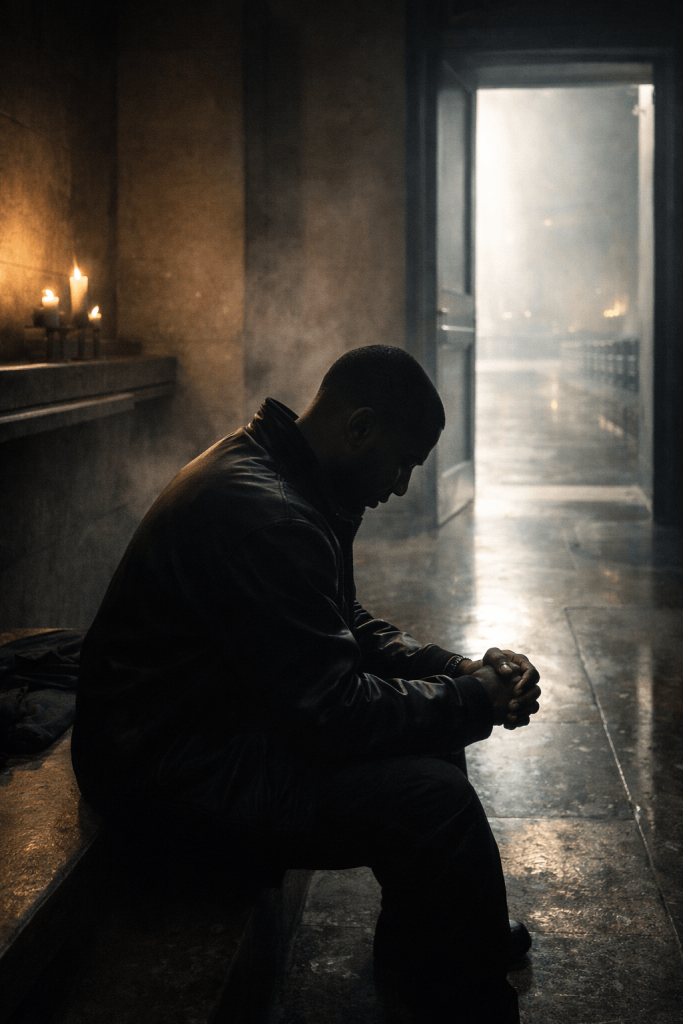
The song begins by establishing a prayer-like mood. Even without relying on long lyric quotation, the tone clearly suggests appeal, gratitude, and a desire for mercy. This matters because it places the listener in a spiritual frame before the song moves into more familiar rap ideas like status, visibility, and power.
That opening changes how everything that follows is heard. Instead of pure boasting, the song starts to sound like a testimony filtered through spectacle. Success is not presented as random; it is made to feel watched over, authorized, or spiritually charged.
Verse One: Reappearance and Control
The first major lyrical section sounds like a re-entry narrative. Ye positions himself as someone returning after absence, pressure, or doubt, and the emotional energy comes from that sense of renewed visibility. The tone is not wounded. It is controlled, sharp, and highly aware of the audience.
That makes the first verse feel like more than autobiography. It becomes a statement about survival under scrutiny. The speaker is not only saying that he endured. He is implying that endurance itself proves something bigger about his place, his calling, or his protection.
Chorus: Why the Title Matters
The chorus gives the song its spiritual weight by centering the word “Father.” Repeating that word turns it into invocation. It sounds less like ordinary naming and more like calling upward, which is why the chorus carries both reverence and force.
At the same time, the delivery does not sound defeated or broken. The word “Father” becomes both a prayer and a source of authority. That dual role is crucial to the song’s meaning: the speaker needs help, but he also speaks as if that relationship grants him confidence and stature.
Travis Scott’s Section: Scale and Momentum
Travis Scott’s appearance widens the record’s emotional range by making it feel larger, faster, and more public-facing. His verse works less as a separate story than as an extension of the track’s central mood. He reinforces the sense that this is a song about visibility, force, and mythic return rather than quiet reflection.
Because of that, his feature helps keep “Father” from becoming narrowly personal. The record starts to feel like a shared performance of status and survival, which suits both artists’ larger catalogs. Instead of reducing the title’s spiritual dimension, Travis helps make it feel bigger and more cinematic.
Ending: An Unresolved Invocation
The ending does not offer a neat answer or emotional release. Instead, it leaves the title’s central image hanging over the song. That unresolved quality works in the track’s favor because it preserves the tension between reverence and spectacle.
Rather than closing with certainty, “Father” ends in suspension. The listener is left with the feeling that the appeal is still active, the ego is still active, and the struggle between dependence and self-belief has not been settled. That ambiguity is one of the song’s strongest qualities.
Symbols, Metaphors, and Hidden Layers
The title is the song’s most important symbol. “Father” most obviously suggests God, especially because of the prayer-like opening and the broader visual presentation around the track. But it also carries secondary meanings: authority, discipline, hierarchy, inheritance, and masculine identity. All of those meanings strengthen the song’s emotional complexity.
Another important layer is the contrast between sacred language and public image. The track uses the vocabulary of prayer, but it does so inside a record that still depends on confidence, charisma, and spectacle. That contrast creates a double meaning: the speaker may be asking for grace, but he is also performing power. The song becomes a place where spirituality and self-mythology are deliberately fused.
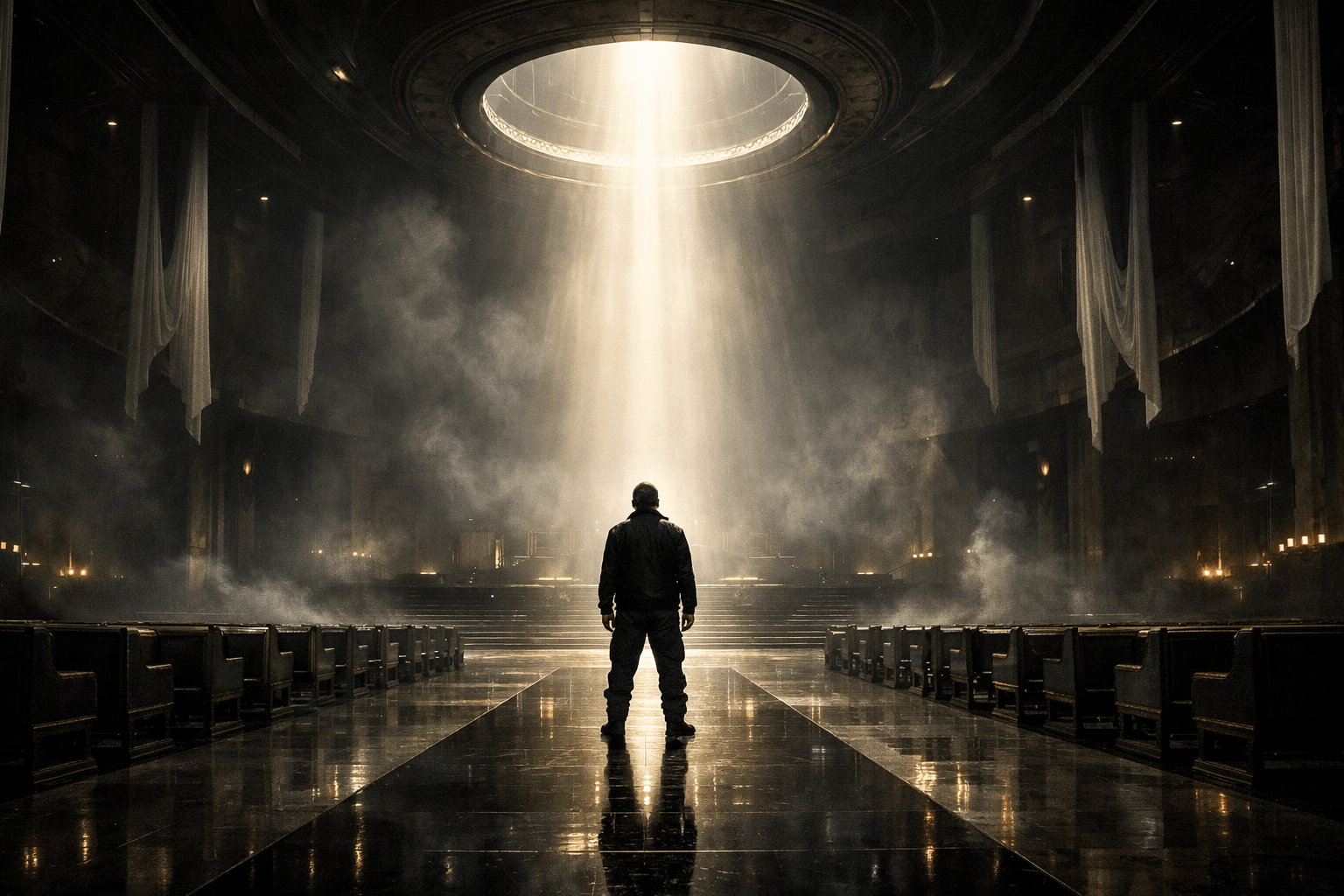
The official visual rollout also supports that interpretation. Coverage of the video emphasized ceremonial, church-like, and surreal imagery, suggesting that “Father” was meant to function as a symbolic world rather than a literal narrative. That does not prove a single fixed meaning, but it strongly supports the idea that the song is about ritual, judgment, and divine framing as much as it is about rap bravado. (Billboard)
Is “Father” About a Real Person?

There is no strong verified evidence that “Father” is about one specific real person or one clearly identified event. Nothing in the major official-facing metadata or mainstream reporting confirms that the track is literally about Ye’s father, Travis Scott’s father, or a single family story.
The more cautious and accurate reading is that the song uses fatherhood as a symbolic structure rather than a documentary subject. Listeners can reasonably connect it to Ye’s long-running religious themes, questions of masculine authority, and ideas of legacy, but those remain interpretations rather than confirmed facts.
Why the Song Fits the Bully Era
Within Bully, “Father” works as an early mission statement. It introduces a version of Ye that still wants scale, controversy, and impact, but now frames those desires through spiritual language and ritualized seriousness. That does not make the song calm or traditionally devotional. It makes it feel like a confrontation between belief and self-assertion.
It also fits Ye’s catalog more broadly. Some of his most compelling work has always lived in the unstable space between reverence and ego, and “Father” continues that pattern. Travis Scott’s presence makes the record feel even more suited to a large, dramatic album-era introduction, because he amplifies atmosphere and intensity instead of reducing them.
Final Thoughts
“Father” is most convincing when heard as a song about return under spiritual pressure. It uses the language of prayer not to erase ego, but to place ego inside a larger drama of judgment, protection, and destiny. That makes the track feel layered, conflicted, and deliberately unresolved.
The song resonates because it refuses to choose just one identity. It is part prayer, part performance, part comeback statement, and part symbolic ritual. That combination gives “Father” more depth than a simple title or a few headline interpretations might suggest.