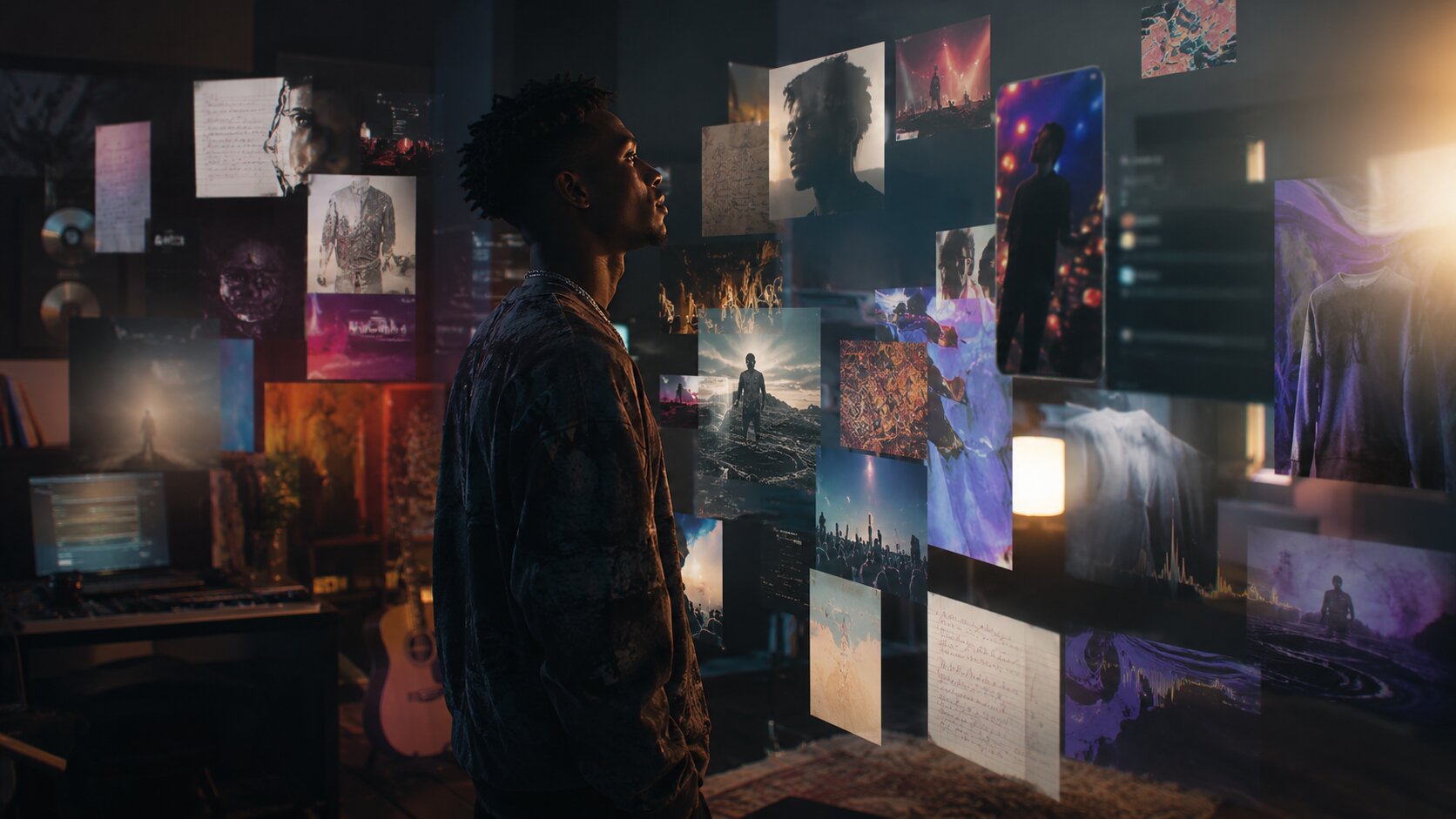
How to Build an Artist Brand That Fans Remember
TL;DR
A memorable artist brand is not just a logo, color palette, or polished press photo. It is the repeatable impression fans get from your music, visuals, story, language, and the way you show up across platforms. Start by defining what people should feel, remember, and say about you, then make every release, profile, post, photo, and fan touchpoint reinforce that same idea.
Introduction
Many artists think branding begins after the music is finished: pick a font, shoot some photos, update the profile picture, and post more often. But fans rarely remember an artist because of one isolated asset. They remember a feeling, a world, a point of view, a phrase, a visual cue, or a consistent pattern they can recognize quickly.
That matters because listeners now meet artists in fragments. Someone may hear a few seconds of your song in a short-form video, see your streaming profile later, find your YouTube channel through a live clip, then finally follow you after reading a lyric caption on Instagram. If those touchpoints feel disconnected, the fan has to work too hard to understand who you are.
The goal of artist branding is to make recognition easier. This guide will help you define the core of your artist brand, turn it into memorable creative choices, and apply it across streaming platforms, social media, visuals, bios, content, merch, and fan communication without becoming fake or overproduced.
Table of Contents
- Key Takeaways
- Start With the Feeling Your Music Leaves Behind
- Build Three Memory Hooks Fans Can Repeat
- Design a Visual Identity That Works at Thumbnail Size
- Write a Story That Gives Fans Something to Hold Onto
- Make Every Platform Feel Like the Same Artist
- Turn Content Into Proof of the Brand
- Create Fan Rituals, Not Just Promotion
- Avoid Branding Mistakes That Make Artists Forgettable
- How BlockTone Records Can Support Your Artist Brand
- FAQs About Building an Artist Brand
- Sources Used
Key Takeaways
| Point | Details |
|---|---|
| Your brand starts with emotional recall | Decide what listeners should feel and remember after hearing your music. |
| Consistency beats complexity | A few repeated signals are easier to remember than a constantly changing identity. |
| Visuals must work on mobile | Profile images, cover art, thumbnails, and short-form clips need to read clearly at small sizes. |
| Your artist bio should support discovery | A strong bio explains your creative world, not just your achievements. |
| Content should prove the brand | Posts, videos, captions, and live moments should make the artist identity visible. |
| Fan memory grows through repetition | Repeated phrases, visuals, rituals, and stories help casual listeners become committed fans. |
Start With the Feeling Your Music Leaves Behind
An artist brand should come from the music, not sit on top of it. Before choosing colors or designing cover art, ask what emotional job your songs are doing for listeners.
Are your songs for late-night reflection, club release, heartbreak recovery, spiritual escape, underground energy, cinematic nostalgia, rebellion, confidence, intimacy, or chaos? The answer does not need to be one word, but it should be specific enough to guide decisions.
A useful exercise is to complete these three sentences:
- People listen to my music when they want to feel…
- My songs make ordinary moments feel…
- A fan would describe my world as…
For example, “sad” is too broad. “Romantic loneliness in a neon city” is usable. “Energetic” is vague. “Sweaty basement-show catharsis” is more memorable. “Authentic” is overused. “Small-town honesty with stadium-sized hooks” gives you something to build around.
This matters because the music market is crowded and access is abundant. IFPI reported that global recorded music revenues reached US$29.6 billion in 2024, with streaming continuing to account for a major share of the market. A clear artist brand helps listeners sort your music into memory instead of treating it as one more track in an endless feed. (IFPI Global Music Report 2025)
The mistake to avoid is building a brand around what looks popular instead of what your songs actually deliver. If your music feels raw and intimate, a glossy luxury image may create friction. If your songs are maximal and theatrical, a minimal mysterious presentation may undersell the work.
Build Three Memory Hooks Fans Can Repeat
Fans remember artists through repeatable hooks. Not only musical hooks, but identity hooks: the things they can easily recognize, describe, imitate, quote, or share.
A sonic hook
This is the recognizable musical fingerprint. It might be a vocal texture, drum sound, guitar tone, production style, lyrical perspective, tempo range, recurring harmony, or the way your choruses land.
You do not need every song to sound identical. But fans should be able to hear a new track and think, “That sounds like them.” The goal is not formula. The goal is recognition.
A visual hook
This is the visual cue that travels across cover art, photos, video thumbnails, stage looks, merch, and social posts. It could be a color family, type style, lighting approach, repeated symbol, wardrobe silhouette, camera angle, or recurring environment.
The best visual hooks are simple enough to recognize quickly. If your identity only works after someone studies the image for 20 seconds, it is too complicated for modern discovery.
A language hook
This is how your brand sounds when it speaks. It includes captions, song descriptions, fan replies, email subject lines, live banter, merch copy, and your bio.
Some artists are poetic. Some are blunt. Some are funny, cryptic, political, romantic, chaotic, academic, devotional, or conversational. Choose a voice that matches the music and that you can sustain naturally.
Pro Tip: Write a one-sentence fan repeat line. This is not necessarily a public tagline. It is an internal test. For example: “She makes breakup songs for people who pretend they are fine.” If a fan could say something like that to a friend, your brand is becoming memorable.
Design a Visual Identity That Works at Thumbnail Size

Music branding is now mobile-first. Your artist image may appear as a tiny circle in a playlist, a square on a streaming profile, a cropped video thumbnail, a search result, or a social avatar. If your visual identity only works on a large poster, it is not finished.
| Brand Asset | What It Should Do | Common Problem |
|---|---|---|
| Profile photo | Make the artist recognizable quickly | Too dark, crowded, low-resolution, or inconsistent |
| Cover art | Communicate the release world | Looks disconnected from the artist profile |
| Social avatar | Stay readable at small size | Text or detailed logos become illegible |
| Video thumbnail | Create instant curiosity | Random frame with no visual intention |
| Merch graphic | Give fans a symbol to wear | Too generic or only release-specific |
Platform requirements matter too. Apple Music for Artists says artist profile pictures appear across Apple Music, the iTunes Store, and Shazam, and recommends images of 2400 x 2400 pixels or greater, with 800 x 800 pixels as the minimum. Apple also advises using JPG or PNG files and avoiding low-quality images. (Apple Music for Artists – Artist Image Guidelines)
Spotify also maintains artist image guidelines and may remove images that violate its platform rules or policies. Treat these uploads as part of your first impression, not as disposable admin tasks. (Spotify for Artists – Artist Image Guidelines)
Build a simple visual system
You do not need a full agency-style brand book. Independent artists can start with a practical system: two or three core colors, one primary type direction, one or two recurring photo moods, a rule for cover art composition, a rule for video thumbnails, a folder of approved press images, and a logo or wordmark only if it genuinely helps recognition.
The goal is not to make every asset identical. It is to make everything feel like it comes from the same world.
Write a Story That Gives Fans Something to Hold Onto
A memorable artist story is not a résumé. It is a frame that helps people understand why your music exists.
Weak artist bios often read like this: “An emerging artist blending multiple genres with honest lyrics and infectious melodies.” That may be true, but it could describe thousands of musicians.
A stronger bio answers sharper questions:
- Where does the emotional tension in your music come from?
- What world, scene, city, culture, or experience shaped the sound?
- What themes do you keep returning to?
- What makes the current project different from your previous work?
- Why should someone care now?
Spotify allows artists to write bios of up to 1,500 characters and use tags or Spotify links to connect to artists, albums, playlists, and tracks. That space is limited, so use it carefully. Do not waste the first sentence on empty adjectives. Say something specific. (Spotify for Artists – Adding a Bio)
A practical artist bio structure
Use this four-part format:
- Identity: Who are you in one clear sentence?
- World: What emotional or cultural space does your music live in?
- Proof: What releases, performances, collaborations, or audience signals matter?
- Current focus: What should fans listen to, watch, or follow now?
A useful framework is: “[Artist Name] makes [genre or scene] music for [emotional situation or audience]. Shaped by [specific influence, place, experience, or creative tension], their songs combine [sonic detail] with [lyrical perspective]. After [credible milestone if available], they are now building toward [release, project, tour, or creative era].”
Do not inflate achievements. A grounded, specific story is stronger than exaggerated hype.
Make Every Platform Feel Like the Same Artist
Fans should not feel like they are meeting five different versions of you on five different platforms. Each platform has its own format, but the identity should remain coherent.
Spotify describes the artist profile as one of the most important ways to represent your brand and music, with tools that help artists customize their profile and keep fans engaged during a release cycle. (Spotify for Artists – Making the Most of Your Artist Profile)
Spotify’s Artist Pick can spotlight music, shows, merch, videos, podcasts, or other featured items, and Spotify notes that a Pick stays live for 180 days unless changed sooner. This makes it useful for keeping your current campaign visible. (Spotify for Artists – Managing Your Artist Pick)
Your brand should not live only on Instagram. It should be visible everywhere a listener might decide whether to care: Spotify, Apple Music, YouTube, TikTok, Instagram, Bandcamp, your website, live listings, email, merch, and press materials.
Platform alignment checklist
- Update streaming bios, artist images, social links, merch links, and current release highlights.
- Refresh YouTube banners, profile images, playlists, Shorts, descriptions, and pinned content.
- Make short-form video covers and captions feel connected to the same artist world.
- Keep Instagram bios, highlights, pinned posts, and link destinations current.
- Use Bandcamp, email, or your website to build direct fan relationships beyond algorithmic feeds.
- Maintain a press kit with current photos, short bio, long bio, contact information, and key links.
The trade-off is time. You do not need to master every platform immediately. But any platform you actively use should feel current and intentional.
Turn Content Into Proof of the Brand
Content should not be random proof that you exist. It should prove the artist brand repeatedly.
Instead of asking, “What should I post today?” ask, “What part of my artist world can I make visible today?” That question helps you move from scattered posting to intentional storytelling.
| Content Pillar | Purpose | Example |
|---|---|---|
| Song world | Shows the emotional meaning of the music | A lyric video filmed in the location that inspired the song |
| Process | Builds trust and intimacy | Studio clips, demo comparisons, writing notes |
| Point of view | Gives fans a reason to identify with you | Commentary on themes your music explores |
| Community | Makes fans feel included | Replies, fan art, live clips, polls, and behind-the-scenes rituals |
Use platform analytics to learn what people respond to, but do not let metrics erase your identity. A post with fewer views but stronger fan comments may be more valuable than a high-view post that attracts the wrong audience. Branding is not only reach. It is recognition.
Content test
- Would this make sense coming from any artist, or only from me?
- Does this reinforce the world of my music?
- Is there a visual, lyrical, emotional, or personality cue fans can remember?
- Does it invite a response beyond “new song out now”?
If the answer is no, revise the idea before publishing.
Create Fan Rituals, Not Just Promotion
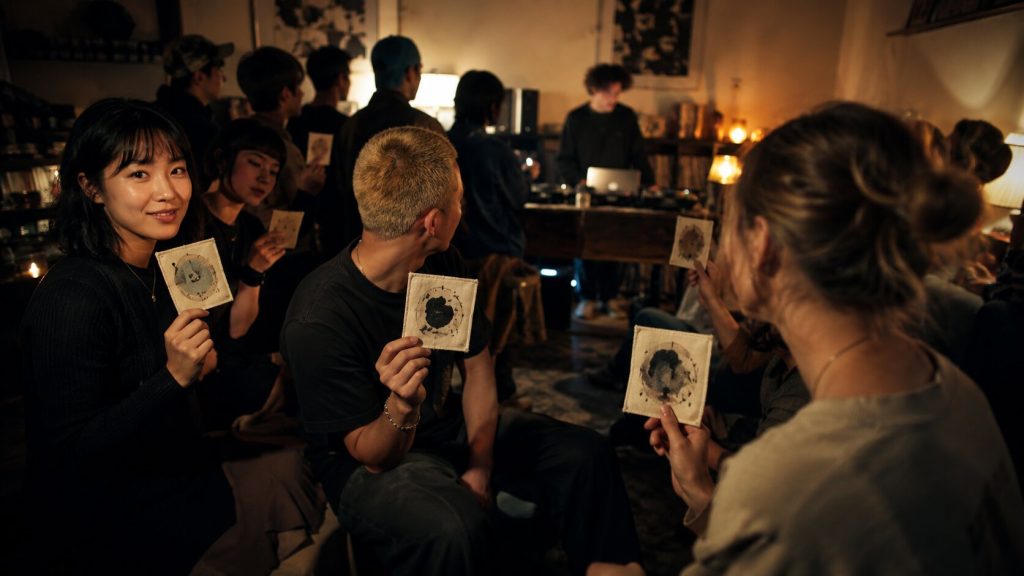
Promotion asks fans to do something for you. Rituals give fans something to belong to.
A ritual can be small: a phrase you say before every show, a weekly demo drop, a recurring fan question, a visual symbol fans use in comments, a release-night livestream, a handwritten note with merch, a specific cover-song format, a private email list name, or a listening-room event before every project.
Rituals are powerful because they create repetition with meaning. Fans begin to recognize not just the music, but the experience of being around the artist.
This is where direct-to-fan platforms matter. Bandcamp describes itself as an online record store and music community where fans discover, connect with, and directly support artists. Whether you use Bandcamp, email, SMS, Discord, Patreon, YouTube memberships, Instagram broadcast channels, or your own website, the strategic point is the same: do not rely only on rented attention from algorithms. (Bandcamp for Artists)
A fan who joins a mailing list, buys merch, attends a show, comments regularly, or shares your music with friends is giving you a stronger signal than a passive like.
Avoid Branding Mistakes That Make Artists Forgettable
Artist branding fails when it becomes either too vague or too artificial. The most common problems are avoidable.
Changing identity every release
Evolution is healthy. Confusion is not. If every song has a totally different visual world, tone, logo, and personality, fans may struggle to connect the dots. Build eras, not random resets.
Copying the surface of bigger artists
Referencing influences is normal. Copying another artist’s poses, fonts, rollout style, captions, or visual world makes you look replaceable. Study why something works, then translate the principle into your own context.
Treating branding as decoration
A logo cannot fix unclear positioning. A photo shoot cannot compensate for weak storytelling. A color palette cannot create fan loyalty by itself. Branding must connect to the songs, values, audience, and experience.
Overexplaining the mystery
Some artists are compelling because they leave space for interpretation. You do not need to explain every lyric, symbol, or image. Give fans enough to enter the world, but leave enough mystery to keep exploring.
Ignoring the boring details
Broken links, outdated bios, low-resolution images, old show dates, mismatched handles, and inconsistent names all weaken trust. These details may not feel creative, but they affect whether industry contacts, playlist editors, press, and fans take you seriously.
How BlockTone Records Can Support Your Artist Brand
A strong artist brand is easier to build when your release strategy, visuals, messaging, and fan development work together. BlockTone Records helps artists think beyond one-off promotion and shape a more coherent presence across music, content, and audience touchpoints.
For independent musicians, that means turning scattered assets into a recognizable artist world: clearer positioning, stronger release presentation, more consistent platform profiles, and a fan experience that feels intentional instead of improvised. Visit blocktonerecords.com to learn more.
FAQs About Building an Artist Brand
What is an artist brand in music?
Do independent artists need branding before they have a large audience?
How often should an artist rebrand?
What should be included in an artist brand kit?
Is artist branding more important than the music?
How can I tell if my artist brand is working?
Can an artist brand be authentic and strategic at the same time?
Sources Used
- IFPI – Global Music Report 2025 revenue announcement
- Apple Music for Artists – Artist Image Guidelines
- Spotify for Artists – Artist Image Guidelines
- Spotify for Artists – Adding a Bio to Your Artist Profile
- Spotify for Artists – Making the Most of Your Artist Profile
- Spotify for Artists – Managing Your Artist Pick
- Bandcamp – Bandcamp for Artists