

Kenny Chesney’s “Carry On”: The Barroom Wisdom Behind the Song
What Is “Carry On” About?
“Carry On” by Kenny Chesney is about choosing joy, freedom, and forward motion while life is still yours to live. On the surface, it sounds like a breezy Key West bar anthem, but underneath the tropical groove is a reminder that time is short, judgment is wasted energy, and happiness is something people have to actively protect.
The song frames its message through a vivid bartender character who seems to have lived enough life to know what matters. Her advice becomes the emotional engine of the track: stop waiting for perfect conditions, stop carrying what cannot go with you, and keep living with open arms.
Background and Release Context
“Carry On” was released on May 8, 2026, as a Kenny Chesney single during the rollout for his new creative chapter with HEY NOW Records. The song page on Chesney’s official site lists “Carry On” as a standalone single release, while later album announcements connect it to the larger Silver Sands Marina era. (Kenny Chesney Official Website)
The track was written by Chase McGill, Matt Jenkins, and Jessi Alexander, and produced by Kenny Chesney with Buddy Cannon. Holler’s song page confirms the writer and producer credits, as well as the May 8, 2026 release date and HEY NOW Records label context. (Holler)
“Carry On” also marked a major radio moment for Chesney. MusicRow reported that the single was added by all 158 country panel stations in its first week, making it Chesney’s biggest add day. (MusicRow)
The song leads into Silver Sands Marina, Chesney’s 21st studio album, announced for release on September 25, 2026. Chesney’s official album announcement describes the title track as the second focus track after “Carry On,” positioning the single as the first major signal of the album cycle. (Kenny Chesney Official Album Announcement)
Musically, “Carry On” blends country with island warmth, reggae undertow, bluegrass color, bright guitars, and a chorus built for communal release. That combination is important because the sound mirrors the message: serious life advice delivered through an easygoing, open-air song.
The Meaning Behind “Carry On”
The deeper meaning of “Carry On” is not simply “keep going” in the generic motivational sense. It is more specific than that. The song says: keep going lightly. Keep going joyfully. Keep going without letting fear, criticism, phones, news, pressure, or regret steal the small pleasures that make life feel real.
That is why the bartender figure matters. She is not presented as someone giving abstract advice from a distance. She is part of a living scene: a Key West bar, drinks, stories, music, aging, memory, and laughter. Her wisdom comes from experience, not theory. She has seen enough people pass through to know that life punishes hesitation as much as recklessness.
Chesney has publicly connected the song to his own outlook. In an official statement, he said the world can feel overwhelming because of phones and news, but people still have their lives “right now” and must find joy in what they can control. (Kenny Chesney Official News)
That comment is crucial because it shows the song is not shallow escapism. It does not pretend pressure is imaginary. Instead, it answers pressure with presence. The track does not say life is easy; it says life is brief enough that joy deserves protection.
The title phrase also carries a double meaning. “Carry on” means to continue, but the lyrics repeatedly play with what people carry: a tune, criticism, memories, burdens, and ultimately nothing permanent. The emotional twist is that the song’s feel-good energy is built on mortality. Because nothing can be taken with us, the song argues, we should live more freely while we can.
Lyrics Breakdown, Section by Section
Verse 1 Meaning
The opening verse introduces a seasoned bartender at Schooner Wharf, a real Key West landmark that Chesney’s official site connects to the song’s visual world and video concept. She is older, confident, still charismatic, and clearly not apologizing for the life she has lived. (Kenny Chesney Official Video Feature)
Emotionally, this verse works like a doorway. The narrator is not just ordering a drink; he is encountering a philosophy. The bartender becomes the kind of stranger who says one thing at the right moment and changes how you see the day.
Her advice about not letting life stand still is the song’s first major message. Movement matters. Not necessarily career movement or ambition, but emotional movement: take the trip, sing the song, say yes to the night, stop letting fear root you in place.
Pre-Chorus Meaning
“Carry On” does not rely on a dramatic, clearly separated pre-chorus in the traditional pop structure. That choice fits the song’s personality. Instead of pausing to build tension, it moves quickly from character sketch into chorus philosophy.
That directness matters. The song does not overthink its own advice. The bartender’s worldview is not complicated, and the arrangement reflects that. The emotional lift comes from the sudden realization that the answer is already simple: live now, laugh now, sing now, and stop asking permission.
Chorus Meaning
The chorus turns the bartender’s advice into a chant. It uses karaoke, Saturday night, bad singing, and naysayers as symbols of ordinary freedom. The point is not musical skill. It is participation. You do not need to be good enough to enjoy your own life.
This is where “Carry On” becomes more than a beach-bar song. It argues that joy can be a form of defiance. Singing badly in public, laughing too loud, ignoring critics, and getting carried away are not presented as childish. They are signs of someone refusing to let self-consciousness win.
The chorus also brings in the song’s most sobering idea: you cannot take anything with you. That thought could make the song dark, but Chesney and the writers flip it into liberation. If nothing lasts forever, then embarrassment matters less. So does judgment. So do the tiny rules people use to shrink themselves.
Verse 2 Meaning
The second verse expands the bartender from a colorful local character into someone almost mythic. References to Elvis and Penny Lane give her life a cinematic quality. Whether the stories are literal or exaggerated is less important than what they represent: she has lived close to music, romance, risk, and legend.
Penny Lane evokes the archetype of the free-spirited woman who moves through music history collecting stories, not possessions. Elvis evokes old American glamour, charisma, and the mythology of celebrity. By placing the bartender near those references, the song suggests that ordinary people can carry extraordinary histories.
The detail of the shift ending also matters. She does not deliver a grand speech from a stage. Her wisdom arrives on a bar tab, in passing, almost casually. That makes the song feel more believable. Some of life’s most important advice does not arrive with ceremony.
Bridge Meaning
The bridge reduces the song’s worldview to a blunt emotional rule: follow what brings life, and leave what does not. Chesney has pointed to this bridge in public comments as part of the song’s core message, saying the idea is simple but deeply true. (Kenny Chesney Official News)
This is not a call for selfishness. In context, it is about clarity. If something fills you with joy, connection, music, adventure, or peace, lean toward it. If something drains your spirit, feeds anxiety, or keeps you trapped in judgment, let it go.
The bridge works because it sounds like something a bar philosopher would actually say. It is direct, memorable, and almost too simple, which is exactly why it lands.
Outro Meaning
By the outro, the narrator has moved from listening to accepting. The final emotional shift is subtle but important: the song’s advice is no longer just the bartender’s philosophy. It becomes the narrator’s commitment.
That is why the ending feels warm rather than explosive. The song does not resolve a plot in a traditional way. Instead, it passes a torch. One person who has lived freely gives a younger listener permission to do the same.
Hidden Meanings, Metaphors, and Symbolism
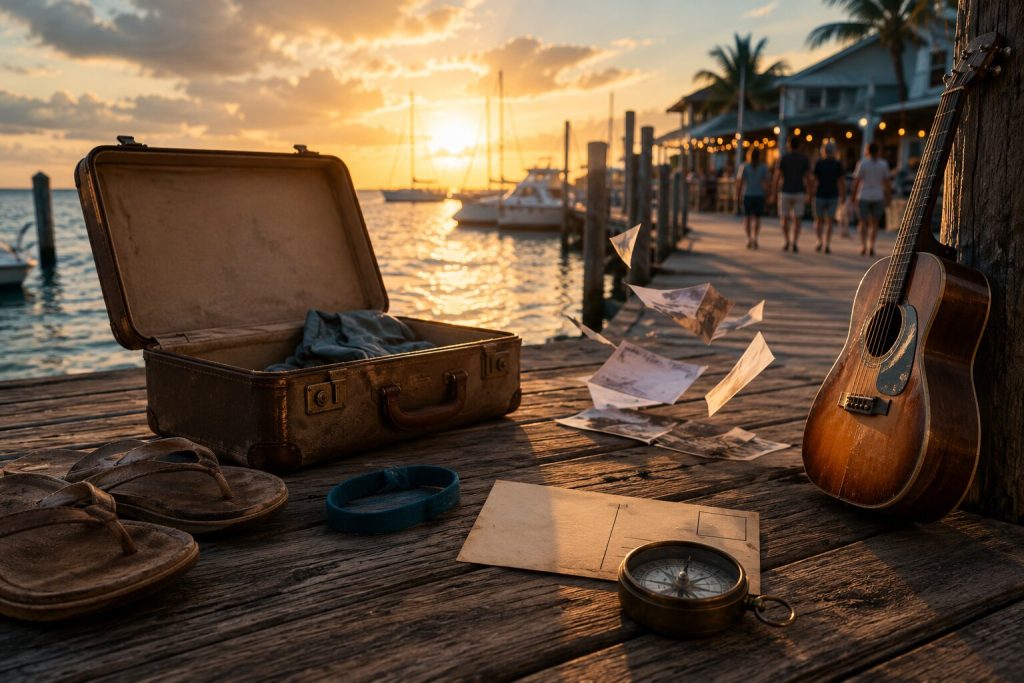
The biggest symbol in “Carry On” is the bartender. She represents lived wisdom, aging without surrendering joy, and the kind of freedom that comes from no longer needing approval. She is not just a person in a bar; she is the song’s moral compass.
Schooner Wharf and Key West symbolize a different rhythm of life. Chesney has said the “Carry On” video was meant to show Key West beyond the tourist surface, describing it as a place where wisdom can be found if people listen. (Kenny Chesney Official Video Feature)
In that sense, Key West becomes more than scenery. It is a place where people loosen their grip on status and remember what makes them happy.
Karaoke symbolizes imperfect participation. The song is not interested in polished performance. It celebrates the person brave enough to sing anyway. That makes the chorus especially effective for Chesney’s live audience, because it turns the crowd itself into part of the message.
The repeated word “carry” is the lyrical hinge. It moves from playful to existential. You carry a tune, carry on, get carried away, carry burdens, and then face the truth that you cannot carry possessions into the end. The wordplay gives the song more depth than its sunny surface first suggests.
The peace-sign detail also fits the song’s emotional world. It suggests a small blessing, a casual goodbye, or a tiny symbol of acceptance. The bartender does not need to preach. She leaves a mark and moves on.
Is the Song Based on a Real Person or Event?
There is no verified evidence that “Carry On” is based on one specific real-life bartender in a literal biographical sense. The lyrics create a vivid character, and Chesney has strongly connected the song’s atmosphere to Schooner Wharf, Key West, and the kind of people who embody that world. (Kenny Chesney Official News)
The official video context adds another real-world layer. Chesney’s site says the video was filmed around Key West and includes David Wegman, the artist and sailor connected to Chesney’s memoir Heart Life Music. (Kenny Chesney Official Video Feature)
Still, the bartender herself should be treated as a lyrical character unless Chesney or the writers confirm a direct real-life model.
How This Song Fits Into Kenny Chesney’s Catalog
“Carry On” fits naturally into Kenny Chesney’s long-running fascination with freedom, coastal life, memory, and joy as a survival strategy. It sits near songs like “No Shoes, No Shirt, No Problems,” “American Kids,” “Get Along,” “Save It for a Rainy Day,” and “Here and Now,” but it has its own sharper philosophical edge.
Like many Chesney songs, it sounds relaxed while carrying a serious emotional idea. The beach-bar setting might suggest escape, but Chesney often uses escape as a way to talk about perspective. In “Carry On,” the island imagery is not just decoration. It becomes a spiritual setting where the narrator remembers how to live.
The song also arrives at a meaningful career moment. It is the first major single of Chesney’s HEY NOW Records era and a gateway into Silver Sands Marina, his 21st studio album. (Kenny Chesney Official Album Announcement)
As a result, “Carry On” does not feel like a reinvention. It feels like Chesney refining a message he has carried for years: life is brief, music brings people together, and joy is worth chasing on purpose.
Final Thoughts
“Carry On” is best understood as a sunny song with a shadow behind it. Its chorus feels made for summer nights, but its real power comes from the knowledge that those nights do not last forever. Kenny Chesney turns that truth into something generous rather than gloomy.
The song resonates because it gives listeners permission to be imperfectly alive. Sing badly. Ignore the naysayers. Stay open. Let go of what weighs you down. Keep moving while there is still time.
That is the heart of “Carry On”: not pretending life is easy, but choosing joy anyway.
FAQs About “Carry On”
What does “Carry On” mean in Kenny Chesney’s song?
Who wrote “Carry On” by Kenny Chesney?
Is “Carry On” based on a true story?
What is the chorus of “Carry On” about?
What album is “Carry On” from?
What genre is “Carry On”?
Why does Key West matter in “Carry On”?
Sources Used
- Kenny Chesney Official Website – “Carry On” song page
- Kenny Chesney Official News – “Carry On” release commentary
- Kenny Chesney Official News – “Carry On” Key West video feature
- Kenny Chesney Official News – Silver Sands Marina album announcement
- Holler – “Carry On” lyrics, credits, and meaning
- MusicRow – Kenny Chesney’s “Carry On” radio add-day report