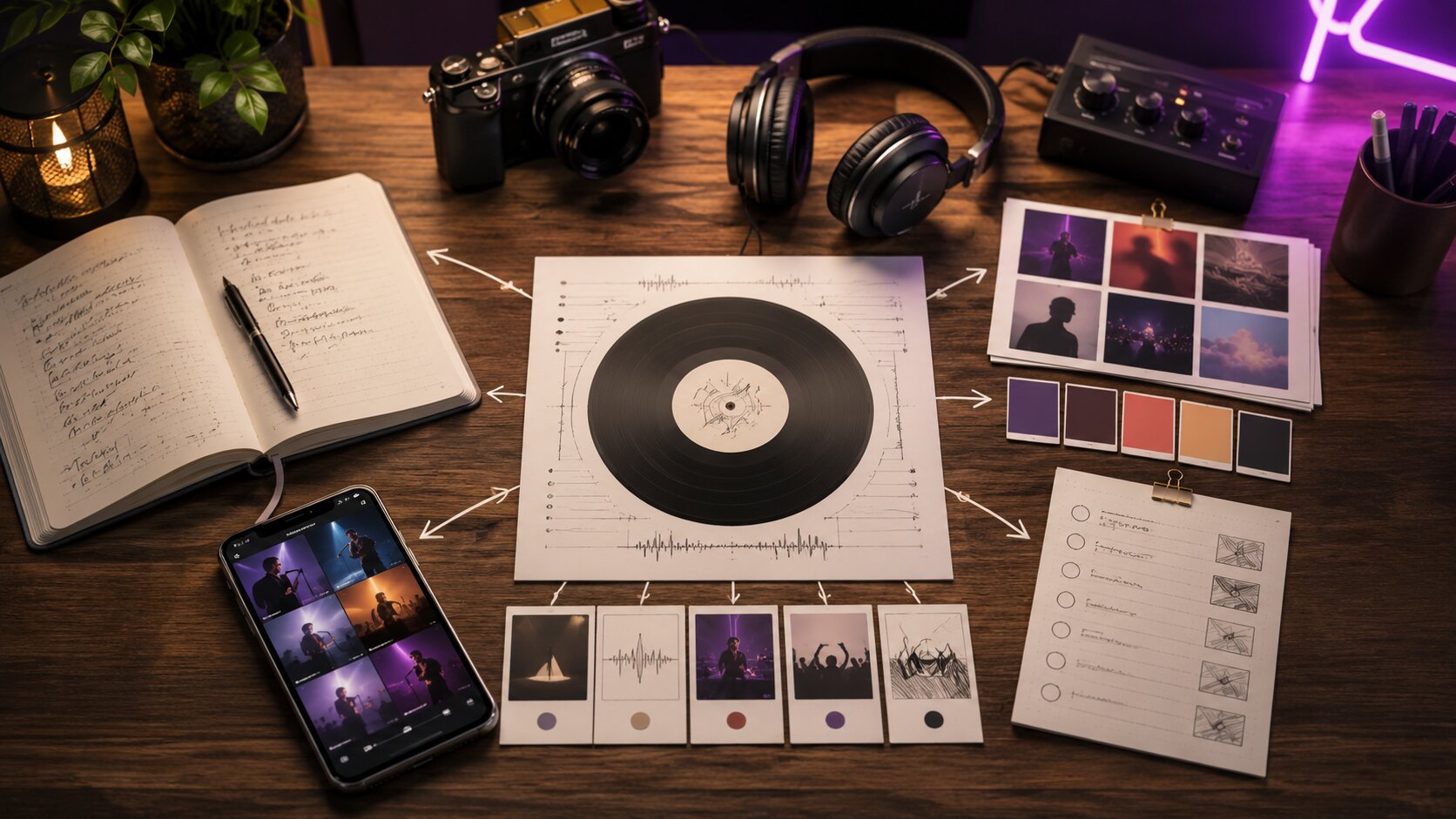
Make 20 Pieces of Content From One Song
One song can become a full content campaign if you stop treating it as only an audio file. A finished track contains hooks, lyrics, production choices, visual ideas, personal stories, fan prompts, behind-the-scenes moments, and platform-specific assets. The goal is not to post the same clip twenty times. The goal is to create twenty different reasons for people to care about the same release.
For independent artists, this matters because most release campaigns end too early. Many musicians post the cover art, announce that the song is out, share a streaming link, and then move on. That approach leaves a lot of promotional value unused, especially on platforms where fans discover music through short-form video, visual storytelling, creator tools, and direct artist updates.
Modern music promotion works best when the song becomes a repeatable content system. Spotify supports short vertical Clips that can be tagged to music, while Canvas gives artists a short looping visual in the Now Playing experience. These tools show that streaming platforms now expect more than a static upload. (Spotify for Artists – Clips)
This guide breaks down how to turn one song into twenty useful pieces of content for TikTok, Instagram Reels, YouTube Shorts, Spotify, email, Stories, and direct fan engagement without making the campaign feel repetitive or forced.
Start With the Song’s Content Spine
Before making twenty posts, identify the song’s content spine. This is the central idea that connects every asset in the campaign. It is not just the genre or mood. “Pop song,” “rap single,” or “indie release” is too broad. A content spine should describe the emotional or cultural reason someone might care.
For example, your content spine might be: “a late-night breakup song about realizing you were the problem,” “a club track built around one bass drop and one chantable phrase,” or “an acoustic track for people who miss someone but will not text them.” A sentence like that immediately gives you direction for captions, visuals, lyric posts, short videos, and fan prompts.
The mistake many artists make is opening the camera before deciding the campaign angle. That leads to random content: one studio clip, one cover reveal, one “out now” post, and maybe one performance video. The posts may look fine individually, but they do not build a recognizable world around the song.
To find the spine, ask four practical questions:
- What is the most attention-grabbing moment in the song?
- What lyric, sound, or emotion would make someone stop scrolling?
- What story makes the track more meaningful?
- What action do you want listeners to take: save, comment, share, stream, duet, or join your list?
Once those answers are clear, content creation becomes less about guessing and more about adapting the same strong idea into different formats.
Use Five Angles to Create Twenty Ideas
The easiest way to make twenty content pieces from one song is to create five core angles and build four variations from each. This keeps the campaign focused while avoiding the feeling that every post is saying the same thing.
1. The Hook Angle
The hook is the most replayable part of the song. It could be the chorus, drop, opening line, guitar riff, drum fill, vocal phrase, or instrumental texture. Use this angle for short-form videos where the first few seconds matter most.
Possible content pieces include a chorus teaser, a “wait for the hook” video, a live performance of the hook, or a split-screen clip comparing the demo hook with the final version.
2. The Story Angle
Story content gives listeners a reason to connect with the track before they know you. The story does not need to be dramatic. It needs to be specific. A simple line like “I wrote this after moving out of my first apartment” is usually stronger than a vague caption about emotions.
Use this angle for talking-head videos, caption-led Reels, email notes, Instagram Stories, and short behind-the-song posts.
3. The Lyric Angle
A strong lyric can become a carousel, Reel, TikTok, Story sticker, visualizer, or short explanation video. Focus on one line instead of trying to promote the entire song at once. The best lyric content makes the listener think, “That sounds like me.”
4. The Process Angle
Process content works because it shows craft. Producers can break down drums, samples, synths, or vocal layers. Singers can show harmonies, warmups, or alternate takes. Bands can show rehearsal footage, arrangement changes, or live-room moments.
This angle is especially useful for attracting other musicians, producers, and serious fans who enjoy seeing how a song is built.
5. The Fan Action Angle
Not every post should only say “stream now.” Some posts should invite participation. Examples include “Use this sound for your late-night walk video,” “Comment the lyric you relate to most,” or “Duet this if you can add a harmony.”
TikTok’s Add to Music App feature is relevant here because it helps users save songs they discover on TikTok to music streaming services. TikTok has described the feature as a way to connect music discovery with listening behavior outside the app. (TikTok Newsroom – Add to Music App)
The 20-Piece Content Map for One Song
Use this map as a practical release campaign framework. You do not need twenty expensive shoots. You can build most of these assets from one vertical video session, one cover artwork file, a few behind-the-scenes clips, and a clear lyric document.
| Content Piece | Best Format | Purpose |
|---|---|---|
| Hook teaser | TikTok, Reels, Shorts | Introduce the strongest 5–15 seconds of the song. |
| Lyric reveal | Carousel or short video | Make one memorable line easy to share. |
| Story behind the song | Talking-head video | Give listeners emotional context. |
| Demo vs final version | Split audio/video clip | Show how the track developed. |
| Studio performance | Vertical live clip | Show personality and musicianship. |
| Acoustic or stripped version | Short video | Reframe the song in a more intimate way. |
| Producer breakdown | Screen recording or studio clip | Highlight drums, bass, vocals, or arrangement. |
| Hidden detail post | Reel, Short, or carousel | Encourage people to listen again. |
| Cover art reveal | Still post or animated visual | Build the visual identity of the release. |
| Moodboard carousel | Instagram carousel | Show the world, colors, and feeling of the song. |
| Canvas-style loop | Spotify Canvas or vertical loop | Create a visual companion for streaming. |
| Spotify Clip | Spotify for Artists vertical video | Connect the story or hook directly to the track. |
| YouTube Shorts performance | Short vertical video | Reach music listeners on YouTube. |
| Fan prompt | TikTok or Reel | Invite comments, duets, stitches, or shares. |
| “Who this song is for” post | Talking-head or caption video | Help the right listener self-identify. |
| Release-day announcement | Multi-platform post | Make the song easy to find and save. |
| Email to fans | Newsletter | Speak directly to your warmest audience. |
| Direct-support post | Email, Bandcamp, or social post | Invite purchases, merch interest, or deeper fan support. |
| Reaction or comment repost | Story, Reel, or Short | Use real audience response as social proof. |
| Post-release reminder | Short video or carousel | Keep the song alive with a fresh angle. |
The key is not to publish everything at once. Spread these pieces across your pre-release phase, release week, and post-release campaign. A song needs multiple touchpoints before a casual viewer becomes a listener.
Adapt Each Idea to the Platform
The same song idea can work across TikTok, Instagram Reels, YouTube Shorts, Spotify, and email, but the execution should change. Lazy reposting makes a campaign feel flat. Smart adaptation makes one idea feel native in several places.
TikTok
On TikTok, focus on participation, mood, and repeatable formats. A strong TikTok post should make sense to someone who has never heard of you. Instead of only saying “my new song is out,” try framing the clip around a situation: “This is for anyone pretending they are fine after midnight.”
Instagram Reels
For Reels, prioritize clear visuals, strong first frames, and captions that help the viewer understand the emotional context quickly. Meta has also introduced an Instagram Best Practices hub to guide creators on creation, reach, engagement, and monetization. (Meta – Instagram Best Practices Hub)
YouTube Shorts
YouTube Shorts can support music discovery, performance clips, behind-the-scenes edits, and longer artist storytelling. YouTube’s artist resources include guidance around Shorts, videos, release strategy, Live, and analytics, making Shorts useful as part of a broader artist channel rather than a standalone trend tool. (YouTube for Artists – Resources)
Spotify
Spotify should not be treated only as the final listening destination. Clips, Canvas, playlist pitching, and artist profile tools can all support a release. Spotify says artists can pitch an unreleased song through Spotify for Artists, and pitching at least seven days before release can get the song added to followers’ Release Radar playlists, although editorial playlist placement is not guaranteed. (Spotify Support – Pitching Music to Playlist Editors)
Email is where you can speak to fans without fighting the feed. Keep it personal and direct. Share why the song exists, include one listening link, and invite one action. Do not turn the email into a full press release unless your audience expects that format.
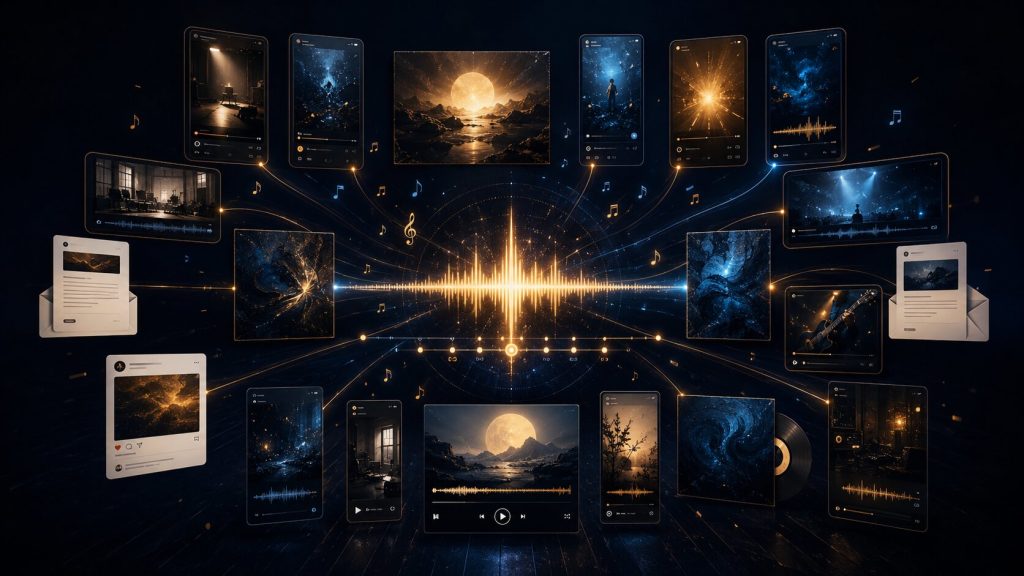
Turn One Shoot Into a Full Asset Kit
You do not need a large production budget to make twenty content pieces. You need a reusable asset kit. Plan one focused shoot and capture enough variations to serve multiple platforms.
A simple one-song asset kit can include:
- Five vertical performance clips.
- Three talking-head clips explaining the song.
- Two behind-the-scenes clips from writing, recording, rehearsal, or mixing.
- Five still photos.
- One cover artwork file.
- One short looping visual for Spotify Canvas-style content.
- Three lyric lines prepared as text overlays.
- One clean streaming link or smart link.
- One short artist note for captions and email.
Shoot vertically first. You can crop vertical footage into square assets later, but it is much harder to make horizontal footage feel natural on vertical-first platforms. Record clean audio where possible, especially for performance content. A strong visual with poor sound can weaken the impression of the song.
Prepare caption variations in advance so every post does not feel like the same announcement. You can write one emotional caption, one direct release caption, one process caption, one fan prompt, and one question-based caption. This gives you flexibility without starting from zero every time.
Post in Phases Instead of One Big Burst
A good release campaign has phases. Each phase gives your content a different job.
Tease the Song Before It Is Out
The pre-release phase should build curiosity. Use hook snippets, lyric fragments, studio clips, visual mood posts, and short explanations. The goal is to make the song feel familiar before people are asked to stream it.
Make Release Day Clear and Simple
On release day, do not be subtle. Tell people what is out, where they can hear it, and what action you want them to take. Use your strongest hook video, a direct announcement, an email, and Stories with a link.
Apple Music for Artists provides promotional tools including customizable assets, links, badges, logos, QR codes, and milestone-sharing options that artists can use when promoting releases. (Apple Music for Artists – Promote Your Music)
Prove That the Song Is Connecting
After release day, show that the track is alive. Share real comments, fan videos, playlist adds, behind-the-scenes reactions, acoustic versions, or a post explaining the lyric people are responding to. Keep this honest. One real listener comment is more useful than fake hype.
Extend the Campaign With New Angles
Many artists stop too early. A song can keep generating content weeks after release if you introduce new angles. Try posts such as “the lyric I almost cut,” “how I would perform this live,” “the hidden vocal layer in the chorus,” or “what this song means to me now that it is out.”
Direct fan platforms can also help extend a campaign. Bandcamp’s artist guide highlights follower notifications, fan messaging, and direct artist-to-fan relationships, which can be useful for artists who want deeper engagement beyond algorithmic feeds. (Bandcamp – Artist Guide)
Measure Each Content Piece by Its Job
Not every post should be judged by views. A hook teaser, lyric carousel, email, Spotify Clip, and production breakdown all have different purposes. If you measure everything by the same number, you may misunderstand what is actually working.
| Content Type | Main Goal | Useful Signals |
|---|---|---|
| Hook video | Discovery | Views, watch time, replays, saves |
| Lyric post | Emotional connection | Shares, saves, comments |
| Story behind the song | Artist identity | Comments, follows, profile visits |
| Process breakdown | Credibility | Saves, detailed comments, niche engagement |
| Release announcement | Conversion | Clicks, streams, saves |
| Direct fan action | Opens, clicks, replies | |
| Fan prompt | Participation | Comments, duets, stitches, shares |
The mistake to avoid is deleting or abandoning posts too quickly because they did not go viral. Some content is designed to deepen connection, not create a huge spike. A small post that brings serious listeners closer to the song can still be valuable.
How Blocktone Records Can Help Artists Build Smarter Release Campaigns
Blocktone Records can use a system like this to help independent artists turn each release into a structured campaign rather than a one-day announcement. The value is not only in making more posts, but in building a release narrative: the sound, the story, the visuals, the platform plan, and the follow-up.
For artists without a large team, this approach makes promotion more manageable. One song becomes a month of useful content, and every asset has a job: attract attention, explain the song, invite participation, drive saves, or strengthen the artist’s identity.
FAQs About Making 20 Pieces of Content From One Song
How many posts should I make for one song?
Should I post the same music video clip everywhere?
What is the best content piece to start with?
Can I make 20 pieces of content without showing my face?
How early should I start posting before a song release?
What if my song content does not perform well at first?
Should every post include a streaming link?
Sources Used