
Noah Kahan’s “End of August” Is a Hometown Ghost Story About Change
What Is “End of August” About?
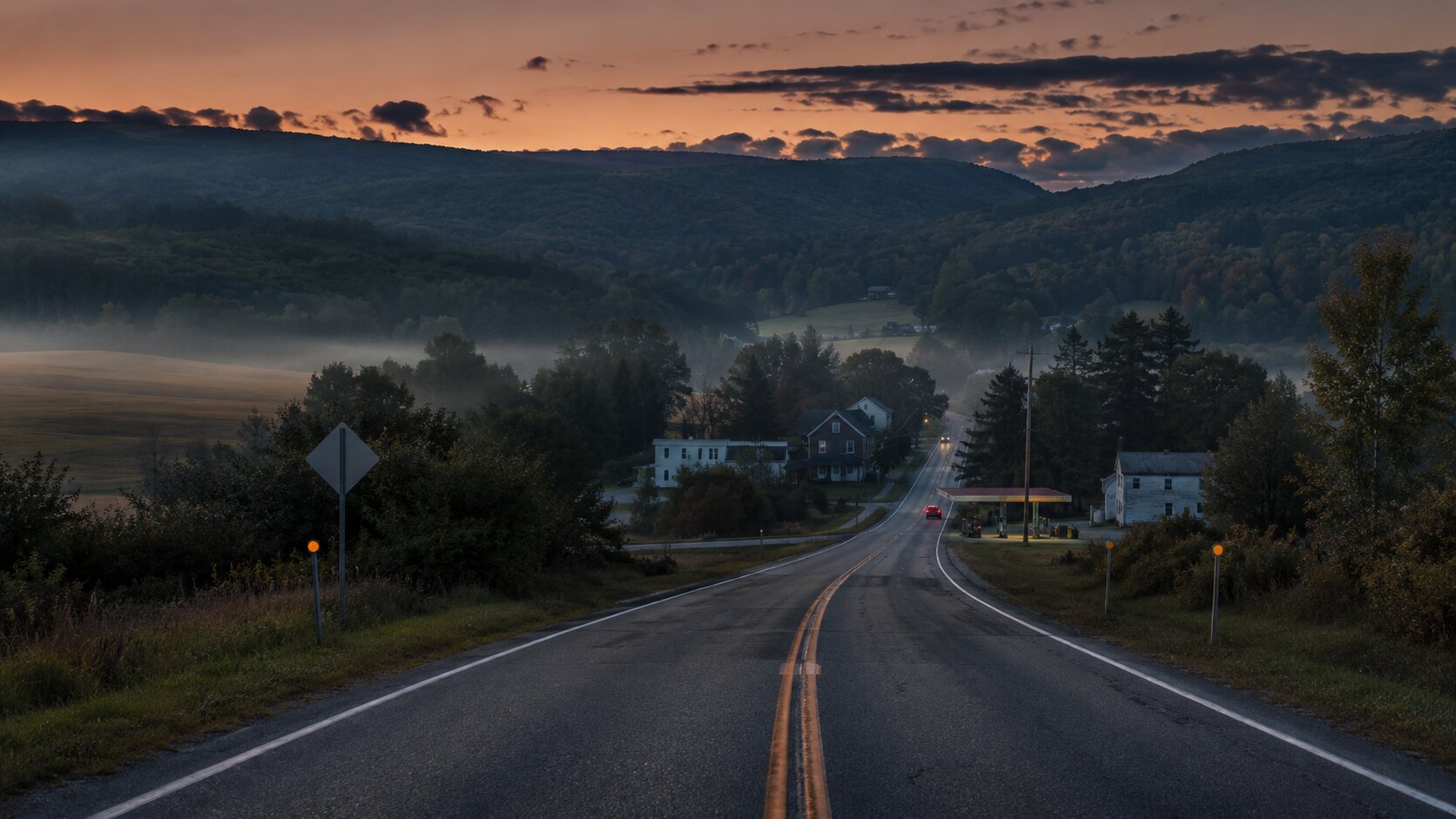
“End of August” is about the uneasy moment when summer gives way to fall and a familiar hometown starts to feel both intimate and unreachable. Noah Kahan uses late-summer Vermont imagery to explore change, sobriety, memory, class tension, and the complicated feeling of belonging to a place that no longer feels entirely yours.
At its core, the song is not only about a season ending. It is about the end of a younger version of the narrator: someone who knows the roads, recognizes the local codes, resents the outsiders, and still feels haunted by the same emotional patterns he hoped he had outgrown.
Background and Release Context
“End of August” appears as the opening track on Noah Kahan’s album The Great Divide. The official album listing places the song first on the standard edition, setting it up as the entry point into a record centered on home, distance, family, memory, and the emotional geography of Vermont. (Noah Kahan Official Store)
The extended digital edition, The Great Divide: The Last Of The Bugs, also includes “End of August” as the opening track. That placement matters because the song works like a thesis statement for the album: it begins with a town, a season, and a narrator trying to understand what remains after time changes everything. (Noah Kahan Official Store)
Song credit data lists Noah Kahan and Aaron Dessner as the writers of “End of August,” with Kahan and Dessner credited as producers and Gabe Simon as additional producer. The recorded instrumentation includes vocals, piano, background vocals, drums, trombone, acoustic guitar, and fiddle, which helps explain the track’s expansive but still earthy folk-pop texture. (Shazam)
Kahan has described the song in connection with Vermont at the end of summer, when tourists leave and year-round locals feel the town returning to them. That context is essential: the song’s seasonal setting is not decorative. It is part of the emotional engine of the track. (The Sun)
The Meaning Behind “End of August”
The central meaning of “End of August” lies in the tension between attachment and alienation. The narrator belongs to the town deeply enough to know its roads, its habits, and its seasonal rhythms, but that belonging does not bring comfort. Instead, the place becomes a mirror for everything unresolved: addiction, aging, local resentment, economic strain, and the fear that life has narrowed into repetition.
The title works as a threshold image. The end of August is still warm, but fall is already approaching. It is not yet winter, but the loss has begun. In the song, that seasonal transition becomes a metaphor for emotional change: the narrator is standing at the edge of something, aware that the softness of summer cannot last.
There is also a strong thread of sobriety and mental health running through the song. The lyrics refer to getting sober and later to medication, but the track does not reduce those subjects to a simple message. Instead, it captures a dangerous emotional ambiguity: the feeling that intensity can be mistaken for healing, and that being “alive” can sometimes feel inseparable from instability.
The result is a song about home that refuses easy nostalgia. Kahan’s Vermont is beautiful, but it is also politically tense, economically complicated, and emotionally loaded. The narrator loves the town enough to defend it, but he also sees clearly how it traps, judges, and changes the people who remain.
Lyrics Breakdown, Section by Section
Verse 1 Meaning
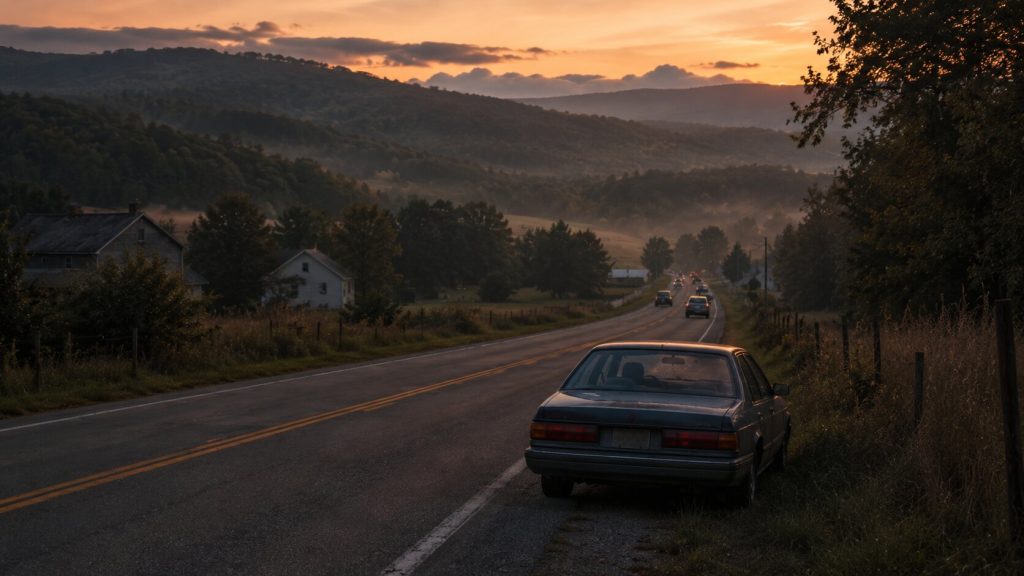
The first verse begins with the intimacy of local movement: people in a car, familiar roads, and a landscape that seems to hold shared history. This is a classic Noah Kahan setup. Instead of introducing a dramatic plot, he begins with ordinary geography and lets it carry emotional weight.
As the verse develops, the setting becomes more judgmental. The trees and roads feel almost like witnesses. The narrator seems aware that people in the town talk, complain, repeat old habits, and fail to act on what they know. The place is not passive; it watches and remembers.
The verse also introduces the song’s darker emotional stakes. References to aging, local politics, and sobriety shift the scene from small-town observation into self-examination. The narrator is not only asking what has happened to the town. He is asking what has happened to him.
Chorus Meaning
The chorus widens the song’s emotional frame. The landscape is moving toward death in the seasonal sense: fields will freeze, roads will harden, and summer’s temporary brightness will disappear. Yet the chorus is not simply bleak. It also contains an offer of protection and insider knowledge.
That offer is important because it shows how belonging works in the song. To belong is not just to love the town abstractly. It means knowing how to move through it, how to avoid trouble, how to bend rules, and how to help someone else survive the same roads.
The repeated idea of “our town” carries more than pride. It sounds protective, but also defensive. The narrator’s claim over the town may be emotionally true, but it also feels fragile, as if he has to repeat it because he senses that the town is slipping away.
Verse 2 Meaning
The second verse turns toward outsiders, especially through the image of out-of-state plates and tourists leaving. On the surface, this section captures local irritation with seasonal visitors. Beneath that, it points to a deeper anxiety about ownership, class, and belonging.
Tourists come and go, but locals remain with the consequences of a place being consumed as scenery. The narrator’s resentment is not only about traffic or inconvenience. It is about watching a hometown become someone else’s temporary experience while the people rooted there continue carrying its daily weight.
The verse’s reference to medication makes the seasonal transition feel psychologically charged. September is not only the start of fall; it becomes a moment when the narrator considers changing the fragile structures that help him stay stable. The external landscape and internal landscape are shifting at the same time.
Bridge Meaning
The bridge gives the song its sharpest social dimension. The town becomes more than a personal memory; it becomes a place shaped by extraction, labor, and inherited patterns. Images connected to natural resources and generational repetition suggest a community that has been used, built over, and mythologized by others.
Kahan’s writing here is especially pointed because it complicates the romantic idea of rural New England. The song does not present Vermont only as a postcard. It asks who works there, who profits from its beauty, who can afford to stay, and who ends up building homes for people with more money than history in the place.
This bridge reframes the irritation toward tourists as something larger than local grumbling. It becomes a critique of how beautiful places can be economically transformed until the people most connected to them are pushed into service roles or priced out of the future.
Outro Meaning
The outro returns to the question of possession. The repeated claim that the town belongs to “us” sounds both proud and wounded. It is less a legal claim than an emotional one: a claim based on memory, routes, grief, work, family, and pain.
By grounding the ending in a specific place, the song avoids becoming vague Americana. It stays local, even as its emotional meaning broadens. The narrator can name the town, but naming it does not restore what has been lost. That is why the ending feels less like closure than a shadow.
Hidden Meanings, Metaphors, and Symbolism
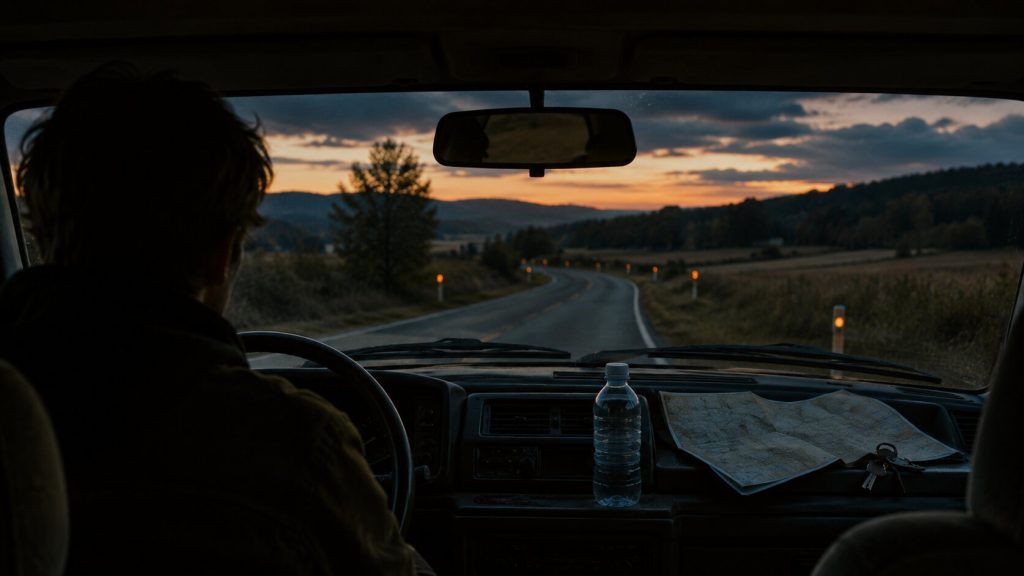
The end of August is the song’s central symbol. It represents a moment when loss has already started but has not fully arrived. Summer is still visible, yet its disappearance is certain. That makes the season a powerful metaphor for aging, sobriety, nostalgia, and emotional instability.
The car functions as another major symbol. It gives the narrator movement without true escape. He can drive familiar roads, follow tourists toward the county line, offer someone a ride, or move through local shortcuts, but emotionally he remains trapped inside the same landscape.
Roads, traffic lights, county lines, plates, and winter reflectors all create a map of belonging. These are ordinary details, but in the song they become signs of local knowledge. Outsiders see infrastructure; the narrator sees memory, identity, and rules that only locals fully understand.
Medication and sobriety operate as inner weather. Just as Vermont moves from late-summer warmth toward winter, the narrator’s mind moves through uncertainty, intensity, temptation, and fear. The song suggests that emotional change can feel as seasonal and uncontrollable as the weather.
Is the Song Based on a Real Person or Event?
There is no confirmed evidence that “End of August” is about one specific person or one single event. The named figures and local details may draw from real life, fictionalization, or composite memory, but Kahan has not publicly explained the song as a direct biographical account of one relationship or incident.
What is confirmed is the broader context: the song is closely tied to Vermont, late summer, and the emotional experience of a town changing after tourists leave. That makes it personal in atmosphere and perspective, even if the exact storyline should not be treated as documented autobiography.
How This Song Fits Into Noah Kahan’s Catalog
“End of August” fits naturally into Noah Kahan’s broader catalog because it returns to several of his defining subjects: New England, mental health, family systems, local identity, self-scrutiny, and the painful magnetism of home. Like many of his strongest songs, it makes a specific place feel emotionally universal.
Compared with the most anthemic moments of the Stick Season era, however, “End of August” feels more layered and unsettled. It is less about turning heartbreak into a communal singalong and more about standing inside a familiar place long enough to see its contradictions clearly.
The production also helps connect the song to a broader, more expansive album world. Aaron Dessner’s involvement brings a textured, patient quality that suits the song’s reflective structure, while Gabe Simon’s continued presence links the track back to the emotional directness associated with Kahan’s earlier breakthrough work. (Shazam)
In the context of The Great Divide, the song works as an opening argument. It introduces an album concerned with distance: distance from home, from childhood, from older versions of the self, and from the people and places that shaped the artist before success changed the view.
Final Thoughts
“End of August” is one of Noah Kahan’s most revealing hometown songs because it refuses to make home simple. Vermont is not just a comforting backdrop. It is beautiful, frustrating, economically strained, politically repetitive, emotionally sacred, and full of ghosts.
The most convincing reading of the song is that Kahan is exploring what happens when the season changes and the distractions leave. The tourists go home, the roads empty out, winter approaches, and the narrator is left with the hard question underneath the scenery: what does it mean to belong to a place that keeps changing, especially when you have changed too?
FAQs About “End of August”
What does “End of August” mean in Noah Kahan’s song?
Who wrote “End of August”?
Who produced “End of August”?
What album is “End of August” from?
Is “End of August” based on a true story?
What is the chorus of “End of August” about?
Why does “End of August” mention tourists and out-of-state plates?
Sources Used
- Noah Kahan Official Store – The Great Divide standard album listing
- Noah Kahan Official Store – The Great Divide: The Last Of The Bugs digital extended album listing
- Shazam – “End of August” song page and credits
- The Sun – Noah Kahan interview feature discussing The Great Divide and “End of August”
- Pitchfork – Review of Noah Kahan’s The Great Divide