


Step-by-step guide to exploring new music and artists
You hit play on yet another playlist and realize you’ve heard every single track before. That hollow feeling of musical déjà vu is more common than you think, and it’s not your fault. Streaming algorithms are designed to keep you comfortable, not curious. But real music discovery, the kind that gives you chills and introduces you to an artist who feels like they were made for your ears, requires a little more intention. This guide walks you through a practical, joyful roadmap for finding new music and emerging artists, step by step, with tools and strategies that actually work.
Table of Contents
- Why step-by-step music exploration matters
- What you need: Tools, apps, and preparation
- Step-by-step: Your music discovery blueprint
- Go deeper: Advanced and data-driven exploration
- Common pitfalls and how to verify your discoveries
- A fresh take: Hybrid strategies beat the algorithm every time
- Discover more with BlockTone Records
- Frequently asked questions
Key Takeaways
| Point | Details |
|---|---|
| Blend exploration methods | Combining algorithmic and human-curated sources leads to a richer and more diverse discovery experience. |
| Track your discoveries | Keep a playlist and log to organize new finds and monitor your evolving musical taste. |
| Go beyond algorithms | Engaging with artist profiles, live events, and niche platforms uncovers hidden gems and reduces boredom. |
| Verify new finds | Use analytics tools and community feedback to confirm genuine quality and avoid repetitive listening. |
Why step-by-step music exploration matters
Let’s start by understanding why a guided exploration process makes a real difference. Most of us rely on a single platform’s recommendations and call it discovery. But that’s a bit like eating at the same restaurant every week and wondering why food feels boring. Algorithms are built to predict what you already like, not to surprise you with something genuinely new.
The numbers back this up. 63% of listeners report feeling bored with their playlists within a month when they rely solely on algorithmic suggestions. That’s not a personal failure. It’s a structural one. Algorithms optimize for engagement, not exploration.
The good news is that blending multiple discovery methods changes everything. Users who combine algorithmic tools with human curation and live experiences report richer, more emotionally satisfying musical journeys. In fact, people who mix their methods achieve 25% more genre exploration over six months compared to single-method listeners.
Here’s what a step-by-step approach gives you:
- Diversity: You break out of the filter bubble and encounter genuinely unfamiliar sounds.
- Community: You find fans and artists who share your curiosity, not just your taste.
- Growth: Your musical palette expands, making every listening session feel like a small adventure.
- Connection: Platforms focused on connecting independent artists bring you closer to the people behind the music.
When you discover new music with intention, you stop being a passive listener and become an active explorer. That shift is where the real joy begins.
What you need: Tools, apps, and preparation
Now that you see the benefit, here’s what you’ll need before diving into exploration. Think of this as packing your bag before a road trip. The right tools make the journey smoother and a lot more fun.
Start by setting up a digital music discovery profile. A step-by-step guide for music discovery recommends configuring your Spotify preferences carefully so the platform’s personalized recommendations actually reflect your curiosity, not just your habits. Spend ten minutes rating songs and following artists you genuinely love. That small investment pays off in smarter suggestions.
But don’t stop at Spotify. Here’s a quick comparison of the major platforms:
| Platform | Best for | Cost |
|---|---|---|
| Spotify | Algorithmic playlists, Discover Weekly | Free/Premium |
| Bandcamp | Indie and underground artists | Free to browse |
| SoundCloud | Raw, emerging talent | Free/Go+ |
| Pitchfork | Editorial curation and reviews | Free |
| Newsletters | Niche genre deep dives | Varies |
Curated playlists and algorithmic suggestions each have a role. Algorithms are fast and personalized. Curated lists bring human taste, context, and surprise. Use both. You can also dig for music beyond the major platforms to uncover artists who haven’t been absorbed into the mainstream yet.
Beyond apps, build your discovery ecosystem with these:
- Artist profiles: Follow artists directly and maximize artist profiles to stay updated on new releases.
- Community groups: Reddit threads, Discord servers, and Facebook groups dedicated to specific genres are goldmines.
- Newsletters: Substack writers and music blogs deliver curated finds straight to your inbox weekly.
Pro Tip: Set a recurring calendar reminder every Sunday to check one new newsletter or blog. Consistency turns casual browsing into genuine discovery.
Step-by-step: Your music discovery blueprint
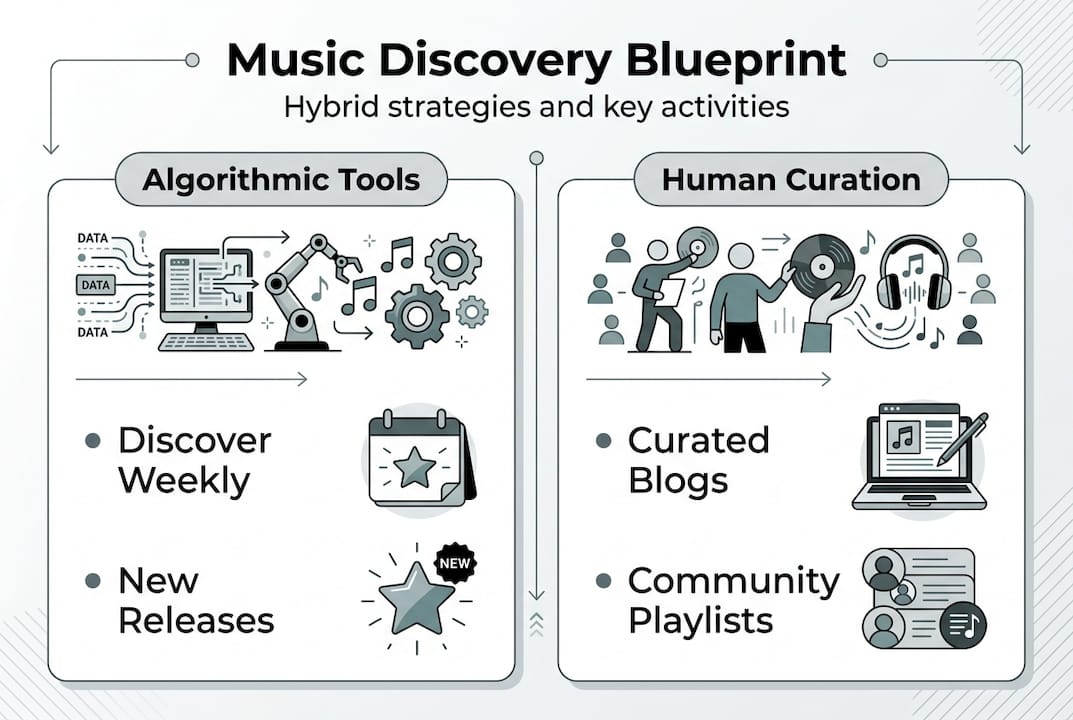
With your tools in place, follow this systematic blueprint to maximize your results. Think of it as a five-stage journey, each building on the last.
- Build your digital profile. Spend time on Spotify, Bandcamp, and SoundCloud setting preferences, following artists, and rating tracks. A well-built profile trains the algorithm to serve you better.
- Curate a discovery playlist. Create a dedicated playlist just for new finds. Aim for a 60/40 mix: 60% editorially curated tracks from blogs and human-made playlists, 40% algorithmic suggestions. This ratio keeps things fresh without losing personalization.
- Engage with artists directly. Comment on posts, attend Q&A sessions, and follow artists on social media. Understanding music platform success means recognizing that artist engagement deepens your connection to the music.
- Attend live shows and events. Nothing compares to hearing a new artist live. Check music event insights to find local and virtual shows worth attending.
- Maintain a discovery log. Write down new artists, albums, and genres you’ve explored each week. A discovery playlist and log helps you organize finds, verify quality over time, and expand your collection intentionally.
Here’s a simple weekly schedule to keep momentum going:
| Day | Activity | Time needed |
|---|---|---|
| Monday | Check Discover Weekly | 20 min |
| Wednesday | Read one music blog or newsletter | 15 min |
| Friday | Add 3 new tracks to discovery playlist | 10 min |
| Sunday | Update discovery log | 10 min |
Research consistently shows that a hybrid approach combining algorithmic and human curation outperforms any single discovery method. You can also find expert music discovery tips from seasoned listeners who’ve refined this process over years.
Pro Tip: Name your discovery playlist with the month and year. Looking back at “March 2026 Finds” six months later is one of the most joyful experiences a music lover can have.
Go deeper: Advanced and data-driven exploration
Once you’ve mastered the basics, these advanced steps will skyrocket your music discovery experience. This is where casual listeners become true music explorers.
Start by going deeper into platforms like Bandcamp and SoundCloud. These spaces are rich with artists who haven’t been picked up by major labels yet. Niche newsletters focused on specific genres, from ambient electronic to West African jazz, surface artists that mainstream algorithms will never touch.

For those who love data, analytics tools open a fascinating new layer. Streaming analytics like Chartmetric can reliably spot trending emerging artists before they break into mainstream consciousness. You can track playlist velocity (how quickly an artist is being added to playlists), follower growth, and social media momentum. These signals often predict a breakout six to twelve months before it happens.
Network analysis is another powerful tool. Research using a Leiden algorithm on a 22,831-artist graph achieved a modularity score of Q=0.64, meaning it could effectively map artist communities and surface related acts you’d genuinely enjoy. This kind of playlist prediction research is reshaping how platforms think about discovery.
Here are advanced methods worth exploring:
- Follow playlist curators on Spotify and Apple Music who specialize in your favorite genres.
- Use Chartmetric or Soundcharts to track artist momentum before everyone else catches on.
- Join genre-specific Discord communities where fans share unreleased tracks and early reviews.
- Read peer reviews on Rate Your Music and similar platforms for honest, community-driven assessments.
- Explore music promotion tips to understand how artists build their audience, which helps you spot genuine talent early.
“The most exciting discoveries happen at the edges of what you already love. Push just a little further, and you’ll find something that changes everything.”
Common pitfalls and how to verify your discoveries
It’s just as important to know what to avoid as it is to know where to explore. Even enthusiastic music seekers fall into traps that quietly shrink their world instead of expanding it.
The biggest pitfall is overreliance on one discovery method. Algorithm filter bubbles lead to repetitive listening, with 63% of users reporting boredom within a month. When every suggestion sounds like the last one, your playlist becomes an echo chamber.
Here’s how to break free and verify your finds:
- Audit your sources monthly. If all your new music comes from one platform, add at least one human-curated source immediately.
- Check artist reach and community. A genuine emerging artist usually has an active social media presence, fan comments, and a growing but authentic following.
- Cross-reference discoveries. If a blog you trust and a friend both recommend the same artist independently, that’s a strong signal of real quality.
- Diversify your playlist deliberately. Add one track from a genre you’ve never explored each week. Discomfort is often the doorway to a new favorite.
- Evaluate with time. First impressions aren’t always right. Revisit a new artist after a week before deciding they’re not for you.
Human curation outperforms algorithms for fairness and novelty, especially when it comes to new or underrepresented artists. Platforms focused on music platforms for growth actively support diverse voices that algorithms might overlook.
“Discovery isn’t just about finding new music. It’s about staying open to being surprised.”
Understanding the difference between a pre-save and a surprise drop also helps you engage with new releases more strategically and catch artists at their most exciting moments.
Pro Tip: Once a month, ask a friend with different taste to share their top three current favorites. That single habit can introduce you to entire genres you’d never find on your own.
A fresh take: Hybrid strategies beat the algorithm every time
After considering pitfalls and solutions, let’s address what most music fans overlook. Algorithms are genuinely useful. They’re fast, personalized, and endlessly available. But they are, by design, backward-looking. They recommend what you’ve already responded to, not what you’re ready to love next.
The fans who report the most joy and the most exciting discoveries are the ones who treat music exploration like a practice, not a passive experience. They keep logs. They set small weekly goals, like finding one new artist per week. They follow curated sources like Pitchfork and OnesToWatch alongside their streaming apps. That combination is where real novelty lives.
We believe systematic music discovery isn’t about working harder. It’s about working smarter and staying genuinely curious. The algorithm will always give you more of the same. The hybrid approach gives you more of what you didn’t know you needed. That’s a meaningful difference, and it’s one worth embracing with warmth and excitement.
Discover more with BlockTone Records
Take these insights further by joining a community designed for music explorers like you. BlockTone Records is built for fans who want more than a playlist. It’s a living, breathing hub where emerging artists share new releases, exclusive content, and real stories behind the music.
Whether you’re looking for a music discovery guide to sharpen your approach or want to connect directly with artists through music discovery for artists, BlockTone has the tools, the community, and the passion to keep your musical journey growing. Come explore with us and let every week bring something new to love.
Frequently asked questions
How can I avoid music algorithm boredom?
Blend algorithmic and curated playlists, join music communities, and attend live events to keep your discovery fresh. Algorithm filter bubbles lead to repetitive listening for 63% of users within a single month.
What is the best platform for finding emerging artists?
A mix of Spotify for algorithms, Bandcamp for indie gems, and curated blogs like Pitchfork delivers the best results. Bandcamp, SoundCloud, and curated lists consistently highlight novel discoveries that mainstream platforms miss.
How do I track my music discoveries over time?
Maintain a discovery playlist and log new artists or genres you’ve enjoyed each week. A discovery playlist and log helps you organize finds, verify quality, and expand your collection with purpose.
How do analytics tools help in exploring music?
Analytics platforms like Chartmetric spot emerging trends and help verify artist momentum with data-driven insights. Streaming analytics like Chartmetric can reliably identify trending emerging artists before they reach mainstream audiences.
Is human curation still important for music discovery?
Yes, human curation provides depth and novelty that algorithms might miss, especially for new or diverse genres. Human curation outperforms algorithms for fairness and novelty, making it an essential part of any discovery strategy.