
The 30-Day Music Release Rollout for Independent Artists
TL;DR
A strong 30-day music release rollout starts before the song goes live, not on release day. Independent artists should use the month before release to finalize distribution, prepare content, pitch platforms, activate fans, and build a post-release plan. The main practical takeaway is simple: treat the release as a campaign with stages, not a single announcement.
Introduction
Many independent artists treat a release date like a finish line. They upload the song, post the cover art, share the link once, and hope listeners find it. The problem is that modern music discovery rewards preparation. A release needs clean metadata, platform tools, short-form content, fan touchpoints, playlist pitching, and a reason for people to care before the song appears online.
A 30-day rollout gives you enough time to build momentum without turning the campaign into a complicated marketing machine. It helps you organize the work: what must happen before release, what should happen on release day, and what needs to continue after the song is out.
This guide is written for independent artists, producers, and small teams who want a practical release structure. It assumes your final master, artwork, credits, and distributor upload are either completed or already in progress before the 30-day countdown begins.
Table of Contents
- Key Takeaways
- Before Day 30: Lock the Release Infrastructure
- Days 30–24: Build the Campaign Around One Clear Promise
- Days 23–17: Prepare Platform Tools and Playlist Angles
- Days 16–10: Turn Content Into a Repeatable Discovery System
- Days 9–3: Move Warm Listeners Into Action
- Release Day: Make the Song Easy to Find, Save, Share, and Watch
- Days 1–14 After Release: Extend the Campaign Instead of Disappearing
- BlockToneRecords.com and Your Next Rollout
- FAQs About the 30-Day Music Release Rollout
Key Takeaways
| Point | Details |
|---|---|
| Upload earlier than release week | A 30-day rollout works best when the song is already delivered or ready for delivery before the campaign starts. |
| Build one clear release story | Your audience should understand the mood, message, and reason to care before the song goes live. |
| Use platform tools early | Spotify pitching, artist profile updates, pre-save links, Apple Music assets, YouTube planning, and short-form tools should be prepared before release day. |
| Content needs repetition, not randomness | Use different angles around the same song: lyrics, story, hook, behind-the-scenes footage, fan prompts, and live versions. |
| Post-release promotion matters | The two weeks after release are crucial for testing content, responding to fans, sharing proof of momentum, and keeping the song alive. |
Before Day 30: Lock the Release Infrastructure
A 30-day rollout should not begin with unfinished files. By the time the countdown starts, your master, artwork, artist name, credits, release date, and basic metadata should be ready. Many distributors recommend giving stores several weeks of lead time, especially if you want to pitch playlists, fix profile issues, and avoid last-minute delivery problems. (TuneCore Support)
Before the campaign begins, confirm your final WAV master, cover artwork, song title, featured artist credits, producer credits, songwriter credits, ISRC or UPC details, release date, and distributor status. Also check that your artist profiles are claimed on the platforms that matter most to your audience.
This matters because release problems are harder to fix once promotion begins. If your song maps to the wrong artist page, links arrive late, artwork gets rejected, or credits are incomplete, your rollout loses focus. You want the 30-day window to be about building demand, not repairing avoidable mistakes.
Pro Tip: Create a private release control sheet with every important link, asset, caption, pitch status, password owner, contact, and posting date. Even if you are a solo artist, this turns the rollout into a manageable campaign instead of a messy collection of tasks.
Days 30–24: Build the Campaign Around One Clear Promise
The first week of the rollout is about positioning. Before asking fans to pre-save or stream, define why this release matters. “New song out soon” is not enough. A stronger campaign gives listeners an emotional reason to pay attention.
Start with three simple questions: What feeling does the song capture? Who is the song for? What story can you repeat across the campaign without sounding forced?
| Weak Release Angle | Stronger Release Angle |
|---|---|
| My new song drops soon. | This is the most honest breakup song I have written. |
| Pre-save now. | If you have ever outgrown someone but still missed them, this one is for you. |
| New music Friday. | A late-night R&B track about choosing peace over closure. |
Good positioning does not mean inventing a fake story. It means translating the real emotion of the song into language your audience can understand quickly. A producer releasing a dark electronic track might frame it as music for the walk home after the club. A folk artist might frame a song around old voicemails, memory, or unresolved love.
The mistake to avoid is making the campaign too broad. If the song is about heartbreak, do not also sell it as a gym anthem, a summer single, a dance challenge, and a cinematic masterpiece. One focused promise is easier for listeners to remember.
Days 23–17: Prepare Platform Tools and Playlist Angles
This is the week to work inside artist platforms, not just on social media. Spotify for Artists allows artists and teams to pitch unreleased music for editorial playlist consideration after the release has been delivered to Spotify. Spotify also notes that pitching at least seven days before release can help the song appear in followers’ Release Radar. (Spotify for Artists Support)
Your playlist pitch should be specific. Include the song’s genre, mood, language, instruments, culture, location, and audience context. Avoid exaggerated claims like “this will be the biggest song of the year.” Curators need accurate fit, not hype.
Update your Spotify profile with current images, a useful bio, an Artist Pick, and any relevant Canvas or release visuals. On Apple Music for Artists, prepare promotional assets if available for your release. Apple provides artist tools for promoting releases, milestones, and other content moments. (Apple Music for Artists)
You should also prepare your YouTube plan. Decide whether the release needs a visualizer, lyric video, Shorts sequence, performance clip, or behind-the-scenes upload. YouTube for Artists positions the Official Artist Channel as a central home for music, videos, Shorts, and artist identity. (YouTube for Artists)
The key trade-off is this: platform tools can support a release, but they cannot replace fan development. A polished profile helps when listeners arrive. Your content and outreach are what help them arrive in the first place.
Days 16–10: Turn Content Into a Repeatable Discovery System
This is where many independent artists either build momentum or burn out. The goal is not to post endlessly. The goal is to create a repeatable content system from one song.
Build five content buckets around the release:
| Content Bucket | Example |
|---|---|
| Story | Why the song was written and what moment inspired it. |
| Sound | A hook clip, chorus preview, beat breakdown, or vocal moment. |
| Visual | Cover art reveal, moodboard, video teaser, or studio scene. |
| Proof | Live rehearsal, early listener reaction, producer feedback, or behind-the-scenes footage. |
| Participation | A fan question, lyric prompt, duet idea, or comment-based challenge. |
Short-form platforms are useful because they create discovery loops. TikTok for Artists gives artists access to music and audience tools, while TikTok’s music ecosystem can help listeners move from discovery to saving songs on streaming platforms. (TikTok for Artists)
A realistic content rhythm for this week could include two hook-based short videos, one behind-the-scenes clip, one story post about the song, one fan question, one live or acoustic fragment, and one clear reminder to save or follow.
Do not make every post a direct sales pitch. If every caption says “pre-save now,” people tune out. Use content to create familiarity first, then give a clear action. The best release content makes listeners feel like they are entering the world of the song before release day arrives.
Mistake to avoid: Posting the exact same video everywhere without adapting the opening frame, caption, or format. TikTok, Instagram Reels, YouTube Shorts, and Facebook Reels may all use vertical video, but audiences do not always respond to the same packaging.
Days 9–3: Move Warm Listeners Into Action
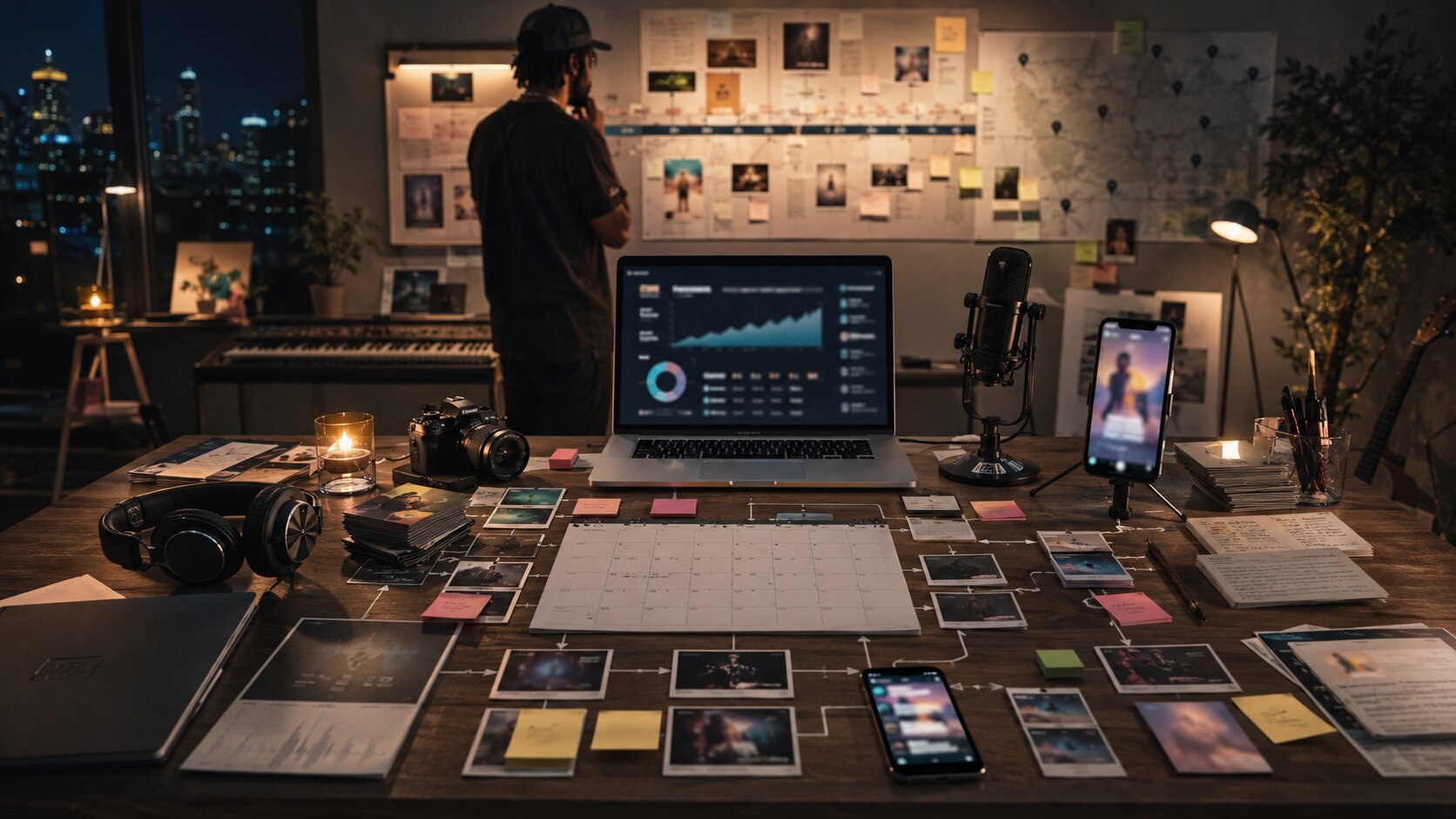
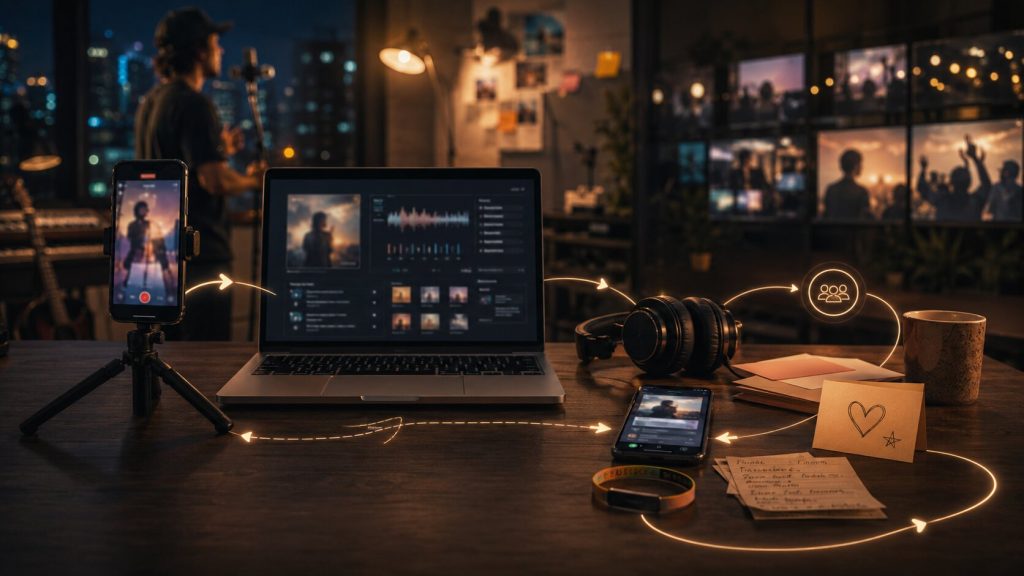
By this point, some people have seen the song several times. Now your rollout should shift from awareness to action. The goal is to help warm listeners do something measurable: pre-save, follow, comment, share, join an email list, watch a premiere, or add the release to a personal playlist.
Think of the listener path in stages. A viewer sees a clip. They like, comment, or reply. You respond personally. They receive the release link, pre-save page, Bandcamp page, YouTube premiere, or mailing list option. Then they get a clear reminder when the song is live.
This phase is also the right time to contact niche blogs, playlist curators, local press, community radio, DJs, YouTube channels, micro-creators, and fan accounts. Keep the outreach short. Mention the song, genre, release date, strongest angle, private listening link, and why their audience might care.
If you use Bandcamp, this is a good moment to prepare a direct-to-fan offer. Bandcamp’s artist resources explain how artists can use the platform for releases, fan communication, merch, and direct support. (Bandcamp Artist Guide)
Pro Tip: Create one private press folder with cover art, press photo, short bio, private stream, clean version, credits, and a short song description. The easier you make it for someone to cover or share your release, the more professional your campaign feels.
Release Day: Make the Song Easy to Find, Save, Share, and Watch
Release day is not the time to explain the entire campaign for the first time. It is the day to remove friction. Every important link should work. Every profile should point to the release. Every post should make the next action obvious.
Your release-day checklist should include testing all streaming links, updating bio links, pinning your release post, sharing the strongest 10–20 seconds of the song, adding the track to your own playlists, replying to comments, reposting fan support, and sending an email or text update if you have a list.
Your call to action should be specific. “Save this if it hits” is stronger than “run it up.” “Send this to someone you had to let go” is more emotional than “stream now.” “Add it to your night drive playlist” gives fans a clear use case.
Release day is also a good time to publish a lyric video, visualizer, performance clip, or Short. A visual asset gives fans another way to engage and gives you more material to promote after the initial announcement.
The mistake to avoid is treating release day as the only day that matters. Most listeners will not hear the song immediately. Some may discover it three days later, a week later, or through a fan repost. Your job is to keep the campaign active long enough for the song to find more entry points.
Days 1–14 After Release: Extend the Campaign Instead of Disappearing
The post-release phase decides whether the song has a real chance to grow beyond the first announcement. This is where you study early signals, test new content angles, follow up with fans, and keep giving the song context.
| Early Signal | What It May Suggest |
|---|---|
| Saves are strong but shares are low | People may connect privately; test more emotional captions and lyric-focused content. |
| Comments are strongest on lyric clips | Build more posts around the writing, meaning, and story of the song. |
| Short videos get views but streams are weak | Improve link placement, CTA clarity, or use of the official sound. |
| YouTube watch time is strong | Create a lyric breakdown, live version, performance clip, or behind-the-scenes video. |
| Direct purchases happen early | Consider a bonus demo, alternate version, merch bundle, or personal fan update. |
Spotify’s Campaign Kit includes tools such as playlist pitching, Marquee, Showcase, and Discovery Mode, though access depends on eligibility and market availability. These tools can support different campaign moments, but they work best when paired with a clear release strategy and existing fan activity. (Spotify for Artists Campaign Kit)
Your second-week content should not repeat the first week word for word. Try new angles such as “the lyric people keep messaging me about,” “how the beat changed from demo to final,” “what I almost cut from the song,” “the first live version,” or “the story behind the cover art.”
Realistically, most independent releases grow through compounding attention, not one perfect post. A good rollout gives the song multiple chances to be understood, saved, shared, and remembered.
BlockToneRecords.com and Your Next Rollout
For independent artists, a release rollout is easier when the strategy, assets, messaging, and promotion timeline are connected before the campaign begins. BlockToneRecords.com can serve as a practical resource for artists who want to release music with more structure, stronger branding, and a clearer plan for turning listeners into long-term fans.
Use this 30-day framework as a working template for your next single, then adjust it to your genre, audience size, budget, and release goals. The best rollout is not always the loudest one. It is the one that gives the right listeners repeated, meaningful reasons to care.
FAQs About the 30-Day Music Release Rollout
How far in advance should an independent artist plan a music release?
Is 30 days enough time to promote a single?
When should I pitch my song to Spotify playlists?
What should I post before release day?
Do I need a music video for every release?
Should I spend money on ads during a 30-day rollout?
What is the biggest mistake artists make after release day?
Sources Used
- TuneCore Support – How long it takes music to go live in stores
- CD Baby Support – How far in advance artists should submit a release
- Spotify for Artists Support – Pitching music to playlist editors
- Spotify for Artists – Campaign Kit
- Apple Music for Artists – Promote content, milestones, and custom assets
- YouTube for Artists – Artist tools and Official Artist Channel resources
- TikTok for Artists – Artist tools and music insights
- Bandcamp Artist Guide – Direct-to-fan release and community tools
- IFPI – Global Music Report 2026