

Why ADÉLA “Feels Like Nicole Kidman”: The Real Meaning of the Song
More Than a Celebrity Name: What “Nicole Kidman” Is Really Saying
ADÉLA’s “Nicole Kidman” is essentially a confidence fantasy transformed into a pop song. Nicole Kidman represents a particular kind of untouchable movie-star glamour: elegant, photographed, desired, powerful, and seemingly capable of commanding a room without needing to explain herself.
The interpretation is unusually well supported because ADÉLA has explained where the idea came from. While attending a Golden Globes-related event, she was dressed up, had her hair styled, and wore a very tight corset. Feeling unusually glamorous, she thought that she felt like Nicole Kidman. ADÉLA later said that watching Eyes Wide Shut intensified her fascination with Kidman as the embodiment of a true movie star. (W Magazine)
The finished song takes that private moment and expands it into a much bigger character. ADÉLA imagines the clothing, cars, cameras, attention, and confidence associated with celebrity, but the real subject is not wealth alone. It is the feeling of deliberately constructing an identity and then behaving as though that identity already belongs to you.
That is why the title matters. ADÉLA is not attempting to tell Nicole Kidman’s biography. Kidman functions as shorthand for a state of mind: cinematic glamour mixed with self-possession, visibility, and control.
How a Golden Globes Moment Became a PRIMA Track
“Nicole Kidman” was released on September 4, 2026 as the second track on ADÉLA’s debut album, PRIMA, issued through Capitol Records. Apple Music lists PRIMA as an 11-track pop album and places “Nicole Kidman” immediately after the opening track “KGB.” (Apple Music – PRIMA)
The official release credits name Adéla Jergová, Blake Slatkin, Dylan Brady, Julia Michaels, Billy Walsh, and Uffie as writers. Blake Slatkin and Dylan Brady are credited as producers, while Slatkin and Bart Schoudel handled vocal production. Those credits help explain the song’s mixture of polished pop structure, unusual rhythmic details, and heavy low-end production. (ADÉLA Official YouTube – “Nicole Kidman”)
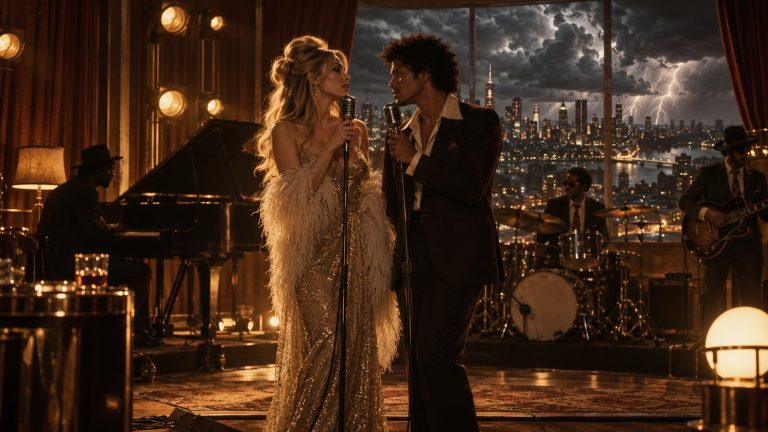
The song arrived alongside a Hannah Lux Davis-directed music video that makes the Nicole Kidman connection even more explicit. According to Universal Music, the video references several projects from Kidman’s filmography, including Eyes Wide Shut, Moulin Rouge!, Birth, and Babygirl, as well as her well-known AMC Theatres campaign. (Universal Music Canada)
That visual approach confirms something important about the title. Nicole Kidman is not simply a famous name chosen because it sounds striking in a chorus. ADÉLA uses Kidman’s screen image, film history, and old-fashioned movie-star aura as the foundation for the song’s entire fantasy.
Nicole Kidman as ADÉLA’s Pop-Star Alter Ego
The central idea behind “Nicole Kidman” is not that ADÉLA literally wants to become another person. Instead, she uses Kidman as an alter ego through which she can exaggerate qualities she already wants to project.
Within that fantasy, looking glamorous is only the beginning. The more important quality is control. The narrator prepares herself, arrives dramatically, receives attention, and moves through the world as if the attention surrounding her is expected rather than surprising.
This gives the song a manifestation-like quality. Instead of singing about how wonderful it would be to become famous someday, ADÉLA writes from inside the imagined future. She behaves as though the transformation has already happened.
There is also humor in the performance. The obsession with appearance, clothes, cars, and cameras is deliberately excessive. “Nicole Kidman” understands that celebrity culture can be absurd, but it does not use that absurdity to reject ambition. ADÉLA appears to enjoy both the fantasy and its theatrical ridiculousness.
That tension makes the song more interesting than a straightforward anthem about wanting fame. ADÉLA can recognize that stardom is partly constructed while still embracing the pleasure of constructing it.
Inside the Song: How the Confidence Fantasy Develops
The Opening: Dressing Into a New Identity
The song begins by establishing appearance and physical presentation as part of the character. Glamour is not treated as something effortless. It is assembled through styling, clothing, posture, and attitude.
The corset is especially important because it comes directly from the real event that inspired the song. ADÉLA’s feeling of being dramatically dressed and physically shaped by the outfit helped produce the original Nicole Kidman comparison.
Emotionally, the opening suggests that changing the way you present yourself can temporarily change the way you understand yourself. The clothes are therefore more than decoration. They help create the persona.
First Verse: Vanity Becomes Performance
The first verse extends the transformation through details involving fashion, appearance, and preparation. In another song, checking yourself in a mirror or worrying about what to wear might suggest insecurity. Here, those actions feel closer to ritual.
The mirror functions almost like a backstage space. ADÉLA is not simply checking whether she looks acceptable; she is watching the pop-star character appear.
The references to luxury work similarly. Expensive objects are obviously status symbols, but within the song they also function as stage props. Everything around the narrator helps reinforce the larger-than-life identity she has decided to inhabit.
The Build-Up: Turning an Entrance Into an Event
As the song moves toward its central hook, attention shifts from preparation to arrival. Cars, photographers, public attention, and movement through a crowd create the atmosphere of a red carpet or celebrity appearance.
What matters is the way ADÉLA imagines handling that attention. She is not overwhelmed by being watched. Instead, she appears to control how she is seen and how much access observers receive.
This introduces one of the song’s most interesting reversals. Cameras normally imply that the subject has lost some privacy. In ADÉLA’s fantasy, however, being photographed becomes evidence of power because she feels capable of controlling the spectacle.
The Chorus: Turning “Nicole Kidman” Into an Adjective
By the time the chorus arrives, Nicole Kidman’s name has effectively stopped functioning only as a proper name. It has become a description of a feeling.
To “feel like Nicole Kidman” in the world of the song means feeling cinematic, polished, expensive, visible, and slightly inaccessible. Most importantly, it means possessing enough confidence to believe that widespread attention belongs there.
The specificity of the name makes the hook more effective than a generic declaration about feeling beautiful or famous. Kidman brings decades of movie-star associations into the song, allowing ADÉLA to communicate an entire aesthetic with one reference.
The Second Half: Ambition Moves to the Foreground
Later in the song, the celebrity imagery starts to reveal a deeper theme: the importance of speaking and behaving like the person you intend to become.
This can be read as playful pop-star arrogance, but it also resembles manifestation culture. ADÉLA imagines confidence not as the final reward for achieving success but as something that can precede success.
From that perspective, the fantasy is almost a rehearsal. The narrator is practicing what it feels like to occupy a larger stage before every part of that future has necessarily arrived.
The idea connects closely with the broader story of PRIMA. The album is built around ambition, identity, and ADÉLA’s movement toward the pop career she has wanted for years. “Nicole Kidman” packages those ideas in their most glamorous form.
The Ending: Staying Inside the Fantasy
One notable feature of the song is what does not happen. There is no major emotional collapse at the end and no sudden confession that fame is empty.
Pop songs about celebrity often reveal loneliness underneath the luxury. “Nicole Kidman” largely refuses that familiar twist. ADÉLA remains inside the character.
That decision strengthens the song’s main idea. The glamorous identity is not presented merely as a costume that must eventually be exposed as false. For the duration of the song, the performance itself creates something emotionally real.

Corsets, Cameras and Chauffeurs: What the Images Represent
The most interesting recurring images in “Nicole Kidman” revolve around the machinery required to create glamour. Clothes, transportation, mirrors, photographers, and celebrity references collectively show that stardom is not simply a personality trait. It is produced.
The corset is perhaps the richest symbol. Its literal importance is confirmed by ADÉLA’s story about the Golden Globes event, but it also carries an intriguing contradiction. A corset creates a carefully shaped glamorous silhouette while simultaneously restricting the body wearing it.
The song does not explicitly present that contradiction as criticism, so it would be excessive to claim that the corset is definitely a metaphor for the dark side of fame. Still, the object naturally captures the relationship between beauty and discipline that runs through the song.
Designer clothes and shoes represent luxury, but they also function as tools of transformation. Choosing an outfit becomes part of creating the star rather than merely decorating her.
Cars and drivers suggest that fame has become an entire environment. The fantasy extends beyond performing onstage into the infrastructure surrounding celebrity: entrances, transportation, appearances, and carefully managed movement.
Photographers and cameras represent visibility. Yet ADÉLA frames visibility as something she can enjoy and control. The fantasy is therefore not simply about being observed; it is about becoming someone worth observing while retaining authority over the image.
Finally, cinema is the song’s largest metaphor. Kidman represents a life that appears bigger than ordinary reality. ADÉLA’s fantasy is not merely about money or popularity. She wants everyday life to acquire the scale and drama of a movie.
The True Story Behind the Nicole Kidman Reference
The inspiration for the song is based on a real experience. ADÉLA has explained that she attended a Golden Globes event where she was styled in a dress, had her hair done, and wore an especially tight corset. Seeing herself fully transformed prompted the thought that she felt like Nicole Kidman.
Afterward, her interest became more specific. Watching Eyes Wide Shut made her fascinated with Kidman as a representation of classic movie-star presence. In her W Magazine interview, ADÉLA described Kidman as “the movie star,” clarifying why the actress became such an effective symbol for the song. (W Magazine)
That does not mean the lyrics should be treated as a biographical account of Nicole Kidman. The confirmed real-life element is ADÉLA’s experience and the association it created in her mind. Kidman is the inspiration and symbol rather than the narrative subject.
The connection later became reciprocal in an unexpected way. Kidman publicly acknowledged knowing who ADÉLA was around the release of PRIMA, making the story particularly fitting: a private fantasy about feeling like a movie star eventually reached the movie star who inspired it.
Why “Nicole Kidman” Belongs at the Heart of the PRIMA Era
“Nicole Kidman” fits naturally into PRIMA because ADÉLA has presented the album as the beginning of her attempt to become what she calls a “prima ballerina of pop music.” Her ballet background gives the album title multiple meanings: prima suggests both “first” and the leading position associated with a prima ballerina. (Apple Music – PRIMA)
That ambition is important when interpreting “Nicole Kidman.” The song is not disconnected celebrity cosplay. It dramatizes the same hunger for scale, performance, and artistic identity that surrounds the album itself.
It also creates an interesting contrast with “Ain’t In LA.” That song challenges the assumption that talent and interesting lives must originate in glamorous cultural centers. “Nicole Kidman,” meanwhile, happily embraces the fantasy of glamour once ADÉLA gets there.
Together, those perspectives reveal a useful contradiction in her persona. She can recognize that celebrity mythology is constructed while still wanting to become a major pop star. Rather than pretending those positions are incompatible, PRIMA allows both to exist.
“Nicole Kidman” may therefore be one of the clearest examples of ADÉLA’s mixture of self-awareness and extreme ambition. She knows there is theater involved in becoming famous. Her response is not to reject the theater, but to perform it more deliberately.
Why the Nicole Kidman Metaphor Works
The most convincing interpretation of “Nicole Kidman” is that it is a song about feeling like a star before the world has completely confirmed that identity for you.
Nicole Kidman becomes shorthand for elegance, cinematic presence, public attention, and self-possession. The corset, mirror, clothes, transportation, and cameras build the environment around that feeling, but the deeper theme is psychological transformation.
ADÉLA’s cleverest choice is to place herself inside the fantasy rather than outside it. She does not spend the song wishing she could someday possess that confidence. She performs from the perspective of someone who has already decided she belongs there.
That is why “Nicole Kidman” works as more than a celebrity-reference song. Beneath its deliberately extravagant surface is an idea about ambition: sometimes a new identity begins as an act of imagination, and behaving like the person you hope to become can be part of building that person.
FAQs About “Nicole Kidman” by ADÉLA
What does “Nicole Kidman” by ADÉLA mean?
Why did ADÉLA call the song “Nicole Kidman”?
Who wrote “Nicole Kidman” by ADÉLA?
What album is “Nicole Kidman” on?
Is “Nicole Kidman” based on a true story?
Which Nicole Kidman movies are referenced in ADÉLA’s music video?
What is the main message of the “Nicole Kidman” chorus?
Sources Used
- W Magazine – ADÉLA interview about PRIMA and the origin of “Nicole Kidman”
- Universal Music Canada – PRIMA release announcement and “Nicole Kidman” video details
- Apple Music – ADÉLA’s PRIMA album page
- ADÉLA Official YouTube – “Nicole Kidman” official audio and song credits
- Official Charts – “Nicole Kidman” chart page