
Yung Miami’s “Spend Dat” Turns Hustle Talk Into a Solo-Era Victory Lap
What Is “Spend Dat” About?
“Spend Dat” by Yung Miami is about money as proof of confidence, status, movement, and control. On the surface, it is a luxury club anthem about spending, designer bags, and fast money, but underneath the flexing, the song works as a solo-era statement: Yung Miami is not asking to be included in the room; she is presenting herself as the person who sets the rules inside it.
The phrase “spend dat” becomes more than a simple command. In the song’s world, spending money proves who has access, who can keep up, who belongs in a fast lifestyle, and who is only talking. It is loud, repetitive, intentionally flashy, and built for nightlife energy rather than quiet reflection.
Release Details and the World Around the Song
“Spend Dat” was released as a single by Yung Miami on April 24, 2026. Apple Music lists it as a one-song hip-hop/rap single released under Yung Miami LLC, under exclusive license to UMG Recordings, Inc. (Apple Music – Spend Dat – Single)
The credited songwriters include Caresha Romeka Brownlee, Akil “worldwidefresh” King, Maurice Simmonds, Anthony Germaine White, and Ronny Wright. Shazam also lists J. White Did It as producer, Sauce Miyagi as mixing engineer, and Ohad Nissim as mastering engineer. (Shazam – “Spend Dat” song page and credits)
The song’s rollout leaned into a glamorous Miami nightlife image. The Source described the track as a luxury club anthem and reported that the music video features cameos from figures including NeNe Leakes, Trina, and Trick Daddy. (The Source – Yung Miami “Spend Dat” video coverage)
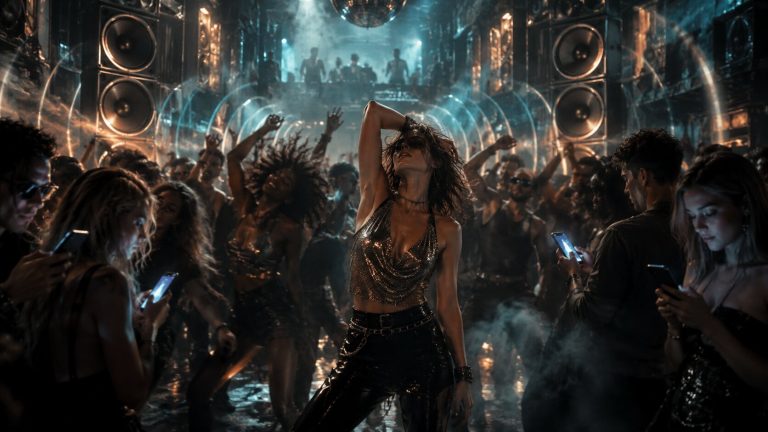
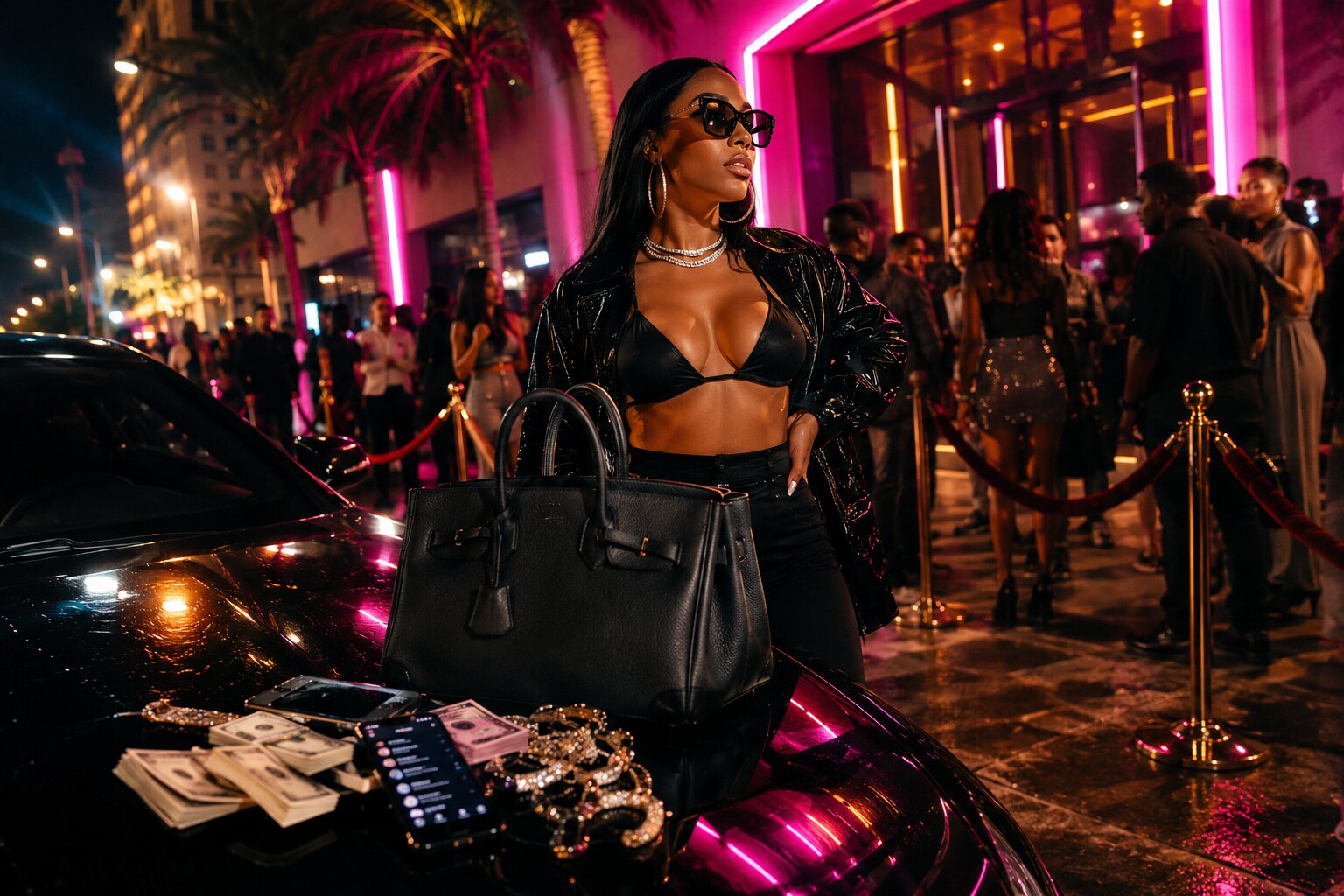
This context is important because “Spend Dat” is not written like a private confession. It is built like a public scene: club lights, expensive bags, fast decisions, local pride, and a hook designed to be repeated in crowds, captions, and short-form clips.
The Core Meaning: Money as Motion, Not Just Luxury
The main idea behind “Spend Dat” is that money should move. Yung Miami presents cash as something to earn, show, flip, carry, and use as a social signal. The song does not treat spending as quiet personal pleasure; it treats spending as proof of presence.
That is why the record feels more confrontational than a standard shopping anthem. Yung Miami is not simply describing designer taste. She is testing people. If someone claims status, they need to show it. If someone wants access to her world, they need to prove that they can match the pace.
The emotional tension comes from the gap between glamour and survival. The song is funny, flashy, and exaggerated, but its language also suggests that money is protection, leverage, and a way to avoid being underestimated. In that sense, the luxury imagery is not only decorative. It becomes armor.
Opening Energy: A Call to the Fast-Money Crowd
The beginning of “Spend Dat” works like a roll call. Yung Miami is speaking to people who understand hustle language, nightlife codes, and the thrill of turning money into visibility. The song immediately creates a crowd before it creates a story.
This opening matters because the track is not trying to slowly reveal vulnerability. It starts already in motion. The listener is dropped into a world where money, confidence, and performance are already happening, and the only question is whether you can keep up.
The Hook: Spending as a Status Test
The chorus is the center of the song’s meaning. Its repeated command turns spending into a kind of social test. The hook asks who is really getting money, who is really willing to show it, and who is only pretending.
Designer-bag imagery plays a major role here. A luxury bag is not just an accessory in the song. It becomes a container for identity: visible proof that the person carrying it has access to money, style, and a certain social world.
The hook also avoids making women passive. While men are expected to spend and prove themselves, women in the song are also positioned as money-getters. The fantasy is not only about being spoiled; it is about women having their own access, their own standards, and their own power.
The Chant Effect: Why the Repetition Matters
“Spend Dat” relies heavily on repetition, and that repetition is part of the point. The phrase becomes almost percussive, functioning like a chant inside a club track. It is easy to remember because it is designed to be physical before it is analytical.
This repeated structure also reflects the appetite of the lifestyle being described. One flex is not enough. One purchase is not enough. One proof of status is not enough. The song keeps circling back to the same demand because the world it describes is built on constant motion and constant display.
Verse One: Attraction, Risk, and Street-Coded Confidence
The first verse expands the song from spending into selection. Yung Miami describes attraction through money, toughness, and active status. The person who interests her is not simply rich; he has to carry a certain energy, danger, and credibility.
This is where the song becomes more than a luxury anthem. The money talk is tied to reputation. Yung Miami’s persona is not impressed by average attention or empty promises. She wants someone who can demonstrate value through action.
At the same time, the verse should be read as rap performance rather than literal autobiography. Its street-coded language, scammer references, and exaggerated images create atmosphere. They make the record feel bold, risky, funny, and larger than life.
Verse Two: Women Who Are Not Waiting to Be Chosen
The second verse gives the song a stronger independence angle. Yung Miami celebrates women who have their own money, their own standards, and their own sense of strategy. The message is that real status is not just looking expensive online; it is having access and options in real life.
The verse also hints that money is preparation. In the song’s world, cash is not only for pleasure. It can also be protection. That detail gives the track a sharper edge and keeps it from being only a party record.
Yung Miami’s self-presentation is central here. She is not average, not easily impressed, and not interested in being played. Her luxury references, sexual confidence, and boss language all build the same character: a woman who treats attention as something she controls.
Why There Is No Soft Emotional Turn
“Spend Dat” does not really slow down for a reflective bridge, and that choice fits the song. A bridge would usually add contrast, confession, or vulnerability. This track refuses that kind of pause.
The absence of a soft emotional turn keeps the listener inside the same loop: money, nightlife, confidence, movement, and pressure. The song is structured like a scene that never breaks character. You stay under the lights until the command becomes the whole atmosphere.
The Outro: A Dedication to Boss Energy
The outro broadens the record beyond individual flexing. Yung Miami frames the song as being for boss women, boss men, and people doing what they can to get ahead. That final shift gives the track a sense of community.
The Miami identity is also important. The “305” energy around Yung Miami’s music makes the song feel rooted in a specific cultural setting: loud humor, nightlife glamour, Southern rap confidence, and a local tradition of turning slang into an anthem.

Hidden Meanings, Metaphors, and Symbols
The biggest symbol in “Spend Dat” is money, but the song uses money in more than one way. Cash represents pleasure, status, attraction, control, and social proof. It is both something to enjoy and something to use as leverage.
Designer bags are another major symbol. They function like trophies, vaults, and identity markers. In the song’s world, a bag does not just hold money; it announces that the person carrying it has entered a certain level of visibility.
The scammer and booster language adds outlaw energy to the record. These references are best understood as part of rap’s tradition of exaggeration, character-building, and provocation. They make the song feel more dangerous and theatrical without needing to be read as literal instruction.
The video imagery strengthens the same meaning. When a music video builds a world of luxury, cameos, nightlife, and money symbolism, it turns the song into a visual brand statement as much as a track. “Spend Dat” is not only about having money; it is about becoming the image of value.
Is “Spend Dat” About a Real Person or Event?
There is no verified evidence that “Spend Dat” is about one specific real person, relationship, or event. The song is better understood as a persona-driven club anthem built around Yung Miami’s public image: money talk, Miami nightlife, female confidence, humor, designer references, and street-coded bravado.
That does not mean the track has no real-life context. Its release during Yung Miami’s solo push gives it a clear career meaning. “Spend Dat” helps define what her solo lane can sound like: direct, repetitive, stylish, regionally rooted, and built for public reaction.
How “Spend Dat” Fits Into Yung Miami’s Catalog
“Spend Dat” connects naturally to the energy Yung Miami became known for as part of City Girls: bold female confidence, money language, sexual directness, humor, and Miami club attitude. The difference is that this time, the entire record is organized around her solo persona.
Compared with some of her earlier solo moments, “Spend Dat” feels less like a one-off shock record and more like a focused brand statement. It gives her a simple phrase, a repeatable hook, and a visual world that can travel through clubs, performances, and social media.
The song also shows that Yung Miami’s solo strength does not depend on dense lyricism. Her power is in tone, timing, persona, and command. “Spend Dat” works because it sounds like something people can repeat before they fully analyze it.
Final Thoughts
“Spend Dat” is a flashy, confrontational money anthem about turning hustle into visibility. It celebrates people who get money, move money, and use luxury as proof that they are not stuck where they started.
The song resonates because it offers a feeling more than a detailed story. For a few minutes, the listener gets to step into a world where confidence is loud, status is visible, and money keeps moving. Yung Miami turns that fantasy into a chant, and that chant becomes the song’s real power.
FAQs About “Spend Dat” by Yung Miami
What does “Spend Dat” by Yung Miami mean?
Who wrote “Spend Dat” by Yung Miami?
Who produced “Spend Dat”?
What album is “Spend Dat” from?
Is “Spend Dat” based on a true story?
What is the chorus of “Spend Dat” about?
Why is “Spend Dat” important for Yung Miami’s solo career?
Sources Used