

Music event updates explained: real-time insights
Missing a concert announcement for your favorite emerging artist feels frustrating, especially when tickets sell out in minutes. Traditional event listings often lag hours or even days behind actual marketplace changes, leaving fans scrambling and industry professionals reacting too late. Real-time music event updates solve this problem by delivering instant notifications about new shows, price changes, and cancellations across major ticketing platforms. This guide explains how these update systems work, why they matter for both fans and music professionals, and how to leverage them for better event discovery and engagement in 2026.
Table of Contents
- Why Real-Time Music Event Updates Matter
- Core Technologies Powering Music Event Updates
- Best Practices For Integrating Music Event Update APIs
- Applying Music Event Updates To Maximize Fan And Industry Engagement
- Discover More With BlockTone Records
- Music Event Updates Explained: Frequently Asked Questions
Key takeaways
| Point | Details |
|---|---|
| Real-time data boosts engagement | Live event integration improves conversion rates by 15 to 30 percent across ticketing platforms. |
| Event monitoring APIs deliver alerts | Systems track Ticketmaster, StubHub, and SeatGeek simultaneously, sending actionable notifications for sales and cancellations. |
| Smart integration optimizes performance | Caching, retry logic, and incremental updates ensure scalability during high-traffic onsales without system overload. |
| Aggregated data expands choices | Unified streams from multiple marketplaces offer wider event options without vendor juggling or manual cross-checking. |
| Persistent IDs prevent duplication | Official event and performer identifiers maintain data consistency and eliminate redundant entries across platforms. |
Why real-time music event updates matter
Delayed event information creates missed opportunities for music fans and industry professionals alike. When a venue announces a surprise show or releases additional tickets, every minute counts. Real-time updates transform this experience by delivering instant notifications that let fans secure tickets before sellouts and help professionals adjust marketing campaigns on the fly.
Concert ticket API integration significantly improves user engagement and conversion rates in ticketing platforms. Studies show live data feeds boost click-through rates by 15 to 30 percent compared to static listings. Fans gain timely access to exclusive releases and last-minute ticket drops, while industry teams can react faster to schedule changes, minimizing refunds and customer complaints. Real-time pricing updates also reduce cart abandonment by showing accurate availability during checkout.
Personalized alert features enhance user retention dramatically. When fans receive notifications tailored to their favorite genres or artists, they engage more frequently with platforms and discover emerging talent they might otherwise miss. For music professionals managing multiple events, real-time dashboards provide centralized visibility into ticket inventory, pricing trends, and competitor activity across venues.
Real-time event data turns passive browsing into active discovery, creating urgency that drives ticket sales and strengthens fan-artist connections.
The impact extends beyond ticket sales. Venues use live updates to optimize staffing based on actual attendance projections. Artists and managers monitor fan response to announcement timing, adjusting promotional strategies for future releases. Merchandise vendors coordinate inventory based on real-time ticket movement, reducing waste and maximizing revenue opportunities. Understanding why artists need music platforms helps contextualize how these real-time systems fit into broader artist development strategies.
Key benefits for different stakeholders include:
- Fans receive instant notifications for favorite artists and genres
- Promoters launch targeted campaigns when inventory becomes available
- Venues adjust operations based on live attendance data
- Artists track fan engagement patterns across markets
- Ticket resellers optimize pricing strategies in real time
Core technologies powering music event updates
Concert ticket APIs form the backbone of real-time event update systems. These interfaces monitor major marketplaces like Ticketmaster, StubHub, SeatGeek, and AXS, continuously polling for changes in event listings, pricing, and availability. When the API detects new information, it sends actionable alerts to connected applications, enabling immediate response to market shifts.

Event monitoring APIs provide real-time alerts for ticket sales, enabling businesses to react quickly to market changes. The technology works by maintaining persistent connections to ticketing platforms, checking for updates at intervals ranging from seconds to minutes depending on system requirements. Advanced implementations use webhooks that push notifications instantly when changes occur, eliminating polling delays entirely.
Persistent event and performer IDs play a crucial role in maintaining data accuracy. Each concert receives a unique identifier that remains constant across updates, preventing duplicate entries when venues announce schedule changes or additional shows. Similarly, performer IDs link artists to their events consistently, even when spelling variations or stage names appear in different marketplaces. This standardization ensures fans searching for a specific artist see complete, deduplicated results.
Aggregated data streams simplify access to wider event options by combining information from multiple sources into unified feeds. Instead of checking five different ticketing sites manually, users receive consolidated updates through a single interface. The aggregation layer handles format differences between platforms, normalizing data structures so applications can process information consistently regardless of source.
Pro Tip: Request sample API responses before committing to a provider. Real-world data reveals how systems handle edge cases like postponed shows, venue changes, and multi-date tours that theoretical documentation often overlooks.
Price smoothing algorithms improve user experience by filtering out temporary fluctuations that create confusion. When resale prices spike briefly due to automated bot activity, smoothing logic applies statistical filters to present more stable pricing trends. This prevents fans from making hasty decisions based on artificial scarcity and helps professionals identify genuine market movements worth strategic response.
Technical implementation varies by provider, but most systems share common components:
| Component | Function | Benefit |
|---|---|---|
| API Gateway | Routes requests and manages authentication | Ensures secure, scalable access |
| Data Normalizer | Standardizes formats across platforms | Enables consistent processing |
| Alert Engine | Triggers notifications based on rules | Delivers timely, relevant updates |
| Cache Layer | Stores frequently accessed data | Reduces latency and API costs |
Understanding the role of music platforms for artists provides context for how these technical systems support broader industry ecosystems. The infrastructure supporting real-time updates requires significant investment in server capacity, data processing pipelines, and ongoing maintenance to handle peak loads during major onsales.
Best practices for integrating music event update APIs
Successful API integration starts with planning for traffic spikes during ticket onsales. Major artist announcements can generate request volumes 50 times higher than baseline, overwhelming systems without proper caching and retry logic. Implement exponential backoff strategies that space out retry attempts when APIs return rate limit errors, preventing cascade failures that compound problems.
Prioritize incremental updates over full data refreshes for efficiency. Instead of requesting complete event catalogs every poll cycle, query only for changes since the last successful update. This approach reduces bandwidth consumption by 80 to 90 percent while maintaining data freshness. Most AXS Tickets API integration requires careful planning for performance and scalability, especially around onsales when demand peaks.
Use official event IDs and persistent performer links to maintain data consistency. When building databases or user interfaces, store these identifiers as primary keys rather than relying on event names or dates that might change. This practice prevents orphaned records when venues reschedule shows and ensures fan notification preferences remain accurate across updates.
Define clear outcomes before selecting integration scope and service level agreements. Ask whether your application needs second-by-second updates or if five-minute intervals suffice. Real-time WebSocket connections cost more and require complex error handling compared to periodic polling. Match technical architecture to actual business requirements rather than over-engineering for theoretical edge cases.
- Start with a narrow geographic or genre focus to validate system stability
- Monitor API response times and error rates for two weeks before scaling
- Establish baseline performance metrics for comparison during peak periods
- Implement circuit breakers that pause requests when error thresholds trigger
- Create fallback data sources for critical functions if primary APIs fail
- Document retry policies and timeout values for troubleshooting
Pro Tip: Build admin dashboards showing real-time API health metrics. Visibility into request volumes, error rates, and response times helps teams identify problems before users notice degraded performance.
Consider data freshness requirements for different content types. Ticket pricing changes demand immediate updates to prevent checkout errors, while venue address information tolerates longer refresh intervals. Implement tiered polling strategies that check critical data more frequently than static details, optimizing resource allocation across system components.
Comparison of integration approaches:
| Approach | Update Speed | Complexity | Best For |
|---|---|---|---|
| Periodic Polling | 1 to 5 minutes | Low | General event listings |
| Webhook Push | Under 10 seconds | Medium | Price-sensitive applications |
| WebSocket Streaming | Real-time | High | Live inventory dashboards |
Exploring music discovery for artists reveals how these technical decisions impact user experience and business outcomes. The integration strategy you choose directly affects how quickly fans discover new shows and how effectively professionals can respond to market opportunities.
Applying music event updates to maximize fan and industry engagement
Fans benefit from timely notifications about exclusive shows and rescheduled events through personalized alert systems. When an emerging artist announces a surprise acoustic set at a small venue, real-time updates ensure dedicated followers receive notifications before general announcement channels spread the news. This creates meaningful connections between artists and their most engaged supporters, strengthening community bonds that drive long-term career growth.
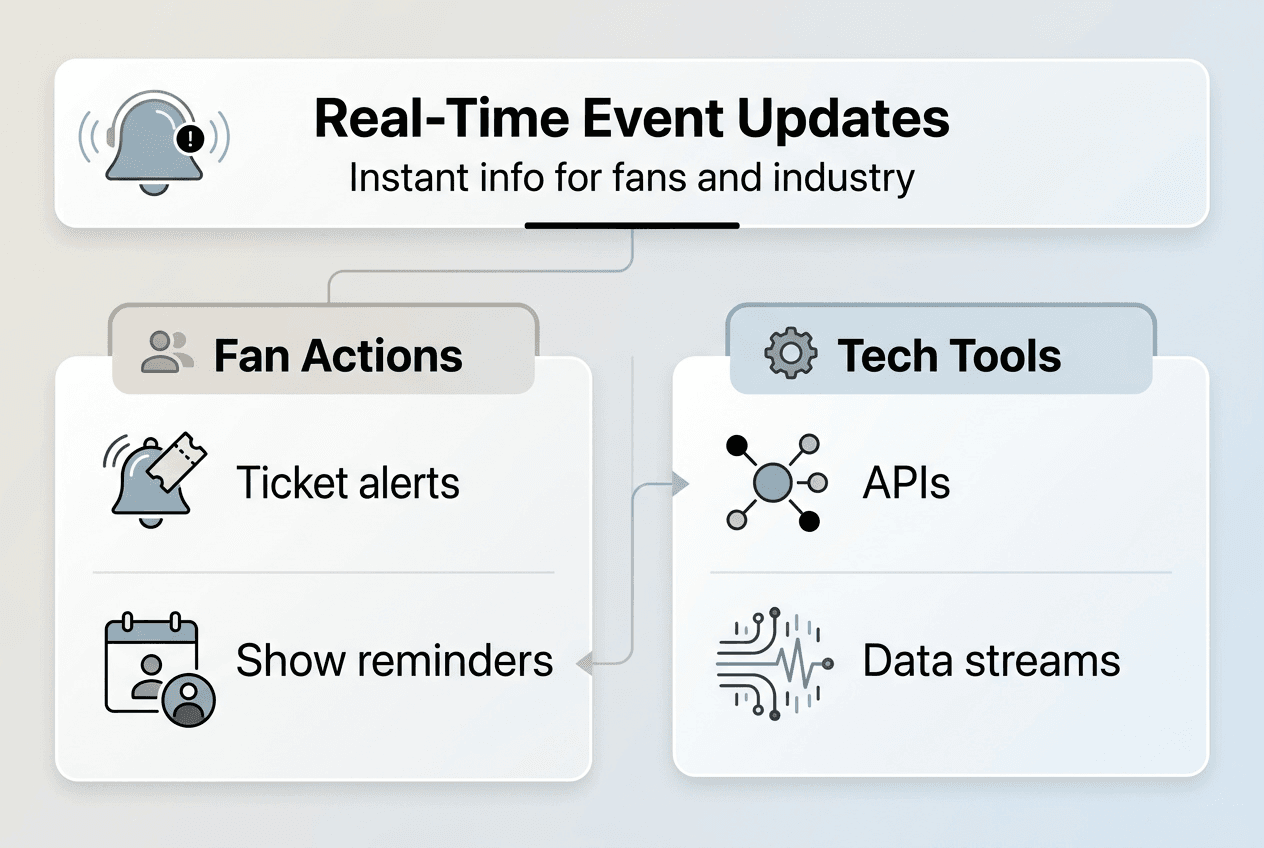
Operations teams use real-time alerts to reduce refunds by monitoring cancellations, reschedules, and policy changes. When a venue announces a show postponement, automated systems can trigger customer service workflows, prepare refund processing, and update marketing materials simultaneously. This coordinated response minimizes confusion and maintains brand trust during disruptive events.
Real-time pricing updates improve checkout conversion by showing accurate availability during the purchase process. Nothing frustrates fans more than selecting tickets only to discover they sold out while browsing. Live inventory feeds eliminate this friction by updating seat maps every few seconds, ensuring displayed options remain available through payment completion. This transparency reduces cart abandonment rates by 20 to 35 percent in well-implemented systems.
Unified data streams offer more event choices without requiring fans to juggle multiple vendor accounts and notification preferences. A single application can surface concerts from Ticketmaster, local venue box offices, and independent promoters simultaneously, ranked by relevance to user preferences. This aggregation democratizes event discovery, giving smaller venues and emerging artists visibility alongside major tours.
Personalized event discovery boosts artist reach and fan satisfaction through intelligent recommendation engines. By analyzing listening history, geographic location, and past ticket purchases, systems can suggest concerts that match individual tastes with surprising accuracy. Fans discover new artists performing in their city, while musicians gain exposure to audiences predisposed to enjoy their sound.
Practical applications for different user types:
- Music bloggers track emerging artist tour announcements for content planning
- Venue managers monitor competitor pricing and scheduling patterns
- Festival organizers identify scheduling conflicts across regional events
- Talent buyers evaluate artist popularity through ticket sales velocity
- Fan communities coordinate group ticket purchases for exclusive shows
Implementing these strategies requires thoughtful user experience design:
- Allow granular notification preferences by genre, venue, and price range
- Provide one-click ticket purchase flows from alert notifications
- Display historical pricing trends to inform purchase timing decisions
- Highlight newly announced shows prominently in discovery interfaces
- Enable social sharing of interesting events to amplify organic reach
- Offer calendar integration so events sync with personal schedules
Understanding music discovery for artists from the creator perspective helps platforms design features that serve both sides of the fan-artist relationship. When discovery tools work effectively, everyone benefits: fans find music they love, artists build audiences, and platforms generate sustainable revenue through facilitated connections.
Discover more with BlockTone Records
Now that you understand how real-time music event updates enhance discovery and engagement, explore how BlockTone Records supports emerging artists and passionate fans. Our platform combines curated music discovery with exclusive releases, helping you stay connected to the artists and sounds you love.
Learn practical strategies through our music discovery for artists resources, understand what music streaming means for modern listeners, and discover music distribution tips for independent artists building their careers. Whether you’re tracking down your next favorite band or supporting independent music, BlockTone Records provides the tools and insights you need to stay ahead in the evolving music landscape.
Music event updates explained: frequently asked questions
What are music event update APIs?
Music event update APIs are software interfaces that monitor ticketing platforms like Ticketmaster, StubHub, and SeatGeek for changes in concert listings, pricing, and availability. They deliver real-time notifications when new shows are announced, tickets become available, or events are rescheduled. These systems use persistent event and performer identifiers to maintain data accuracy across multiple marketplaces.
How do real-time alerts improve the ticket buying experience?
Real-time alerts notify fans instantly when tickets for favorite artists become available, before general announcements reach wider audiences. This early access increases purchase success rates and reduces frustration from sold-out shows. Live pricing updates during checkout prevent cart abandonment by ensuring displayed seats remain available through payment completion, improving conversion rates by 20 to 35 percent.
What should I look for in a reliable event update provider?
Evaluate providers based on marketplace coverage, update frequency, data accuracy, and system uptime during peak onsales. Request sample API responses to assess how they handle edge cases like postponements and venue changes. Check whether they offer persistent event IDs, price smoothing algorithms, and flexible notification rules. Reliable providers publish service level agreements and maintain transparent status dashboards.
How can artists benefit from these updates?
Artists use real-time event data to monitor fan response to tour announcements, adjust promotional timing, and identify markets with strong ticket sales velocity. The insights help optimize future routing decisions and reveal which promotional channels drive the most engagement. Emerging artists gain visibility through personalized discovery features that surface their shows to fans with matching musical preferences.
How do these updates help fans discover new music?
Real-time event systems power recommendation engines that suggest concerts based on listening history, geographic location, and past ticket purchases. When emerging artists announce shows in your area, personalized alerts introduce you to new music you’re likely to enjoy. Aggregated data from multiple venues and promoters surfaces diverse options beyond major ticketing platforms, expanding discovery opportunities. Explore our how to discover new music guide for additional strategies.