

What Is Music Streaming and Why It Matters for Artists
Many independent artists believe streaming offers a clear path to global exposure and steady income, but the reality is far more intricate. Music streaming’s rise has forever changed how creative voices reach audiences in Canada, Italy, Brazil, and beyond, yet complex revenue models and platform algorithms often leave talented musicians struggling to claim their fair share. This guide unpacks the critical misconceptions of music streaming, the variety of service types, and actionable strategies to help you navigate the digital music ecosystem and amplify your reach as an emerging artist.
Table of Contents
- Music Streaming Defined And Common Misconceptions
- Types Of Music Streaming Services Explained
- How Digital Music Platforms Operate
- Monetization And Revenue Streams For Artists
- Copyright, Licensing, And Artist Rights
- Risks, Challenges, And Alternatives For Artists
Key Takeaways
| Point | Details |
|---|---|
| Understanding Revenue Models | Music streaming creates complex revenue opportunities, requiring artists to actively engage with platform algorithms and listener behaviors to maximize earnings. |
| Choosing the Right Streaming Service | Each streaming service offers distinct advantages; artists should research and select platforms that align with their genre and audience to optimize visibility and revenue. |
| Navigating Copyright and Licensing | Artists must be savvy about music rights and licensing agreements, ensuring they protect their intellectual property while seeking fair compensation. |
| Embracing Alternative Revenue Streams | Diversifying income through crowdfunding, direct sales, and emerging technologies can provide greater artistic control and financial stability beyond traditional streaming. |
Music Streaming Defined and Common Misconceptions
Music streaming represents a revolutionary digital method of music consumption where users access vast musical libraries instantly through internet-connected platforms without purchasing individual tracks or albums. Digital audio delivery systems have transformed how artists distribute and fans experience music worldwide.
At its core, music streaming allows listeners to play audio content on-demand across multiple devices, fundamentally shifting how musical experiences are created and consumed. Unlike traditional music purchases, streaming platforms offer:
- Instant access to millions of songs
- Personalized playlist creation
- Algorithm-driven music recommendations
- Cross-device synchronization
- Low-cost monthly subscription models
Despite its popularity, music streaming harbors several critical misconceptions that significantly impact independent artists. Many musicians mistakenly believe streaming represents a straightforward path to sustainable income, when in reality, the revenue model can be surprisingly complex.
Streaming platforms generate revenue, but creators often receive a disproportionately small share of those earnings.
The economics of streaming reveal a nuanced landscape where global reach doesn’t automatically translate to financial success. Music streaming’s complex revenue structures mean artists must understand platform algorithms, listener engagement metrics, and strategic distribution approaches to maximize their potential earnings.
Pro tip: Develop a comprehensive streaming strategy that focuses on consistent releases, playlist targeting, and audience engagement to improve your digital music performance.
Types of Music Streaming Services Explained
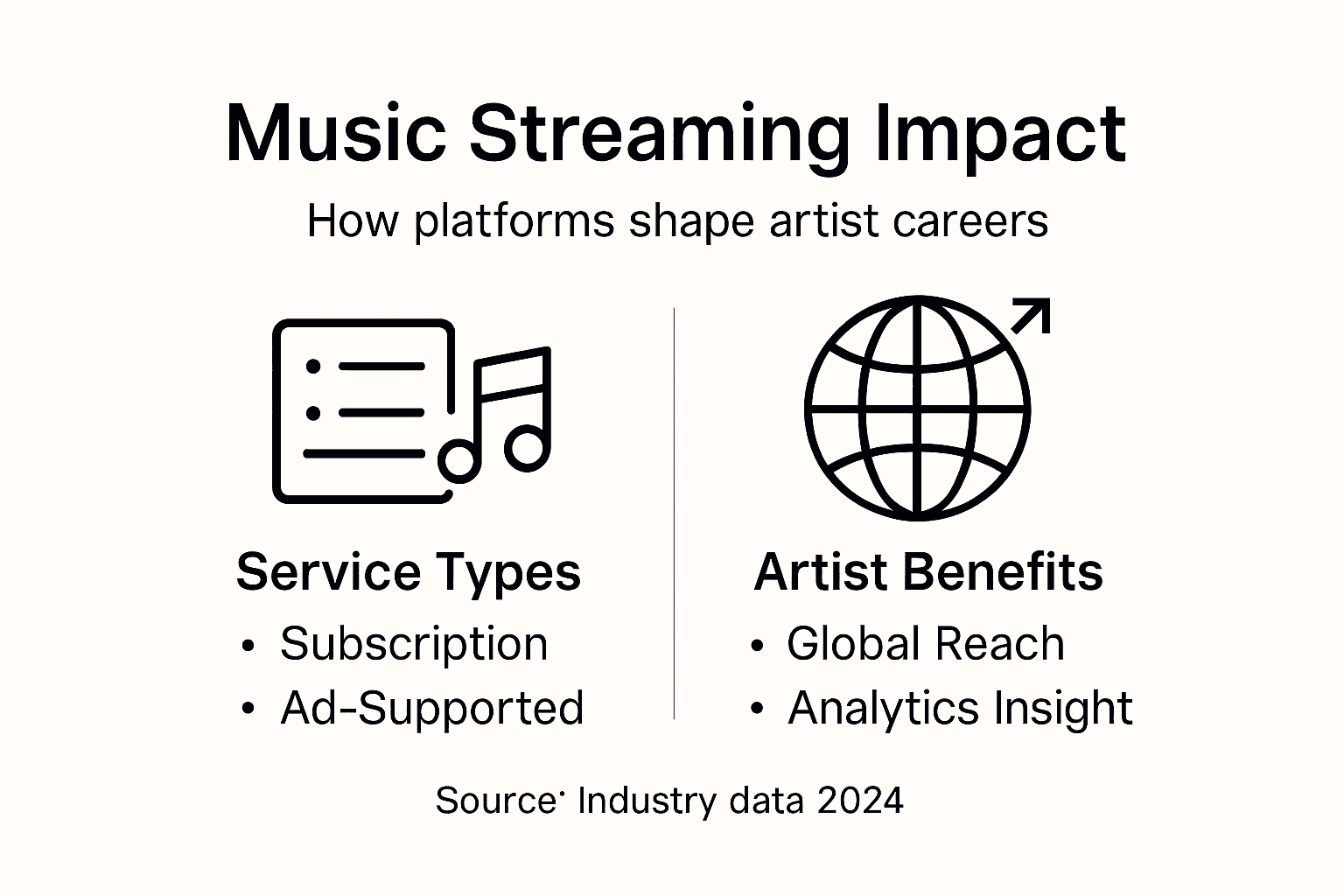
Music streaming services have evolved into a complex ecosystem offering diverse models for digital music consumption. Streaming service models range from global platforms to niche regional services, each presenting unique features and revenue structures for artists and listeners.
The primary types of music streaming services can be categorized into three fundamental models:
-
Subscription-Based Services
- Premium tier with ad-free listening
- Offline download capabilities
- High-quality audio streaming
-
Ad-Supported Free Tiers
- No direct cost to listeners
- Periodic audio advertisements
- Limited functionality compared to paid plans
-
Artist Direct Platforms
- Allows direct artist uploads
- Higher revenue percentage for creators
- More personalized distribution channels
Not all streaming services are created equal – each platform offers distinct advantages for independent musicians.
Music streaming user experiences demonstrate significant variations in platform engagement, with algorithmic recommendations and social sharing features playing crucial roles in music discovery and artist visibility.

Understanding these different service types becomes paramount for artists seeking to maximize their digital music strategy. Global platforms like Spotify and Apple Music offer massive reach, while niche platforms provide targeted audience connections that can be equally valuable for specialized genres or regional markets.
Here’s how major music streaming service models differ in business focus and artist impact:
| Service Model | Core Business Focus | Artist Revenue Potential | Listener Experience |
|---|---|---|---|
| Subscription-Based | Maximizing recurring revenue | Low to moderate per stream | High-quality, ad-free access |
| Ad-Supported Free Tier | Monetizing advertising | Very low per stream | Frequent ads, limited features |
| Artist Direct Platforms | Empowering creator control | Higher share, but less scale | Niche content, strong fan focus |
Pro tip: Research multiple streaming platforms and develop a distribution strategy that leverages the unique strengths of different service models to optimize your music’s potential reach and revenue.
How Digital Music Platforms Operate
Digital music platforms represent complex technological ecosystems that fundamentally transform how music is distributed, consumed, and monetized. Algorithmic recommendation systems drive the intricate mechanisms that connect artists, listeners, and music industry stakeholders through sophisticated digital infrastructure.
The core operational components of these platforms typically include:
-
Content Management
- Digital rights verification
- Metadata processing
- Licensing agreement management
-
User Experience Design
- Personalized playlist generation
- Listener preference tracking
- Seamless cross-device synchronization
-
Revenue Distribution
- Streaming count calculations
- Royalty tracking systems
- Transparent payment mechanisms
Digital platforms are not just music distributors – they are complex ecosystems that reshape musical engagement.
Streaming platform algorithms play a critical role in determining music discovery, analyzing user behavior patterns to curate personalized listening experiences and influence content visibility.
These platforms leverage advanced data analytics to create intricate networks that simultaneously serve artists, record labels, and listeners. By tracking listener preferences, engagement metrics, and streaming patterns, they generate insights that can help artists understand audience behaviors and optimize their digital music strategies.
Pro tip: Understand platform algorithms by consistently analyzing your streaming data and adapting your music distribution strategy to maximize listener engagement and discovery.
Monetization and Revenue Streams for Artists
Music streaming has fundamentally transformed how artists generate income, creating a complex landscape of digital revenue opportunities. Artist compensation models now require independent musicians to understand multiple income streams beyond traditional album sales.
The primary revenue channels for streaming artists include:
-
Direct Streaming Royalties
- Per-stream payment rates
- Variations across different platforms
- Algorithmic playlist placement impact
-
Performance Royalties
- Live streaming revenues
- Radio and public performance payments
- International rights management
-
Supplemental Income Sources
- Merchandise sales
- Fan subscriptions
- Exclusive content monetization
Streaming success requires strategic understanding of platform economics, not just musical talent.
Streaming revenue distribution remains highly unequal, with top-tier artists capturing disproportionate earnings while emerging musicians struggle to generate sustainable income. The complex revenue chain involves multiple stakeholders, including streaming services, record labels, and rights organizations.
Successful artists now approach streaming as a multifaceted business strategy, leveraging data analytics, consistent content release, and targeted audience engagement to maximize their digital earnings potential. Understanding platform algorithms and listener behavior becomes as crucial as musical creativity in generating meaningful revenue.
Pro tip: Diversify your streaming strategy by consistently releasing high-quality content, engaging with your audience, and tracking detailed performance metrics across multiple platforms.
Copyright, Licensing, and Artist Rights
Music streaming has dramatically reshaped the landscape of digital music rights, introducing complex challenges for artists seeking fair compensation and creative control. Copyright management frameworks now require musicians to navigate intricate legal territories that extend far beyond traditional music distribution models.
The primary categories of music rights in streaming platforms include:
-
Mechanical Rights
- Reproduction of musical compositions
- Digital recording permissions
- Compensation for song reproduction
-
Performance Rights
- Public broadcast permissions
- Online streaming transmission
- Royalties for live and digital performances
-
Neighboring Rights
- Protection for sound recording owners
- Compensation for recording usage
- International rights management
Navigating music rights requires understanding complex legal frameworks that differ across global platforms.
Licensing complexity impacts artist control and bargaining power, often creating significant challenges for independent musicians seeking fair compensation in digital ecosystems.
Successful artists must develop a strategic approach to rights management, understanding that modern music distribution requires both creative talent and legal sophistication. This means carefully tracking usage, understanding complex licensing agreements, and proactively protecting intellectual property across multiple digital platforms.
Pro tip: Consult with a music rights professional to develop a comprehensive strategy for protecting and monetizing your digital music catalog.
Risks, Challenges, and Alternatives for Artists
The digital music streaming landscape presents complex challenges that require independent artists to develop strategic approaches to survive and thrive. Artist survival strategies have become increasingly sophisticated as musicians navigate an unpredictable digital ecosystem.
Primary risks and challenges for artists include:
-
Income Instability
- Unpredictable streaming revenues
- Low per-stream payment rates
- Dependency on platform algorithms
-
Limited Artistic Control
- Reduced bargaining power
- Algorithmic content selection
- Platform-driven exposure
-
Market Concentration Risks
- Dominance of established artists
- Difficulty breaking through noise
- Geographical content restrictions
Digital platforms create opportunities and barriers simultaneously for independent musicians.
Digital music ecosystem challenges highlight the need for artists to develop diverse digital strategies beyond traditional streaming platforms.
Emergent alternatives for artists include crowdfunding, direct-to-fan platforms, blockchain-based music distribution, and leveraging emerging technologies like NFTs. These approaches offer greater control, more direct fan engagement, and potentially more sustainable revenue models compared to traditional streaming platforms.
Compare emergent artist revenue alternatives beyond streaming:
| Alternative Model | Revenue Predictability | Artist Control | Fan Engagement |
|---|---|---|---|
| Crowdfunding | Variable, campaign-based | Full project control | Direct supporter input |
| Direct-to-Fan Sales | Direct and immediate | Highest ownership | Personalized offers |
| Blockchain Platforms | Fluctuating, experimental | Increased transparency | Limited but growing |
| NFT Releases | One-off, potential spikes | Unique asset control | Novelty-driven demand |
Pro tip: Develop a multi-platform strategy that combines streaming, direct sales, and emerging digital technologies to maximize your music’s reach and revenue potential.
Unlock Your Music Streaming Potential with Blocktone Records
Navigating the complex world of music streaming requires more than talent. Artists face challenges like fluctuating royalties, algorithm-driven visibility, and limited control over their content. If you want to move beyond uncertainty and achieve sustainable income through strategic digital distribution and fan engagement, Blocktone Records is your solution. Our platform empowers you to showcase and monetize your music effectively while connecting with a dedicated community of music lovers.
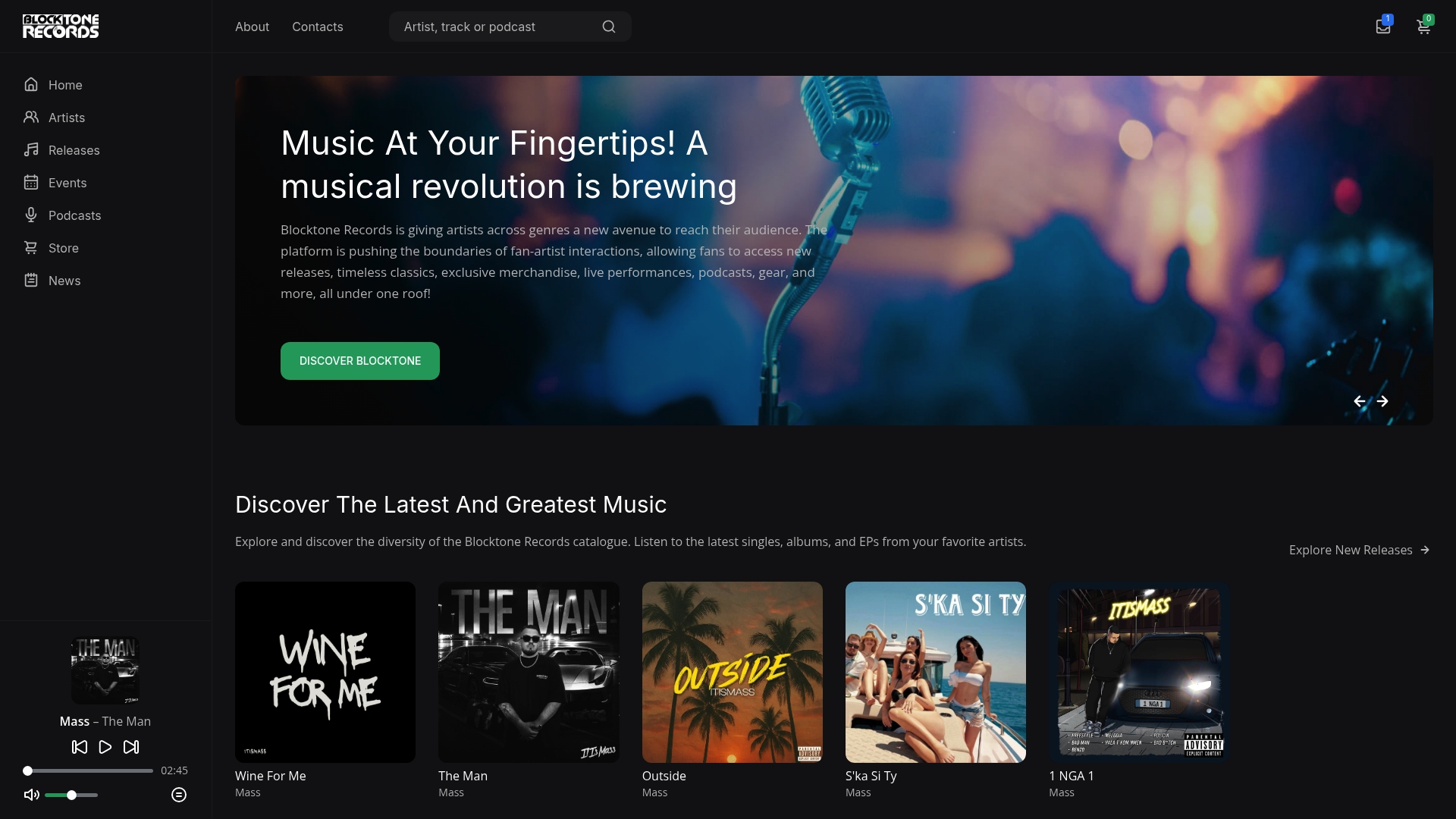
Take control of your music career today by joining Blocktone Records, where you can leverage exclusive releases, live performances, and personalized artist features designed to amplify your reach. Learn how to master platform algorithms, maximize streaming revenue, and build a loyal fan base with tools and insights tailored for musicians ready to thrive in the evolving digital music landscape. Explore how our platform supports every step of your artist journey at Blocktone Records. Start now and transform your streaming presence into meaningful success.
Frequently Asked Questions
What is music streaming?
Music streaming is a digital method of accessing and listening to vast libraries of songs instantly over the internet without purchasing individual tracks or albums.
How do music streaming services generate revenue for artists?
Music streaming services generate revenue through various models, primarily involving subscription fees and advertising revenues. However, artists often receive a small share of these earnings based on complex revenue structures.
What are the main types of music streaming services?
The main types of music streaming services include subscription-based services that offer ad-free listening, ad-supported free tiers with periodic ads, and artist direct platforms that allow creators to upload music directly and earn a higher revenue percentage.
What are the challenges artists face with music streaming?
Artists face challenges such as income instability due to low per-stream payment rates, limited artistic control over how their music is promoted on platforms, and the difficulty of standing out in a highly competitive digital landscape.