Why release exclusive music: boost income and fan engagement
Most independent artists assume that putting their music everywhere at once is the fastest path to growth. That assumption is costing some of them real money. A growing number of indie musicians are discovering that strategic exclusivity, releasing music on one platform or in a limited format before a wide rollout, can drive higher per-sale revenue, stronger fan loyalty, and better platform visibility than a standard release. This guide breaks down exactly how exclusive releases work, which models fit which artists, and how to avoid the traps that catch newcomers off guard.
Table of Contents
- What is an exclusive music release?
- Why musicians choose exclusive releases: Visibility and financial impact
- Ways to structure exclusivity: Timed, platform, and format options
- Risks and tradeoffs: Is exclusivity always the right move?
- Ethics, streaming, and artist-fan connection
- When and how to launch your own exclusive release
- Get expert help and maximize your music’s reach
- Frequently asked questions
Key Takeaways
| Point | Details |
|---|---|
| Exclusive releases offer key benefits | They boost short-term revenue and visibility on key platforms when used strategically. |
| Risks must be weighed | Exclusivity may not suit emerging artists who need maximum exposure, so always assess your goals. |
| Multiple exclusivity models exist | Choose between timed windows, platform exclusivity, or product bundles based on your career stage. |
| Fan engagement matters | Announce and explain exclusives clearly to maximize anticipation and results for your core audience. |
What is an exclusive music release?
An exclusive music release means your track or album is available only through a specific channel, format, or platform for a defined period or permanently. The term covers several different models, and mixing them up leads to poor strategy.
Here are the main types of exclusivity you’ll encounter:
- Single-platform exclusivity: Your track lives only on one platform, such as Beatport or Bandcamp, for a set window before going wide.
- Timed exclusivity: You release on one channel first, then open it to all platforms after a window of a few weeks.
- Full exclusivity: The release never leaves that platform or format. Common with physical vinyl or limited NFT drops.
- Bundle exclusivity: Fans get early access when they buy a physical copy, a bundle, or a special edition before the digital release goes live.
Platforms that actively support exclusive drops include Beatport (especially for electronic music), Bandcamp (for direct artist-to-fan sales), and NFT marketplaces for limited digital ownership. Exclusive releases can include higher pricing, better royalties, priority charting, and platform promotion, which makes the setup worth understanding before you commit to any one model.
Setting up an exclusive is straightforward. You choose your platform, set your window or format, upload your track, and communicate the terms clearly to your audience. If you’re still figuring out how to present new material to listeners, start with showcasing new music before layering in exclusivity.
Why musicians choose exclusive releases: Visibility and financial impact
With definitions in place, let’s dig into the real-world payoffs and risks.
The financial case for exclusivity is stronger than most emerging artists realize. On platforms like Beatport, exclusive tracks can be priced higher than standard releases, and priority charting and featured promotions boost short-term sales and visibility in ways that a standard wide release rarely achieves. That front-page placement translates directly into streams, purchases, and new followers.
Here’s what exclusivity can do for your release:
- Higher per-sale revenue during the exclusive window, especially on download-focused platforms
- Editorial features and curated chart placement that platforms reserve for exclusive content
- Scarcity-driven demand, where fans act faster because they know access is limited
- Stronger fan relationships, since early access rewards your most loyal listeners
- Negotiating leverage with platforms, since exclusives give them a competitive edge they value
“Scarcity is one of the most powerful psychological triggers in music marketing. When fans know a track won’t be available forever, they act now instead of later.”
The caveat is real, though. Exclusivity creates a short-term spike, not a long-term stream. Artists who rely on algorithmic discovery across Spotify or Apple Music may find that locking a track away delays that momentum. Platforms that feature top releases understand this balance, which is why the smartest artists use exclusivity selectively rather than as a default.
Who benefits most? Established DJs and artists with an existing fanbase see the biggest returns, because their fans are already primed to act fast. Emerging artists can still benefit, but they need to weigh short-term revenue against the value of broad exposure. Solid music promotion tips can help you decide which approach fits your current stage. If you’re still building your audience, read up on promoting music online before committing to an exclusive-first strategy.
Ways to structure exclusivity: Timed, platform, and format options
Different artists need different strategies, so here’s how to tailor exclusivity to your release.
Timed exclusivity windows of 2 to 8 weeks on platforms like Audocs allow higher per-unit revenue before streaming broadens accessibility. That window is your highest-earning period, so you want your marketing to be loudest during those weeks.
| Exclusivity model | Revenue impact | Audience reach | Best use case |
|---|---|---|---|
| Timed window (2 to 8 weeks) | High per-unit during window | Limited initially, then wide | Singles, DJ tools, dance tracks |
| Platform-only (e.g., Beatport) | Higher price points, royalties | Platform-specific audience | Electronic, club, genre-specific releases |
| Bundle (physical + digital bonus) | Premium pricing, upsell potential | Core fans and collectors | Albums, special editions, merch drops |
| NFT or limited digital edition | Very high per-unit, low volume | Crypto-native and collector fans | Experimental, art-forward projects |
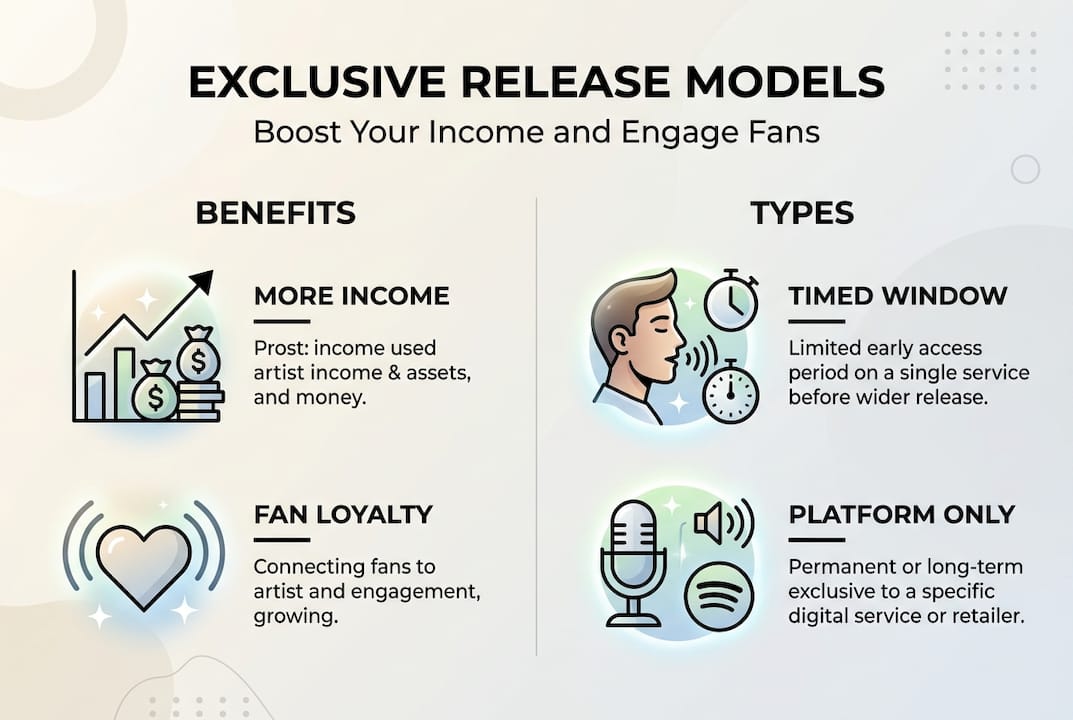
Timed windows work best when you have a clear promotional plan and an engaged email list or social following ready to act. Platform exclusivity makes sense when your genre has a natural home, such as electronic music on Beatport, where the audience is already buying downloads. Bundles are powerful for album cycles where physical merchandise adds perceived value.
For music distribution tips that help you choose the right platform for your genre and goals, it’s worth mapping out your fanbase before you commit to a model.
Pro Tip: Tell your fans about the exclusive window before it opens. Build anticipation with a countdown, a short teaser clip, and a clear message about when and where they can get it. Fans who feel informed act faster than fans who feel surprised.
Risks and tradeoffs: Is exclusivity always the right move?
While exclusivity can work wonders, it’s not risk-free. Here’s what to watch for.
The biggest danger is timing. Some artists risk limited audience or missed streams if their exclusive track underperforms during the window. If your promotional push falls flat, you’ve delayed the broader release without capturing the revenue spike you planned for.
Here’s a breakdown of risks and benefits by artist type:
| Artist type | Exclusivity benefit | Exclusivity risk |
|---|---|---|
| Established artist with large fanbase | Strong sales spike, fan reward | Minimal, fans are ready to buy |
| Emerging artist with active social presence | Builds buzz, rewards early fans | May limit algorithmic discovery |
| New artist with small audience | Potential premium pricing | High risk of low sales, missed exposure |
| Genre-specific artist (e.g., electronic) | Platform chart placement | Narrow reach outside the platform |
Other risks to keep in mind:
- Missed streaming momentum: Algorithms on Spotify and Apple Music reward consistent, wide-release activity. Locking a track away pauses that engine.
- Fan frustration: If fans can’t access your music on their preferred platform, some will simply move on.
- Platform dependency: Relying on one platform’s promotion puts your release at the mercy of their editorial decisions.
Understanding the role of music platforms in your overall strategy helps you avoid over-committing to any single channel. Your artist profile also plays a role in how platforms decide to feature your work, so keep it current and complete.
Pro Tip: Don’t lock up every track. Reserve exclusivity for your strongest single or a special project where the premium positioning adds real value. Your catalog as a whole benefits from wide availability.
Ethics, streaming, and artist-fan connection
Beyond the financial, there’s an ethical and community side to exclusivity.
Some independent artists are choosing exclusivity not for revenue strategy, but for values-based reasons. Some artists withhold from streaming entirely for moral or ethical reasons, including low payouts and concerns about AI data scraping, favoring physical copies and Bandcamp for more intentional connections with their audience.
This approach reframes exclusivity as a statement. When you sell a vinyl-only release or a Bandcamp-exclusive album, you’re telling your fans that you value direct relationships over algorithmic reach. That message resonates deeply with certain audiences, particularly those who already buy records, attend shows, and follow artists closely.
“Releasing music exclusively through Bandcamp or physical formats isn’t just a financial choice. It’s a way of saying: I trust you, my actual fans, enough to make this just for you.”
NFT releases take this further by giving fans verifiable ownership of a piece of your work. The community that forms around limited-ownership releases tends to be more engaged and more vocal than passive streaming listeners. Understanding music streaming and its limitations helps you make an informed choice about where your music lives and why.
When and how to launch your own exclusive release
Ready to try exclusivity? Here’s your practical roadmap.
Exclusive releases bundled with physical or NFT sales for additional value before streaming give you multiple revenue touchpoints in a single campaign. Here’s how to structure your launch:
- Define your goal. Are you chasing income, rewarding fans, building buzz, or gaining platform visibility? Your goal determines your model.
- Choose your exclusivity type. Timed window, platform-only, bundle, or full exclusivity. Match the model to your goal and your fanbase.
- Pick the right platform. Go where your fans already are and where the payout model rewards your genre. Beatport for electronic, Bandcamp for indie and direct sales, NFT platforms for collector audiences.
- Build your pre-release hype. Email your list, post teasers, and announce the window clearly. Give fans at least two weeks of lead time.
- Execute the exclusive window. Stay active on socials, respond to fan reactions, and push any platform-specific promotions during this period.
- Plan your wide release. After the window closes, distribute broadly and use the momentum from the exclusive to fuel your streaming push.
- Analyze and learn. Track sales, streams, and fan signups during and after the window. Use that data to refine your next release.
For your next music showcase, consider whether an exclusive window could amplify the launch rather than limit it.
Pro Tip: Use the exclusive window to collect email addresses. Offer a free bonus track or early access to fans who sign up. That list becomes your most valuable asset for every future release.
Get expert help and maximize your music’s reach
Blocktone Records is built for independent artists who want more than just a place to upload music. Whether you’re planning your first exclusive drop or looking to sharpen your overall release strategy, the platform gives you tools and resources designed around real artist needs.
Explore distribution tips for independent artists to understand how to get your music to the right listeners at the right time. Use Blocktone’s music discovery solutions to connect with fans who are actively looking for new music in your genre. And if you’re weighing exclusivity against streaming, the music streaming guide gives you a clear breakdown of how the two approaches can work together. Blocktone is where your next release finds its audience.
Frequently asked questions
How long should a music exclusive window be?
Timed exclusivity windows of 2 to 8 weeks drive higher unit revenue and give you enough time to maximize sales before opening to broader platforms. Shorter windows work for singles, while longer ones suit albums or special editions.
Is exclusivity good or bad for new artists?
Exclusivity can limit exposure for emerging artists who may benefit more from wide distribution. Exclusivity risks a limited audience if the track underperforms during the window, which is a real concern when you’re still building your fanbase.
How do artists announce exclusives to fans?
Announce exclusives early through email, social media, and direct messaging with a clear call to action and a specific date. Give fans enough lead time to plan and build genuine anticipation.
What should I bundle with an exclusive?
Consider adding NFTs, physical copies, or bonus material to create added value for core fans. Exclusive releases bundled with physical or NFT sales before streaming give collectors a reason to act immediately rather than wait for the wide release.