
Top music revenue streams for independent artists explained
Monetizing your music in 2026 is no longer as simple as releasing an album and waiting for checks to arrive. The landscape has shifted dramatically, and streaming royalties now account for 69.6% of global recorded music revenues, yet many independent artists still struggle to pay their bills from streams alone. The joy of making music deserves to be matched by the reward of real, sustainable income. This guide breaks down every major revenue stream available to you right now, compares the margins honestly, and helps you build a strategy that actually works for your career.
Table of Contents
- How to evaluate music revenue streams
- Streaming royalties: scale and reality check
- Direct-to-fan sales: maximize your margins
- Selling merchandise: physical and digital opportunities
- Live performances: touring, shows, and virtual gigs
- Sync licensing: get paid for placements
- Teaching, beats, and content creation: side hustles for musicians
- Quick comparison: which streams deliver the most?
- Blocktone Records: your platform for music growth
- Frequently asked questions
Key Takeaways
| Point | Details |
|---|---|
| Direct streams aren’t always king | Streaming drives global music revenue but pays low out-of-pocket per stream for most indie artists. |
| Fan engagement means more money | Direct-to-fan platforms and merch sales deliver higher profit margins and audience ownership. |
| Live performances power indie success | For most independents, touring, shows, and merch bundles account for the largest income slice. |
| Diversification reduces risk | Combining several streams—including sync licensing and teaching—creates financial stability. |
| Smart choices beat scale | Focus on high-ROI streams for your strengths, not just the most popular industry options. |
How to evaluate music revenue streams
Before you chase every opportunity at once, it helps to understand what makes a revenue stream worth your time. Not all income is created equal, and some streams demand far more effort than they return.
Here are the key factors to weigh when evaluating any revenue stream:
- Ownership and control: Direct-to-fan channels allow high ownership and retention compared to streaming platforms, where algorithms and policy changes can cut your reach overnight.
- Scalability: Can this stream grow without you working more hours? Passive income like sync licensing scales well; one-on-one lessons do not.
- Margin: Royalties from streaming leave thin margins. Memberships and direct sales channels keep far more money in your pocket.
- Repeatability: Merch and memberships generate recurring income. A one-time sync deal is great but not guaranteed to repeat.
- Hidden costs: Watch for payout minimums, platform fees, and contractual limitations that quietly eat into your earnings.
Diversification is your best protection against market instability. When one stream dips, others carry you forward. The artists who thrive long-term treat their music career like a small business with multiple revenue lines.
Pro Tip: Build your email list from day one. It is the one audience you own outright, no matter which platforms rise or fall.
Streaming royalties: scale and reality check
Digital streaming is the most visible part of the music economy, but for most independents, it is more of a marketing tool than a primary paycheck. Understanding the math helps you use it wisely.
Streaming royalties make up 69.6% of global recorded music revenue, yet the per-stream rate sits between just $0.003 and $0.005. That means you need roughly 250,000 streams per month to earn $1,000. For most independent artists, that number takes years to reach consistently.
Here is a quick breakdown of major platforms and what they offer:
| Platform | Avg. payout per stream | Key advantage |
|---|---|---|
| Spotify | $0.003-$0.005 | Largest global audience |
| Apple Music | $0.007-$0.010 | Higher per-stream rate |
| YouTube Music | $0.002-$0.003 | Ad revenue adds on top |
| Tidal | $0.010-$0.013 | Artist-friendly model |
Distributors like DistroKid and CD Baby let you keep 100% of your streaming revenue while handling delivery to all major platforms. Use your streaming dashboard data to identify your most engaged listeners, then funnel those fans toward higher-margin streams like merch or memberships. Learn more about how music streaming works and explore your music distribution options to get started on the right foot.
Direct-to-fan sales: maximize your margins
When platform payouts feel limiting, connecting straight with your fans opens new doors for profits and stability. Direct-to-fan platforms put you in control of pricing, communication, and the relationship itself.

Bandcamp lets artists keep 85% of every sale, Patreon collects around 10%, and even 100 Patreon supporters paying $5 per month adds up to $500 in steady monthly income. That kind of predictability is a blessing for any independent artist trying to plan ahead.
Here is what makes direct-to-fan so powerful:
- Bandcamp: Artists keep 85% of sales, and Bandcamp Fridays waive fees entirely, boosting your take-home even further.
- Patreon and Ko-fi: Tiered memberships let fans choose their level of support, from $1 to $50 per month, with perks like early access, exclusive tracks, or behind-the-scenes content.
- Email list ownership: Unlike social media followers, your email subscribers are yours. No algorithm can take them away.
- Higher engagement: Fans who pay directly feel more connected to your journey, which means better retention and word-of-mouth growth.
Pro Tip: Offer a free download in exchange for an email address. It is one of the fastest ways to build a loyal audience that you can monetize directly over time.
Selling merchandise: physical and digital opportunities
Beyond digital, tangible products and even digital merch offer profits you can truly feel in your bank account. Merchandise is one of the most emotionally resonant ways fans show their love for your music.
A $30 shirt earns as much as 10,000 Spotify streams, and physical revenues are growing thanks to vinyl’s resurgence. Global vinyl sales reached $5.3 billion with 13.7% growth, proving that fans still crave something they can hold.
- Physical merch: T-shirts, hats, vinyl, and cassettes serve as superfan anchors, items that deepen identity and loyalty.
- Digital merch: Sample packs, PDFs, exclusive video content, and preset bundles carry zero shipping costs and near-100% margin.
- Print-on-demand: Platforms like Teespring, Printify, and Shopify eliminate inventory risk entirely. You only pay when something sells.
- Bundling strategy: Pair a new release with a limited vinyl pressing or exclusive shirt to increase perceived value and average order size.
Pro Tip: Bundle merch with your music releases at launch. A “vinyl plus digital album” package gives fans a reason to buy immediately rather than just stream for free. Explore more ways to sell more music merchandise and grow that side of your business.
Live performances: touring, shows, and virtual gigs
While physical goods provide steady income, it is the energy of live shows that often powers the majority of indie artists’ annual earnings. There is something irreplaceable about the connection between artist and audience in a shared space.
Live shows account for 38 to 50% of indie incomes, and merch and tips at shows amplify those earnings even further. A single well-attended show can outperform months of streaming revenue.
“The stage is where the relationship between artist and fan becomes real. Everything else supports that moment.” — A sentiment shared widely among touring independents.
Key strategies for maximizing live income:
- Sell merch at every show and set up a visible table near the exit.
- Offer virtual shows through platforms like Bandcamp Live to reach fans who cannot travel to you.
- Book direct with venues whenever possible to avoid unnecessary cuts from middlemen.
- Be cautious of 360 deals, which allow labels to take a percentage of your live earnings on top of recording revenue.
- Focus on per-head revenue: what does each fan spend on average at your show?
Learn how to plan live music events more effectively and turn every performance into a full revenue moment.
Sync licensing: get paid for placements
Moving from fans to business partners, your music can generate licensing revenue far beyond direct consumption. Sync licensing places your tracks in films, TV shows, advertisements, and video games, earning you upfront fees plus backend royalties.
Sync licensing delivers upfronts plus royalties, typically outperforming streaming for income on licensed tracks. A single placement in a popular ad campaign can pay more than a year of streaming.
- Platforms to explore: Musicbed, Epidemic Sound, and Songtradr connect your catalog with music supervisors actively searching for tracks.
- AI-driven opportunities: New AI-powered catalog tools are creating fresh placement opportunities for independent artists with niche sounds.
- No label required: You can pitch directly to music supervisors or aggregators without any label involvement.
- Royalty backend: Every time a licensed track airs, you earn performance royalties through your PRO (performing rights organization).
Pro Tip: Register every track with a PRO like ASCAP or BMI before pitching for sync. You cannot collect backend royalties without it.
Teaching, beats, and content creation: side hustles for musicians
If you have knowledge and production skills, there is income to be found beyond traditional music releases. These streams reward your expertise just as much as your artistry.
YouTube, TikTok, and selling beats and samples are valuable side hustles for producers, and education leverages your unique skills to create passive income that grows over time.
- Online teaching: Platforms like Skillshare, Udemy, and even your own YouTube channel let you monetize what you know about music production, songwriting, or performance.
- Beat and sample sales: Producers can list beats on BeatStars or Airbit and earn licensing fees every time a track is purchased.
- Content monetization: YouTube ad revenue and TikTok creator funds reward consistent posting with real dollars over time.
- Educational products: Ebooks, webinars, and production guides add passive income that works while you sleep.
Explore more ideas around monetizing music content and see how other artists are turning their knowledge into income.
Quick comparison: which streams deliver the most?
With each revenue stream’s mechanics explained, here is a side-by-side look to help you make the smartest choices for your situation.
Streaming dominates for reach, but merch and direct sales offer higher ROI for indie artists who have built even a modest fanbase.
| Revenue stream | Margin | Scale potential | Best for |
|---|---|---|---|
| Streaming | Very low (3-5%) | Very high | Reach and discovery |
| Direct-to-fan | High (85-100%) | Medium | Superfans and recurring income |
| Merchandise | High (50-80%) | Medium-high | Superfans and touring artists |
| Live shows | Medium-high | Medium | All indie artists |
| Sync licensing | Very high | High | Catalog-rich producers |
| Teaching/beats | High | Medium | Producers and educators |
The smartest approach combines streaming for visibility, direct-to-fan for stability, and live shows or sync for your biggest income moments. No single stream is enough on its own, but together they create something genuinely sustainable.
Blocktone Records: your platform for music growth
At Blocktone Records, we believe every independent artist deserves a space where their music can be heard, celebrated, and rewarded. Building multiple revenue streams is a journey, and having the right platform behind you makes all the difference.
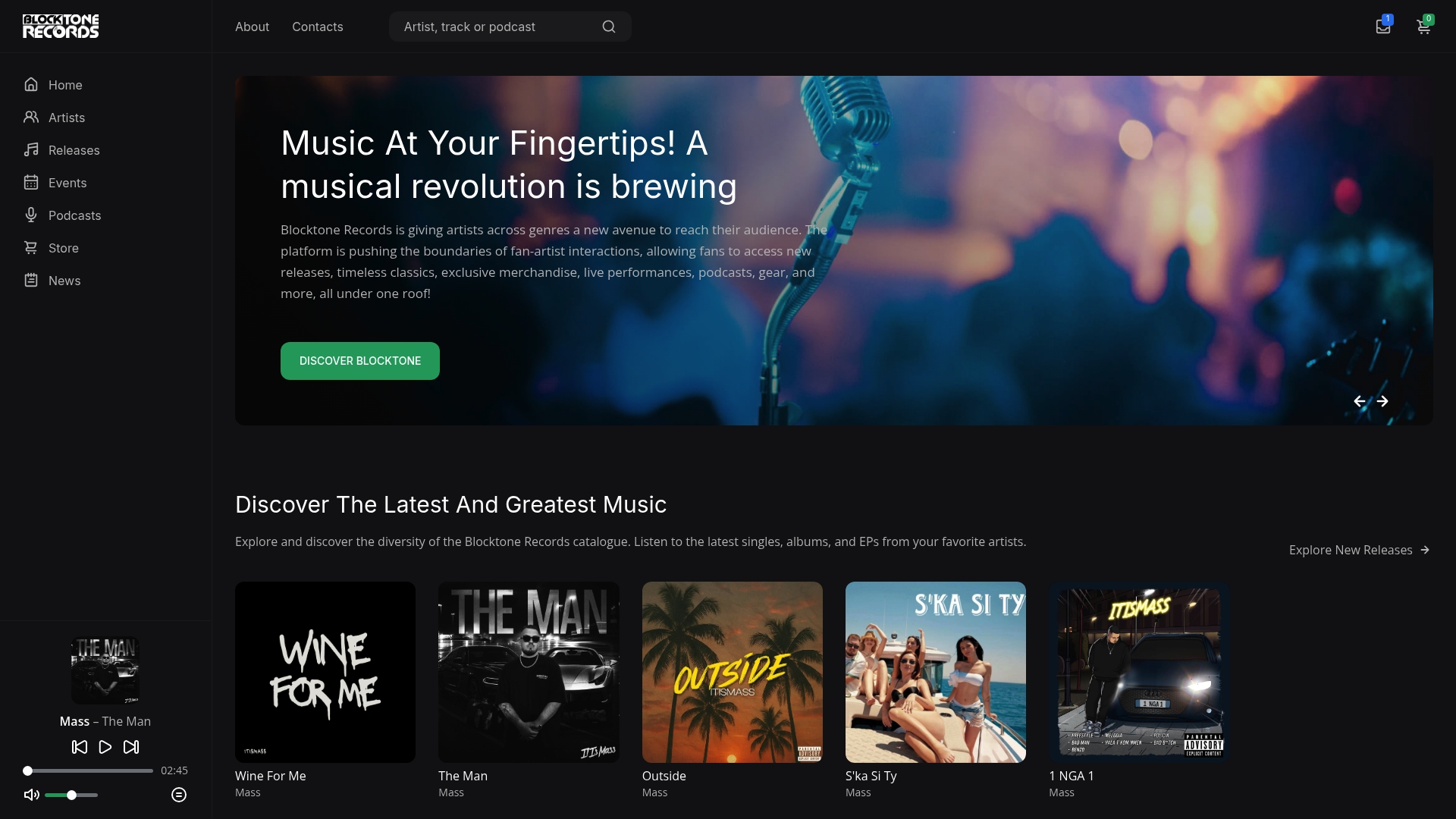
Blocktone Records offers a comprehensive digital hub where you can showcase your music, connect with fans, and explore exclusive release opportunities across multiple genres. Whether you are just starting to think about monetization or you are ready to scale your catalog, our platform is designed to support artists at every stage. From artist profiles and exclusive content to merchandise features and live performance highlights, Blocktone Records is built to help you grow. Visit Blocktone Records and take the next step in building a music career that lasts.
Frequently asked questions
What is the highest-earning revenue stream for most independent musicians?
Live performances, especially when bundled with merch sales, typically generate the highest proportion of annual income for independents, accounting for 38 to 50% of total earnings.
How many streams do I need to earn $1,000 on Spotify?
You will need approximately 250,000 streams per month at the average payout rate of $0.003 to $0.005 per stream to reach that milestone.
Are direct-to-fan sales better than streaming for independent artists?
For most artists, yes. Bandcamp keeps 85% for the artist and Patreon collects around 10%, making both far more profitable per transaction than streaming royalties.
What streaming platforms pay artists the most?
Apple Music and Tidal generally offer higher per-stream payouts than Spotify, though your total earnings still depend heavily on audience size and engagement across all streaming platforms.
How can I get started with sync licensing for my music?
Register on platforms like Musicbed or Epidemic Sound and pitch to aggregators. Always register your tracks with a PRO first so you can collect the backend royalties that come with every placement.