

Music content curation: boost discovery and engagement
TL;DR:
- Human music curation creates genuine emotional connections and cultural nuance beyond algorithms.
- Effective playlists balance emerging and established artists, with clear themes and intentional flow.
- Curator success is measurable through metrics like high completion rates and follower growth.
Most music fans assume that the playlist an algorithm builds for them is as good as it gets. It feels personal, it updates automatically, and it never runs out of songs. But there is a meaningful difference between a machine selecting tracks based on your listening history and a human curator intentionally shaping a musical experience with context, emotion, and story. Music content curation, when done with care, builds something an algorithm simply cannot: genuine connection. This article breaks down what curation really means, how it works in practice, how to measure its impact, and why it still matters deeply for artists and fans alike.
Table of Contents
- What is music content curation?
- Key elements and strategies of effective music curation
- Metrics and methods: Measuring curation impact
- Challenges, pitfalls, and trends in modern music curation
- The future of music content curation: A fresh perspective
- Take your music experience further with BlockTone Records
- Frequently asked questions
Key Takeaways
| Point | Details |
|---|---|
| Human curation adds value | Expert curators build trust and context that algorithms alone can’t deliver. |
| Emerging artists benefit most | A 70/30 mix of new and established talent drives discovery and engagement. |
| Measurable success factors | High playlist coherence and completion rates are hallmarks of strong curation. |
| Avoid algorithmic sameness | Mixing human and data-driven curation prevents homogenized music experiences. |
What is music content curation?
Music content curation is the intentional process of selecting, organizing, and presenting music to create a meaningful listening experience. It goes far beyond dropping songs into a folder. A skilled curator considers genre, mood, narrative arc, and audience context. The goal is to guide a listener through something that feels purposeful, not random.
Curation has existed long before streaming. Radio DJs, music journalists, and record store owners were all curators in their own right. What changed in the streaming era is scale and visibility. Today, editorial playlists on major platforms carry enormous influence. A single placement can introduce an emerging artist to millions of new listeners overnight.
The distinction between human and algorithmic curation is important. Algorithms are powerful at scale. They process billions of data points and serve up recommendations based on patterns. But they lack the ability to understand cultural nuance, current events, or the emotional weight of a specific moment. As noted in why music curation matters, human curation builds trust and context in ways that algorithms cannot replicate, even as critics sometimes dismiss it as just another form of filtered selection.
Here is what strong music content curation typically includes:
- Editorial playlists built around themes, moods, or cultural moments
- Label selections that spotlight a roster’s newest and most relevant releases
- Influencer-driven lists that carry personal voice and community trust
- Genre-specific collections that help fans explore sounds they already love
“The best curators do not just pick good songs. They build a world that listeners want to live in for a while.”
For artists, the stakes are high. Getting featured on the right curated list can be the difference between obscurity and breakthrough. Platforms focused on music discovery for artists understand that editorial curation is one of the most powerful tools in an artist’s growth strategy. Staying current with music industry trends also helps artists and curators align their efforts with what audiences are gravitating toward. You can also find timely updates in the music news section to stay informed on which curators are gaining influence.
Key elements and strategies of effective music curation
Knowing what curation is and knowing how to do it well are two very different things. Effective curation is built on a set of deliberate choices that stack together to create a coherent, engaging experience.
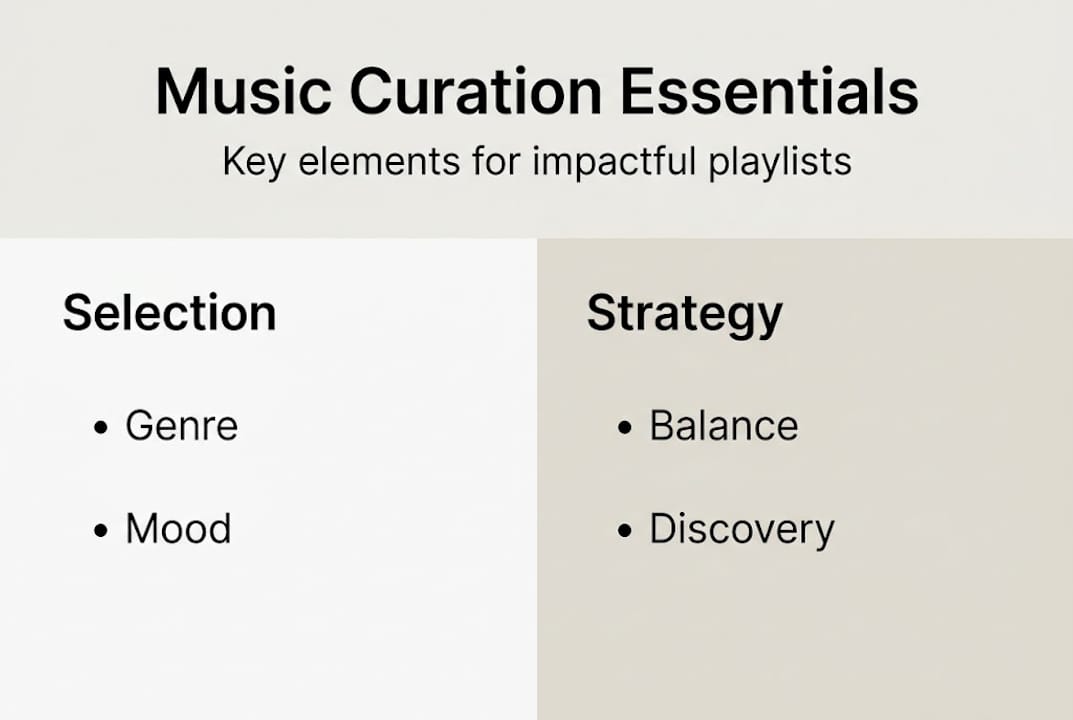
Selection criteria matter enormously. Genre alone is not enough. A strong curator also thinks about mood, energy level, tempo progression, and the story being told across the playlist. A morning workout playlist and a late-night reflection playlist might share the same genre but require completely different sequencing and emotional tone.

One of the most important strategic decisions involves balancing discovery with familiarity. Research on playlist benchmarks shows that effective playlists tend to follow a 70/30 split, with 70% emerging artists and 30% established names. This balance keeps listeners engaged with familiar anchors while consistently introducing them to new sounds. Playlists that are too heavy on popular tracks actually show lower coherence scores, which means listeners disengage faster.
| Element | Best practice | Common mistake |
|---|---|---|
| Track mix | 70% emerging, 30% established | All popular tracks, no discovery |
| Playlist length | 20 to 40 tracks for coherence | Too long, loses focus |
| Sequencing | Energy arc with intentional flow | Random order, no narrative |
| Theming | Clear mood or context | Mixed signals, no identity |
| Completion rate target | Aim for 80% or above | Ignoring listener drop-off data |
Here is a simple framework for building a curated playlist that performs:
- Define the audience and the moment (who is listening, and when?)
- Set a clear theme or emotional tone
- Open with a strong, familiar track to earn trust
- Introduce emerging artists in the middle section
- Close with a memorable track that leaves a lasting impression
Pro Tip: Avoid adding tracks just because they are popular. Coherence, not clout, is what keeps listeners coming back. A playlist that flows naturally will always outperform one that is just a collection of hits.
Supporting emerging artists through intentional placement is one of the most rewarding parts of curation. When you feature top releases strategically alongside fresh talent, you create a listening environment that feels both exciting and trustworthy.
Metrics and methods: Measuring curation impact
Great curation is not just a feeling. It is measurable. Understanding the right key performance indicators, or KPIs, helps curators refine their work and prove its value to artists, labels, and platforms.
The most critical metrics to track include:
- Completion rate: The percentage of listeners who finish the playlist. Research confirms that targeting an 80% completion rate is a reliable benchmark for strong playlist coherence.
- Skip rate: High skips on specific tracks signal poor placement or a mismatch with audience expectations.
- Like or save ratio: When listeners save a playlist or heart individual tracks, it signals genuine engagement.
- Follower growth: A growing follower count means the playlist is being shared and recommended organically.
- New listener conversion: How many followers of the playlist go on to follow an individual artist featured within it?
| Metric | Target benchmark | What it signals |
|---|---|---|
| Completion rate | 80% or above | Strong coherence and engagement |
| Skip rate | Below 15% | Good track placement and flow |
| Save or like ratio | Above 25% | High listener satisfaction |
| Follower growth | Month over month increase | Organic reach and sharing |
Tracking these numbers is only useful if you act on them. If a track consistently triggers skips, it likely breaks the mood or energy arc. Swap it out and monitor whether the completion rate improves. If follower growth stalls, it may be time to refresh the track list or update the theme to reflect a current cultural moment.
For artists looking to grow through curation, learning how to showcase new music effectively is a natural next step. Combining that with strong promotion strategies gives emerging artists the best chance of catching a curator’s attention. Fans who want to stay ahead of new sounds can also use platforms built to discover new music with editorial guidance baked in.
Challenges, pitfalls, and trends in modern music curation
Music curation in 2026 comes with real friction. Even the most experienced curators run into obstacles that can quietly undermine the quality of their work.
Cross-platform consistency is one of the biggest headaches. A playlist that works beautifully on one streaming service may not translate the same way on another due to differences in audio quality, user interface, and audience demographics. Edge cases in playlist curation confirm that these inconsistencies are a genuine challenge, and curators who ignore them risk diluting the impact of their work across channels.
Over-editing is another trap. Curators who constantly swap tracks in and out in search of perfection often end up breaking the coherence they worked hard to build. Listeners develop familiarity with a playlist’s identity, and too many changes disrupt that bond.
Perhaps the most debated issue is algorithmic homogenization. When platforms rely too heavily on automated recommendations, the diversity of music that surfaces to listeners shrinks. Niche genres, regional sounds, and experimental artists get buried under a wave of what the algorithm already knows people like. As human curation advocates argue, editorial prestige and human context offer something that algorithmic scale simply cannot match.
“Algorithms optimize for what you already know. Human curators introduce you to what you did not know you needed.”
Collaborative curation, where multiple curators contribute to a single playlist, can be exciting but also risky. Without a clear editorial vision, the result can feel scattered and lose the personal voice that makes a curated list worth following.
Here are the most common pitfalls to watch for:
- Letting popularity override coherence
- Ignoring listener data and gut-checking everything manually
- Failing to update playlists to stay culturally relevant
- Over-relying on one platform without considering cross-channel impact
Pro Tip: Review your playlist metrics every two weeks rather than daily. Daily changes create noise. Biweekly reviews give you enough data to spot real patterns without over-reacting to short-term fluctuations.
Building a strong artist profile strategy can also help artists become more visible to curators who are actively searching for fresh voices to feature.
The future of music content curation: A fresh perspective
Here is something worth sitting with: artificial intelligence will never fully replace the human curator, and not because AI lacks processing power. It is because music is not just data. It carries memory, identity, and cultural weight that no model can fully decode.
Algorithms are genuinely impressive at surfacing what you already like. But true discovery, the kind that changes how you feel about music, almost always comes from a human source. A friend’s recommendation, a radio host’s late-night pick, an editor’s bold choice to spotlight an unknown artist from a city no one is watching yet. That is where the joy lives.
The most exciting future for curation is not human versus machine. It is both working together. AI handles the scale and data processing. Humans bring the cultural nuance, the storytelling, and the trust. For emerging artists especially, that human layer is everything. A well-placed editorial feature on a platform built around music discovery for artists can open doors that no algorithm would think to knock on. The curators who embrace both tools while keeping their editorial voice sharp will lead the next chapter of music discovery.
Take your music experience further with BlockTone Records
If this article sparked something in you, whether you are an artist ready to be discovered or a fan hungry for something new, BlockTone Records was built with exactly that energy in mind.
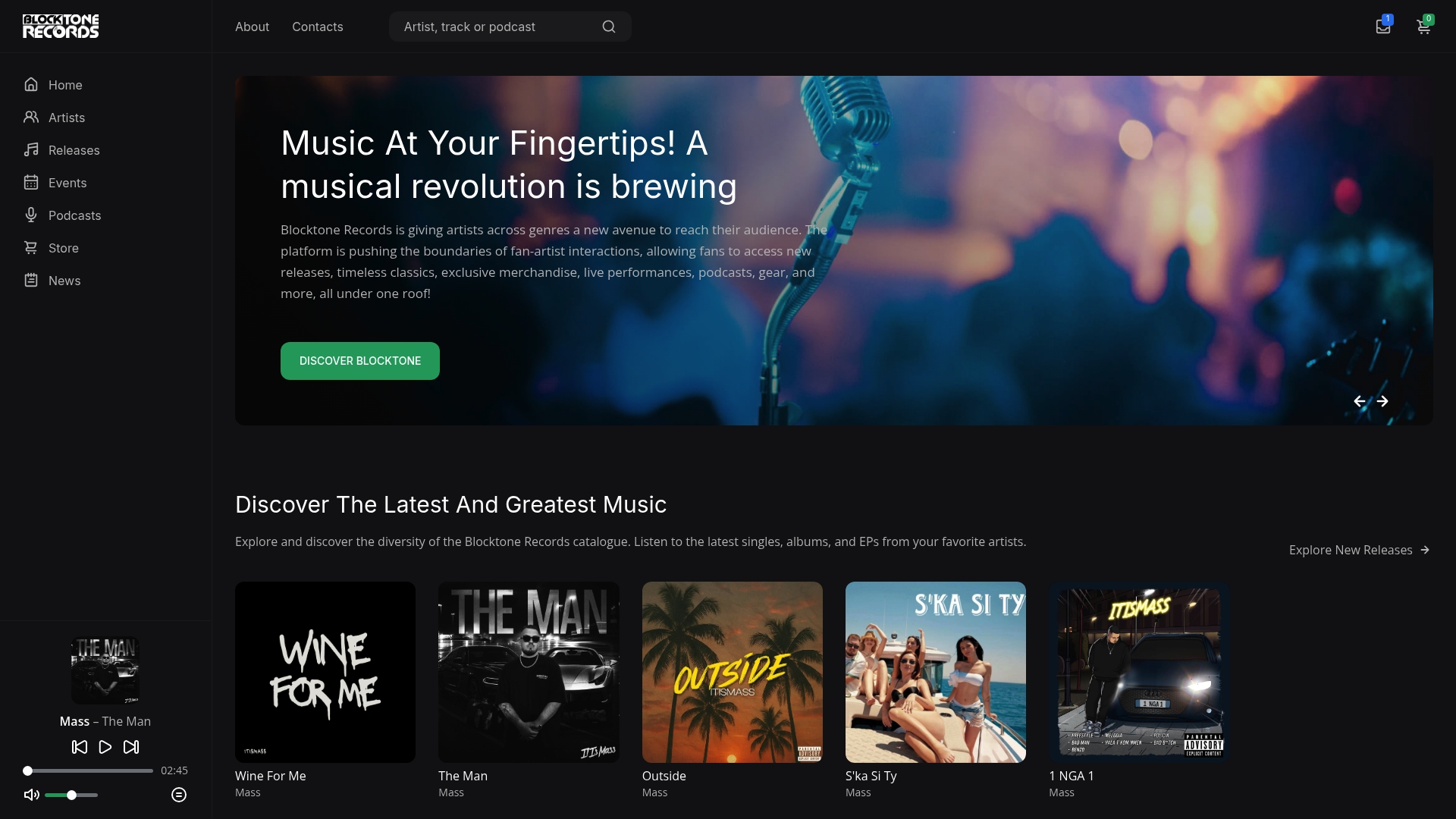
BlockTone Records is a platform where editorial curation meets artist empowerment. Artists can showcase their music, connect with fans, and grow their reach across genres. Fans get access to curated releases, exclusive content, and a community that genuinely loves music. Whether you want to deepen your understanding of music discovery for artists or explore the world of music streaming, BlockTone Records offers a warm, welcoming space to do it. Come find your next favorite artist, or let the world find you.
Frequently asked questions
How does music content curation differ from algorithmic playlists?
Music content curation involves human editorial selection with intentional context and narrative, while algorithmic playlists rely on automated pattern recognition based on listening data. The key difference is trust, context, and cultural awareness.
What are the best indicators of a successful curated playlist?
The strongest signals include high completion rates of 80% or above, steady follower growth, and a healthy balance of emerging and established artists that keeps listeners engaged and returning.
Does music curation actually help new artists grow their fanbase?
Absolutely. Editorial curation exposes new artists to audiences they would never reach on their own, especially when playlists follow the 70% emerging artist model that prioritizes discovery alongside familiar names.
What are common challenges faced by music curators?
The biggest challenges include cross-platform inconsistencies, coherence loss from over-editing, and the growing risk of algorithmic homogenization reducing the diversity of music that actually reaches listeners.