
The Content System Behind a Successful Music Release
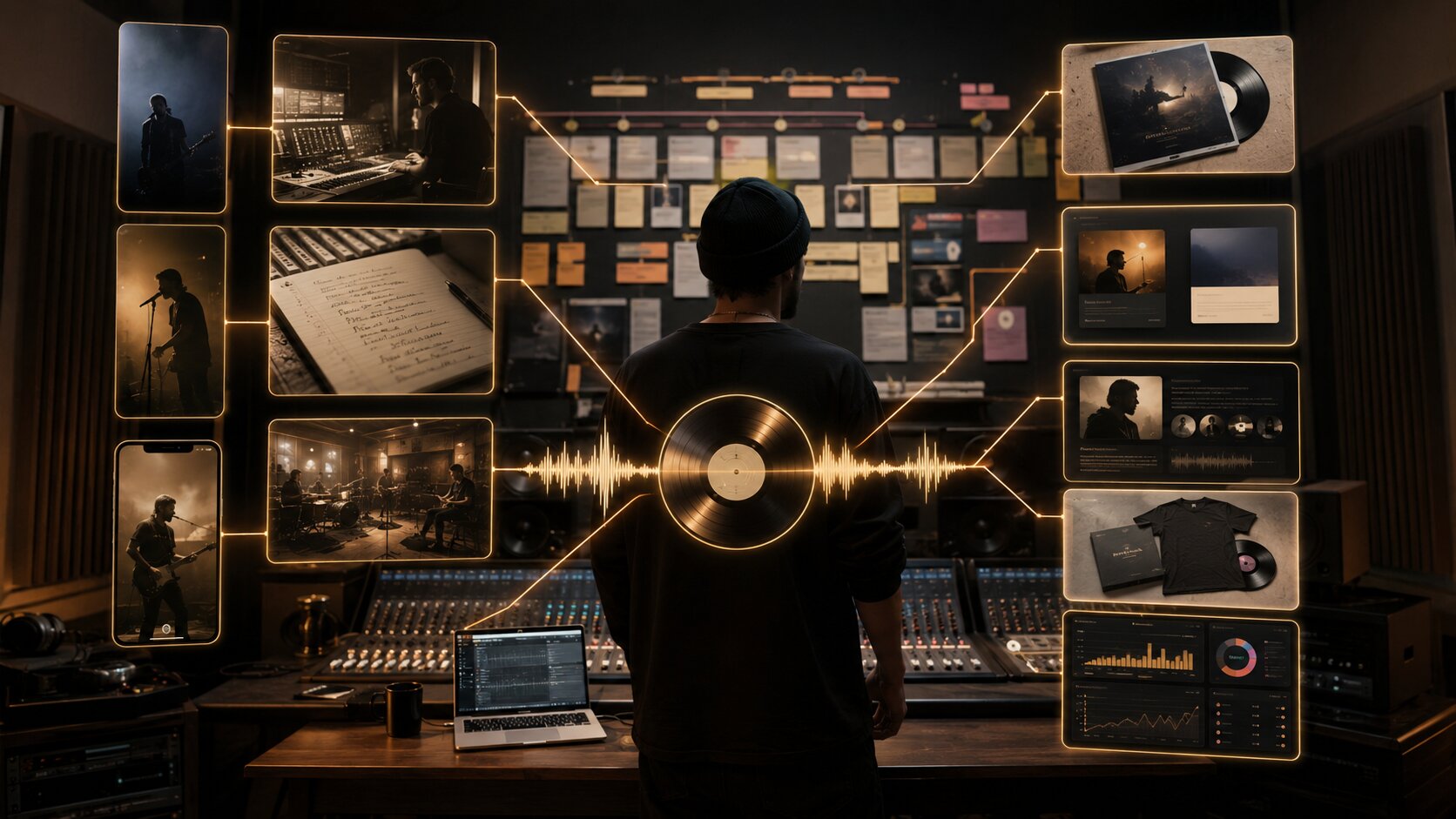
A successful music release campaign is not a collection of unrelated promotional posts. It is a repeatable content system that turns one song into multiple stories, formats, and fan actions before and after release day.
Start with one primary campaign goal, build a bank of stories around the music, capture reusable assets in batches, and assign each platform a specific role. After publishing, use audience behavior to decide which ideas should be repeated, adapted, or retired.
Independent artists rarely struggle because they have nothing to post. They struggle because every post becomes a separate creative project.
As release day approaches, the artist suddenly needs teaser videos, photographs, cover reveals, captions, emails, visualizers, profile updates, short-form clips, streaming links, and release-day announcements. These tasks compete with rehearsals, production, administration, and the actual work of making music.
Without a content system, promotion usually becomes a short burst of repetitive announcements followed by silence. Fans may see several versions of “my new song is out,” but they receive little context about the song, the artist, or why the release deserves their attention.
A music release content system solves that problem. It defines what the campaign should achieve, which stories will carry it, how assets will be produced, where each piece will appear, and what happens after publication. The goal is not to turn musicians into full-time content creators. It is to make release promotion more organized, sustainable, and effective.
Table of Contents
- Start With the Conversion, Not the Calendar
- Build a Story Bank Before You Build a Posting Schedule
- Create a Modular Asset Library From One Release
- Assign Every Platform a Specific Job
- Run the Campaign in Content Waves
- Manage Production With a Simple Release Board
- Measure Whether Content Is Moving People Closer
- Keep the Release Alive After Launch Week
- Frequently Asked Questions
Key Takeaways
| Point | Details |
|---|---|
| Choose one primary fan action | Decide whether the campaign should generate awareness, pre-saves, streams, followers, email signups, ticket sales, or direct purchases. |
| Separate stories from formats | Develop the message first, then adapt it into short videos, photographs, emails, performances, livestreams, and longer videos. |
| Capture content in batches | One organized studio, rehearsal, or location shoot can supply raw material for several stages of the release campaign. |
| Give platforms different roles | Discovery platforms, streaming profiles, email lists, websites, and direct-sales pages should not all receive identical content. |
| Continue beyond release day | Use performances, listener questions, lyric explanations, production details, and audience reactions to extend the campaign. |
| Measure fan movement | Evaluate whether content causes people to listen, save, follow, reply, subscribe, purchase, or return. |
Start With the Conversion, Not the Calendar
Many release plans begin with a question such as, “What should I post four weeks before the song comes out?” A stronger starting point is, “What should an interested person do next?”
Choose one primary conversion for the campaign. Depending on the release and the artist’s current stage, that action might be:
- Pre-save or pre-add the release
- Stream the focus track
- Follow the artist
- Join an email list
- Watch the complete music video
- Buy a download, vinyl record, or merchandise item
- Purchase a ticket
Secondary actions can still exist, but the campaign needs a clear center. Otherwise, one post directs fans to Spotify, another asks them to watch YouTube, another promotes merchandise, and another announces a show. The audience receives several disconnected requests without understanding which one matters most.
The primary action should influence the content you produce. A campaign focused on discovery needs recognizable hooks, clear emotional ideas, and videos that make sense to people who have never heard of the artist. A direct-sales campaign needs more context about the project, the physical product, and the value of supporting the artist directly.
Set a realistic objective beside the action. For example, an independent artist might aim to generate qualified interest in a single, bring existing listeners back, and identify two or three content concepts that deserve to be repeated.
This objective is more useful than expecting every release to become viral. It gives the campaign a practical purpose even when the final streaming numbers remain modest.
Build a Story Bank Before You Build a Posting Schedule
A content calendar answers when something will be published. It does not solve what the artist has to say.
Before assigning dates, create a story bank containing the raw ideas behind the release. Organize those ideas into categories that reveal different sides of the song.
The Origin
Document where the song began. Useful material might include the first voice memo, an early chord progression, a production reference, the lyric that unlocked the chorus, or the event that inspired the track.
The origin story does not need to be dramatic. A small, specific detail is often more believable than an exaggerated claim about how important the song is.
The Transformation
Show what changed between the first draft and the final master. Compare alternate lyrics, discarded sections, arrangement changes, different vocal approaches, or sound-design decisions.
Transformation content gives listeners a reason to hear the finished recording more carefully because they understand some of the choices behind it.
The Emotional Question
Identify the tension that makes the song relatable. Instead of immediately explaining every lyric, frame the subject as a question:
- Why do people stay in relationships they know are ending?
- What does ambition cost?
- Can a hometown still feel like home after you leave?
- Why can a happy memory become painful?
These questions allow people to enter the campaign before they know the artist. The post becomes a piece of relatable content rather than an advertisement disguised as a personal story.
The Performance
Collect moments that demonstrate musicianship. These might include a stripped-back chorus, a difficult vocal phrase, an instrumental breakdown, a live rehearsal, or an alternate version of the arrangement.
The World Around the Song
Define the release’s visual language, locations, objects, clothing, lighting, textures, and atmosphere. This helps the campaign feel connected without placing the cover artwork on every post.
Pro Tip: Write at least three ideas under each story category. A bank of 15 specific ideas is more useful than a calendar filled with vague entries such as “post teaser” or “promote single.”
Create a Modular Asset Library From One Release
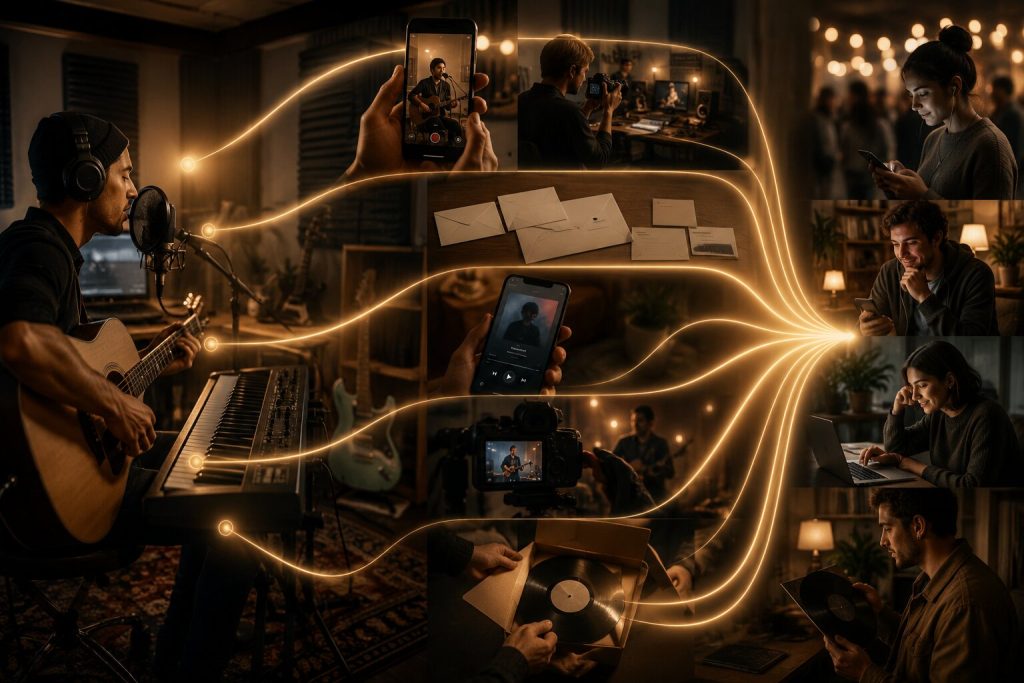
Efficient campaigns do not create every post from the beginning. They capture a controlled library of raw material and assemble different versions from it.
Plan one or two dedicated content sessions around the release. During those sessions, capture:
- Complete vertical performances
- Close-up instrumental footage
- Silent visual moments for text-led videos
- Spoken explanations of lyrics or production choices
- Studio and rehearsal footage
- Clean photographs in vertical and horizontal orientations
- Short visual loops for streaming profiles
- Several introductions, hooks, and endings
- Natural footage of the artist writing, traveling, listening, or preparing
Record complete takes rather than stopping after every planned clip. Unexpected gestures, transitions, mistakes, and reactions can become useful assets later.
One full performance could produce a 10-second chorus hook, a lyric-led edit, a production comparison, a release-day performance, and a post-release acoustic version. The same recording session can therefore support multiple campaign stages without making every post look identical.
Spotify also allows artists to add short looping Canvas visuals to tracks, giving the visual system another place to appear after a listener reaches the music. (Spotify for Artists – Canvas)
The main mistake to avoid is excessive uniformity. Consistent art direction is useful, but repeatedly publishing the same footage, crop, caption structure, and section of the song makes the campaign feel smaller than it is.
Assign Every Platform a Specific Job
Copying the same post across every channel saves time, but it ignores how people use those channels. Keep the campaign message consistent while changing the role and presentation of the content.
| Channel | Primary Job | Suitable Content |
|---|---|---|
| TikTok and Instagram Reels | Discovery and participation | Strong hooks, relatable ideas, informal performances, experiments, and responses |
| YouTube Shorts | Discovery that can lead to deeper viewing | Performance excerpts, recurring series, production explanations, and video teasers |
| YouTube long-form | Depth and searchable context | Music videos, live sessions, documentaries, and detailed breakdowns |
| Streaming artist profiles | Convert interest into listening | Updated profiles, visual assets, artist playlists, release tools, and catalog organization |
| Direct communication and repeated access | Personal context, early access, release links, merchandise, and tour news | |
| Bandcamp or an artist store | Direct financial support | Downloads, physical editions, bundles, and supporter messages |
| Artist website | Stable campaign destination | Embedded music, biography, press materials, tour dates, and mailing-list signup |
TikTok for Artists provides song, post, and follower analytics that can help musicians evaluate content performance and audience behavior. Use that information to identify repeatable creative ideas rather than chasing isolated view counts. (TikTok Newsroom – TikTok for Artists)
YouTube Studio also provides Shorts-specific performance data, including discovery sources and engagement signals. Comparing several videos can reveal whether the topic, opening seconds, performance style, or video length influenced the result. (YouTube Help – Shorts Analytics)
Owned and direct channels matter because social reach can fluctuate. Bandcamp automatically notifies followers about new music and merchandise, while its messaging tools allow artists to communicate with supporters outside a conventional social feed. (Bandcamp – Artist Guide)
Run the Campaign in Content Waves
A release campaign should change as the audience moves from unfamiliarity to recognition, interest, and action. Publishing the same type of announcement for six weeks does not create that progression.
Wave One: Establish the Idea
Suggested period: four to six weeks before release.
Introduce the song’s emotional subject, creative world, or central question without explaining everything. Publish early performance fragments, studio moments, visual motifs, or narrative posts that can stand alone.
The objective is recognition, not immediate conversion. Someone should be able to enjoy or understand the content even if they do not click a link.
Wave Two: Connect the Idea to the Release
Suggested period: two to three weeks before release.
Reveal the title, artwork, release date, and strongest section of the music. Introduce the pre-save or pre-add link and explain why this particular song matters within the artist’s development.
Spotify recommends delivering and pitching a focus track in advance rather than waiting until the final days before release. Early preparation also leaves time to correct metadata, update profiles, and organize visual assets. (Spotify for Artists – Release Guide)
Wave Three: Concentrate Attention
Suggested period: the final week and release day.
Increase clarity rather than simply increasing volume. Publish the strongest performance, a direct announcement, a personal email, and one clear listening destination.
Avoid filling release day with numerous near-identical graphics. Strong content needs enough time to circulate, collect responses, and reach different parts of the audience.
Wave Four: Add Proof and Depth
Suggested period: one to four weeks after release.
Use comments, listener reactions, live performances, lyric discussions, production details, playlist additions, and audience-created content to give people new reasons to return.
Spotify has reported that a large share of a release’s first-year listening can occur after its opening month. Release day should therefore be treated as the beginning of the public campaign rather than the moment promotion ends. (Spotify for Artists – Preparing for Release Day)
Manage Production With a Simple Release Board
A useful release board needs more than publication dates. Each content item should have enough information to explain its purpose and current status.
| Field | Example |
|---|---|
| Story | The chorus was rewritten after the first vocal session |
| Format | Vertical spoken video with a demo comparison |
| Audience stage | Existing followers who already know the artist |
| Platform | Instagram Reels, TikTok, and YouTube Shorts |
| Fan action | Comment on which version works better |
| Status | Captured, editing, approved, or published |
| Publish window | Two weeks before release |
| Result | Completion rate, comments, profile visits, and link activity |
Organize the board into four basic stages: ideas, captured, editing, and published. Add a separate archive for strong concepts that should be adapted during later campaigns.
When more than one person is involved, assign ownership. The artist may approve the story, a photographer may supply raw media, an editor may produce vertical cuts, and a manager may schedule posts and record results.
The mistake to avoid is building such a complicated project-management system that maintaining it becomes another campaign burden. Track only the information that helps the team make a decision.
Measure Whether Content Is Moving People Closer
Views indicate exposure, but they do not prove that a release campaign is creating a durable audience. Measure performance at three levels.
Content Signals
Review completion rate, watch time, shares, comments, saves, and profile visits. These signals reveal whether the idea and format held attention.
Music Signals
Track streams, saves, playlist additions, followers, video views, and repeat listening. Compare changes with publishing dates, but do not assume every increase came from a single post.
Relationship Signals
Look for email signups, replies, direct purchases, ticket clicks, returning listeners, and recurring commenters. These actions usually indicate a deeper connection than passive exposure.
Spotify for Artists separates listeners into audience segments and provides conversion-related data that can help artists understand whether people are moving from passive discovery toward more intentional listening. (Spotify for Artists – Audience Segmentation)
Use a short weekly review to answer five questions:
- Which story generated the strongest response?
- Which format held attention most effectively?
- Which post caused a meaningful next action?
- Which concept should be repeated with a different opening?
- Which idea should be retired?
Do not redesign the entire campaign after one underperforming post. Test a new hook, duration, caption, format, or section of the song before abandoning the underlying idea.
Keep the Release Alive After Launch Week
Post-release content should not consist of leftover announcements. It should reveal material that becomes more interesting after people can hear the complete song.
Useful post-release angles include:
- Explaining a lyric that listeners keep mentioning
- Recreating the song in another genre or arrangement
- Showing isolated vocal, drum, bass, or production layers
- Responding to a fan interpretation
- Sharing rehearsal footage for the live version
- Comparing the demo, master, acoustic, and stage arrangements
- Connecting the release to older catalog songs
- Showing how listeners are discovering the track
- Featuring fan-made videos with permission
- Publishing a retrospective about what the artist learned
Apple Music for Artists provides customizable promotional assets that can be used to share releases and selected milestones in different formats. These tools can supplement original content without replacing the artist’s story. (Apple Music for Artists – Promote)
The campaign is finished when the content no longer creates useful attention or when the next release needs to take over—not simply because a predetermined number of days has passed.
Build a Repeatable Release Workflow With BlockTone Records
BlockTone Records helps independent artists approach music promotion as a connected process rather than a series of isolated upload dates.
Use this content system as a reusable operating model: define the fan action, build the story bank, capture assets in batches, publish in waves, and carry the strongest ideas into the next release. Each campaign should leave behind useful templates, creative lessons, and audience data that make the next campaign easier to manage.
Frequently Asked Questions About Music Release Content Systems
How much content should an artist create for one music release?
There is no universal number. A focused independent campaign might use 12 to 25 core pieces distributed over several weeks, with additional edits made from the same raw footage. Quality, variety, and relevance matter more than publishing every day.
When should release content begin?
For many independent releases, beginning four to six weeks before release provides enough time to establish the story, test hooks, prepare assets, and introduce the song gradually. Platform submissions and profile updates should be completed as early as practical.
Should every post include a pre-save or streaming link?
No. Some posts should create recognition, conversation, or emotional interest without demanding an immediate action. Use direct links when the audience has enough context to understand why clicking is worthwhile.
Is it necessary to post every day during a release campaign?
No. Several purposeful posts per week can be more effective and sustainable than daily filler. Increase frequency only when you have distinct material and a clear reason for publishing it.
What content works best before a song is released?
Strong pre-release content usually introduces the song’s emotion, story, performance, visual world, or creative process. Test several hooks instead of relying entirely on artwork reveals and countdown graphics.
What should an artist post after release day?
Useful post-release content includes alternate performances, lyric explanations, production breakdowns, listener reactions, live arrangements, fan questions, and connections to the artist’s wider catalog.
How can a small artist know whether the content system is working?
Look for movement beyond views. Useful signs include profile visits, saves, repeat streams, relevant comments, email signups, direct purchases, follower growth, and listeners returning across multiple posts.
Sources Used