Why Riley Green’s “Think As You Drunk” Is More Than a Barroom Joke
Riley Green’s “Think As You Drunk” is a comedic country song about an obviously intoxicated man who insists that everyone around him has exaggerated how drunk he is. The central joke comes from the narrator attempting to say that he is not as drunk as people think, only to reverse the words and accidentally prove the opposite.
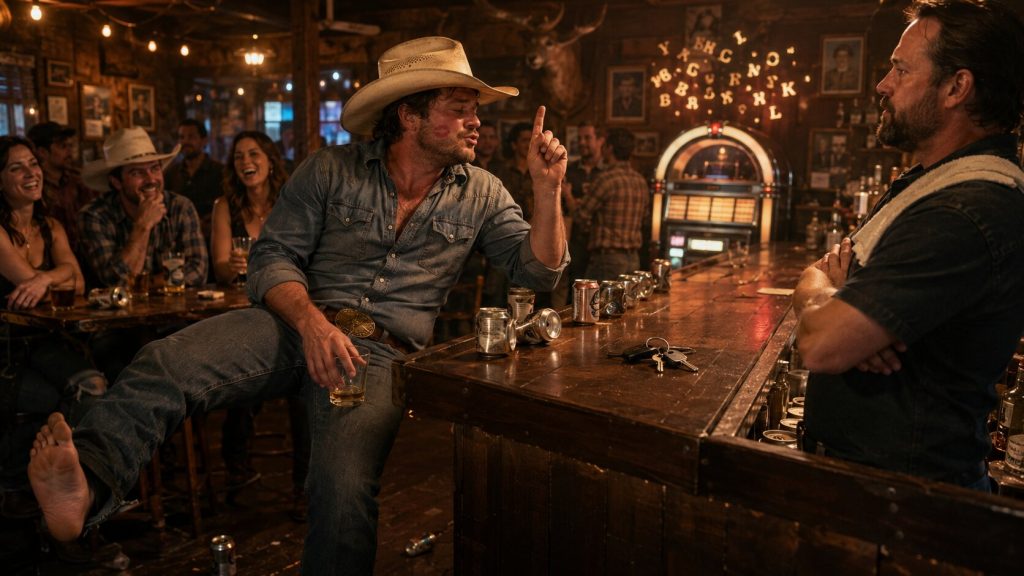
The song works because the narrator never recognizes the contradiction. He presents every piece of evidence against himself—empty cans, missing keys, lost clothing, slurred speech and an inability to stand—as though it supports his claim that he is still in control.
Beneath the slapstick humor, the track is also a deliberate tribute to Toby Keith. Green draws on the swagger, self-deprecation and larger-than-life barroom storytelling associated with Keith’s catalog, then makes that connection explicit by incorporating Keith’s voice into the end of the recording. (People)
How a Backwards Sentence Became a Riley Green Song
“Think As You Drunk” was released on May 28, 2026. The song appears on Riley Green’s album That’s Just Me, a 19-track project scheduled for release on September 18, 2026. It is listed as the ninth song on the album. (Riley Green Official Website)
Green wrote the song with Jessi Alexander, Erik Dylan and Wyatt McCubbin. Toby Keith and Scotty Emerick are also credited because the finished recording incorporates part of Keith’s “As Good as I Once Was,” which Keith and Emerick co-wrote.
According to the official Apple Music credits, Green performs the lead vocal, while Toby Keith is credited for additional vocals. Dann Huff produced the track and also played electric guitar. The recording features acoustic and electric guitars, bass, piano, Hammond organ, steel guitar, fiddle and drums. (Apple Music)
The idea reportedly developed during a songwriting session after Green introduced the intentionally scrambled phrase “think as you drunk.” Green and Erik Dylan recalled that the writers completed the song in roughly 20 minutes, building a sequence of increasingly ridiculous incidents around the central joke.
Green initially recorded a simple guitar-and-vocal work tape before taking the song into Nashville’s Sound Stage with producer Dann Huff and a live studio band. Because the song slows down and briefly stops before its choruses, the musicians chose not to follow a rigid click track. Instead, they followed Green’s vocal phrasing as he led them back into tempo. (Billboard Country Update)
The Narrator Is His Own Worst Witness
The deeper comic mechanism of “Think As You Drunk” is not simply that a man has consumed too much alcohol. It is that he has become the least reliable witness to his own behavior.
He believes he is presenting a convincing defense. In reality, every new argument reveals another reason that the bartender, his friends and presumably his partner should not trust his judgment. His speech deteriorates, his memory disappears and his physical coordination collapses, yet his confidence remains untouched.
That gap between self-image and observable reality drives the entire song. The narrator sees himself as charming, functional and unfairly judged. Everyone else sees a man who has reached the end of a long drinking session and should probably go home.
Green does not turn the situation into a heavy moral lesson. The tone remains playful and theatrical. The character is not presented as a tragic figure but as a recognizable honky-tonk exaggeration: the customer who becomes entertaining because he has no idea how ridiculous he looks.
At the same time, the narrator is written with enough warmth to remain likable. Green has explained that listeners should still want to like the character even when he is doing absurd things. That balance prevents the song from becoming a simple list of drunken mistakes.
The Night Unravels One Excuse at a Time
The Opening Argument with the Bartender
The first verse begins with the narrator challenging a bartender who has apparently decided to stop serving him. He argues that he has spent so much money in the establishment that he practically pays its electricity bill.
The complaint immediately defines his personality. He is proud, argumentative and convinced that being a loyal customer entitles him to one more drink.
The humor arrives through dramatic irony. The narrator believes his indignation makes him sound authoritative, but protesting this aggressively about being cut off strongly suggests that the bartender has made the correct decision.
The verse then introduces unexplained details. The narrator does not know who took his keys or how lipstick appeared on his face. These are not minor lapses. They indicate that other people have already intervened in his evening and that events have occurred beyond his ability to remember them.
Instead of treating the confusion as evidence of intoxication, he dismisses it. The audience can recognize the truth, while the narrator continues assembling a defense that defeats itself.
The Pause Before the Punchline
As the song approaches its chorus, the narrator acknowledges that other people think he looks severely intoxicated. For a moment, his admission sounds like self-awareness.
He understands what the people around him have concluded from his behavior. Rather than accepting their judgment, however, he prepares to contradict it.
The musical hesitation before the chorus reflects his unstable mental state. The track slows as though he is concentrating intensely on delivering a clear statement. When the words emerge in the wrong order, that preparation makes the error even funnier.
The Chorus Turns Denial into Evidence
The chorus is structured like a courtroom statement from a witness who continuously submits evidence against himself.
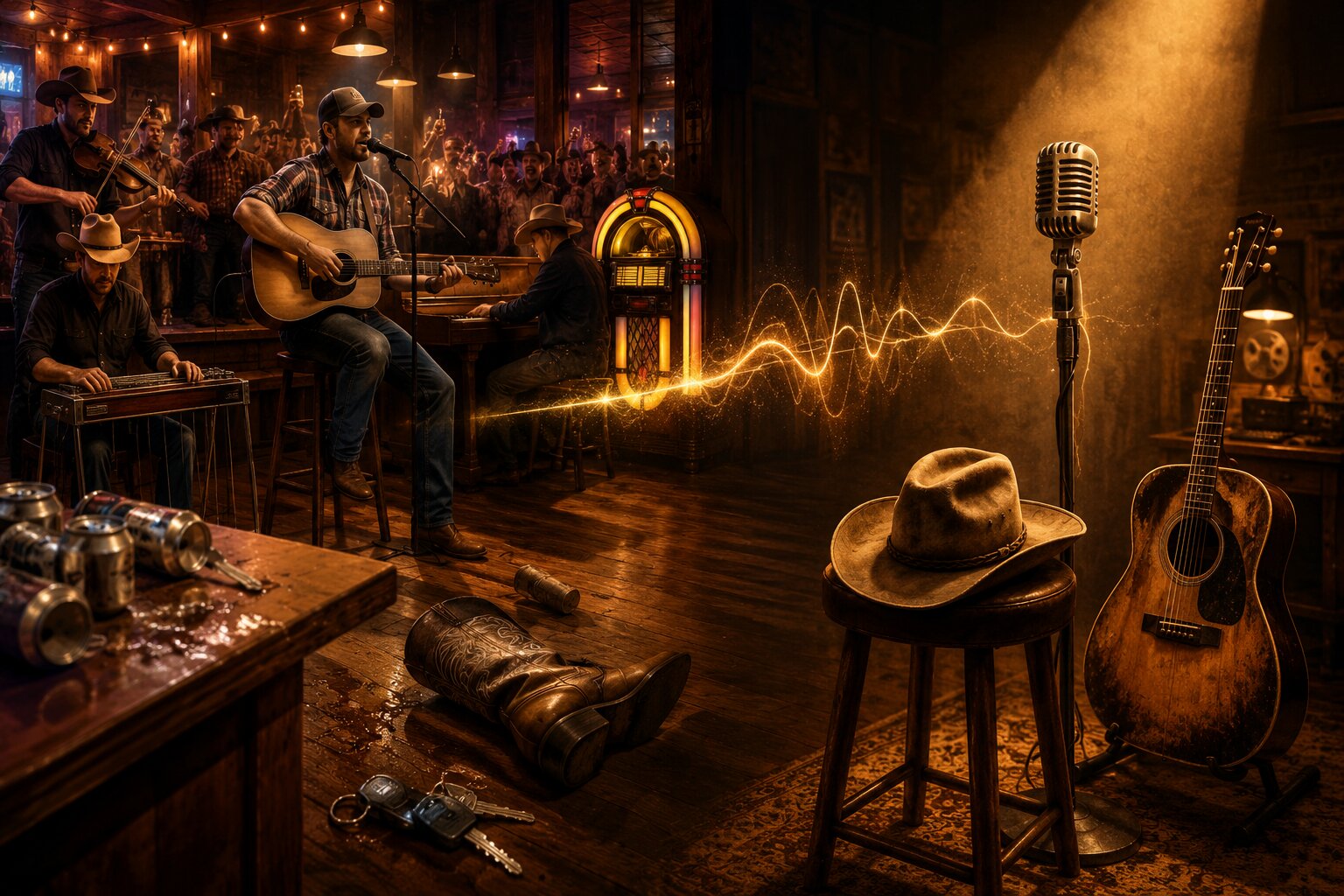
The backwards title phrase is the clearest indication of impairment, but the surrounding details expand the joke. The narrator asks listeners to disregard a large collection of empty cans. He struggles with the alphabet, cannot maintain his balance and continues carrying multiple drinks.
His supposed proof of sobriety is that he can still sing along with the jukebox and dance. In his mind, being able to participate in the bar’s entertainment outweighs every other physical and verbal symptom.
This is a recognizable form of intoxicated reasoning. A person invents one test that he can still pass and treats that narrow success as proof that nothing is wrong.
The chorus is therefore about denial as much as alcohol. The title is funny because the narrator’s mouth exposes what his pride refuses to admit.
The Second Verse Expands the Damage
The second verse broadens the consequences of the night. The narrator concedes that he has consumed several drinks, danced with strangers, lost part of his clothing and may have ended up lying outside.
Each admission is delivered casually, as though none of these events deserves concern. That casualness is central to the characterization. He is not successfully hiding the evidence; he simply lacks the perspective required to interpret it accurately.
The missing boot is especially effective country imagery. It is visual, specific and ridiculous. A general statement that the character behaved badly would be less memorable. A man returning from the bar with only one boot immediately creates a complete comic scene.
The image of him ending up in the yard pushes the story beyond the bar itself. The consequences are no longer contained inside the honky-tonk, but he continues insisting that everyone else has misread the situation.
From Noon Until Closing Time
Near the end of the song, the narrator reveals that he may have started drinking around noon, while the bar does not close until 2 a.m.
This detail quietly explains everything that came before it. The night is not the result of one unexpectedly strong drink. It is the culmination of an extended session in which the character has had many hours to lose his keys, forget conversations, dance, misplace clothing and accumulate empty cans.
The line also produces one of his strangest rationalizations. Because the bar is technically still open, he appears to believe that the evening—and therefore his continued drinking—remains reasonable. Closing time becomes the only boundary he is prepared to acknowledge.
Toby Keith Gets the Final Word
The ending moves beyond stylistic imitation and becomes a direct intergenerational tribute. Toby Keith’s voice appears through material from “As Good as I Once Was,” connecting Green’s narrator to one of Keith’s best-known comic characters.
The connection is carefully chosen. Keith’s song also centers on a boastful man whose confidence exceeds his present physical abilities. In both tracks, masculine pride survives even when the body and the surrounding circumstances undermine it.
Green has described Toby Keith as one of his greatest songwriting influences. After the song was completed, Green’s team shared it with Keith’s family and management, who understood it as an affectionate tribute and supported the use of Keith’s vocal.
A portion of the song’s proceeds was also designated for the Toby Keith Foundation, which supports pediatric cancer patients and their families. The outro therefore changes the emotional temperature of the recording: a comic drinking song closes with a meaningful acknowledgment of artistic influence and country music history. (People)
What the Song’s Details Really Symbolize
The Reversed Title
The most important device in “Think As You Drunk” is its reversed title. It demonstrates the narrator’s condition without requiring another character to explain that he is intoxicated.
It also functions as an instantly repeatable punchline and summarizes the conflict between perception and reality. The narrator believes he is correcting everyone else, but the correction confirms their judgment.
The Empty Cans
The empty cans act as physical evidence. The narrator’s memories may be incomplete and his explanations may be unreliable, but the cans remain visible proof of how much he has consumed.
By asking people to ignore them, he demonstrates how denial works: inconvenient evidence is not disproved but simply treated as irrelevant.
The Missing Keys
The missing keys suggest that someone else has taken responsibility for the narrator’s safety. They imply that his companions or the bartender understand his condition more clearly than he does.
What he interprets as an unexplained disappearance may actually be a practical intervention intended to prevent him from driving.
The Lipstick and the Cowgirls
The lipstick mark and the dances with strangers reinforce the narrator’s image of himself as a charismatic barroom figure. He appears to view these details as evidence that he is having a successful night.
Because he is an unreliable narrator, however, it is impossible to know whether events happened exactly as he remembers them. His supposed romantic success may be partly accurate, greatly exaggerated or completely misunderstood.
The Missing Boot
The missing boot symbolizes the breakdown of order. Boots are part of the traditional country persona, helping communicate confidence, masculinity and a connection to rural life.
Losing one boot transforms that composed image into slapstick. The character may still imagine himself as the confident center of the bar, but his appearance tells a very different story.
The Jukebox
The jukebox represents communal memory and belonging. The narrator cannot organize ordinary language correctly, yet he insists that he can remember and perform every song in the bar.
Music remains available to him even when normal speech begins to fail. That contrast helps explain why the track feels designed for live audiences: the character may be incoherent, but the entire room can still join him in the chorus.
Is “Think As You Drunk” Based on a True Story?
There is no verified evidence that “Think As You Drunk” documents one specific night from Riley Green’s life.
Published accounts describe the track as an idea-driven songwriting exercise built around its deliberately scrambled title. The writers then created a fictional barroom character through increasingly absurd details.
Wyatt McCubbin joked that listeners who do not recognize someone like the narrator may actually be that person themselves. The comment suggests that the character is intended as a familiar composite rather than a direct portrait of one identifiable individual.
The safest interpretation is that the song transforms recognizable honky-tonk behavior into an exaggerated fictional narrative. Its situations feel believable because many listeners have encountered someone who becomes overconfident, argumentative and unreliable after drinking too much.
Green’s admiration for Toby Keith, by contrast, is publicly documented. The tribute, the use of Keith’s vocal and the musical connection to “As Good as I Once Was” are intentional rather than speculative.
How the Song Expands Riley Green’s Catalog
“Think As You Drunk” fits Riley Green’s catalog through its traditional instrumentation, conversational language and preference for characters rooted in recognizable Southern settings.
Many of Green’s best-known songs emphasize nostalgia, family, heartbreak, romance or rural identity. This track reveals a more openly comic side of the same artistic persona. The setting remains familiar—beer, boots, a jukebox and a local bar—but the emotional objective is laughter rather than reflection.
That tonal range matters within That’s Just Me. Official album materials describe the project as exploring fleeting romance, lingering heartbreak, escapism and country pride through Green’s direct, lived-in writing style. “Think As You Drunk” represents the album’s rowdy and humorous extreme. (Riley Green Official Store)
The song also places Green within a specific lineage of personality-driven country storytelling. Rather than merely borrowing Toby Keith’s attitude, Green acknowledges the influence directly and allows Keith’s voice to close the recording.
As a result, the track feels both retrospective and contemporary. It recalls an era of witty radio-country character songs while functioning as a modern Riley Green single designed for crowd participation.
The Last Call on What “Think As You Drunk” Means
“Think As You Drunk” is ultimately about the comic distance between how a person sees himself and how everyone else sees him.
Its narrator is intoxicated, disorganized and increasingly incoherent, but he remains certain that he is still in control. Every excuse undermines his argument, and the scrambled title becomes the perfect verbal symbol of denial.
The song resonates because it does not overcomplicate its premise. The story is immediate, visual and easy to follow. Each new detail raises the absurdity while reinforcing the same central contradiction.
At the same time, the Toby Keith outro gives the recording an additional emotional layer. What initially sounds like a novelty phrase becomes an affectionate tribute to one of Green’s defining influences.
The track therefore carries two stories at once: the fictional story of a man refusing to admit that his night has gone too far, and the real story of a country artist honoring a songwriter who helped shape his own sense of humor.
FAQs About “Think As You Drunk”
What does “Think As You Drunk” mean?
The title intentionally reverses the idea that the narrator is not as drunk as people think he is. His inability to arrange the words correctly reveals that he is far more intoxicated than he admits.
Who wrote “Think As You Drunk”?
Riley Green wrote the song with Jessi Alexander, Erik Dylan and Wyatt McCubbin. Toby Keith and Scotty Emerick also receive credits because the recording incorporates part of Keith’s “As Good as I Once Was.”
Who produced “Think As You Drunk”?
Dann Huff produced the recording. He also played electric guitar on the track, which features fiddle, steel guitar, piano, Hammond organ, bass, acoustic guitar and drums.
Is “Think As You Drunk” based on a true story?
No specific real-life incident has been confirmed. Available accounts indicate that the writers created a fictional honky-tonk character around the song’s backwards title phrase.
Why is Toby Keith featured at the end of the song?
Riley Green included Toby Keith’s voice as a tribute to one of his greatest songwriting influences. The outro uses part of “As Good as I Once Was,” connecting the boastful comic narrators of both songs.
What is the chorus of “Think As You Drunk” about?
The chorus shows the narrator trying to prove that he is sober enough to continue drinking. Every example he offers, including his confused speech, poor balance and collection of empty cans, actually confirms that he is drunk.
What album is “Think As You Drunk” from?
“Think As You Drunk” appears on Riley Green’s fourth studio album, That’s Just Me. The 19-track album is scheduled for release on September 18, 2026, with the song listed as track nine.
Sources Used
- Riley Green Official Website – That’s Just Me album page
- Riley Green Official Website – “Think As You Drunk” official video listing
- Apple Music – “Think As You Drunk” song page and credits
- Billboard Country Update – report on the song’s writing and recording
- People – Riley Green’s Toby Keith tribute in “Think As You Drunk”
- Riley Green Official Store – That’s Just Me tracklist and album description