
College Radio and Community Radio for Emerging Artists
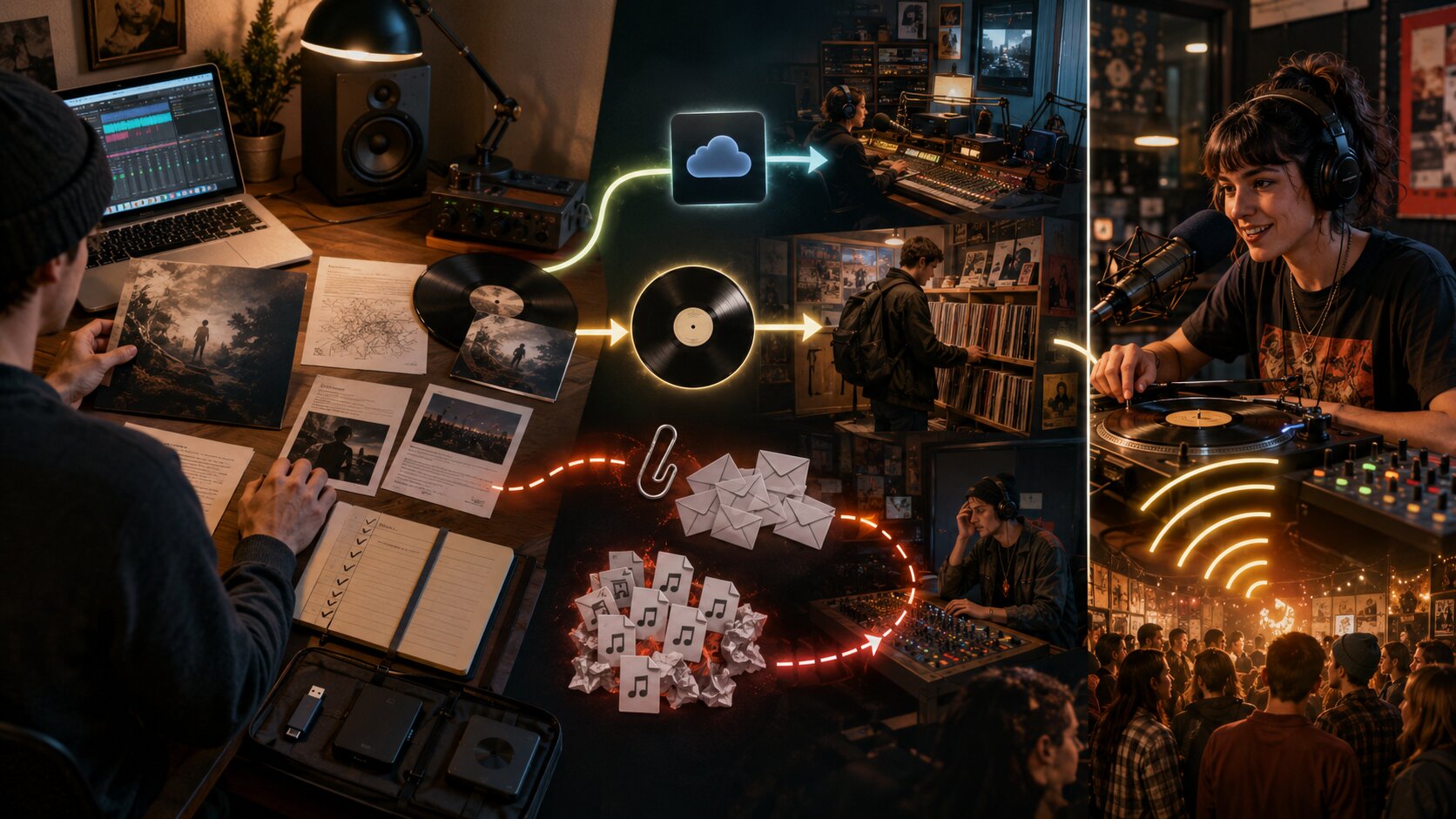
College and community radio can give emerging artists human-curated exposure inside specific music scenes and local communities. The strongest campaigns target relevant stations and specialty shows, follow each station’s submission requirements, provide broadcast-ready assets, and connect radio outreach to an active release or tour cycle. Treat useful airplay as the beginning of a relationship with DJs and local music communities rather than simply chasing a high number of spins.
Introduction
Streaming platforms and short-form video dominate most conversations about music discovery, but independent artists should not assume radio has become irrelevant. College and community stations still operate as discovery environments where DJs, music directors, students, volunteers, and specialist hosts actively decide which music reaches their audiences.
That structure can be particularly useful for artists who are still building recognition. The North American College & Community Radio Chart continues to track airplay reported by college and noncommercial stations, including overall, specialty, and adds charts. (NACC)
Community broadcasters can also operate as local cultural hubs rather than simply playlists transmitted over FM. Stations may support local musicians through interviews, live sessions, event partnerships, concert coverage, and community programming. (National Federation of Community Broadcasters)
The opportunity comes with an important condition: noncommercial radio is decentralized. One station may want WAV download links, another may accept physical releases, and individual DJs may have considerable freedom over their programs. A successful campaign therefore starts with research rather than a single submission template.
Table of Contents
- College and Community Radio Work Differently From Commercial Radio
- Build a Shortlist by Show, Sound, and Geography
- Make Your Release Easy to Review and Safe to Air
- Pitch While the Release Still Has a Radio Story
- Follow Each Station’s Submission Culture
- Turn Airplay Into Relationships, Not Just a Spin Count
- Know What Radio Can—and Cannot—Do for Your Career
- A Practical 30-Day Radio Outreach Plan
- Keep Building Beyond the First Campaign with BlockTone Records
- Frequently Asked Questions
Key Takeaways
| Point | Details |
|---|---|
| Target shows, not only stations | A specialist DJ whose program matches your sound may be more relevant than a larger station with no suitable programming. |
| Read every submission page | Submission formats vary. Never assume every station wants the same files, links, or physical formats. |
| Supply radio-ready assets | Make focus tracks, release details, credits, lyrics, clean versions, and downloadable audio easy to access. |
| Connect outreach to a current release | A new single, EP, album, tour date, or local event gives programmers a timely reason to consider the music. |
| Use geographic relevance | Hometown connections, upcoming concerts, regional collaborators, and local press can strengthen a community-radio pitch. |
| Measure relationships as well as spins | Track DJs, interviews, sessions, repeat airplay, local contacts, and future opportunities in addition to individual plays. |
College and Community Radio Work Differently From Commercial Radio
Commercial radio campaigns are often associated with more centralized programming, defined formats, and established promotional networks. College and community radio can be considerably more fragmented.
A university-affiliated station may be operated primarily by students, community volunteers, professional staff, or a mixture of all three. Its schedule might combine freeform programs with specialist shows devoted to punk, hip-hop, electronic music, jazz, metal, experimental music, folk, local releases, or other niches.
Some stations also give individual DJs substantial programming freedom. KEXP, for example, states that its DJs have freedom over what they play while its rotation serves as a curated discovery resource rather than a rigid commercial-style playlist. (KEXP Submission Guidelines)
Community radio can add another layer of relevance because its programming may be closely tied to a geographic or cultural community. Local artists can appear through airplay, interviews, live sessions, station events, and partnerships with nearby arts organizations.
For an emerging artist, this means fit can matter more than raw station size. An experimental producer may gain more from a specialist late-night electronic program than from repeatedly contacting larger stations whose programming does not match the record.
Pro Tip: Listen to the program you intend to contact and inspect recent playlists when they are available. A few minutes of research can prevent a completely mismatched pitch.
Build a Shortlist by Show, Sound, and Geography
The first operational mistake in DIY radio promotion is often building the database around quantity. Collecting hundreds of station addresses feels productive, but a shorter list of genuinely relevant contacts is usually easier to personalize, track, and follow up with responsibly.
Start with musical compatibility
Research station schedules, specialty programs, playlist archives, DJ pages, charts, and local-music shows. Look for evidence that a station or host already programs artists whose audience, genre, or musical context overlaps with yours.
If you make abrasive post-punk, the existence of a generic music-submission inbox does not mean every DJ at that station is relevant. Find the people who already play adjacent music.
Add geographic relevance
Prioritize markets where you live, perform regularly, have collaborators, already attract listeners, or plan to tour. A radio pitch becomes more useful when the station can connect the music to something happening in its community.
KEXP’s current submission guidance, for example, asks artists to include upcoming shows in the Pacific Northwest or Bay Area. That illustrates why relevant tour information can strengthen a radio submission rather than functioning as unrelated background. (KEXP)
Build a working campaign database
For an artist handling promotion independently, a first campaign of roughly 20 to 40 carefully selected stations can be more manageable than an enormous unqualified mailing list. The exact number matters less than whether you can research and manage each contact properly.
| Field | What to Track |
|---|---|
| Station | Call letters and station name |
| Market | City or region |
| Contact | Music director, submission address, or relevant DJ |
| Show | Best-fitting program |
| Genre fit | Why your release belongs there |
| Submission method | Email, form, download link, CD, vinyl, or another requested format |
| Date sent | Initial submission date |
| Follow-up | Whether and when follow-up is appropriate |
| Result | Added, played, reviewed, declined, or unknown |
| Relationship | DJ response, interview, session, event lead, or repeat support |
The goal is not merely to create a mailing list. Build a radio relationship database that becomes more useful with every release.
Make Your Release Easy to Review and Safe to Air
A programmer should not need to search through multiple social profiles to determine which track you are promoting, when it was released, or where to download it.
A useful radio package can include:
- artist name;
- release title;
- release date;
- one or two focus tracks;
- streaming link;
- downloadable WAV files when requested;
- label information or a clear indication that the project is self-released;
- a concise artist bio or one-sheet;
- song and recording credits;
- lyrics when relevant;
- clean versions where necessary;
- upcoming shows relevant to the station’s market;
- direct contact information.
KEXP’s submission guidelines request many of these assets, including streaming and WAV download links, focus tracks, release dates, lyrics, credits, a bio or one-sheet, clean edits where required, and relevant upcoming shows. It also specifically asks artists to use links instead of attaching audio files directly to the submission email. (KEXP Submission Guidelines)
Prepare clean versions before they become a problem
Artists targeting U.S. terrestrial radio should pay attention to broadcast-content restrictions. The FCC prohibits obscene programming at all times and restricts indecent or profane broadcast material between 6 a.m. and 10 p.m. (Federal Communications Commission)
That does not mean every song needs a censored alternative. It means you should know exactly what is contained in the track you are promoting. If explicit language could prevent daytime airplay, prepare a clean version before a programmer has to request one.
Avoid sending a poorly organized folder containing multiple unlabelled masters. Make it immediately clear which track is the focus single and which file is the clean version.
Pitch While the Release Still Has a Radio Story
Radio outreach becomes stronger when there is a reason for a programmer to consider your music now rather than at an undefined point in the future.
That reason could be:
- an upcoming single;
- a newly released EP or album;
- a regional tour;
- a hometown release show;
- a festival appearance;
- a music video;
- a collaboration with an artist relevant to that market;
- a local cultural event.
NACC’s reporting system is oriented toward current music. Its reporting guidance also distinguishes new “adds” from subsequent airplay and generally treats older releases differently from current releases for chart purposes. (NACC Reporting Rules and Guidelines)
The practical lesson is straightforward: do not release a record, ignore radio for months, and then expect late outreach to create urgency. Start station research before the release so your campaign can connect with the period when the record is genuinely current.
Give the pitch a concrete reason to exist
If you are playing a show in the station’s city three weeks after release, mention it. If you have a local collaborator, include that context when it is genuinely relevant. If the song is tied to a community event or regional story, make that connection clear without manufacturing significance.
Mistake to avoid: Do not invent momentum. A straightforward explanation of what you are releasing and why it fits the station is more credible than claiming a track is “blowing up” without evidence.
Follow Each Station’s Submission Culture
There is no universal college-radio submission format. Even among well-established noncommercial stations, preferred delivery methods can vary.
KEXP currently requests digital submissions with streaming and download links and asks artists not to send physical releases to its music department. The important lesson is not that every station should be approached digitally; it is that the official station instructions should override generic music-promotion advice. (KEXP)
Before contacting a station:
- Find its official music-submission page.
- Identify the correct music director, department, show, or DJ.
- Confirm whether the station accepts digital or physical submissions.
- Check whether email attachments are allowed.
- Determine whether the station prefers singles, EPs, albums, or particular formats.
- Identify specialty programs that closely match your sound.
- Check whether the station publishes guidance about follow-up.
Keep the actual pitch short
A radio email does not need to contain your entire biography. State who you are, what you are releasing, why it may fit the station or show, where the programmer can hear or download it, and any genuinely relevant local context.
A simple structure is enough: artist name, release title, release date, focus track, private or public listening link, download link when appropriate, and one concise sentence about why you selected that station.
Respecting the station’s workflow is part of the pitch. A perfectly written email sent in a format the music department specifically rejects is still a poor submission.
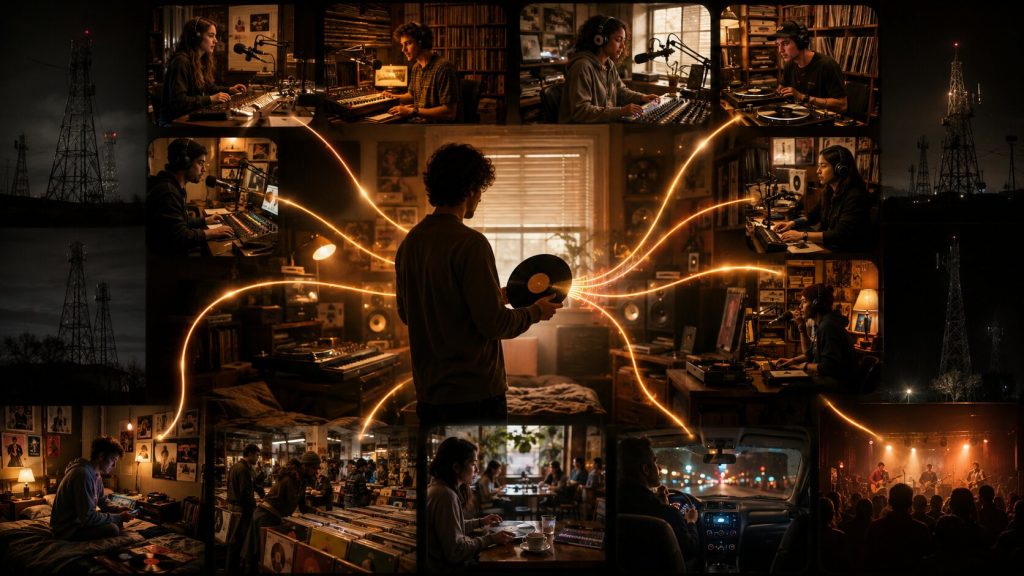
Turn Airplay Into Relationships, Not Just a Spin Count
One radio play is useful. A DJ who remembers your name when your next record arrives can become considerably more useful.
If a station plays your music, verify the spin through its playlist or archive when possible and respond proportionately. A short thank-you is usually enough. Do not immediately turn a positive interaction into several additional requests.
Instead, consider whether the relationship could naturally lead to:
- future airplay;
- another release submission;
- an interview;
- an in-studio or remote performance;
- a station event;
- a local-show recommendation;
- contact with another relevant host;
- stronger recognition when you return to the market.
Community broadcasters frequently participate in arts ecosystems beyond conventional playlisting. NFCB encourages stations to support local artists through airplay, interviews, live sessions, performances, cultural partnerships, and local events. (NFCB)
That changes the question artists should ask. Instead of only asking, “How many people heard this spin?” consider, “What useful connection did this airplay create?”
Know What Radio Can—and Cannot—Do for Your Career
College and community radio should usually be treated as one component of a wider release strategy rather than a standalone growth engine.
A realistic campaign can contribute to:
- third-party validation;
- local awareness;
- relationships with DJs and music directors;
- specialty-show exposure;
- interview opportunities;
- touring and venue connections;
- noncommercial chart activity;
- an additional discovery channel beyond streaming and social media.
It cannot guarantee streaming growth, ticket sales, press coverage, label interest, or a chart position. Even KEXP explicitly states that submission does not guarantee airplay. (KEXP)
Do not evaluate terrestrial airplay only through immediate revenue
There is also an important U.S. royalty distinction. Traditional terrestrial AM/FM broadcasting does not currently provide the same federal sound-recording performance royalty to recording artists and sound-recording copyright owners that qualifying digital transmissions can generate. Songwriters and publishers operate under a different public-performance rights framework. (SoundExchange)
For an emerging artist, the immediate value of a small college-radio campaign is therefore more likely to come from credible discovery, scene relationships, local opportunities, and audience development than from direct master-recording royalty income.
A Practical 30-Day Radio Outreach Plan
Days 1–7: Research the right stations
Choose the release you actually want radio programmers to focus on. Build your shortlist and identify appropriate stations, shows, DJs, submission pages, and music-director contacts. Remove weak matches rather than keeping them simply to make the spreadsheet longer.
Days 8–10: Prepare the assets
Create one organized folder containing the relevant masters, clean versions, artwork, bio, credits, lyrics, release information, and any other material specifically requested by your target stations.
Open every download and streaming link in a private browser window before sending it. A permissions error can ruin an otherwise professional submission.
Days 11–18: Submit in manageable batches
Send targeted submissions and record each one in your campaign sheet. Personalization does not require writing a completely new essay for every station. One accurate sentence explaining why the release fits a particular show is more useful than several paragraphs of generic praise.
Days 19–24: Watch for activity
Check playlists, station archives, charts, and program pages when available. Do not automatically interpret silence as rejection. Some stations receive substantial submission volume and may review music without sending individual replies.
Days 25–30: Follow up selectively
Follow up only when the station permits it and when you can add something useful. A relevant local show announcement, updated clean version, or release-date reminder can justify another message. Repeatedly asking whether someone has listened rarely improves the relationship.
At the end of the campaign, study which types of shows and stations responded. Those patterns are valuable research for your next release.
Keep Building Beyond the First Campaign with BlockTone Records
College and community radio work best alongside a broader independent-artist strategy that connects releases, live shows, artist branding, direct fan communication, press, streaming discovery, and consistent follow-up.
Use each campaign to learn which audiences and tastemakers respond to your music rather than treating promotion as a series of disconnected pushes. For more practical guidance on sustainable release strategy and independent music promotion, explore more resources from BlockTone Records.
FAQs About College and Community Radio for Emerging Artists
Is college radio still worth pitching for independent artists?
How do I submit music to college radio stations?
Should I send a single or a full album to college radio?
Do independent artists need a college radio promoter?
When should I start pitching college radio?
Do explicit songs need clean radio versions?
Can an artist pay a college or community station for airplay?
Sources Used
- KEXP – Music Submission Guidelines
- North American College & Community Radio Chart (NACC)
- NACC – Reporting Rules and Guidelines
- National Federation of Community Broadcasters – Community Radio and Local Arts
- Federal Communications Commission – Broadcast of Obscenity, Indecency, and Profanity
- Federal Communications Commission – Noncommercial Nature of Educational Broadcasting
- SoundExchange – U.S. Terrestrial Radio Performance Rights