


Why “Good Luck, Babe!” Turns Denial Into a Pop Tragedy
A Goodbye That Sounds More Like a Warning
“Good Luck, Babe!” is about loving someone who appears to share the same attraction but refuses to fully acknowledge what that attraction means. Instead of presenting the breakup as ordinary rejection, Chappell Roan frames it as a conflict between desire and denial: the narrator believes her former lover can choose another life, but cannot permanently erase what she feels.
Roan herself provided a particularly clear explanation when the single arrived. She described wanting to write about a common situation in queer relationships in which someone is struggling to come to terms with themselves, calling the song a wish of good luck to somebody avoiding their true feelings. (Pitchfork)
That explanation makes the title deliberately double-edged. “Good luck” sounds polite on the surface, but within the song it becomes sarcastic, wounded and prophetic. The narrator is effectively saying that her former partner may leave the relationship, but leaving cannot automatically change the feelings that made the relationship possible in the first place.
This tension gives the song much of its emotional force. The narrator is hurt because the relationship is ending, yet she sounds increasingly certain that the attraction itself was real. Her frustration comes from watching someone attempt to distance herself from a truth the narrator believes both of them already understand.
How “Good Luck, Babe!” Took Shape
“Good Luck, Babe!” was released on April 5, 2024, following Chappell Roan’s 2023 debut album, The Rise and Fall of a Midwest Princess. It arrived as a standalone single rather than appearing on the original version of that album. (Pitchfork)
The official credits list Kayleigh Rose Amstutz, Roan’s legal name, Daniel Nigro and Justin Tranter as the songwriters. Nigro produced the recording, while Mitch McCarthy handled mixing and Randy Merrill mastered it. (Chappell Roan Official Website)
The song’s creation was also more gradual than the popular idea that the entire track simply appeared in a few minutes. Nigro has explained that the first idea was written with Tranter in late 2022, when the songs for Roan’s debut album had largely already been selected. The early version was called “Good Luck, Jane!” before the writers decided that “Babe” sounded more playful and sarcastic. (Music Week)
That change matters because “babe” can sound affectionate, dismissive or cutting depending on how it is delivered. Roan uses all three possibilities throughout the performance. A phrase that might normally soften a goodbye instead becomes one of the sharpest parts of it.
Musically, the finished recording combines bright synth-pop textures with the dramatic scale of a power ballad. Its string arrangement becomes increasingly important as the song develops, helping transform an intimate relationship conflict into something enormous and almost theatrical. Nigro has described committing to the prominent string arrangement even though he initially worried that it could make the track unusually epic.
The gamble worked. “Good Luck, Babe!” became Roan’s major crossover hit, eventually reaching No. 4 on the Billboard Hot 100 and becoming her first No. 1 on Billboard’s Pop Airplay chart. The track also surpassed one billion Spotify streams during 2024. (Billboard)
The Real Conflict Is Not Attraction but Acceptance
The central question in “Good Luck, Babe!” is not whether attraction exists. From the narrator’s perspective, that question has already been answered. The conflict is whether the other woman is willing to recognize those feelings honestly and allow them to affect how she understands herself.
That distinction is essential. If this were simply a song about unrequited love, the narrator would be attempting to convince another person to love her. Instead, she sounds convinced that the emotional connection already existed. Her anger comes from believing that the other person is trying to rename, minimize or suppress it.
This is why the song is widely interpreted through the idea of compulsory heterosexuality, often shortened to “comphet.” The term broadly describes social pressures that position heterosexuality as the expected or default path, potentially making queer attraction more difficult for some people to recognize or accept. The Recording Academy specifically discussed “Good Luck, Babe!” in terms of compulsory heterosexuality when covering its Grammy recognition. (GRAMMY.com)
Roan does not turn that concept into an academic argument. She makes it personal. One person wants an honest relationship, while the other appears to want emotional and physical intimacy without accepting what that intimacy might reveal about her.
The result is a relationship that cannot remain stable. The narrator may still want her partner, but she eventually realizes that love cannot solve a conflict the other person refuses to acknowledge.
Inside the Song: How the Relationship Falls Apart
Verse One: Erasing Something That Clearly Happened
The opening verse establishes the contradiction at the center of the relationship. The narrator suggests that the other woman can insist their connection was insignificant, but she does not believe that explanation.
What makes the situation painful is not merely rejection. It is the attempt to erase or downgrade something the narrator experienced as emotionally real.
This creates an immediate imbalance between the two characters. Both participated in the relationship, yet only one seems prepared to recognize its emotional significance. The narrator is willing to admit vulnerability, while the other woman protects herself through distance and reinterpretation.
The opening therefore contains affection and bitterness at the same time. Romantic memories have not vanished, but the narrator now sees them through the frustration of knowing that the relationship cannot continue honestly.
Pre-Chorus: Intimacy Without Calling It Love
The pre-chorus narrows the conflict to language. The relationship may contain affection, desire and closeness, but one person resists describing it in terms that would make its significance difficult to deny.
This connects directly with Roan’s description of the song as being about a queer “situationship.” The ambiguity may initially allow the relationship to continue, but eventually it becomes the reason the relationship cannot survive.
For the narrator, refusing to name the connection no longer feels casual or harmless. It begins to feel like an emotional escape route that allows her partner to enjoy intimacy without confronting what that intimacy means.
Chorus: You Cannot Simply Outrun a Feeling
The chorus expands the conflict beyond the immediate relationship. The narrator imagines the other woman attempting to bury her attraction beneath encounters with men, alcohol and repeated efforts to convince herself that the feeling is temporary.
The song’s central image presents suppressing that feeling as an almost impossible task. Roan compares stopping desire with stopping something far larger than either character can control.
That exaggeration is important. Attraction becomes almost a force of nature. The other woman may be able to control her behavior, choose different relationships or construct explanations for herself, but the narrator believes those choices cannot simply switch an authentic feeling off.
This is where the title fully reveals its sarcasm. “Good luck, babe” is not straightforward encouragement. It is a prediction that the strategy of suppression will fail.
Verse Two: The Narrator Stops Waiting
By the second verse, the narrator sounds less willing to remain caught inside the other woman’s uncertainty. Desire is still present, but patience has started to disappear.
Being wanted privately while being denied emotionally is no longer enough. The narrator recognizes that remaining in the relationship would mean accepting rules created by somebody else’s fear or avoidance.
This marks an important shift in power. At the beginning of the song, she appears to want the relationship to survive. Later, she begins choosing her own emotional boundaries instead of waiting indefinitely to be chosen.
The pain has not disappeared, but the uncertainty has changed. She understands that affection without acknowledgment cannot produce the relationship she wants.
The Bridge: A Flash-Forward Into Regret
The bridge is the point where “Good Luck, Babe!” moves beyond the immediate breakup and imagines an entire future built on avoidance.
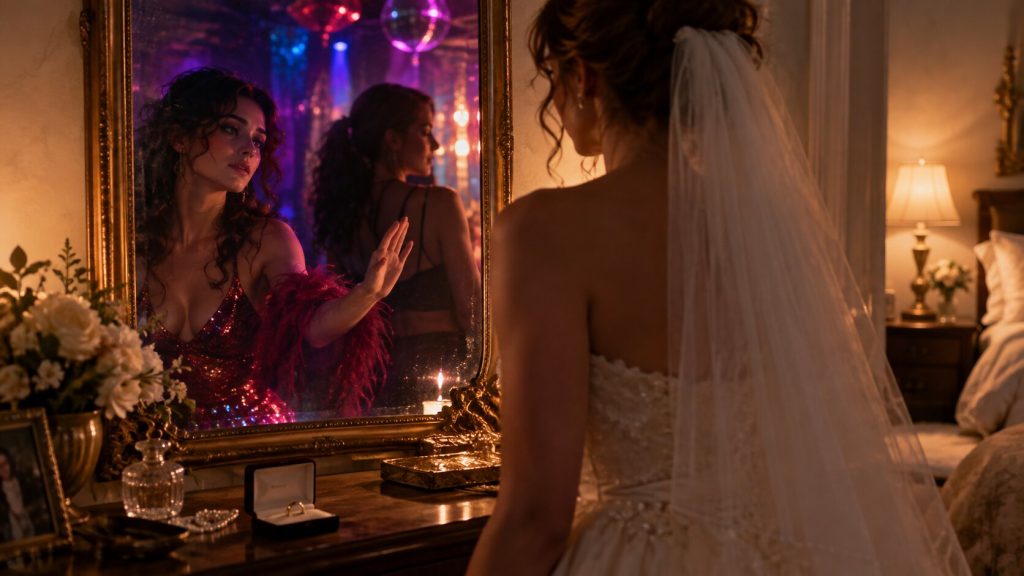
Roan jumps forward in time and pictures the other woman following a conventional heterosexual path. The imagined future includes marriage and domestic life, but the scene is not presented as peaceful resolution. Instead, the narrator imagines a private moment when everything that was suppressed returns.
The power of the bridge comes from this sudden expansion of scale. The conflict is no longer about whether the relationship lasts another week or another month. Roan imagines the consequences of spending years trying to build a life around a truth that remains unresolved.
The future marriage should not be interpreted as a claim that heterosexual marriage itself is false or unhappy. Within this particular story, it symbolizes choosing the socially expected route while feelings from an earlier queer relationship remain buried underneath it.
The narrator imagines becoming a memory that eventually proves her point. Her former partner may succeed in creating a different life, yet the narrator predicts that one quiet moment of recognition will reveal that avoidance never actually removed the underlying desire.
There is triumph in that prediction, but very little happiness. Being proven right would not restore the relationship. The imagined regret only confirms that something meaningful was lost.
The Final Refrain: Leaving Without Changing the Truth
After the bridge, the final return to the chorus sounds different. Earlier repetitions feel like arguments; the last one feels closer to a verdict.
The narrator has accepted that she cannot force another person to confront herself. She cannot control whom her former partner dates, what life she chooses or how she explains the past.
What she can control is whether she continues participating in the denial.
That gives the ending its sense of release. The relationship remains unresolved, but the narrator’s role in it has changed. She can leave while still believing that what happened between them was real.
Why the Song’s Symbols Feel So Powerful
One of the strengths of “Good Luck, Babe!” is that its imagery is vivid without becoming overly complicated. Roan uses ordinary scenes and one enormous metaphor to express the difference between hiding a feeling and actually eliminating it.
The image of the world represents something effectively impossible to control. By making emotional suppression comparable to stopping something that large, the song argues that authentic desire cannot simply be switched off through willpower.
The references to boys, bars and drinking operate differently. They represent possible forms of substitution or distraction. From the narrator’s perspective, dating men or attempting to numb the conflict does not prove that the original attraction disappeared.
The imagined future marriage then takes that avoidance to its furthest possible conclusion. Instead of distracting herself for one night, the other woman could theoretically build an entire adult life around the identity she believes she is supposed to inhabit.
Finally, there is the phrase “good luck.” Its meaning changes with every return. It can sound affectionate, mocking, frustrated, compassionate and furious. That instability is part of what makes the hook so effective.
Even the replacement of the original title “Good Luck, Jane!” with “Good Luck, Babe!” strengthens this ambiguity. A specific name would point toward an individual character. “Babe” preserves intimacy while simultaneously allowing the narrator to sound dismissive.
Is “Good Luck, Babe!” About a Real Person?
Roan has publicly explained the emotional situation behind the song, but reliable public sources do not establish that every detail represents one identifiable real-life woman.
Her explanation focuses on a recognizable type of queer relationship: a situationship in which someone struggles to come to terms with their feelings. That supports reading the song as emotionally grounded, but it does not justify identifying a particular former partner as the subject.
The song’s original title does not provide reliable evidence either. Nigro explained that “Good Luck, Jane!” emerged because the writers initially liked the idea of using a specific name. They eventually preferred “Babe” because its tone was more sarcastic and playful.
Therefore, claims that a particular named person definitively inspired the song should be treated as speculation unless Roan herself confirms them.
Where “Good Luck, Babe!” Fits in Chappell Roan’s Catalog
“Good Luck, Babe!” develops themes that already appeared throughout Roan’s earlier work while changing the narrator’s position within them.
“Casual,” for example, also examines a relationship whose significance is minimized by one participant. Both songs deal with the frustration of intimacy that means more than the other person is prepared to admit.
The difference is that “Casual” feels emotionally trapped inside uncertainty. “Good Luck, Babe!” moves beyond that stage. Its narrator believes she understands what is happening and eventually refuses to remain inside the other person’s ambiguity.
“Red Wine Supernova” provides an almost opposite perspective on queer desire. That song is playful, flirtatious and openly delighted by attraction. “Good Luck, Babe!” asks what happens when similar attraction exists but one participant cannot comfortably integrate it into her identity or future.
There is another useful contrast with “Pink Pony Club,” which centers on finding a place where self-expression and queer community feel liberating. “Good Luck, Babe!” examines the emotional cost of moving in the opposite direction: away from self-recognition and toward suppression.
Musically, the song also feels like an expansion of Roan’s established theatrical pop style. The retro influences, dramatic vocals and camp sensibility remain, but the arrangement gives the emotional conflict a much larger scale.
That combination is crucial. A painfully private problem receives blockbuster pop production, allowing an intimate queer breakup story to feel universal without stripping away what makes the story specific.
Why the Song Hurts Even When the Narrator Gets the Last Word
The most convincing interpretation of “Good Luck, Babe!” is that it is a breakup song about queer self-denial and the painful limit of what one partner can do for another. The narrator believes the attraction is genuine, but she eventually accepts that she cannot make another person confront feelings they are determined to avoid.
That does not make the narrator purely victorious.
She gets the memorable final argument. She predicts that her former lover will remember the relationship. She believes that time will eventually expose the difference between genuinely moving on and simply suppressing something uncomfortable.
Yet none of those predictions give her what she originally wanted.
That contradiction is the song’s emotional core. “Good Luck, Babe!” can sound like revenge, grief, compassion and exasperation almost simultaneously. Its soaring chorus invites a crowd to sing along, while the story underneath it is deeply private.
The narrator walks away not because she has decided the relationship was meaningless, but because she has decided the opposite. It mattered enough that continuing to pretend otherwise would become unbearable.
That is why the song’s goodbye feels so devastating. She is not saying that the love was fake. She is saying that love can be real and still fail when only one person is prepared to live honestly inside it.
FAQs About “Good Luck, Babe!”
What does “Good Luck, Babe!” mean?
Is “Good Luck, Babe!” about compulsory heterosexuality?
Who wrote “Good Luck, Babe!”?
What does the bridge of “Good Luck, Babe!” mean?
Is “Good Luck, Babe!” based on a true story?
What album is “Good Luck, Babe!” on?
How successful was “Good Luck, Babe!”?
Sources Used
- Chappell Roan Official Website – “Good Luck, Babe!” official credits
- Pitchfork – “Listen to Chappell Roan’s New Song ‘Good Luck, Babe!’”
- Music Week – Dan Nigro on the making of “Good Luck, Babe!”
- Billboard – “Good Luck, Babe!” chart performance and one-billion-stream milestone
- GRAMMY.com – “Good Luck, Babe!” and compulsory heterosexuality
- GRAMMY.com – 2025 Grammy nominations and recording credits
- Official Charts – “Good Luck, Babe!” UK chart history