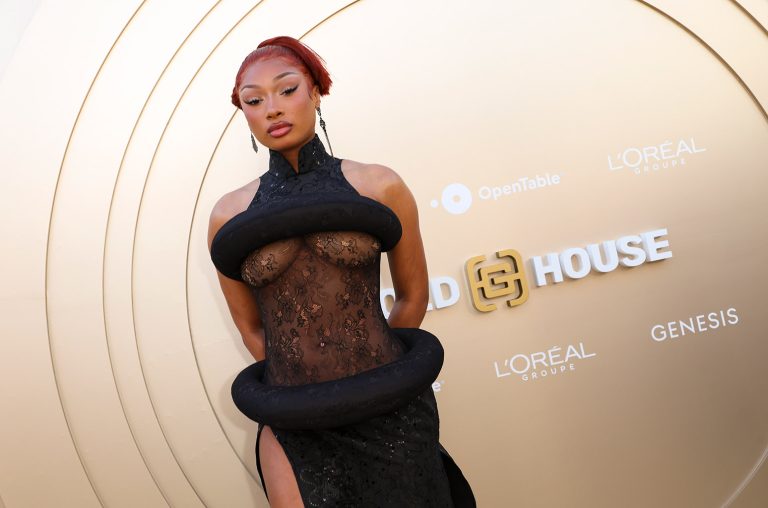


Victoria Monét’s “Frequency of Love”: Inside the Album, Collaborations and New R&B Era
Victoria Monét’s Frequency Of Love is not structured as a cautious sequel to the album that made her breakthrough feel so sharply defined. Released October 2, 2026 through Lovett Music/RCA Records, the 22-track project stretches her R&B foundation through house, gospel, retro soul and close-up balladry. Its scale is the point: Monét is making room for a larger range of sounds, relationships and audiences than a compact victory lap could contain.
That expansion carries a real artistic and commercial tension. Jaguar II benefited from concision and a distinctive throughline; Frequency Of Love runs roughly 63 minutes and enlists a wide circle of guests. The record’s most interesting proposition is therefore not simply that Monét has more to say. It is that she is testing whether an R&B album can work as a shared space—one broad enough to hold radio, club-facing production, inherited musical languages, motherhood, spirituality and public-facing care—without losing the focus that helped establish her as a singular artist.
Frequency Of Love Rejects the Jaguar II Repeat
Monét’s stated premise gives the album a clearer purpose than its runtime alone might suggest. In an Essence interview, she described the project as an effort not to repeat the formula that made Jaguar II work. More importantly, she frames love less as a single romantic subject than as an emotional and social spectrum: motherhood, self-reflection, sexuality, spirituality and care for other people all belong in its field.
That framing changes how the album’s range should be read. House, gospel, retro soul and balladry are not presented as isolated genre exercises in the album’s release description; they are different settings for a larger subject. Sony Music Canada’s release announcement identifies all of those modes within the record’s R&B foundation. The premise is expansive without requiring Monét to abandon R&B as the organizing language.
There is a useful distinction here between variety and departure. Frequency Of Love does not advertise a clean break with the elegance and detail associated with Monét’s recent work. Instead, it asks that those qualities carry more weight. A song concerned with intimacy can sit alongside one shaped by dance-floor motion or spiritual feeling because the record treats each as a form of connection. That is a more ambitious organizing idea than simply widening a sonic palette, even if it also gives the album more opportunities to feel diffuse.
Three Singles, Multiple Doors Into Victoria Monét’s New Era
The pre-release campaign made that breadth practical. Rather than sending one track out to represent the full album, Monét introduced three different access points. “Let Me” reached No. 1 on Billboard’s Adult R&B Airplay chart, providing a concrete radio foothold. “Reach Out,” produced by Kaytranada and D’Mile, foregrounded production credentials with a different rhythmic proposition, while “Juicy” arrived with yacht-R&B influence. Those distinctions are documented in the album’s release campaign materials.
It is a smart way to introduce a 22-song album, because it declines to make any one listener pathway carry the whole project. Adult R&B radio listeners received a track with demonstrated chart traction. Listeners drawn to Kaytranada and D’Mile’s work received a production-led invitation. The yacht-R&B description for “Juicy,” meanwhile, signals a smoother, period-conscious polish. None of those songs needs to stand in for the entire record; together, they establish that Monét’s new era is designed around multiple points of recognition.
The strategy also reflects a useful reality about contemporary R&B audiences. They are not necessarily separated by a hard genre boundary so much as by listening habits: radio listeners, producer-conscious listeners and listeners attracted to polished revivalism can meet in the same album cycle. Monét’s rollout gives each group a route in before asking them to engage with the project’s broader emotional vocabulary.

SZA, Bruno Mars and Hazel Monét Populate a Shared R&B Vocabulary
The guest list on Frequency Of Love includes SZA, Bruno Mars, Leon Thomas, Bryson Tiller, Chlöe, Lucky Daye and Victoria Monét’s daughter, Hazel Monét, according to Apple Music. It makes the project both a major-label showcase and a deeply personal, family-centered work.
Hazel’s inclusion gives concrete presence to motherhood, one part of the album’s thematic range. Elsewhere, the album information identifies references to Brandy, Kenny Lattimore, Ashford & Simpson and Bruno Lauzi.
That historical range is more than a set of interchangeable nostalgia markers. It places Monét’s new era within an active revival of sophisticated, sample-aware R&B: the record draws on older musical languages without presenting itself as a clean break from the past.
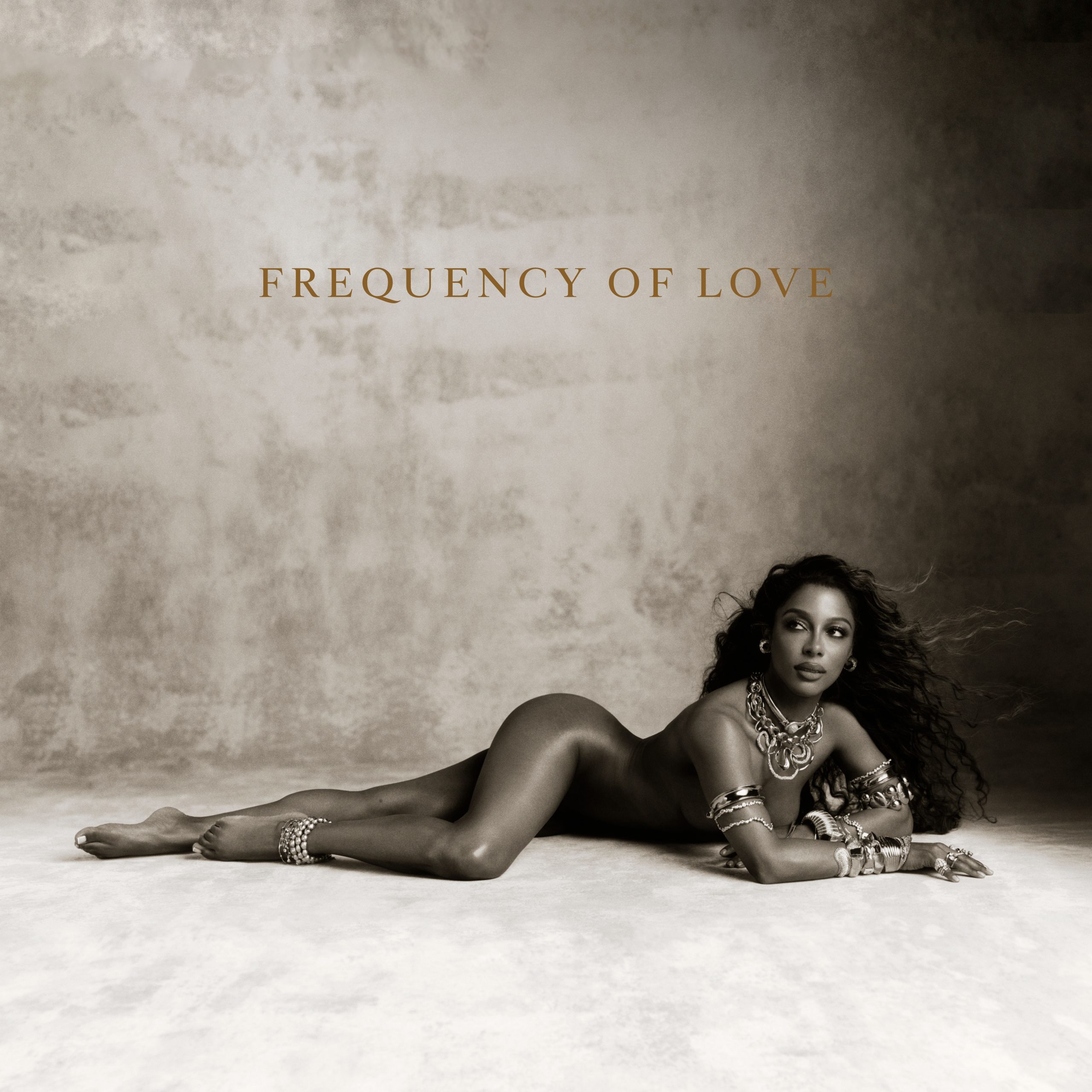
Official Frequency Of Love album artwork, credited to MAR+VIN. — Source: Sony Music Canada / MAR+VIN
The Frequency Of Love Tour and Foundation Extend the Album’s Meaning
Her North American Frequency Of Love Tour begins October 27, 2026, and the campaign launches the Frequency Of Love Foundation, focused on youth education, food, agriculture and wellness. Sony Music Canada reports both elements of the rollout.
The album’s care-centered concept therefore has a life outside the songs: the tour creates a setting for performance and audience connection, while the foundation gives the campaign a philanthropic dimension. Love, in this context, is being organized as both an artistic idea and a public-facing platform.
Frequency Of Love runs to 22 tracks and roughly 63 minutes. Pitchfork connects that size to the record’s room for collaboration and extensive world-building, while noting the risk that it could dilute the concise impact associated with Jaguar II. Its unresolved question is whether that breadth will feel like abundance rather than excess.