


Data-Driven Music Promotion: 69% Revenue Growth Strategy
Streaming platforms have transformed how musicians reach fans, but most artists still chase playlist placements and viral moments while overlooking the real driver of sustained growth: data. The music industry now generates 69% of its $29.6 billion revenue from streaming, with independent artists capturing nearly half of all Spotify payouts. Yet many musicians ignore the analytics that could unlock consistent audience expansion. This article reveals how data transforms music promotion from guesswork into a repeatable system, showing you exactly which metrics matter and how to turn insights into real fan engagement and revenue.
Table of Contents
- Streaming’s dominance and what it means for artists
- Why playlists aren’t enough: Beyond algorithmic discovery
- Leveraging data: Practical steps for independent musicians
- How data transforms artist-fan engagement
- Turning insights into action: Building your data-driven promotion plan
- Discover more resources and support for data-driven music promotion
- Frequently asked questions
Key Takeaways
| Point | Details |
|---|---|
| Streaming shifts the landscape | Digital platforms put independents on equal footing, but data analysis is critical to standing out. |
| Playlist reliance isn’t enough | Sustainable growth comes from blending playlist and social strategies guided by data. |
| Analytics drive action and engagement | Tracking metrics lets you optimize content, connect with fans, and adapt your promotion monthly. |
| Data transforms audience connection | Personalized outreach and timely releases based on analytics deepen fan relationships. |
Streaming’s dominance and what it means for artists
The digital music landscape has shifted dramatically. Streaming now accounts for 69% of global recorded music revenue, with subscription services alone representing 51.2% of the $29.6 billion industry. Physical sales and downloads have become secondary revenue streams.
What makes this shift exciting for independent musicians is the democratization of opportunity. Independent artists received approximately $4.5 billion from Spotify in 2023, representing nearly 50% of total platform payouts. This means you’re competing on more level ground than ever before, but only if you understand how to use the data these platforms provide.
| Revenue Source | Percentage of Total | 2024 Value |
|---|---|---|
| Streaming (Total) | 69.0% | $20.4B |
| Subscription Streaming | 51.2% | $15.2B |
| Physical Sales | 16.0% | $4.7B |
| Downloads | 3.0% | $0.9B |
Every stream generates data points: listener location, discovery source, skip rates, save rates, and playlist additions. These metrics reveal patterns that traditional radio play or physical sales never could. When you know which cities stream your music most, you can target tour dates and local promotion. When you see which tracks listeners save versus skip, you understand what resonates.
“Independent artists now capture nearly half of streaming payouts, but success requires understanding where streams originate and how fans discover your music.”
The challenge isn’t access to data. Most music streaming platforms for artists provide robust analytics dashboards. The challenge is knowing which metrics drive decisions and how to act on them. Many musicians check their stream counts but never dig into the geographic, demographic, and behavioral data that could double their audience.
Pro Tip: Set a weekly 30-minute appointment to review your streaming analytics. Consistency in monitoring creates consistency in growth.
Understanding music distribution channels means recognizing that each platform offers different data insights. Spotify for Artists shows playlist performance and listener demographics. Apple Music for Artists reveals city-level engagement. YouTube Analytics tracks watch time and traffic sources. Cross-referencing these platforms gives you a complete picture of how fans interact with your music across the digital ecosystem.
The artists who thrive in this environment treat data as their compass. They don’t guess which single to promote next; they analyze which track has the highest save rate. They don’t randomly post on social media; they schedule content when their analytics show peak engagement. This approach transforms music discovery for artists from hoping for luck into engineering outcomes.
Why playlists aren’t enough: Beyond algorithmic discovery
Playlist placements have become the holy grail for many independent artists, and for good reason. Playlists drive 60-80% of music discovery on major streaming platforms. Landing on a popular playlist can generate thousands of streams overnight. But here’s what the data reveals: playlist spikes rarely translate to sustained audience growth without complementary strategies.
The problem with playlist dependency is simple. When your track rotates off a playlist, streams often drop dramatically. You haven’t built a relationship with those listeners; the algorithm introduced you, but nothing kept them engaged. Real audience growth requires converting casual listeners into active fans who follow your profile, save your tracks, and return for new releases.

| Discovery Method | Initial Impact | Sustained Growth | Fan Conversion Rate |
|---|---|---|---|
| Playlist Placement | High (1000s of streams) | Low (drops after removal) | 5-10% |
| Social Media Consistency | Moderate (100s of streams) | High (compounds over time) | 25-40% |
| Combined Approach | Very High | Very High | 40-60% |
Case studies show that artists who blend playlist placements with daily social media posts achieve 20-400% greater listener growth than those relying on playlists alone. The social content creates touchpoints that remind listeners you exist beyond a single track. It builds narrative, personality, and connection.
Your data tells you which approach works for your specific audience. Check your Spotify for Artists dashboard under “How fans find your music.” If 80% comes from playlists but your follower count stays flat, you’re getting exposure without conversion. If social media drives only 10% of streams but those listeners have a 50% save rate, that channel builds more valuable relationships.
- Track which playlists actually drive repeat listeners, not just one-time streams
- Monitor save rates and follower growth, not just stream counts
- Compare engagement metrics across discovery sources
- Test different social content types and measure which drives profile visits
Pro Tip: Create a simple spreadsheet tracking weekly streams by source, new followers, and saves. Patterns emerge within 4-6 weeks that reveal your most effective promotion channels.
“Over-reliance on algorithmic discovery creates vulnerability. Artists who combine playlist strategy with consistent social engagement build audiences that stick around.”
The most successful independent artists use playlists as one tool in a larger strategy. They pitch to curators while simultaneously building their social presence, engaging with fans directly, and creating content that gives listeners reasons to care beyond the music. This integrated approach, guided by data on what actually converts listeners to fans, creates sustainable growth.
When you showcase new music effectively, you’re not just announcing a release. You’re creating multiple touchpoints across platforms, each trackable through analytics, each contributing to a fuller picture of what resonates. The music promotion tips that work best are those informed by your specific data, not generic advice.
Your artist profile strategies should reflect what your analytics reveal about your audience. If your data shows strong engagement from a specific city, highlight that connection in your bio. If certain tracks consistently drive profile visits, feature them prominently. Let data shape how you present yourself.
Leveraging data: Practical steps for independent musicians
Transforming raw analytics into actionable strategy requires a systematic approach. Here’s how to turn numbers into growth:
- Audit your current data sources. Log into Spotify for Artists, Apple Music for Artists, YouTube Studio, and your social media insights. Identify which platforms provide the most detailed listener information.
- Identify your top-performing content. Sort tracks by save rate, not just stream count. A song with 1,000 streams and a 30% save rate is more valuable than one with 5,000 streams and a 5% save rate.
- Map your audience geography. Note the top 5-10 cities where your music streams most. These locations represent concentrated fan bases worth targeting with localized promotion or tour stops.
- Analyze discovery patterns. Determine what percentage of listeners find you through playlists, search, social media, or artist profiles. This reveals which promotional channels actually work.
- Track engagement timing. Review when your audience is most active on social platforms and when streams peak. Schedule releases and posts to match these windows.
- Monitor competitor strategies. Use Spotify’s “Fans Also Like” section to find similar artists, then study their release patterns, playlist placements, and social activity.
- Test and measure campaigns. When you run a promotion, tag links and track which specific efforts drive streams, saves, and follows. Kill what doesn’t work; double down on what does.
Pro Tip: Create a monthly data review ritual. Compare this month’s metrics to last month and identify the single biggest opportunity for improvement. Focus your next 30 days on that one area.
The music platforms for artists you choose should align with where your data shows your audience lives. If YouTube drives significant traffic but you rarely post there, that’s a missed opportunity. If Instagram engagement outperforms Twitter, reallocate your time accordingly.
Independent artists who leverage data to compete with major labels understand that every promotional decision should answer to metrics. When considering whether to invest in a music video, check if your YouTube traffic converts to streaming platform followers. When debating a collaboration, analyze whether the other artist’s audience overlaps with yours demographically and geographically.
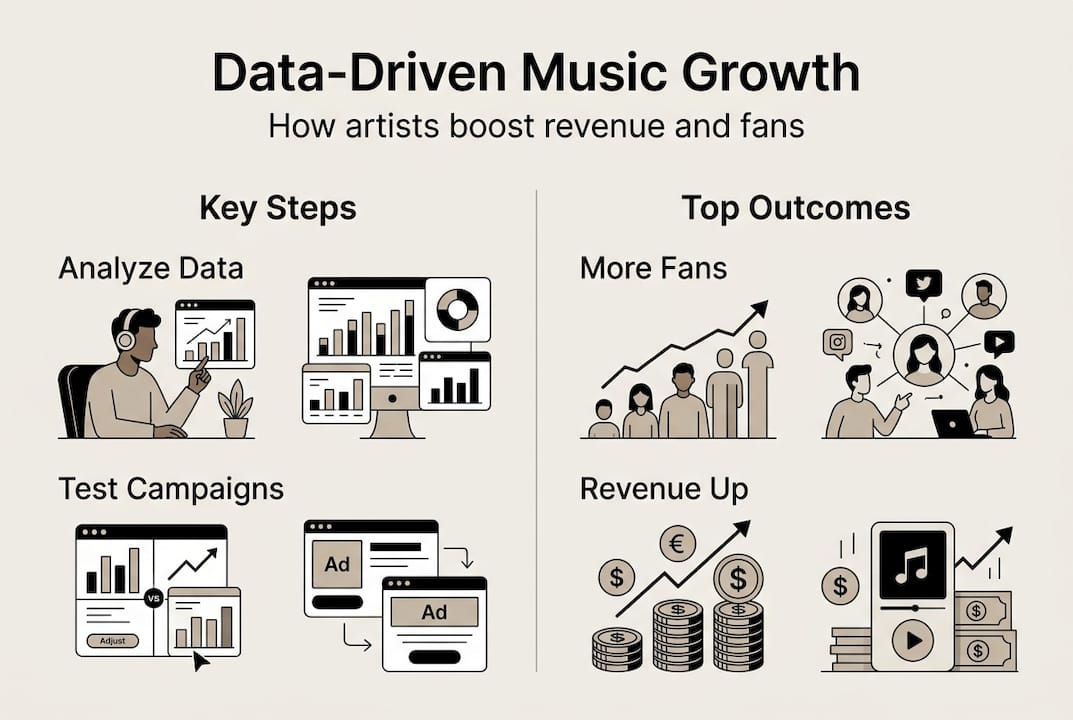
Effective online music promotion means meeting fans where they already spend time, then using data to optimize those interactions. If your analytics show that Instagram Stories drive more profile visits than feed posts, shift your content strategy. If email open rates exceed social media reach, prioritize building your mailing list.
The goal isn’t to become a data scientist. The goal is to let evidence guide your promotional investments. When you connect with fans based on what your analytics reveal about their preferences and behaviors, you build relationships that translate to sustained career growth.
How data transforms artist-fan engagement
Real-time analytics enable a level of fan connection that was impossible in the pre-streaming era. You can now see exactly when someone in Tokyo discovered your music, which track they played first, and whether they saved it or skipped after 30 seconds. This granular insight allows for personalized, meaningful engagement.
When you notice a spike in streams from a specific city, you can create content acknowledging those fans. When a particular track gains traction, you can share behind-the-scenes stories about its creation. When listeners consistently skip the intro of your songs, you can adjust your production approach. Data turns the artist-fan relationship from broadcasting into conversation.
- Respond to geographic trends with localized content and tour announcements
- Personalize email campaigns based on which tracks subscribers stream most
- Create content around your most-saved tracks, giving fans deeper connection to favorites
- Adjust setlists for live performances based on regional streaming preferences
“Independent artists capturing nearly half of Spotify payouts succeed by using agile data strategies to maximize fan reach and campaign effectiveness.”
The artists who excel at engagement treat their analytics dashboard as a direct line to fan preferences. They don’t guess what content to create; they look at which posts drove the most profile visits last month. They don’t wonder which single to release next; they analyze which unreleased snippet on social media generated the most saves and comments.
This approach also enables rapid campaign adjustments. If a promotional push isn’t generating expected results after 48 hours, you can pivot immediately rather than wasting weeks on an ineffective strategy. If a particular type of content overperforms, you can create more while momentum exists. Agile data use helps independents compete with labels that have larger budgets but slower decision-making processes.
The most powerful aspect of data-driven engagement is its compounding effect. Each interaction you optimize based on analytics performs slightly better than the last. Over months and years, these incremental improvements create exponential growth. A 10% increase in conversion rate might seem small, but applied consistently across all your promotional activities, it can double your audience within a year.
Staying current with music event updates and industry trends helps you contextualize your own data. When you understand broader streaming patterns and fan behavior shifts, you can anticipate changes rather than react to them.
Turning insights into action: Building your data-driven promotion plan
Knowing what your data says is worthless without a system for acting on it. Here’s how to build a repeatable promotion framework:
- Establish a monitoring schedule. Review streaming analytics every Monday morning. Check social media insights every Wednesday. Conduct a comprehensive monthly audit comparing all platforms.
- Create decision triggers. Define specific metrics that prompt action. For example: “If a track’s save rate exceeds 25%, create a music video for it” or “If a city generates 500+ monthly listeners, book a show there.”
- Align releases with engagement peaks. Your data reveals when your audience is most active. Schedule single drops and major announcements during these windows for maximum impact.
- Build feedback loops. After every release or campaign, document what worked and what didn’t. Compare predicted outcomes to actual results. Refine your approach based on these learnings.
- Invest proportionally. Allocate promotional budget and time based on what your data proves works, not what you think should work or what others recommend.
| Action | Frequency | Key Metrics | Decision Point |
|---|---|---|---|
| Review streaming analytics | Weekly | Streams, saves, playlist adds | Identify trending tracks |
| Audit social engagement | Weekly | Reach, profile visits, link clicks | Optimize content strategy |
| Analyze geographic data | Monthly | Top cities, country trends | Plan tours, localized campaigns |
| Assess campaign ROI | Per campaign | Cost per stream, follower growth | Continue, adjust, or stop |
| Competitor benchmarking | Monthly | Their growth rate vs. yours | Identify gaps and opportunities |
The artists who achieve sustained growth don’t treat data analysis as a one-time task. They build it into their creative and promotional workflow as a non-negotiable habit. Just as you wouldn’t release music without mixing and mastering it, you shouldn’t run promotion without analyzing which approaches your data validates.
Regularly reviewing your data is essential for adapting promotional strategies and boosting fan engagement. The music industry changes rapidly. What worked six months ago might be less effective today. Your analytics provide early warning signals when strategies lose effectiveness and highlight emerging opportunities before they become obvious.
The most successful independent musicians view their careers as ongoing experiments. They test new promotional tactics, measure results rigorously, and scale what works while abandoning what doesn’t. This scientific approach, powered by data, removes emotion and ego from decisions. You’re not attached to a strategy because you like it; you’re committed to strategies because the numbers prove they deliver results.
Implementing these music promotion tips within a data-driven framework ensures you’re not just busy, but effective. Activity doesn’t equal progress. Measured, optimized activity creates the compounding growth that builds sustainable music careers.
Discover more resources and support for data-driven music promotion
Building a data-driven promotion strategy becomes significantly easier when you have the right support system and tools. Blocktone Records provides independent artists with comprehensive resources designed to turn analytics into audience growth.
Our platform offers specialized guidance on music discovery for artists, helping you understand not just how fans find your music, but how to optimize each discovery channel for maximum conversion. We’ve helped hundreds of independent musicians transform their approach from hoping for viral moments to engineering consistent growth through smart data application.
Whether you’re just starting to explore streaming analytics or you’re ready to build sophisticated promotional campaigns, our music distribution tips for independent artists provide actionable frameworks you can implement immediately. We believe every artist deserves access to the same data-driven strategies that major labels use, and we’re committed to making those approaches accessible and practical for independents at every career stage.
Frequently asked questions
How can independent artists use streaming data to increase their audience?
By analyzing streaming dashboards, artists pinpoint their hottest tracks, fan locations, and optimal release times, enabling targeted promotion and more frequent engagement. Streaming dominates revenue and independents capture approximately 50% of payouts, making data essential for competing effectively.
Do playlist placements or social media posts drive more growth?
A combination of playlist placements and regular social content delivers optimal results. Blending playlists with social consistency leads to 20-400% listener growth, significantly outperforming either approach alone.
What are the first steps to building a data-driven music promotion plan?
Start by reviewing your analytics weekly, identifying trends in listening behavior, and experimenting with content based on what your data reveals. Regularly reviewing your data is key to adapting promotional strategies and maintaining momentum.
How does data transform artist-fan engagement?
Data allows artists to tailor releases and interact directly with fans based on their actual preferences and behaviors, driving loyalty and campaign effectiveness. Agile data use helps independents maximize fan reach and achieve results that compete with major label campaigns.
Which streaming metrics matter most for independent artists?
Save rate, follower growth, and playlist additions matter more than raw stream counts because they indicate genuine fan interest rather than passive listening. These engagement metrics predict long-term audience retention and revenue potential.