

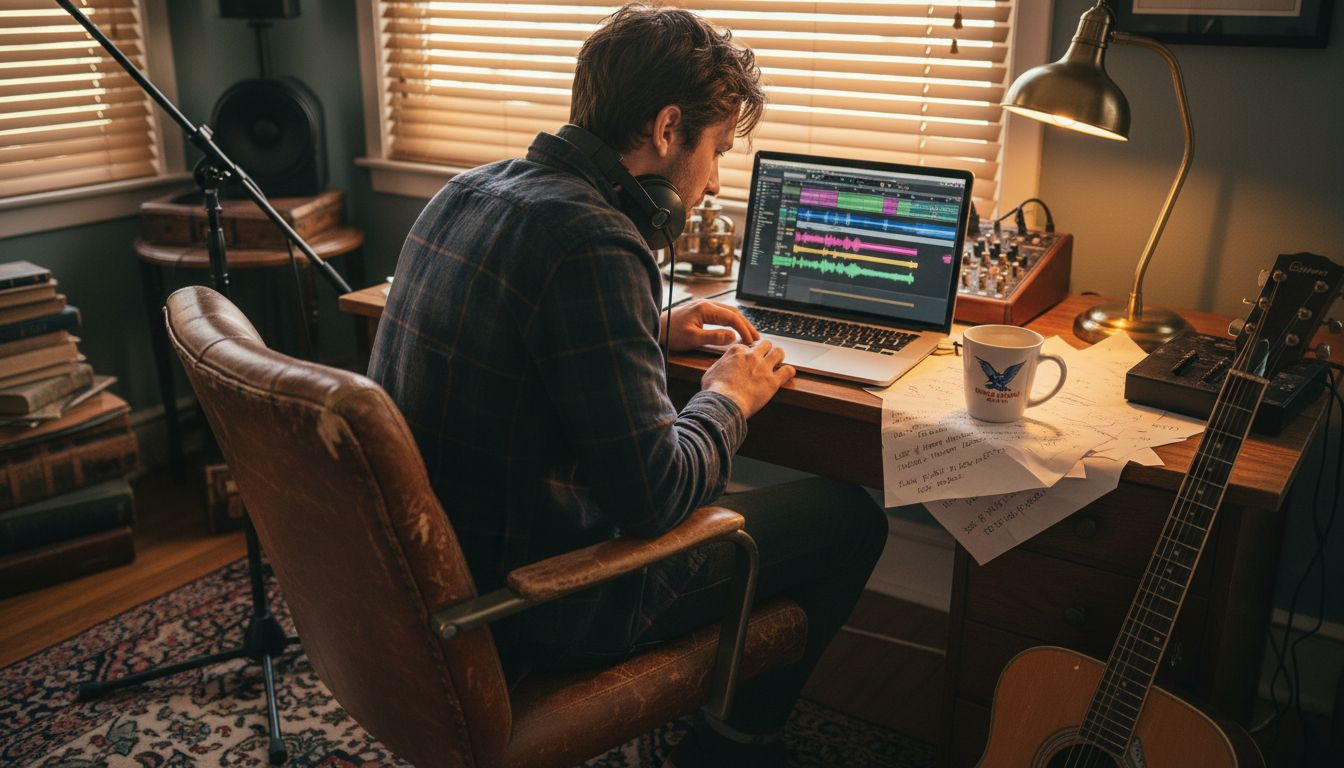
Emerging Artist Challenges – How They Shape Music Careers
Breaking through in music feels more complicated than ever. As an indie pop or hip-hop artist, you navigate obstacles far beyond creativity, including systemic barriers and intense competition fueled by digital acceleration and market saturation. Growing your career means balancing income instability, technical hurdles, and the constant pressure to stand out among millions worldwide. This guide explores the real challenges artists face today and offers actionable strategies to help you build a sustainable music journey while finding the community support every creator needs.
Table of Contents
- Defining Emerging Artist Challenges Today
- Navigating Oversaturation and Competition
- Financial Hurdles and Monetization Issues
- Adapting to Technology and Audience Shifts
- Key Mistakes and Sustainable Growth Strategies
Key Takeaways
| Point | Details |
|---|---|
| Understanding the Landscape | Emerging artists face systemic challenges that extend beyond talent, including income instability and increased competition. |
| Financial Diversification | Artists should develop multiple revenue streams to create sustainable income rather than relying solely on streaming. |
| Building Community | Fostering genuine connections and utilizing digital platforms for engagement is crucial for combating isolation and enhancing creativity. |
| Adaptability to Technology | Continuous adaptation to rapidly changing technology and audience expectations is necessary for maintaining relevance in the music industry. |
Defining Emerging Artist Challenges Today
Being an emerging artist today means navigating a completely different landscape than it did a decade ago. The challenges you face are not just about talent or hard work—they’re systemic, multidimensional, and deeply connected to how the entire music industry operates.
The core challenges emerging artists encounter include:
- Income instability and financial strain from inconsistent revenue streams
- Difficulty accessing professional resources, mentorship, and industry connections
- Competition from millions of artists fighting for listener attention
- Technical barriers to distribution, marketing, and audience building
- Mental health pressures from isolation, rejection, and creative uncertainty
- Lack of formal career pathways or clear steps toward sustainable income
According to recent research on artistic career challenges, these obstacles reflect broader precarity in contemporary cultural markets. You’re not dealing with isolated problems—these are patterns affecting artists globally.
One major reality: making money from music has become harder, not easier. Streaming pays fractions of a cent per play. Physical sales have declined. Live performances require significant upfront investment. Many artists work multiple jobs while creating music on the side, splitting focus and energy.
Another challenge is visibility. Getting discovered requires more than great music now. You need a cohesive brand, consistent social media presence, music videos, and strategic playlist placements. The creation side becomes just one piece of a much larger puzzle.
The path from “emerging” to “established” is no longer linear. Today’s artists navigate multiple income sources, audience platforms, and career pivots simultaneously.
Community and connection matter more than ever. Many emerging artists feel isolated, working alone without feedback, mentorship, or peer support. This isolation directly impacts creative output and mental health.
The good news? Platforms designed specifically for independent artists now exist. These spaces reduce some barriers by providing distribution channels, community forums, and tools to monetize directly without traditional gatekeepers.
Understanding these challenges deeply—not just acknowledging they exist—is your first step toward building resilience and strategy around them. Recognition transforms obstacles from unseen forces into manageable, addressable problems.
Here’s a quick summary comparing traditional music industry barriers and new digital challenges faced by emerging artists:
| Barrier Type | Traditional Era Impact | Digital Era Impact |
|---|---|---|
| Distribution | Limited physical channels | Global digital platforms |
| Financial Stability | Relies on label advances | Fragmented, unpredictable |
| Discovery | Gatekeeper-driven radio play | Algorithm and playlist bias |
| Competition | Fewer artists, local focus | Millions, worldwide pool |
| Community | In-person networking required | Online forums and isolation |
| Career Path | Linear, label-led progression | Multiple pivots, unclear path |
Pro tip: Map your specific challenges on paper: identify which obstacles directly impact your music (time, money, visibility) versus which ones affect your mindset, then prioritize one actionable change per month.
This table highlights key strategies that help transform artist challenges into sustainable opportunities:
| Challenge Area | Growth Strategy | Expected Benefit |
|---|---|---|
| Visibility | Target niche audiences | Stronger fan engagement |
| Income | Diversify revenue streams | Increased financial stability |
| Technology | Focus on core platforms | More efficient promotion |
| Mental Health | Build creative communities | Reduced isolation |
| Career Planning | Document actionable changes | Trackable progress |
Navigating Oversaturation and Competition
Right now, there are more artists competing for listener attention than ever before. Spotify alone hosts over 11 million songs. YouTube gets hundreds of hours of music uploaded every minute. The sheer volume of content makes standing out feel nearly impossible.
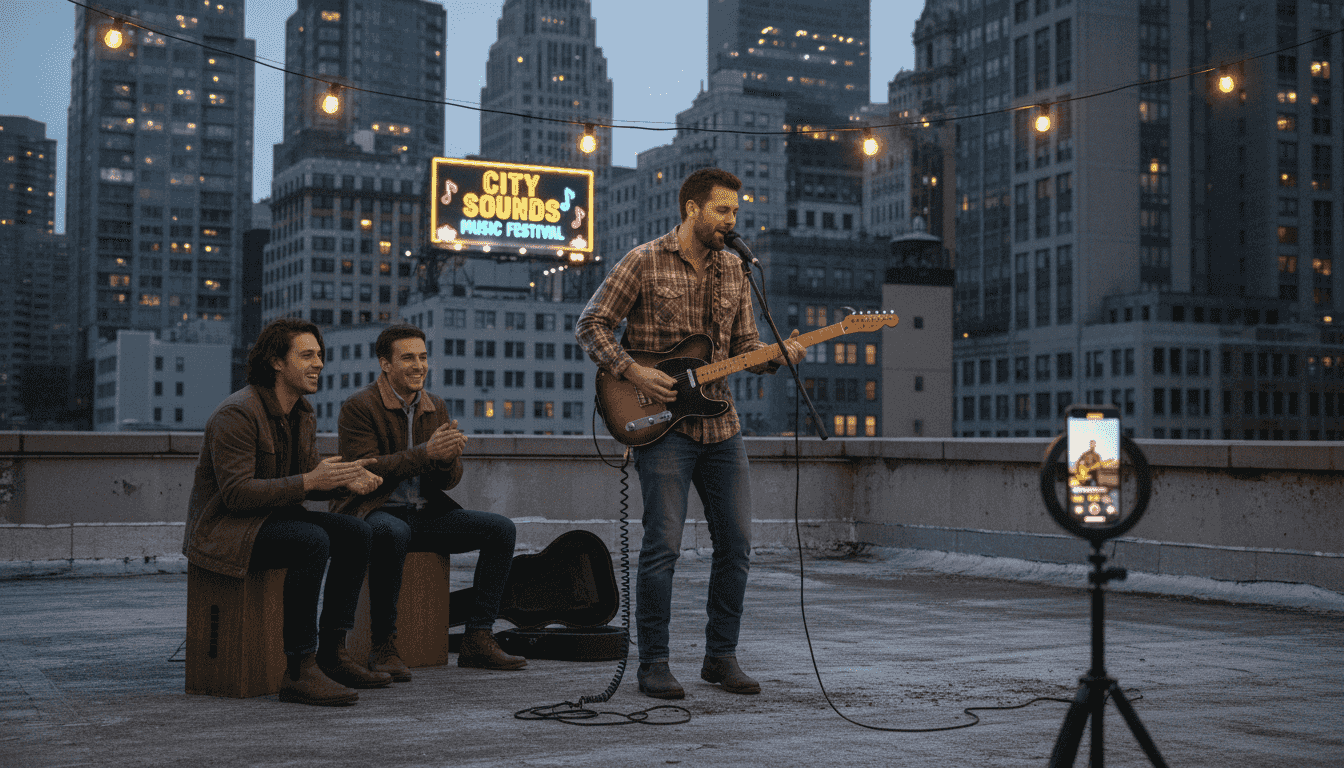
This oversaturation is not random. Digital acceleration and globalization have fundamentally changed how music reaches audiences. Anyone with a laptop can record, produce, and distribute globally. That’s democratizing—and overwhelming.
The real problem isn’t competition itself. It’s invisible competition. Your songs compete not just with other emerging artists, but with established acts, legacy catalogs, and algorithmic recommendations favoring already-popular music.
How oversaturation affects your career:
- Playlists receive thousands of submissions weekly, making placement extremely difficult
- Algorithm preference for established artists limits discovery opportunities for new voices
- Listener attention fragments across infinite options, making audiences harder to build
- Average streams per song decline as catalog size explodes
- Marketing costs rise because organic reach diminishes
But here’s the truth: oversaturation also creates opportunity. When everyone can release music, niche audiences become valuable. You don’t need millions of listeners—you need the right listeners.
Indie pop and hip-hop artists thrive by finding their specific audience, not chasing mainstream appeal. A devoted fanbase of 5,000 listeners spending $5 monthly on merchandise and tickets generates more sustainable income than millions of passive streams.
Competing against everyone means you must compete for nobody—focus on your specific audience instead.
Strategy matters more than ever. Generic approaches fail in oversaturated markets. Differentiation works.
This might mean:
- Building a tight community around your specific sound or message
- Leveraging authenticity and behind-the-scenes storytelling
- Collaborating with complementary artists to cross-pollinate audiences
- Creating consistent, exclusive content for dedicated fans
- Using data to understand which platforms and formats reach your people
Platforms like Blocktone Records help by connecting you directly with fans who actively seek new music, reducing the noise of oversaturated mainstream channels.
Pro tip: Stop competing with everyone and start building for someone specific—define your exact listener (age, location, interests, music taste) and create content exclusively for them, then measure engagement only within that audience.
Financial Hurdles and Monetization Issues
Money is the reality check for most emerging artists. You might create brilliant music, but without sustainable income, your career stalls. The financial hurdles are brutal and systemic.
Streaming pays almost nothing. Spotify pays between $0.003 and $0.005 per stream. That means you need roughly 200,000 streams just to earn $1,000. For most indie artists, that takes months or years.
The broader issue is income inequality across creative professions, where emerging artists earn a fraction of what established musicians make, despite similar effort and output. This isn’t accidental—it’s baked into how the industry structures compensation.
Major monetization challenges you face:
- Streaming revenue barely covers production and distribution costs
- Physical sales (CDs, vinyl) generate better margins but require upfront investment
- Touring demands significant capital for equipment, travel, and promotion before earning anything
- Merchandise sales require inventory investment and fulfillment logistics
- Limited access to traditional funding like grants or sponsorships
- DSP (Digital Service Provider) payment models favor catalog depth, not new releases
Many emerging artists piece together income from multiple sources: a few streams here, a TikTok sync there, selling merch at shows, taking day jobs. This fragmentation is exhausting and unpredictable.
Then there’s the timing problem. Money takes months to arrive. Spotify pays quarterly. YouTube takes weeks to process. Merchandise sales depend on unpredictable demand. Meanwhile, you need money now for recording, equipment, or simply eating.
Financial instability doesn’t just hurt your wallet—it directly impacts your ability to create music, promote it, and maintain your mental health.
Your best path forward combines multiple revenue streams rather than relying on one:
- Direct fan support through subscriptions or exclusive content
- Live performances and ticket sales
- Merchandise beyond just apparel—digital assets, samples, beats
- Licensing for sync, podcasts, or content creators
- Teaching or production services
- Platforms offering direct-to-fan monetization
Blocktone Records addresses this by providing tools to distribute widely, access exclusive release opportunities, and monetize directly without middlemen taking cuts.
Pro tip: Build a spreadsheet tracking income from each source monthly—identify which channels generate actual money versus vanity metrics, then dedicate 70% effort to your top two revenue sources and 30% to testing new channels.
Adapting to Technology and Audience Shifts
Technology changes faster than most artists can keep up. What worked for reaching listeners last year might be obsolete today. Your audience listens differently, discovers differently, and expects different content formats than they did five years ago.
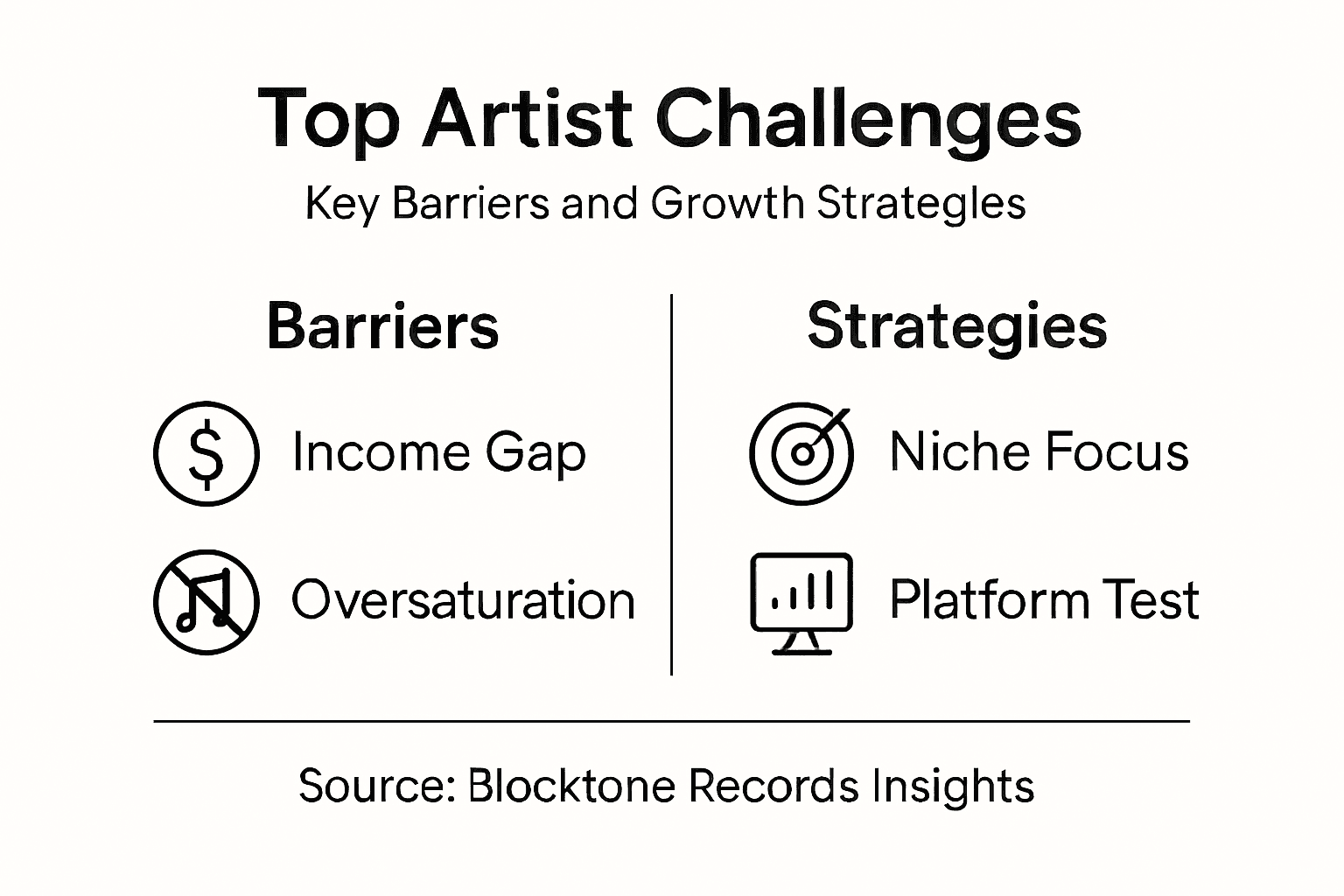
Your audience no longer waits for album releases. They consume singles, snippets, behind-the-scenes clips, and live streams constantly. Attention spans fragment across TikTok, Instagram Reels, YouTube Shorts, and platforms that didn’t exist a few years ago.
Rapid technological shifts reshape artistic creation and audience engagement patterns, forcing emerging artists to continuously adapt production methods, promotional strategies, and platform presence to remain relevant in evolving digital spaces.
The challenge is dual: you must master both the technical production side and the algorithmic distribution side. Neither alone is enough anymore.
Technology pressures affecting your music career:
- Learning new production tools and software constantly
- Understanding algorithm changes on streaming platforms
- Creating content in multiple formats (audio, video, short clips, live)
- Managing presence across 5-10 different platforms simultaneously
- Keeping pace with AI tools reshaping music production and artist workflows
- Competing with professionally produced content from bedroom producers
Audience expectations shift rapidly too. Gen-Z listeners expect authenticity—raw, unpolished content—but also high production quality. They want artist storytelling and parasocial connection more than polished marketing.
This means your strategy can’t be static. Digital transformation accelerates changes in consumption patterns, requiring artists to continuously adapt skills and leverage emerging platforms strategically.
Staying relevant means treating your music career like a startup—testing, measuring, iterating monthly on what’s actually working.
Practical adaptation steps:
- Pick two primary platforms where your audience actually gathers
- Test short-form content weekly to understand what resonates
- Monitor platform algorithm changes through artist communities
- Batch-create content monthly instead of scrambling daily
- Use data tools to track which formats drive actual engagement
- Stay curious about emerging tools without chasing every trend
Don’t try to master everything. Focus on platforms generating real fan engagement and revenue, not just vanity metrics.
Pro tip: Dedicate one day monthly to testing one new platform or content format, measure engagement for 30 days, then decide to double down or move on—this prevents you from wasting time while staying adaptable.
Key Mistakes and Sustainable Growth Strategies
Most emerging artists repeat the same mistakes. Understanding what fails prevents you from wasting years on dead-end approaches. The good news? These mistakes are predictable and avoidable.
The biggest mistake is treating music like a hobby while expecting professional results. You cannot build a sustainable career working 5 hours weekly on your music while neglecting promotion, community building, and business basics.
Another critical error: chasing trends obsessively. You release drill tracks one month, switch to pop-punk the next, then jump to lo-fi beats because that’s trending. Your audience gets confused. You dilute your identity. Consistency builds careers.
Common pitfalls emerging artists encounter:
- Underestimating the business side of music (contracts, rights, licensing)
- Ignoring audience feedback or data about what resonates
- Spreading effort across too many platforms instead of mastering one or two
- Isolating instead of building genuine relationships with other artists
- Spending money on vanity metrics (fake followers, bought streams) instead of authentic growth
- Neglecting mental health and burning out within two years
Research on sustainable career management strategies shows that emerging artists who diversify income streams, build intentional networks, and develop strategic career plans achieve longevity. This isn’t luck—it’s deliberate structure.
Sustainable growth requires multiple approaches working together:
- Diversify income sources beyond streaming (live shows, merch, teaching, licensing)
- Build authentic community, not just followers—engage directly with real fans
- Develop one core skill deeply (production, songwriting, or performance excellence)
- Create consistent, intentional content aligned with your actual brand
- Network strategically with artists, producers, and curators in your genre
- Track metrics that matter: engaged listeners, revenue per source, community growth
Sustainable growth means choosing a direction and walking it for 18-24 months before pivoting, not changing every quarter.
Blocktone Records removes distribution friction, but the strategy and consistency must come from you. The platform amplifies intentional artists, not scattered ones.
Focus on depth over breadth. Become excellent at one thing and known for it. Build a real fanbase of 1,000 people who genuinely love your music, not 100,000 passive listeners.
Pro tip: Document your current habits (hours creating vs. promoting, income sources, which platforms drive actual engagement), identify your three biggest mistakes, then replace one bad habit with one good one every 30 days—compound changes build careers.
Overcome Emerging Artist Challenges With Blocktone Records
Navigating today’s saturated music industry can feel overwhelming. You face financial hurdles, fierce competition, and constant pressure to adapt your digital presence while building authentic connections. The article highlights these real pain points and the need for sustainable growth strategies like diversifying income sources, targeting niche audiences, and mastering key platforms.
Blocktone Records is designed with these exact challenges in mind. Our platform empowers you to showcase your music, distribute it globally, and monetize directly without the traditional gatekeepers draining your earnings. Beyond distribution, we offer exclusive releases, live performances, merchandise, and a vibrant community that reduces isolation by connecting you with fans and fellow creators. Don’t wait to transform your music career. Visit Blocktone Records now and start building a sustainable artist journey where your talent meets opportunity. Explore how you can take control of your career today by discovering new tools and support at https://blocktonerecords.com and learn more about empowering your music at Blocktone Records.
Frequently Asked Questions
What are the biggest challenges emerging artists face today?
Emerging artists today face challenges such as income instability, difficulties accessing professional resources and mentorship, intense competition, technical barriers in distribution and marketing, mental health pressures, and a lack of formal career pathways.
How do technology and audience shifts impact emerging artists?
Technology and audience shifts require emerging artists to adapt rapidly to new tools and platforms, as listeners now expect content in various formats (like singles and short clips) and require constant engagement across multiple social media channels.
What strategies can emerging artists use to improve their visibility?
Emerging artists can focus on targeting niche audiences, create consistent and authentic content, build online communities, collaborate with other artists, and use data insights to understand what resonates with their listeners to enhance their visibility.
How can emerging artists diversify their income streams?
Emerging artists can diversify their income by exploring various sources like live performances, merchandise sales, licensing their music, offering teaching services, and setting up direct fan support through subscriptions or exclusive content.