Pink Pony Club Meaning: Why Chappell Roan’s Escape Story Became an Anthem
What Is “Pink Pony Club” Really About?
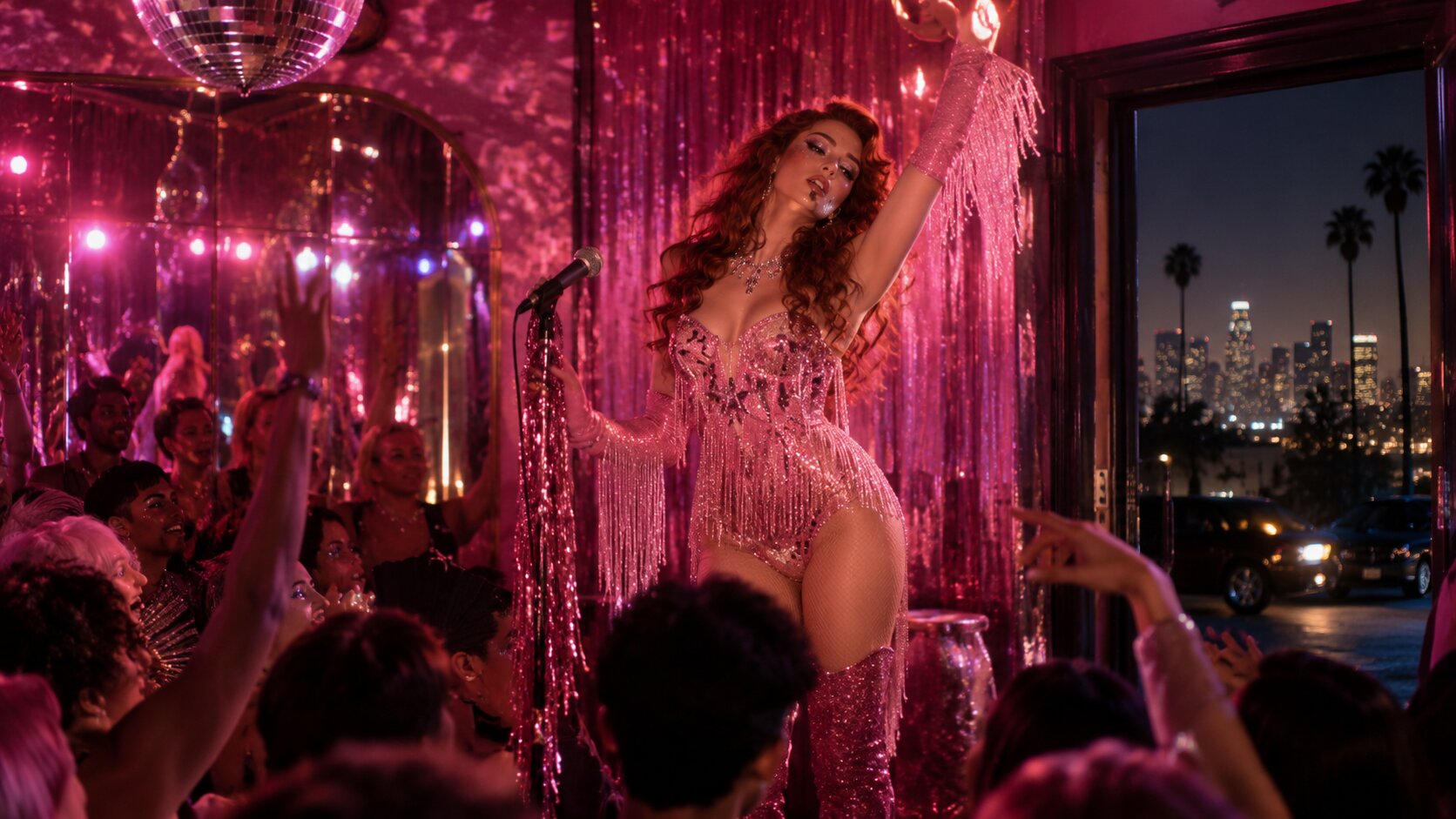
“Pink Pony Club” is about leaving an environment where you feel constrained and discovering a place where you can express yourself without apology. Chappell Roan tells the story through a fictional young woman who leaves Tennessee for Southern California, begins performing at a club in West Hollywood, and decides that her newfound sense of belonging matters more than her mother’s approval.
Although the song is strongly connected to queer identity and queer nightlife, its emotional core reaches beyond one specific experience. It is about the moment when someone realizes that the life expected of them may not be the life in which they are happiest.
The conflict is what gives the song its emotional force. The narrator does not stop loving her family or forget where she came from. Instead, she decides that maintaining that love does not require giving up the person she wants to become.
The Real Night That Sparked the Pink Pony Fantasy
“Pink Pony Club” was originally released on April 3, 2020. The official music video was published the same day through Chappell Roan’s official YouTube channel. The song was later included on her debut studio album, The Rise and Fall of a Midwest Princess, released in 2023. (Chappell Roan – “Pink Pony Club” Official Music Video)
The song was written by Chappell Roan, credited under her legal name Kayleigh Rose Amstutz, and Daniel Nigro. Nigro also produced the recording. The official credits list additional contributions from musicians including Sam Stewart, Benjamin Romans, Ryan Linvill and Kate Brady. (Chappell Roan – Official Album Credits)
The central inspiration came from Roan’s experience of queer nightlife in Los Angeles. She has discussed visiting a gay club and being struck by the freedom, performance and lack of judgment she saw around her. That experience became an important contrast with the attitudes toward sexuality she had encountered while growing up in Missouri.
Roan told The Guardian that going to a gay club felt transformative because it was the opposite of what she had been taught about being gay while growing up. The experience helped inspire “Pink Pony Club,” turning a night out into an imagined story about a young woman finding a community where she could finally belong. (The Guardian – Chappell Roan interview)
The Abbey, a famous LGBTQ+ venue in West Hollywood, has frequently been identified as an important real-world inspiration for the song. Roan did not simply write a documentary description of the venue, however. She transformed the experience into an exaggerated fictional world of dancers, lights, glamour and theatrical freedom.
The Song’s Central Conflict: Approval or Belonging?
The most important tension in “Pink Pony Club” is not simply between Tennessee and California. It is between external approval and internal belonging.
The narrator understands that her mother will probably disapprove of her new life. She knows that dancing onstage in West Hollywood contradicts the future that may have been imagined for her back home. Yet the song never suggests that she makes this decision because she hates her family.
That distinction is crucial.
She still cares about what her mother thinks. She simply reaches a point where parental pride can no longer be the ultimate measurement of whether she is living correctly.
The Pink Pony Club offers another standard: Does she feel alive there? Does she feel accepted? Can she become a version of herself that previously seemed impossible?
Her answer is yes, and that realization drives the entire song.
From Tennessee to West Hollywood: The Lyrics as a Journey
The Opening Verse: California Exists First as a Dream
The song initially presents Los Angeles as something the narrator can see in her imagination before she actually reaches it. She has visions of herself in California and has heard about an extraordinary place where conventional rules of identity seem less powerful.
The idea that different people can all become “queens” is particularly significant. The image evokes glamour and self-confidence while also carrying an obvious connection to drag and queer culture.
Instead of imagining California merely as a location, the narrator imagines it as permission. It represents a world in which transformation is possible.
This makes the opening less about geographical travel than psychological escape. Before she can physically leave, she must first be able to imagine a life outside the boundaries she already knows.
The Pre-Chorus: The Dream Suddenly Has a Cost
As the song moves toward its chorus, the fantasy becomes more complicated. Leaving means upsetting someone she loves.
The narrator imagines her mother seeing what she has become and reacting with shock. The new life is therefore presented as both liberating and potentially painful.
Roan is not literally documenting her own biography here. She grew up in Missouri, not Tennessee, and she has described the narratives in some of her songs as heightened or fictionalized versions of real emotions and experiences. In a 2023 interview with Vanity Fair, she discussed Chappell Roan as a deliberately larger-than-life persona influenced by drag and theatrical pop performance. (Vanity Fair – Chappell Roan on her music and persona)
The Tennessee setting therefore works as storytelling rather than literal autobiography. It creates a clear emotional distance between the conservative home the character leaves and the colorful West Hollywood world she discovers.
The Chorus: She Stops Asking for Permission
The chorus is where the song’s emotional balance changes.
The mother’s imagined reaction is dramatic. From her perspective, her daughter has crossed some unacceptable boundary by becoming a performer at the Pink Pony Club.
But the narrator sees the exact same transformation differently.
For her, performing is not evidence that something has gone wrong. It is evidence that she has finally found where she belongs.
This reversal is the heart of the song. One person sees shame while the other experiences freedom.
That is also why dancing matters so much as an image. The narrator is not simply accepting herself privately. She is becoming visible. She is onstage, dressed as she wants to dress and allowing other people to watch her.
Something that might once have needed to remain hidden has become a performance.
The Second Verse: The Fantasy Becomes a Community
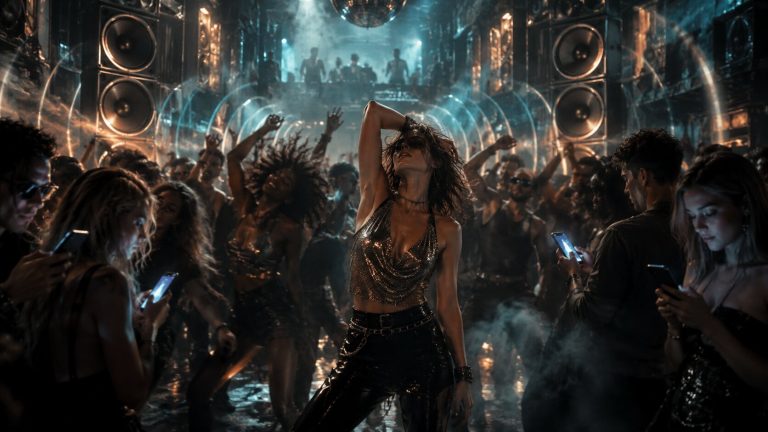
The second verse presents the club as a fully realized environment rather than a distant dream. Roan fills it with nightlife imagery: crowds, attraction, blacklights, mirrors and a disco ball.
These details give the narrator’s new world physical texture. More importantly, they show that she is no longer alone.
In one environment, the character’s desires may have made her feel unusual. Inside the Pink Pony Club, difference is everywhere. The social rules have changed.
That shift helps explain why the song resonates so strongly as a queer anthem. Finding a community can fundamentally change the meaning of characteristics that previously made someone feel isolated. A person who once felt like an outsider may discover that the problem was not who they were, but the environment in which they were trying to exist.
The Bridge: Freedom Does Not Erase Homesickness
The bridge complicates what could otherwise have been a straightforward escape story.
The narrator makes it clear that leaving did not erase her affection for home. She still thinks about her family and still emotionally hears her mother even from far away.
That admission matters because “Pink Pony Club” never ultimately argues that liberation requires pretending the past did not exist.
She can miss Tennessee while knowing she needed to leave. She can love her mother while refusing to organize her adult life around her mother’s expectations. She can carry her old home with her without returning to the identity associated with it.
The song therefore presents independence as emotionally messy rather than effortless.
The Final Refrain: A Club Becomes an Identity
By the final repetition of the chorus, the Pink Pony Club has stopped feeling like a simple building.
It now represents the narrator’s chosen world.
Repeating the club’s name reinforces her decision to stay. At the start of the song, Los Angeles exists in visions and dreams. By the ending, she is no longer wondering whether she should go. She has already decided that this is where she belongs.
The emotional journey therefore moves from imagination to risk, from risk to experience, and finally from experience to certainty.
Why the Pink Pony Club Works as More Than a Nightclub
The song’s central symbol is deliberately larger than reality. The Pink Pony Club is a venue within the story, but it also functions as a metaphor for chosen community.
It represents the kind of place where behavior that would be criticized elsewhere can become ordinary, celebrated or even glamorous.
The word “pink” contributes to the song’s exaggerated femininity and camp aesthetic. It suggests brightness, visibility and theatricality rather than restraint. The “pony” makes the name feel playful and slightly fantastical, as though the club belongs to a dream version of reality rather than an ordinary nightlife district.
The result is a location that feels almost mythological.
California as Reinvention
California also carries symbolic weight. American popular culture has long used the West Coast as a setting for reinvention: a destination where characters leave their old identities behind and try to become someone else.
“Pink Pony Club” adapts that familiar idea to a specifically queer and theatrical story.
The promise of California is not simply fame. The narrator is attracted to the possibility of existing differently.
The Mother as More Than One Character
The mother is a specific person inside the song’s narrative, but she can also be read more broadly.
She represents the expectations the narrator carries from home: family approval, traditional morality, religious influence, gender expectations and fear of social embarrassment.
Importantly, the narrator does not defeat this figure or persuade her to change her mind. She moves beyond the need for agreement.
That makes the song less about winning acceptance and more about learning to live even when acceptance may be incomplete.
The Stage as the Opposite of Hiding
The stage is another important symbol.
The narrator does not merely enter the club as a visitor. She imagines herself performing there. That makes her transformation public.
Performance turns identity into spectacle. Rather than reducing herself to avoid criticism, she becomes bigger, brighter and more visible.
This idea would later become fundamental to Chappell Roan’s artistic world, with its drag-inspired styling, theatrical costumes and deliberately heightened version of femininity.
Is “Pink Pony Club” Based on a True Story?
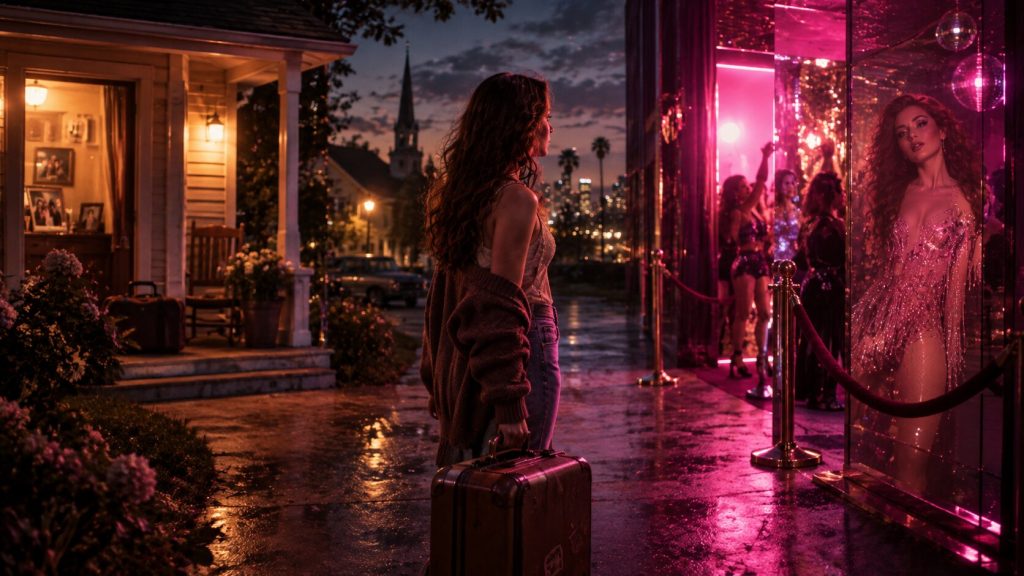
“Pink Pony Club” is based on a real emotional experience, but its narrative is fictionalized.
Roan really did find queer nightlife in Los Angeles transformative. The Abbey in West Hollywood has been repeatedly connected to the song’s inspiration, and Roan has spoken about being fascinated by the freedom she saw in the club environment. A later Guardian profile also identified The Abbey as the venue that helped inspire the track. (The Guardian – How Chappell Roan slow-burned her way to stardom)
However, the protagonist should not be interpreted as a literal account of everything Roan personally did. Details such as being from Tennessee are invented, and the club performer at the center of the story functions as a character.
The best way to describe the song is therefore as autobiographical emotion transformed into pop fiction.
Roan takes the genuine feeling of discovering a freer environment and asks what that freedom might look like if turned into a larger-than-life story. The result is not a diary entry but an imaginative version of self-discovery.
How “Pink Pony Club” Became a Blueprint for Chappell Roan
Looking back at Chappell Roan’s catalog, “Pink Pony Club” feels like a crucial artistic turning point.
Her earlier work was often more subdued and darker in tone. “Pink Pony Club,” by contrast, embraces huge emotion, theatrical pop, queer imagery, humor and deliberately excessive femininity.
Those qualities became central to The Rise and Fall of a Midwest Princess.
The song also fits naturally alongside tracks such as “Naked in Manhattan,” “Red Wine Supernova,” “HOT TO GO!” and “California.” Across these songs, Roan explores desire, experimentation, performance, homesickness and the distance between the identity someone inherits and the identity they eventually create.
“California” is an especially revealing counterpart. While “Pink Pony Club” presents the West Coast as a place of possibility, “California” complicates that mythology with disappointment and longing for home.
Together, the songs make Roan’s artistic world more emotionally convincing. Reinvention can be exhilarating without being easy. Moving away can provide freedom while creating loneliness. A new community can become home without completely replacing the old one.
The track also had an unusually long commercial life. Its initial 2020 release did not immediately become a major mainstream hit, but the song continued gaining listeners as Roan’s audience expanded. Years later, it reached No. 1 on the UK Official Singles Chart, illustrating the extraordinary slow-burn trajectory of both the song and Roan’s wider career. (Official Charts – “Pink Pony Club” chart history)
Why the Song Resonates Beyond Its Queer-Club Setting
The queer meaning of “Pink Pony Club” is important and directly connected to its inspiration, but the song also works because its basic emotional question is widely recognizable.
What happens when the people you love have one idea of who you should become, but happiness leads you somewhere else?
The narrator does not receive a neat resolution. Her mother does not suddenly appear at the club and announce that she understands everything. Instead, the daughter accepts that love and disagreement can coexist.
That is a more complicated and useful version of empowerment than simply declaring that other people’s opinions never matter.
They do matter to her.
They simply do not matter enough to make her abandon herself.
For queer listeners, the Pink Pony Club can represent the transformative experience of discovering LGBTQ+ community. For others, it can symbolize any environment where they first stopped feeling that an important part of themselves needed to be explained or hidden.
That could be a city, a music scene, a group of friends, a stage, an artistic community or another place entirely.
The specific destination changes. The emotional experience does not.
Final Thoughts: Finding the Place Where You No Longer Have to Shrink
At its surface, “Pink Pony Club” is a colorful story about a young woman leaving Tennessee, moving toward Los Angeles and dancing at a club in West Hollywood.
Beneath that story is a more powerful idea: sometimes growing into yourself means disappointing people who imagined a different future for you.
The narrator never completely disconnects from her past. She remembers home, loves her mother and understands the emotional cost of leaving. What she refuses to do is treat those attachments as a reason to give up the life that finally feels right.
That is why the Pink Pony Club ultimately becomes more than a destination. It represents the first place where the narrator does not have to make herself smaller in order to remain understandable to somebody else.
For Chappell Roan, the idea grew from a transformative encounter with queer nightlife in West Hollywood. For listeners, the symbol can mean something much broader: the place, community or moment where being yourself stops feeling like a problem that needs to be solved.
FAQs About “Pink Pony Club”
What does “Pink Pony Club” mean?
Who wrote “Pink Pony Club”?
When was “Pink Pony Club” released?
Is the Pink Pony Club a real place?
Is “Pink Pony Club” based on Chappell Roan’s real life?
What is the chorus of “Pink Pony Club” about?
What album is “Pink Pony Club” on?
Sources Used
- Chappell Roan – official album credits for The Rise and Fall of a Midwest Princess
- Chappell Roan – “Pink Pony Club” official music video
- The Guardian – Chappell Roan interview on queer identity, Los Angeles and “Pink Pony Club”
- Vanity Fair – Chappell Roan on her music, persona and debut album
- The Guardian – profile covering The Abbey and the inspiration behind “Pink Pony Club”
- Official Charts – “Pink Pony Club” UK chart history