Roblox Music Royalties Explained: PRS Licensing Deal and How Songwriters Can Get Paid in 2027
TL;DR: What the PRS-Roblox deal covers—and what it does not
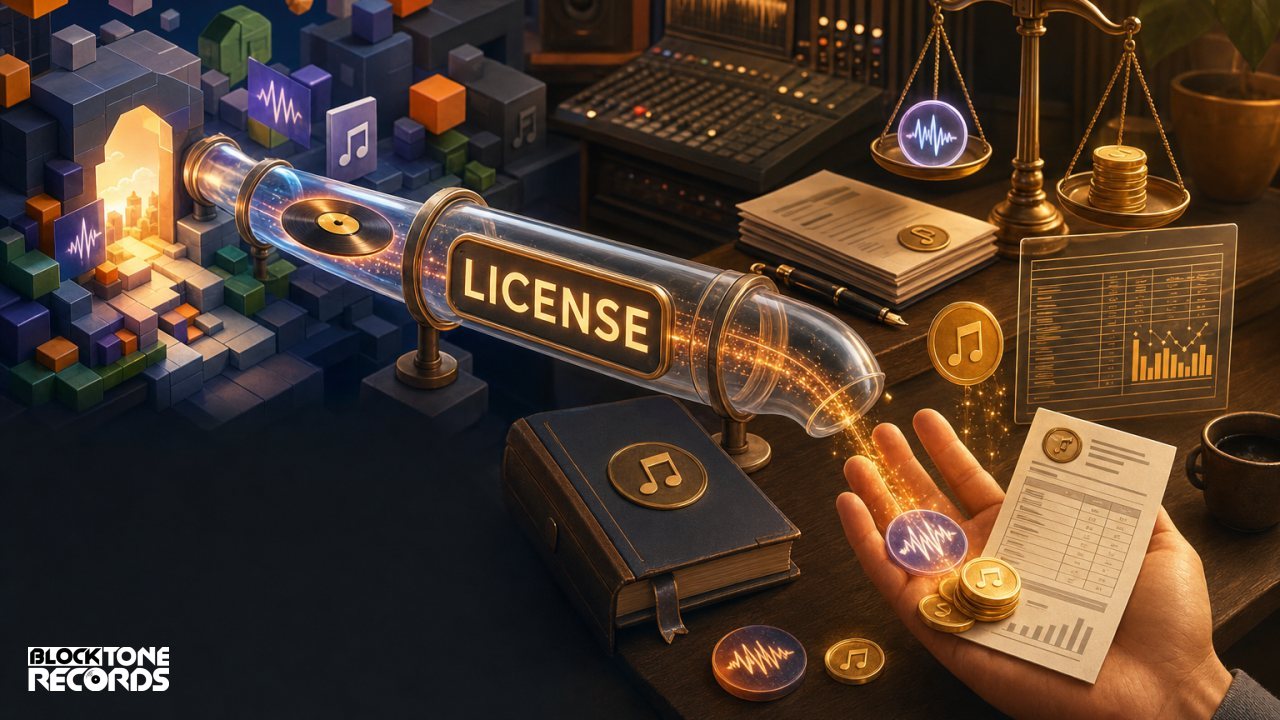
PRS announced the Roblox licensing agreement on November 25, 2026, with distributions to songwriters, composers and publishers scheduled to begin in 2027. Music Business Worldwide reported that the deal’s financial terms and per-use rates were not disclosed.
The agreement creates a prospective royalty route for eligible compositions represented by PRS. It is a publishing-rights arrangement, not an automatic payment mechanism for every artist, song, recording or audio upload on Roblox, and it does not establish a public per-play rate or support a reliable earnings estimate.
That makes repertoire and registration the immediate checks for a writer, publisher or manager: the composition must sit in PRS repertoire, with writer shares, publisher information and identifiers complete and accurate. A recording’s availability or audibility in a Roblox experience—including through Roblox music tools—does not by itself establish eligibility for a PRS distribution. Sound recordings and other audio used on Roblox are therefore not automatically covered by this composition-focused arrangement.
- If you write songs: check repertoire status, registrations, writer splits and identifiers now.
- If you own recordings: do not treat a PRS payment as payment for use of your master.
- If you upload audio: Roblox’s terms place clearance responsibility on the uploader; do not assume the platform deal clears a recording or sync use.
- If you are forecasting revenue: wait for actual reporting and statements. There is no reliable earnings formula yet.
Composition royalties are not master-recording royalties on Roblox
Composition and master rights are different claims on different things: the former concerns the music and lyrics, while the latter concerns a particular recorded performance. Songwriters and publishers typically hold interests in the first; an artist, label or other recording owner generally controls the second.
That distinction is the limit of what the PRS agreement with Roblox does. The agreement primarily covers composition and publishing rights represented by PRS—not automatic payment whenever a sound recording is heard. Nor does PRS distribution establish that the recording owner has been paid or that a particular recording use has been cleared.
For an upload, the rights picture may include the musical work, the recording, synchronisation and performance rights. Roblox’s Audio Upload License Agreement puts responsibility for obtaining those rights on the uploader and says Roblox is not responsible for third-party royalty payments under the agreement.
So the chains should be checked independently. Master permission cannot replace publishing clearance, and PRS distribution cannot demonstrate either recording-owner payment or uploader authority. Even an artist who wrote, recorded and self-released a track should treat control of the two sides as separate rights chains.
The eligibility checklist: PRS repertoire, registrations, shares and ISWCs
Before trying to connect Roblox activity to income, start with the work data. PRS cannot license or pay royalties for works outside its repertoire. As PRS explains in its repertoire guidance, control of the work is the threshold question—not whether a creator can find or upload audio on Roblox.
For songwriters and publishers, the useful workflow is straightforward:
- Identify the composition, not only the track. Make a list of the musical works you expect might be used. One recording can embody more than one relevant work in certain versions, and different recordings can embody the same composition.
- Confirm PRS representation. Check whether PRS has the authority to administer the relevant rights for the territory and use. If another society or publisher controls the work, a PRS distribution should not be assumed.
- Audit work registrations. Ensure the title, all writers, writer shares and publisher details are accurate. A disagreement over splits or an incomplete registration is a data problem worth resolving before platform reporting begins.
- Check identifiers. Confirm that the work has the correct ISWC and that internal publisher and catalogue records match the registered work. Identifiers do not create eligibility on their own, but they help connect usage data to the correct composition.
- Maintain a separate master-rights file. Keep recording ownership, artist agreements, licences and any relevant recording identifiers distinct from the composition record. This is essential where a label, producer or collaborator owns part of the master.
Managers should not use platform availability as a shortcut for any of these checks. Roblox has used multiple catalog-access and distribution arrangements, including royalty-free licensed music and user-upload systems. Its licensed-music guidance underscores the point that availability on the service is not proof that a given recording or composition is eligible for a PRS payment.
When Roblox royalties may show up in a PRS statement
PRS generally distributes royalties in quarterly cycles. Its process depends on usage data, matching and allocation, as set out in the distribution policy. Distributions are scheduled to begin in 2027.
For a represented work, those facts describe an administrative timetable rather than an immediate statement result. A visible line may not appear at once, and payments below the standard UK threshold of £30 are held until that threshold is reached. An absent early payment therefore does not by itself prove that Roblox use was unreported, that the deal did not apply or that the registration is incorrect; timing, matching, distribution cycles and the accumulated balance remain possible explanations.
Keep the work title and ISWC, writer and publisher shares, relevant recording information, known activity dates and the PRS statement period. If the expected work is still missing after sufficient reporting and distribution time, that record supports a focused query. It remains evidence for investigation, not proof that the claimed use was payable.
A licensing shift after Roblox’s earlier publishing disputes
In 2021, Roblox and the National Music Publishers’ Association reached an agreement settling copyright claims and creating an industry-wide opt-in framework for eligible publishers. Roblox described it in its September 2021 announcement. The PRS agreement belongs to that longer, unfinished move toward negotiated music licensing on Roblox.
An opt-in publishing framework, a PRS licensing agreement, royalty-free catalogues and uploader-facing clearance obligations can all exist on the platform at once. They concern different routes into Roblox and different rights; the relevant position may depend on the composition, recording, catalogue arrangement and manner of use.
The PRS arrangement may capture qualifying composition usage within PRS control. Music being available on Roblox does not establish eligibility for PRS payment, while publishing coverage does not resolve master-side recording permission. For independent creators, catalogue access and royalty entitlement therefore remain distinct.
No reliable Roblox publishing-income calculation follows from plays, visits or uploads. The PRS-Roblox financial terms and per-use rates have not been made public, leaving any fixed payment assigned to a play speculative.
Do not model income from Roblox yet
There is no defensible way to calculate Roblox publishing income from plays, visits or uploads at this stage. The PRS-Roblox financial terms and per-use rates have not been made public. Any calculator that assigns a fixed payment to a Roblox play would be speculation, especially before users can compare actual statements against known usage.
Roblox’s wider creator-economy numbers should not be repurposed as songwriter-royalty evidence. The company said creators earned approximately $1.7 billion in the 12 months ended June 30, 2026, while the median DevEx creator received approximately $1,500 over that period. Those figures concern Roblox creator economics generally, not PRS distributions to songwriters or publishers, as Roblox stated in its 2026 creator-economy update.
The actionable position is less glamorous but more valuable: clean the composition data, verify PRS control, preserve a separate master-rights trail and assess revenue only when usage reporting and quarterly statements establish what this new licensing route actually pays.