The Chicks and Jason Isbell vs Suno: Inside the Expanding AI Music Copyright Lawsuit
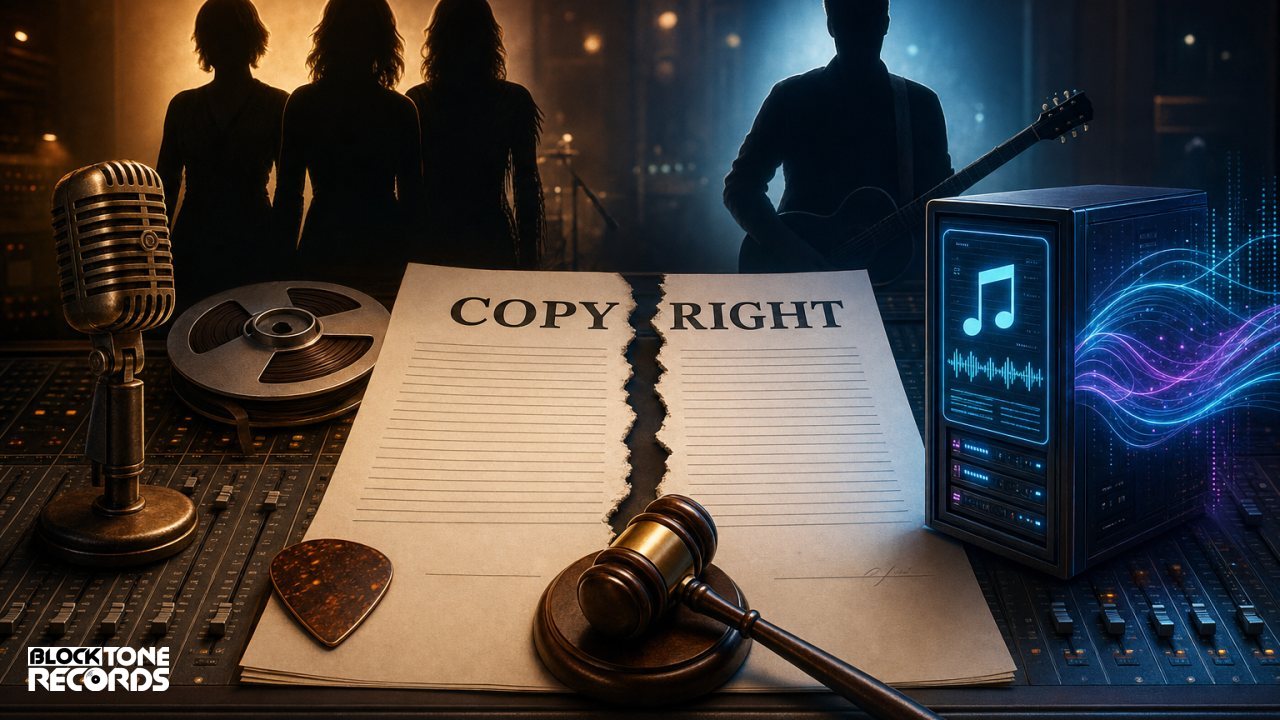
The newest front in the fight over generative music is not confined to whether an AI company copied recordings for training. In an amended complaint filed in Massachusetts federal court on November 24, 2026, The Chicks joined Jason Isbell, David Lowery, Guy Forsyth, Eduardo Calle and other musicians in litigation against Suno. The suit alleges that Suno commercially exploited artists’ names, images, likenesses, voices and identities without consent.
That framing is the important development. The plaintiffs are not simply asking whether a model ingested protected works. They characterize artist identity as a feature that helps make the product useful and marketable. In a business built around prompts, stylistic association and quick generation, that theory targets a layer of AI music that conventional recording-infringement claims do not fully reach.
The allegations remain allegations, and the case will have to be resolved under the applicable law and evidence in federal court. But the amended complaint expands the legal and commercial question around Suno: can a platform profit from making a recognizable performer identity accessible through its interface even when a user does not receive a literal copy of a particular song?
Artist identity as a product feature
The musicians’ action began on August 31, 2026. The November amended complaint added The Chicks and 16 other plaintiffs, according to Music Business Worldwide’s report. It alleges that Suno commercially exploited artists’ names, images, likenesses, voices and identities without consent.
The original Isbell complaint says that entering an artist’s name into Suno can operate as a retrieval key, generating songs, descriptions and images associated with that artist. It also says the claims do not depend on a particular output literally reproducing a particular recording.
That makes the filing’s theory legally distinct from copyright claims concerning musical compositions or sound recordings. It presents identity as part of the value offered by a generative-music product—even where an AI output is not identical to an existing recording—rather than as incidental metadata. Whether the theory will ultimately succeed remains unresolved.
The artist-name prompt is the alleged mechanism
The original Isbell complaint describes the operational link more directly. It alleges that entering an artist’s name into Suno can function as a retrieval key for performer-specific representations, producing songs, descriptions and images associated with that artist. Crucially, the complaint says the claims do not depend on showing that a specific output literally reproduces a specific recording.
That is a deliberate departure from the most familiar image of music infringement litigation, in which parties compare identifiable works, recordings or protected elements. The musicians’ claim instead focuses on the use of an identity as an input and product cue. Put plainly, the alleged harm is not limited to an output sounding exactly like a named track. It is the alleged conversion of a performer’s name and recognizable identity into a command that helps users retrieve a particular kind of generated result.
The Isbell complaint provides the plaintiffs’ account of that mechanism; it is not a judicial finding that Suno operates as alleged. Still, the pleading illustrates why the case has stakes beyond one company’s training dataset. If artist names can serve as high-value navigation tools in generative systems, disputes over identity may become as commercially consequential as disputes over the underlying recordings.
It also complicates a common response to AI-music complaints: that an output which avoids a note-for-note copy should end the inquiry. For these plaintiffs, non-identical output is not necessarily dispositive. Their theory is aimed at the alleged commercial use of the recognizable person behind the reference.
A parallel fight over training copies
Universal, Sony and Warner filed an RIAA-coordinated lawsuit against Suno in June 2024, alleging that the company copied copyrighted sound recordings without authorization while developing its generative-AI model. Their complaint seeks damages, injunctive relief and statutory remedies under the U.S. Copyright Act. The major-label complaint presents alleged unauthorized copying of sound recordings—not, on the supplied record, a ruling that Suno infringed or a resolution of the separate claims brought by Isbell and the other musicians.
A separate Massachusetts federal action brought by independent musicians alleges that Suno downloaded songs from YouTube, copied them for model training and generated music substantially similar to protected works. On August 20, 2026, a federal judge allowed the core Copyright Act and DMCA claims to proceed beyond dismissal, while dismissing a Tennessee consumer-protection claim. The decision was procedural rather than a final merits determination.
That is why the Isbell-led identity-based action should not be folded into “the Suno lawsuit.” The three matters share technology but not the same asserted harm or legal pathway: alleged training copies of sound recordings, alleged copying and output similarity, and alleged use of artist identity. The identity case is therefore legally distinct from the RIAA-coordinated copyright litigation.
The Copyright Office’s unsettled framework
There is no blanket U.S. legal answer in the supplied record declaring all AI music training lawful or unlawful. In its May 2025 pre-publication report on AI training, the U.S. Copyright Office treated licensing, liability and market effects as unresolved policy issues. Its discussion leaves fair-use analysis fact-specific, particularly where commercial uses involve highly creative works such as songs and sound recordings. That is a poor fit for declarations that either all training is theft or all training is automatically protected innovation.
The Copyright Office’s AI materials point to the questions that litigation and policy still need to confront: the nature of the copied material, the purpose and character of the use, the relevant markets and the role licensing might play. Those issues are especially acute in music because composition rights and sound-recording rights are distinct, and a licensing arrangement adequate for one category may not resolve claims involving the other.
There is a further commercial complication on the output side. The Copyright Office’s January 2025 report concluded that AI-generated material is copyrightable only where a human determines sufficient expressive elements; prompts alone generally do not provide the required authorship. As the Office explained, that limits claims to copyright in prompt-only output. The same ecosystem is thus arguing about allegedly unauthorized inputs while users may have limited copyright protection in some of the resulting music.
That does not decide ownership of every AI-assisted work, and it does not resolve the Suno suits. It does expose an awkward business proposition: platforms may be built on music inputs whose use is contested, while offering users outputs that may not carry the exclusive rights commonly associated with conventional recordings or compositions.
Permission and participation, not AI music’s existence
The most revealing element of the major-label complaint may be what it concedes. The labels acknowledge that AI could create commercial opportunity when it is developed with permission and participation from rights holders. Their objection is to alleged unlicensed copying that, they argue, can compete with and dilute the value of human recordings.
That position does not make the litigation a simple anti-AI campaign. It identifies a contest over who supplies the inputs, who authorizes identity-based associations, who participates in the resulting revenue and whether generated substitutes affect existing markets. Licensing and partnership models may offer one route through those tensions, but they do not automatically answer the Isbell-led claim that a performer’s identity itself has been made into a product feature.
The labels’ own complaint captures the constraint that will outlast any single case: AI music’s commercial future is not only a technical question about what models can generate. It is a negotiation—and, increasingly, a litigation—over permission, participation and the value attached to the humans whose work and identities make those systems legible to users.