
TikTok Says 94% of Global Hits Went Viral There First: What the 2026 Music Impact Report Really Shows
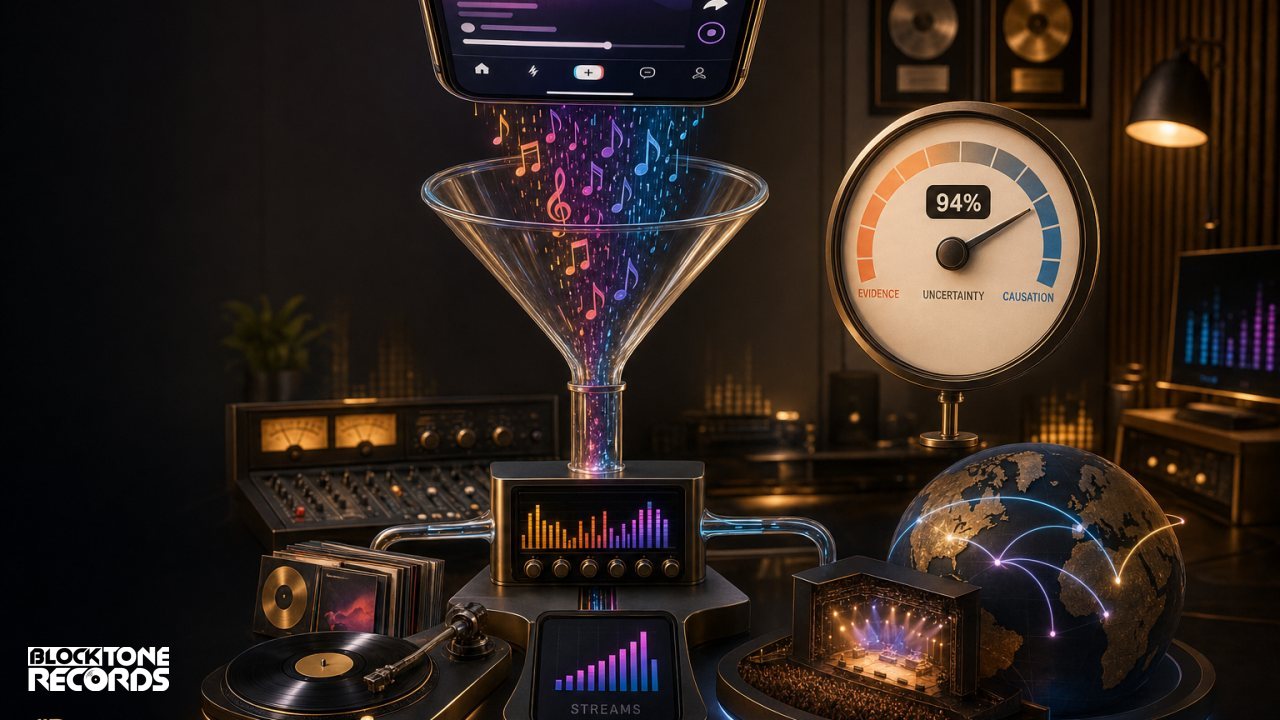
TikTok’s most attention-grabbing number in its 2026 Music Impact Report is deliberately expansive: 94% of songs entering the Billboard Global 200 in 2025 had a viral moment on TikTok before they reached the chart. It is an increase from 84% for 2024 chart entrants, and it helps the company make a persuasive case that TikTok has become deeply embedded in the route from cultural traction to global consumption.
But the statistic is not a measurement of how many songs TikTok made successful. It begins with songs that had already cleared the far more demanding threshold of entering the Global 200, then asks whether they had gone viral on TikTok beforehand. That distinction matters. The report is strong evidence of overlap between TikTok activity and contemporary hitmaking; it is not controlled evidence that TikTok independently caused 94% of those songs to become hits.
The more revealing story is how TikTok is trying to turn that overlap into a music-business proposition. Its report pairs chart data with evidence of longer chart runs, a growing relationship between views and audio streaming, and product tools that document handoffs from a TikTok post to a paid music service. In other words, the platform is moving beyond the familiar claim that it starts conversations. It wants to demonstrate that it can create measurable downstream value for rightsholders. The limits of that pitch were also exposed by Universal Music Group’s 2024 removal of recordings and publishing works: promotional visibility and the price of music rights remain separate negotiations.
What the 94% statistic measures
TikTok’s report defines its headline population narrowly: songs that entered the Billboard Global 200 in 2025. Of that group, 94% had a viral moment on TikTok before entering the chart. The prior-year comparison, 84% in 2024, suggests that TikTok’s relationship with the songs that become global chart records has tightened.
That is commercially meaningful without being a universal causal claim. A chart entrant is already a selected outcome, shaped by artist profile, label and distributor activity, existing audience, editorial support, radio in some territories, press, touring and activity across competing platforms. Viral activity may be a key accelerant, a visible symptom of demand that was already forming elsewhere, or both. The report does not separate those effects.
The 94% figure describes TikTok’s presence in the success stories that reached a particular global chart, not TikTok’s conversion rate for new music. It therefore cannot tell a label, manager or independent artist what percentage of music uploaded to the app will break through, and it says nothing about the enormous population of tracks that find a micro-audience on TikTok yet never approach the Global 200. That is not a flaw in the data point so much as a reason to read it precisely.
For the platform, that framing is still strategically useful. The music business does not need TikTok to prove it is the only route to a hit to treat it as a major promotional channel. It needs credible signs that songs with TikTok momentum travel into consumption that counts elsewhere. The report’s additional performance measures are more useful on that question than the headline itself.
Longevity and recent releases make the sharper case
Among the report’s comparisons, TikTok-viral tracks reached a median Billboard Global 200 peak of No. 79, against No. 120 for non-viral tracks. TikTok says the viral tracks also stayed on the chart four times longer. Those results are a better articulation of the platform’s business value: not merely a burst of attention, but an association with broader chart penetration and a longer commercial tail.
Even here, the appropriate reading is correlation rather than proof of a single cause. Songs with enough momentum to go viral may also have stronger marketing behind them, a more established artist relationship, an unusually adaptable hook, or parallel uptake on streaming services. TikTok’s own finding supports an argument that virality can be a catalyst for longevity; it does not establish that virality alone produced the stronger peaks or longer runs.
The Luminate analysis included in the report adds granularity. It examined 516 artists representing approximately two-thirds of U.S. streaming volume. The share of artists showing a strong or moderate positive correlation between TikTok views and on-demand audio streams rose from 33% in 2023 to 43% in 2025. For artists whose consumption is concentrated in recent releases, that figure reached 71%.
That split is important for release strategy. TikTok’s conversion signal appears strongest where an artist’s audience is actively consuming new material, rather than principally returning to a deep catalog. This does not mean catalog cannot benefit from a trend; it can mean that a resurging older song has an entirely different path to streaming. But the reported 71% figure supports the view that the platform is particularly well suited to campaigns built around a current release cycle and a clear next action for listeners.
For labels and distributors, the practical question is therefore less “will a clip go viral?” than whether a moment of usage can be sustained, connected to a release plan and converted into listening after the trend loses novelty. TikTok’s report is designed to answer that question with product-level evidence.
Add to Music App creates an off-platform funnel
TikTok says 45% of U.S. users discover music on the platform. It also says its music listeners are 78% more likely than the U.S. general population to have a paid streaming subscription and that 61% bought physical or digital music in the prior year. The company-reported figures support TikTok’s argument that its music audience includes potential customers.
Add to Music App turns that argument into a trackable action. TikTok said in an April 2026 announcement that the feature generated more than 6 billion saves to premium music services in the preceding 12 months. The total records a handoff from in-app discovery to an off-platform streaming service, giving rightsholders a metric beyond views or in-app sound uses.
It is not a measure of the full commercial chain: TikTok has not reported how many saves became full listens, repeat listening, subscriber retention or royalty revenue, and the aggregate does not assign value among labels, publishers, artists or services. The narrower implication is that TikTok can sit at the top of a campaign funnel, making the next step into a premium streaming environment easier to observe without replacing DSPs.
The UMG takedown tests indispensability
Universal Music Group’s 2024 catalog removal put TikTok’s promotional narrative under pressure. Licensing negotiations failed, and UMG’s music disappeared from the app. TikTok said in its February 28, 2024 statement that it was acting on UMG’s request to remove recordings and publishing works—distinct rights categories that may be controlled or administered by different parties.
The dispute is revealing less because it answers whether TikTok drives promotion than because it exposes two different negotiations. TikTok can offer access to a valuable audience and measure downstream conversion from discovery, giving that access economic and bargaining value. None of that makes reach decisive on licensing terms: a label may prize the audience and still reject the terms on offer.
Then there is the market behavior after removal. A quasi-natural-experiment study found a 2–3% increase in affected songs’ streams on audio platforms. Listeners, on this evidence, could substitute other discovery channels or destinations.
Read alongside TikTok’s high presence among songs that reach the Global 200, and its association of viral tracks with stronger peaks and longer chart lives, the result points to influence without indispensability. TikTok can function as a catalyst and as an intermediary in the handoff to monetised music services. It does not own the path to every hit, and the UMG case shows both why its audience matters and why demand can continue elsewhere.