

Unlock diverse music revenue streams: boost artist income in 2026
Music income is unpredictable for most independent artists, and that reality hits hard. 80% of artists earn less than $10,000 per year from music, which means relying on a single source is not just risky, it is a career threat. The good news is that there are more ways to earn from music today than at any point in history. This guide breaks down every major revenue stream available to independent musicians in 2026, explains what each one pays, and shows you exactly how to tap into them.
Table of Contents
- How to evaluate and diversify your music revenue streams
- Streaming royalties
- Publishing royalties: Mechanical, performance, and sync
- Live performances and merchandise
- Direct-to-fan sales and memberships
- Sync licensing: TV, film, and ad placements
- Physical sales: Vinyl, CDs, and emerging formats
- Social, video, and micro-monetization platforms
- Side-by-side comparison of music revenue streams
- How to choose and prioritize your revenue mix
- Amplify your music career with BlockTone Records
- Frequently asked questions
Key Takeaways
| Point | Details |
|---|---|
| Diversify for stability | Combining 5 or more revenue streams helps shield artists from industry changes. |
| Direct-to-fan pays most | Fan memberships and self-sales offer the highest profit margins and predictability. |
| Streaming is discovery | Streaming builds audience reach but pays less, so use it as a stepping stone to higher-value sources. |
| Don’t skip registrations | Joining the right PROs and rights organizations is critical for collecting all your royalties. |
| Physical sales are resurgent | Well-targeted vinyl and merch strategies can boost both income and fan loyalty. |
How to evaluate and diversify your music revenue streams
Building a stable music income starts with understanding why one source is never enough. A single stream can dry up overnight. Streaming algorithms change, venues close, and platforms shift their payout models without warning. The artists who weather those storms are the ones who have layered their income thoughtfully.
Top earning musicians typically use 5 to 8 different revenue streams at once. That is not a coincidence. It is a deliberate strategy. When you evaluate a new stream, consider these key factors:
- Scalability: Can it grow without proportional extra effort?
- Predictability: Is the income recurring or one-time?
- Upfront vs. recurring: Does it pay now or build over time?
- Effort required: How much time and skill does setup demand?
- Genre and career stage fit: Is this stream realistic for where you are right now?
Understanding distribution channels explained is a smart first step before committing to any stream. It is also worth reading about how platforms support emerging artists at different career stages.
Pro Tip: Start with two or three streams that match your current fanbase size and skill set. Add new ones only after you have stabilized the first batch.

Streaming royalties
Streaming is where most musicians start, and for good reason. It offers global reach and passive discovery. But the math is sobering. Streaming royalties pay around $0.003 to $0.005 per stream and now make up 84% of US recorded music revenues. That means you need roughly 250,000 streams per month just to earn $1,000.
Here is what streaming does well and where it falls short:
- Pros: Global discovery, essential for credibility, passive income once uploaded
- Cons: Tiny per-stream payouts, requires massive scale, algorithm-dependent
- Best for: Building audience awareness, not primary income
Distributors like DistroKid and TuneCore make it easy to get your music onto Spotify, Apple Music, and Amazon Music. Understanding music streaming basics will help you set realistic expectations. For practical setup guidance, explore distribution tips for artists before you upload your first release.
Pro Tip: Pitch your tracks to Spotify editorial playlists through Spotify for Artists at least seven days before release. A single playlist placement can add tens of thousands of streams overnight.
Publishing royalties: Mechanical, performance, and sync
Streaming is only part of the story. True music ownership relies on publishing royalties, and many indie artists leave serious money uncollected simply because they have not registered properly.
Publishing royalties are split into mechanical, performance, and sync fees. Each type is collected differently:
- Mechanical royalties: Earned from streams and downloads, collected by the Mechanical Licensing Collective (MLC)
- Performance royalties: Earned when your music plays on radio, in venues, or on TV, collected by PROs like ASCAP, BMI, or SESAC
- Sync royalties: Earned from TV, film, and ad placements (covered in detail below)
To collect everything you are owed, follow these steps:
- Register as a songwriter and publisher with a PRO (ASCAP, BMI, or SESAC)
- Register your sound recordings with SoundExchange for digital performance royalties
- Register your compositions with the MLC for mechanical royalties
- Register each new release promptly after distribution
“Unregistered works earn nothing. Every day you delay registration is money left on the table.”
Review the platform registration steps to make sure your catalog is fully set up across every relevant income channel.
Live performances and merchandise
Beyond digital, live events and physical merchandise create real-life fan engagement and high-margin income. For many mid-tier artists, this is where the real money lives. Live events and merch are often the biggest earners, with 20 to 30% profit margins on merchandise.
Here is how to maximize both:
- Ticketed shows: Direct payment, new fan conversion, and community building all happen in one night
- Festival appearances: Exposure to large audiences who may not know your music yet
- Apparel and vinyl: High perceived value, strong fan loyalty, and repeat purchases
- Limited-run products: Scarcity drives urgency and collector appeal
Strategies that work especially well for indie artists include bundle offers (album plus T-shirt), QR codes at the merch table linking to your mailing list, and exclusive merch drops tied to new releases. Pairing new music with merch creates a natural sales moment that fans genuinely appreciate.
Pro Tip: Offer a “show exclusive” item that fans can only buy at the venue. Scarcity and exclusivity together are a powerful combination for driving merch revenue.
Direct-to-fan sales and memberships
Some of the highest-grossing indie incomes now come from direct fan relationships online. The reason is simple: direct-to-fan models like Patreon and Bandcamp let artists keep 80 to 100% of income, far exceeding what streaming platforms offer.
Compare that to the 10 to 15% effective share most artists see from streaming after distributor fees and label splits. The difference is enormous. Here is how to build this stream effectively:
- Patreon: Offer tiered memberships with exclusive content, early access, and personal interaction
- Bandcamp: Sell digital downloads, physical releases, and exclusive tracks directly to fans
- Email list: Your most valuable asset for direct communication and sales
- Exclusive launches: Give paying fans first access to new music before public release
Avoid chasing declining NFT and token models. Focus on platforms with proven track records and loyal user bases. Pair your direct sales with strong online promotion strategies and use showcases and exclusives to reward your most engaged fans.
Pro Tip: Even a small Patreon with 50 fans paying $10 per month generates $6,000 per year. That is more than many artists earn from millions of streams.
Sync licensing: TV, film, and ad placements
One of the fastest cash injections for musicians comes from sync licensing. Sync licenses can earn $5,000 to $50,000 or more upfront for placements in TV, film, ads, and video games, plus downstream royalties every time the content airs.
Here is what you need to know before pursuing sync:
- Own both master and publishing: You cannot license what you do not fully control
- Avoid giving up all rights: Non-exclusive deals protect your ability to license the same track elsewhere
- Use music libraries: Platforms like Musicbed, Artlist, and Songtradr connect your catalog to buyers
- Direct outreach: Pitch to music supervisors with a clean, well-tagged catalog
“Sync is high-reward but low-volume. Most indie artists land one or two placements per year, but a single placement can change your financial picture entirely.”
Explore the sync licensing overview to understand how this fits into your broader income strategy.
Physical sales: Vinyl, CDs, and emerging formats
Physical music is not dead. It is growing. Vinyl sales hit $1.4 billion in the most recent reporting period, marking the 18th consecutive year of growth. That is a signal worth paying attention to.
For indie artists, physical formats offer unique advantages:
- Vinyl: Premium pricing, collector appeal, and strong superfan demand
- CDs: Lower production cost, great for merch tables and local sales
- Cassettes: Niche but growing, especially in indie and lo-fi communities
- Limited runs: Small batches create urgency and exclusivity
Bundling physical formats with show tickets or pre-orders adds revenue without extra marketing effort. Physicals also serve as a branding tool. A beautifully designed vinyl sleeve communicates artistry in a way that a Spotify profile simply cannot. Review physical formats explained to understand your production and distribution options.
Social, video, and micro-monetization platforms
Do not overlook social and video platforms. They can add up to surprising recurring income, especially when you treat them as a system rather than individual channels. YouTube and social platforms generate income through ad splits, fan funding, and content partnerships.
Key platforms and what they offer:
- YouTube Partner Program: Ad revenue share on every video view, plus channel memberships
- TikTok Creator Fund: Small per-view payments that scale with viral content
- Instagram Reels: Bonus programs for high-performing short-form video
- Facebook In-Stream Ads: Revenue from ads placed in your live and recorded videos
These platforms pay small amounts individually, but they compound quickly with consistent output. The smartest move is to repurpose content across all platforms from a single recording session. One studio performance becomes a YouTube video, a TikTok clip, an Instagram Reel, and a Facebook post. Use discovery through social platforms to build the audience that makes micro-monetization meaningful.
Side-by-side comparison of music revenue streams
With all the streams explained, here is a one-glance comparison to guide your choices.
| Revenue stream | Payout size | Payout speed | Predictability | Scalability | Setup effort |
|---|---|---|---|---|---|
| Streaming royalties | Low | Slow (quarterly) | Low | High | Low |
| Publishing royalties | Medium | Slow (quarterly) | Medium | Medium | Medium |
| Live performances | High | Fast (same night) | Low | Medium | High |
| Merchandise | Medium-High | Fast | Medium | Medium | Medium |
| Direct-to-fan (Patreon/Bandcamp) | High | Fast (monthly) | High | Medium | Medium |
| Sync licensing | Very High | Fast (per deal) | Low | Low | High |
| Physical sales | Medium | Medium | Medium | Low | Medium |
| Social/video monetization | Low-Medium | Medium | Low | High | Low |
The table makes one thing clear: no single stream scores high across every category. Combining streams is not optional. It is the strategy.
How to choose and prioritize your revenue mix
The last piece is building your custom mix. Here is a practical decision framework based on where you are in your career.
- Assess your fanbase size: Under 1,000 fans? Focus on direct-to-fan and live. Over 10,000? Add streaming and sync.
- Evaluate your digital presence: Strong social following? Prioritize video monetization and merch drops.
- Identify your genre fit: Instrumental or cinematic music? Sync licensing is a natural match.
- Start with two streams: Stabilize them before adding a third.
- Review quarterly: Drop underperforming streams and reinvest time into what works.
Indie artists out-earn majors when they emphasize ownership and direct-to-fan business. That is a powerful reminder that your independence is an asset, not a limitation.
Pro Tip: Use a simple spreadsheet to track monthly income from each stream. Seeing the numbers side by side makes it easy to spot which streams deserve more attention and which ones to cut.
Explore using music platforms to understand how the right digital tools can accelerate every stream on this list.
Amplify your music career with BlockTone Records
Ready to apply these strategies? BlockTone Records helps independent artists turn knowledge into real income, and we are genuinely excited to be part of your journey.
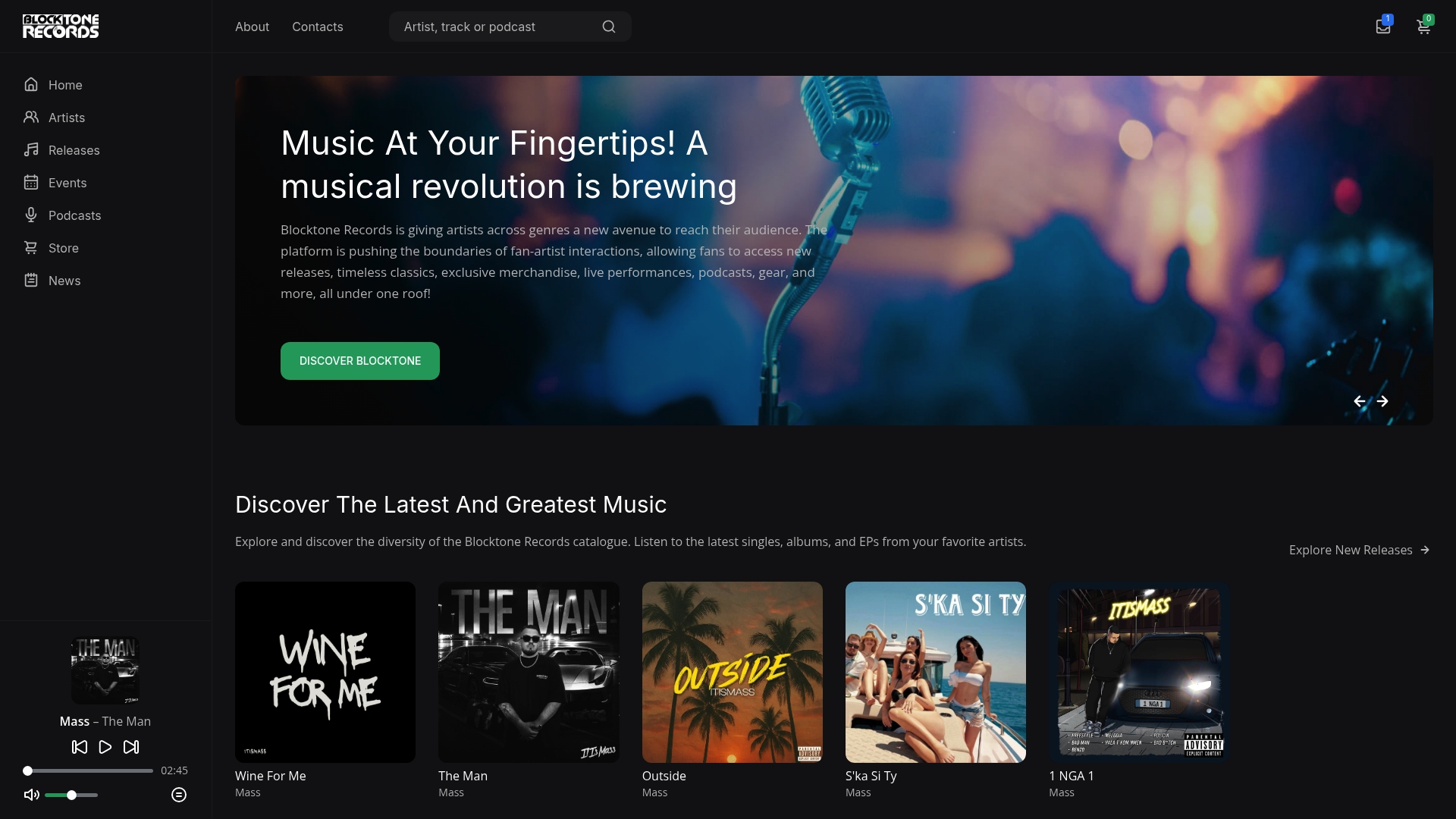
At BlockTone Records, we have built a platform designed specifically for artists who want to grow on their own terms. Whether you are exploring your first steps in music discovery, learning the fundamentals of music streaming essentials, or looking to showcase your catalog to a wider audience, we have the tools, guides, and community to support you. Create your artist profile, access exclusive resources, and connect with fans who are actively looking for new music. Your next revenue stream might be one conversation away.
Frequently asked questions
What is the most reliable music revenue stream for independent artists?
Direct-to-fan platforms like Patreon or Bandcamp offer the most predictable income and highest payout share for indie artists, letting you keep 80 to 100% of what you earn.
How many revenue streams should musicians have?
Top earning musicians typically use 5 to 8 active income streams, which provides the financial stability and flexibility to weather industry changes.
Do artists need to register with music rights organizations to get paid?
Yes, artists must register with PROs like ASCAP or BMI, the MLC, and SoundExchange to collect all the royalties they are legally owed.
Are physical music sales still worth it for independent musicians?
Absolutely. Vinyl sales hit $1.4 billion in the latest reporting period, proving that superfans still love owning physical music, which also strengthens your brand.
What are sync licensing fees for TV and film placements?
Sync deals typically pay $5,000 to over $50,000 upfront per placement, plus ongoing royalties each time the content is broadcast or streamed.