


What Is an Online Music Hub? Core Features Explained
TL;DR:
- Online music hubs combine distribution, fan engagement, analytics, and resources in one platform.
- They enable artists to retain up to 90% of revenue with low annual fees.
- Success depends on active use, strategic promotion, and long-term planning, not just signing up.
Independent musicians pour everything into their craft, yet many still rely on a patchwork of streaming services, social media profiles, and email lists to reach fans. That scattered approach leaves money, connections, and opportunities on the table. An online music hub changes the equation by bringing distribution, fan engagement, analytics, and growth resources under one roof. If you have ever felt like your music deserves a bigger, more organized stage, this guide will show you exactly what these platforms offer, how they compare to the alternatives, and how to use them to build something lasting.
Table of Contents
- Defining the online music hub: more than just streaming
- How online music hubs support independent artists
- Comparing online music hubs to other platforms
- Making the most of an online music hub: practical steps for success
- Our take: The overlooked power (and real limits) of online music hubs
- Take your music further with the right hub
- Frequently asked questions
Key Takeaways
| Point | Details |
|---|---|
| Music hubs are all-in-one | Online music hubs provide distribution, fan engagement, and resources for indie musicians. |
| High revenue retention | Platforms like MusicHub enable artists to keep up to 90 percent of their music revenue. |
| Go beyond streaming | Music hubs offer specialized tools that social media and streaming alone can’t match for career growth. |
| Use hubs strategically | Success depends on using all features, from analytics to fan outreach and profile optimization. |
Defining the online music hub: more than just streaming
Streaming platforms let people hear your music. Social media lets people follow you. But neither one was built with the independent artist’s full career in mind. An online music hub is a dedicated digital platform that combines music distribution, fan engagement tools, analytics dashboards, and artist support resources into a single, connected experience. Think of it as the difference between renting a corner at a flea market and having your own fully stocked store.
Understanding why artists need music platforms starts with recognizing what standard platforms leave out. A pure streaming service, for example, focuses on listener experience, not artist growth. A social media site optimizes for engagement and advertising revenue, not music discovery or fair compensation. An online music hub, by contrast, is designed specifically around what artists need to grow.
Here are the core features that set a true online music hub apart:
- Music distribution to major streaming services and download stores
- Fan engagement tools such as exclusive releases, direct messaging, and community features
- Analytics dashboards that show where listeners come from, which tracks perform best, and how fans behave
- Resource libraries covering promotion, licensing, and industry education
- Merchandise and monetization options beyond simple streaming royalties
- Artist profile pages that serve as a professional home base
Learning how to promote music online becomes far more effective when you have a centralized hub backing your efforts. User reviews praise these platforms for ease of use and artist support, which matters enormously when you are juggling songwriting, recording, and promotion all at once.
Pro Tip: Before signing up for any online music hub, list the three biggest gaps in your current setup, whether that is distribution reach, fan communication, or revenue tracking. Match those gaps to the platform’s feature set before committing.
How online music hubs support independent artists
The role of music platforms in an indie artist’s career has never been more significant. One of the most tangible benefits is financial. Traditional record deals often leave artists with 15 to 20 percent of their own revenue. Online music hubs flip that model dramatically.

| Platform type | Typical artist revenue share | Annual fee range |
|---|---|---|
| Major label deal | 15 to 25% | None (but advances recouped) |
| Standard distributor | 80 to 85% | $20 to $50 per year |
| Online music hub | Up to 90% | Low or tiered |
| Social media monetization | Varies widely | Free but inconsistent |
MusicHub offers 90% revenue retention and low annual fees for non-GEMA artists, which is a remarkable shift from the traditional industry norm. For an independent artist earning $10,000 a year in streaming and download revenue, that difference between 80 percent and 90 percent retention is an extra $1,000 back in your pocket every single year.
Understanding music distribution channels helps you see why retention rates matter so much over time. Here is a simple numbered plan to maximize your financial benefit on an online music hub:
- Calculate your current earnings across all platforms and note what percentage you actually keep.
- Compare hub fee structures to find the best fit for your release volume and genre.
- Consolidate your distribution through the hub to reduce fragmented royalty payments.
- Use the hub’s analytics to identify your highest-earning tracks and double down on similar content.
- Activate fan engagement features like exclusive releases to create additional revenue streams beyond streaming.
Pro Tip: Many hubs offer a free trial or a limited free tier. Use that window to test the analytics and distribution features before upgrading to a paid plan.
Comparing online music hubs to other platforms
With the benefits outlined, it is worth looking honestly at how online music hubs stack up against the other options indie artists commonly use. Understanding 2026 music industry trends makes it clear that no single platform does everything perfectly, but the right choice depends on your goals.
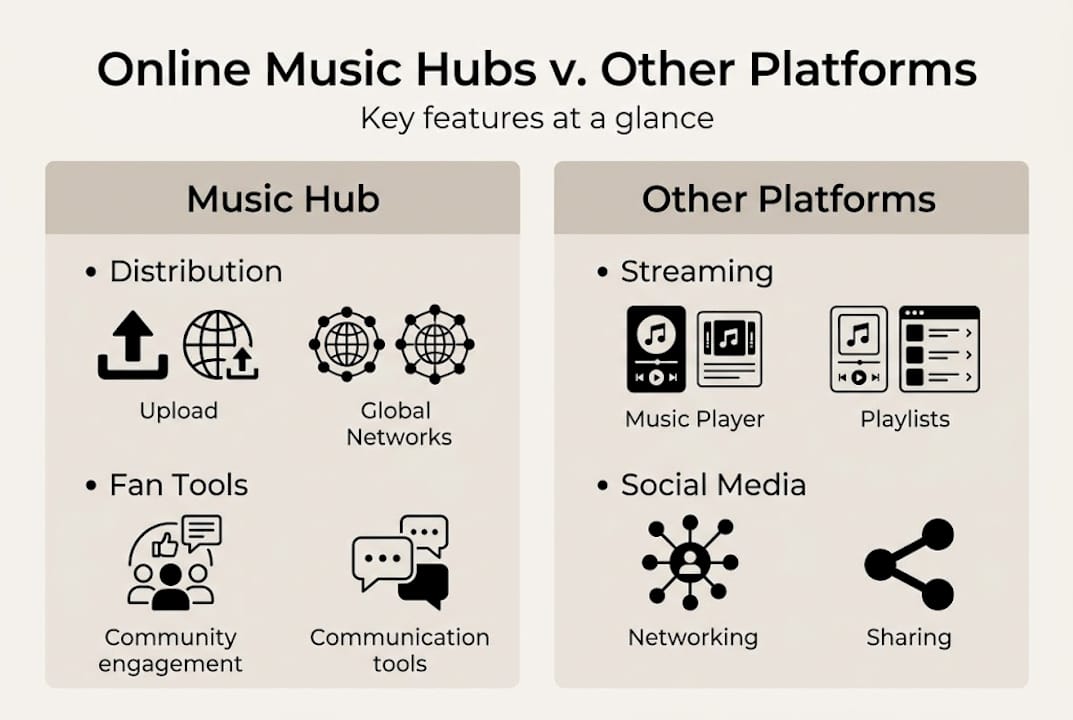
| Feature | Online music hub | Streaming service | Social media |
|---|---|---|---|
| Music distribution | Yes, broad reach | Limited to own platform | No |
| Revenue retention | Up to 90% | Very low per stream | Inconsistent |
| Fan engagement tools | Built-in, artist-focused | Minimal | Strong but scattered |
| Analytics | Detailed, artist-centric | Basic listener stats | Engagement metrics only |
| Artist support | Dedicated resources | Self-serve only | None |
| Merchandise integration | Often included | Rare | Third-party only |
Streaming services like Spotify or Apple Music are essential for discoverability, and music streaming for artists remains a critical piece of the puzzle. But relying on them alone means accepting fractions of a cent per play with little control over your relationship with fans.
Social media is powerful for building personality and community, but algorithms shift constantly and your reach can vanish overnight. Here is where each option shines:
- Online music hub: Best for artists who want control, higher earnings, and a professional home base
- Streaming services: Best for broad passive discoverability and playlist placement
- Social media: Best for real-time fan interaction and viral moments
“User reviews cite support and platform efficiency, though speed can be an issue on some hubs.” This is a fair reminder that no platform is flawless, and setting realistic expectations protects your momentum.
The smartest indie artists treat these three as a team, with the online music hub as the anchor.
Making the most of an online music hub: practical steps for success
Knowing the theory is one thing. Putting it into practice is where the real growth happens. Music discovery tools built into most hubs are only as powerful as the artist using them. Here is a step-by-step plan to help you thrive.
- Build a complete artist profile. Fill in every field, upload high-quality photos, write a compelling bio, and link your social channels. Incomplete profiles lose fans before a single song plays.
- Schedule consistent releases. Hubs reward active artists with better visibility. Plan a release calendar at least three months ahead.
- Engage fans with exclusive content. Offer early access tracks, behind-the-scenes recordings, or live session clips through the hub’s engagement features.
- Study your analytics weekly. Look at which tracks drive the most saves, shares, and repeat listens. Let that data guide your next creative decisions.
- Leverage artist resources. Most hubs include educational content on licensing, sync opportunities, and promotion. Treat these as free mentorship.
- Cross-promote strategically. Share hub links on social media and in email newsletters to funnel your existing audience into a more controlled environment.
Artist profiles in 2026 are more than digital business cards. They are the foundation of your online presence. Artists on MusicHub retain 90% of revenue and report high satisfaction with support, which confirms that the platform experience directly affects artist confidence and output.
Pro Tip: Set a monthly reminder to audit your hub profile. Update your bio after major releases, refresh your photos every six months, and always respond to fan comments within 48 hours to build genuine loyalty.
Our take: The overlooked power (and real limits) of online music hubs
Online music hubs are genuinely exciting tools, and we believe every independent artist should explore them. But we also want to be honest about something many articles skip over: a hub is a platform, not a career strategy.
The artists who thrive on these platforms are not the ones who simply sign up and wait. They are the ones who treat the hub as a base of operations while actively building relationships, creating content, and showing up consistently. The hub gives you the infrastructure. You still have to bring the energy.
We have also noticed that speed to market is underestimated. Some hubs have longer approval or distribution timelines than artists expect. If you are planning a release around a cultural moment or a trending topic, that delay can cost you relevance. Always check the hub’s average processing time before scheduling a time-sensitive drop.
Long-term thinking wins here. Artists who use hubs to nurture a dedicated fan base over 12 to 24 months consistently outperform those chasing quick streaming spikes. Staying current with the music news section helps you spot shifts in the industry before they affect your strategy. The hub is a long game, and that is a beautiful thing if you embrace it.
Take your music further with the right hub
Choosing the right online music hub is one of the most impactful decisions an independent musician can make in 2026. The platform you build on shapes your revenue, your fan relationships, and your long-term growth.
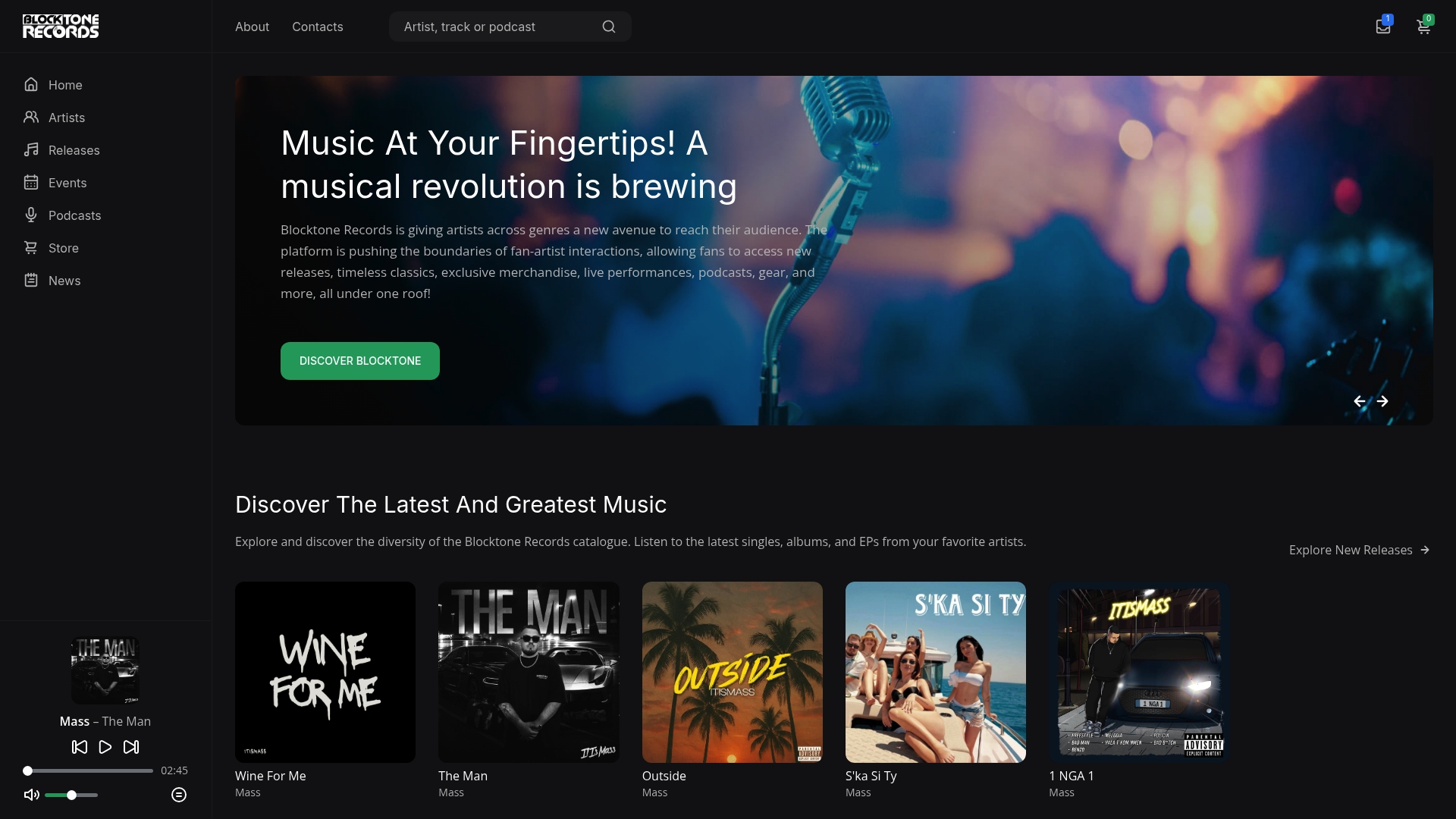
BlockTone Records is built for artists exactly like you. Whether you are releasing your first single or managing a full catalog, the platform offers artist and fan discovery tools, exclusive content features, and a community designed to help your music reach the right ears. You can also explore why streaming matters and how to pair it with a hub strategy for maximum impact. Your music deserves more than a scattered approach. Come build something real.
Frequently asked questions
What is an online music hub?
An online music hub is a digital platform where musicians can distribute music, engage with fans, and access tools for growth all in one place. Platforms in this space are praised for ease of use and dedicated artist support.
How do online music hubs help independent artists financially?
They allow artists to keep up to 90% of their revenue and often have low annual fees, boosting direct earnings significantly. MusicHub’s 90% retention and low fees make it a strong example of this model in action.
Are online music hubs better than social media and streaming alone?
They offer more specialized tools for music distribution, fan engagement, and analytics compared to general sites. A centralized platform for artists simply gives you more control over your career than scattered alternatives.
What features should I look for in an online music hub?
Look for high revenue retention, broad distribution reach, fan engagement tools, detailed analytics, and supportive educational resources to ensure the platform grows with your career.