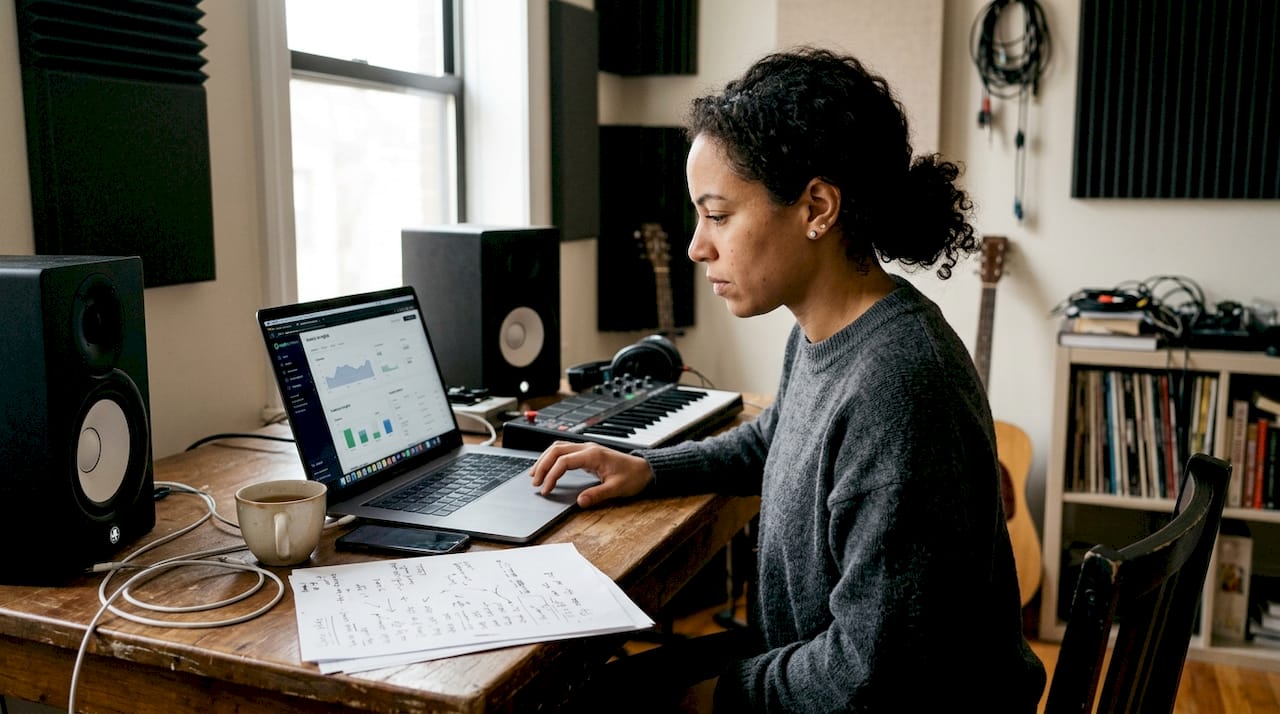
Music industry trends shaping success in 2026
TL;DR:
- Streaming and AI are now the dominant forces shaping music discovery and revenue in 2026.
- Social media, especially vertical video, is the primary platform for promoting and viralizing music.
- Blockchain and new support systems are transforming artist income, ownership, and community engagement.
The music industry has never been more accessible, yet many talented artists feel more invisible than ever. Global streaming reach, AI-powered tools, and social media platforms have created extraordinary opportunities, but they have also raised the noise floor to deafening levels. In 2026, simply releasing music is no longer enough. The artists, producers, and executives who thrive are those who understand which trends actually move the needle and how to act on them with intention. This guide breaks down the four most consequential shifts reshaping the industry right now, so you can make smarter, faster decisions for your career or roster.
Table of Contents
- How streaming platforms and AI are redefining music consumption
- The rise of social media ecosystems and vertical video for promotion
- Decentralization, blockchain, and new revenue models
- Support systems for independent artists: Platforms, grants, and fan economy
- Our take: What most forecasts miss about music industry innovation
- Unlock your music’s future with BlockTone Records
- Frequently asked questions
Key Takeaways
| Point | Details |
|---|---|
| Streaming and AI transformation | Streaming platforms and AI recommendation engines now drive most music discovery and revenue. |
| Social video for breakout success | Short-form, vertical video is essential for building fanbases and viral tracks in 2026. |
| Blockchain and direct payouts | Decentralized payment systems are making artist royalties faster and more transparent. |
| Independent resilience | Creator platforms and fan communities are doubling indie artist earnings with more control. |
How streaming platforms and AI are redefining music consumption
Streaming is no longer just one revenue channel among many. It is the channel. Streaming accounts for over 85% of recorded music revenue globally, and AI-driven playlists have become the top way listeners discover new songs. That shift changes everything about how you should plan a release.
For independent artists, this is both a gift and a challenge. Algorithmic playlists on platforms like Spotify, Apple Music, and Amazon Music can expose a track to millions of listeners without any label backing. But the same algorithms that reward engagement can also bury a song that underperforms in its first 48 to 72 hours. Understanding how music streaming in 2026 actually works at a technical level is no longer optional for serious artists.
AI is also reshaping A&R, which stands for artists and repertoire, the traditional label function of scouting and developing talent. Data platforms now analyze listener behavior, social signals, and streaming velocity to flag emerging artists before they break. Major labels use these tools to make signing decisions faster. Independent artists can use the same data signals to time their releases strategically.
Here are the key metrics that matter most in the streaming era:
- Save rate: The percentage of listeners who save a track to their library, a strong signal of genuine connection
- Playlist add rate: How often your song lands in user-curated playlists after release
- Skip rate: High skips in the first 30 seconds tell algorithms your intro needs work
- Listener-to-follower conversion: Turning casual listeners into loyal followers drives long-term algorithmic favor
- Streams per listener: Repeat listening signals deep engagement and boosts recommendation scores
Pro Tip: Build your release strategy around the algorithm’s first-week window. Pre-save campaigns, coordinated playlist pitching, and a social push in the first 72 hours can dramatically improve your algorithmic placement and music discovery for artists outcomes.
For major-label teams, the takeaway is equally clear. AI-driven A&R tools are only as good as the human judgment applied to their outputs. The artists who connect emotionally still outperform those who simply optimize for data points.
The rise of social media ecosystems and vertical video for promotion
If streaming is where music lives, social media is where it gets born into public consciousness. Vertical video views on music platforms have grown by 150% year-over-year, making short-form video the primary channel for breaking new tracks in 2026. TikTok, Instagram Reels, and YouTube Shorts are not supplementary marketing tools anymore. They are the main stage.
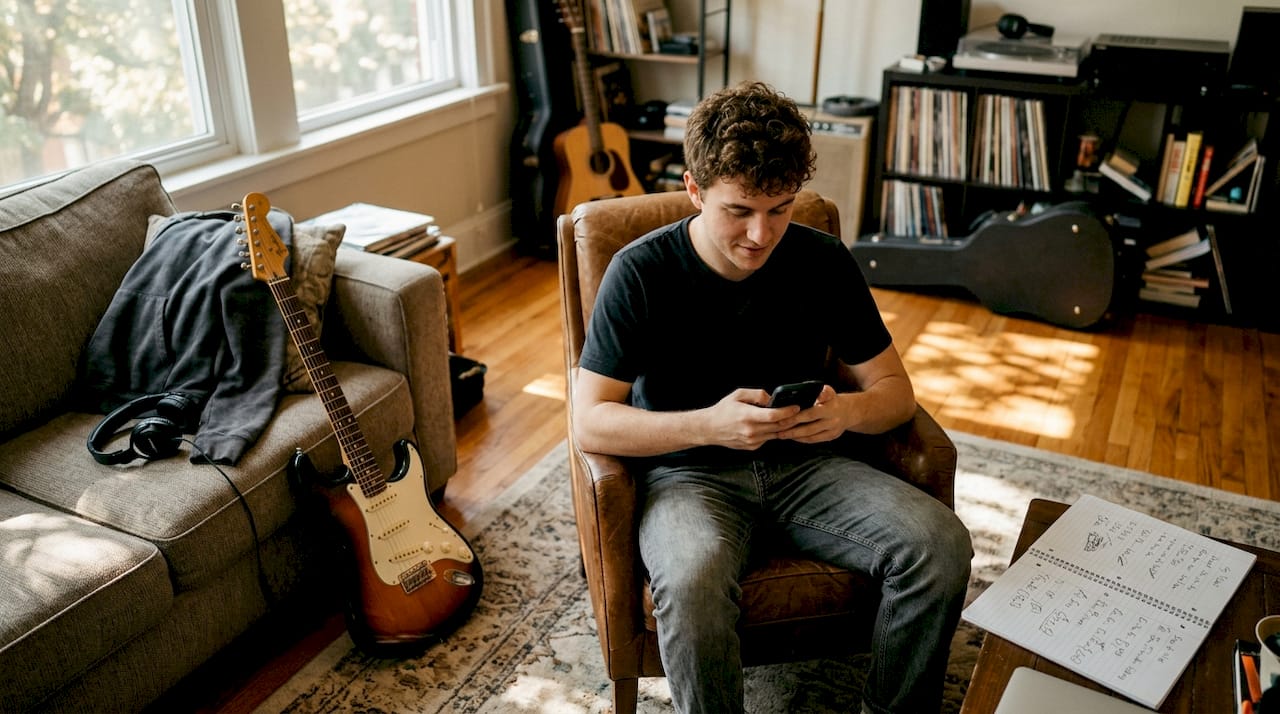
The mechanics of viral music promotion have changed dramatically. A song hook placed in the first seven seconds of a vertical video can spark a challenge, a duet trend, or a meme cycle that reaches audiences no paid campaign could match. Artists who understand platform-native behavior, like using trending audio, AR filters, and collaborative features, consistently outperform those who simply repurpose traditional promotional content.
Here is a direct comparison of traditional promotion versus integrated social strategies:
| Factor | Traditional promotion | Integrated social strategy |
|---|---|---|
| Discovery speed | Weeks to months | Hours to days |
| Cost | High (radio, PR, ads) | Low to moderate |
| Fan interaction | One-way broadcast | Two-way conversation |
| Data feedback | Delayed and limited | Real-time and granular |
| Viral potential | Low | Very high |
| Longevity | Short campaign window | Evergreen content loops |
The most effective artists in 2026 are building content ecosystems, not just posting singles. They create behind-the-scenes clips, lyric breakdowns, live session snippets, and community challenges that keep fans engaged between releases. Reviewing music promotion strategies that are built for this era can help you structure a sustainable content calendar.
Key steps to amplify reach through social platforms:
- Post consistently, not just around release dates
- Engage with fan-created content using your music, resharing builds loyalty
- Use platform analytics to identify which content formats drive the most profile visits
- Collaborate with creators in adjacent niches to expand your audience
- Prioritize authentic storytelling over polished production in short-form video
Building strong artist profiles in 2026 that reflect your personality and story is what turns a viral moment into a lasting fanbase. Vanity metrics like views and likes matter far less than comment quality and repeat engagement. Use the discover new music guide to understand how fans are actively searching for artists like you.
Decentralization, blockchain, and new revenue models
Once you have built an audience, the next question is how to ensure you actually benefit financially from your work. This is where blockchain technology is creating real, measurable change for artists at every level.
Blockchain-powered royalty platforms offer up to 80% faster payouts to artists compared to traditional publishers. That speed difference is not just a convenience. For independent artists managing cash flow without label advances, faster royalties can mean the difference between funding the next project and stalling out.
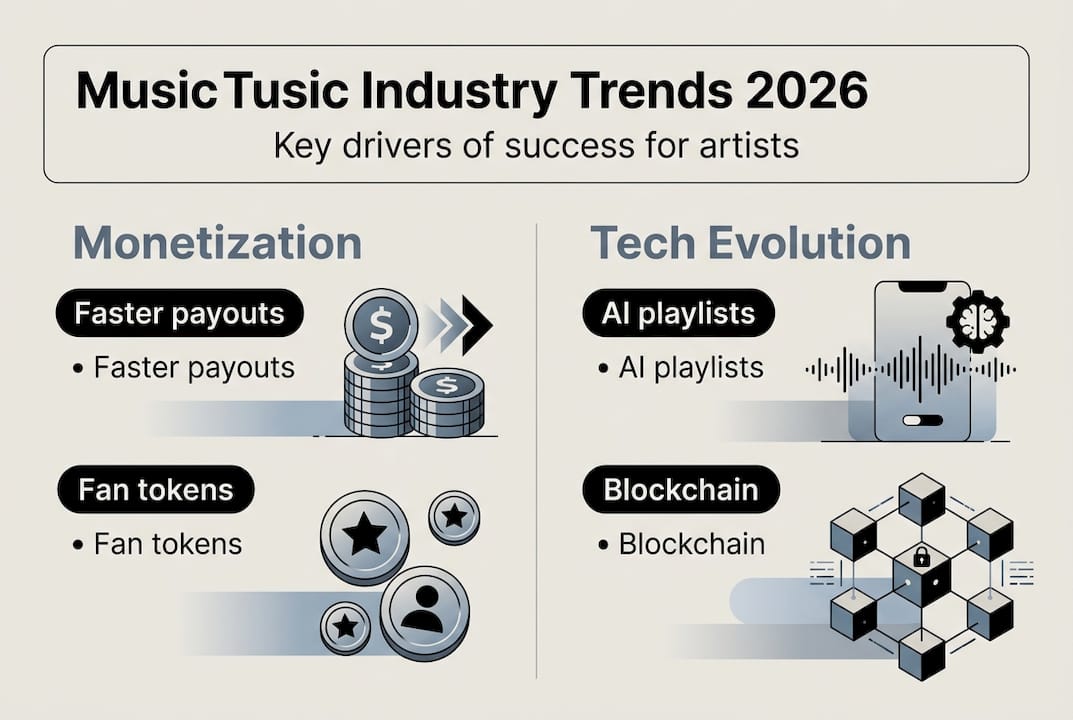
Smart contracts, which are self-executing agreements coded directly onto a blockchain, automate royalty splits the moment a song earns revenue. No intermediaries, no delayed accounting periods, no disputes over percentages. The transparency is built into the system.
| Factor | Traditional payment | Blockchain payment |
|---|---|---|
| Payout speed | 6 to 18 months | Days to weeks |
| Fees | 15% to 30% | 2% to 5% |
| Transparency | Limited | Fully auditable |
| Split automation | Manual | Automatic via smart contract |
“The artists who understand Web3 are not just chasing NFT hype. They are building ownership structures that protect their catalogs and create new income streams for decades.” This is the quiet revolution happening beneath the surface of the streaming economy.
Decentralized autonomous organizations, known as DAOs, are also emerging as a powerful model for fan investment. A DAO allows a community of fans to collectively fund an artist’s project in exchange for governance tokens or revenue shares. It is a direct-to-fan funding model that bypasses traditional label structures entirely.
NFT collectibles, exclusive digital releases, and tokenized concert experiences are all part of this ecosystem. Staying current with music event updates helps you identify where these models are gaining traction in real time.
Pro Tip: Do not treat Web3 as an all-or-nothing bet. A hybrid release strategy, where you distribute on streaming platforms while offering exclusive NFT editions or early-access tokens to superfans, lets you capture both mainstream reach and Web3 revenue without alienating either audience.
Support systems for independent artists: Platforms, grants, and fan economy
Technology and revenue models only go so far. The emotional and structural backbone of a sustainable music career in 2026 is community. The number of independent artists earning over $50,000 per year has nearly doubled since 2022, and the primary driver is enhanced direct support platforms that connect artists to fans and funding without label gatekeeping.
Here is a framework for building a diversified support system:
- Choose your primary creator platform. Patreon, Bandcamp, and Substack all offer subscription models that turn casual fans into paying supporters.
- Apply for grants actively. Organizations like the Recording Academy, ASCAP Foundation, and regional arts councils offer funding specifically for independent musicians.
- Build a superfan tier. Offer exclusive content, early releases, and personal access at a premium price point. Even 200 superfans paying $10 per month generates $2,000 in monthly recurring revenue.
- Engage your community weekly. Consistent communication through newsletters, Discord servers, or live streams builds the loyalty that sustains careers through slow release cycles.
- Diversify income streams. Sync licensing, live performance, merchandise, and teaching are all viable revenue layers that reduce dependence on any single platform.
Top platforms worth prioritizing for emerging artists support in 2026 include:
- Patreon: Subscription-based fan support with tiered rewards
- Bandcamp: Direct music sales with strong artist-friendly revenue splits
- DistroKid and TuneCore: Affordable global distribution with fast payouts
- Splice: Collaboration and sample licensing for producers
- SoundBetter: Marketplace for session work and production services
Understanding why music platforms for growth matter and how to use them strategically is what separates artists who build careers from those who build catalogs nobody hears. The role of music platforms has evolved from simple distribution to full-spectrum career management tools.
Our take: What most forecasts miss about music industry innovation
Most industry forecasts in 2026 focus on technology as the primary driver of artist success. Faster AI, better blockchain, smarter algorithms. And while those tools genuinely matter, we believe the real differentiator is something far less quantifiable: the depth of human connection an artist builds with their audience.
The artists who will define this decade are not necessarily the ones with the best data strategies. They are the ones who use data as a compass while leading with authentic storytelling and genuine community care. Technology amplifies what is already there. It does not create it.
We also see a pattern that most forecasts ignore: strategic patience. The artists who experiment with new platforms and revenue models without abandoning their core creative identity consistently outperform those who chase every trend. Jumping from Web3 to AI tools to the next social platform without a clear brand foundation leads to burnout and audience confusion.
Our honest advice is to invest deeply in a signature sound and a community-rooted identity first. Then use the promotion tips for 2026 and digital tools available to amplify what already resonates. The artists who build something real will always find the right technology to carry it further.
Unlock your music’s future with BlockTone Records
The trends covered in this guide are not just observations. They are actionable pathways, and BlockTone Records is built to help you walk them with confidence. Whether you are an independent artist navigating algorithmic discovery or a producer exploring new revenue models, BlockTone offers the tools, community, and visibility you need to grow.
From our music discovery platform that connects your releases with engaged listeners, to practical distribution tips designed for the 2026 landscape, BlockTone is your partner in turning industry knowledge into real career momentum. Explore what is possible when strategy meets a platform that genuinely cares about your growth.
Frequently asked questions
What is the most important music industry trend in 2026?
Streaming and AI are redefining music discovery at scale, making algorithmic placement and listener engagement the most critical factors for reaching new fans and generating revenue.
How is blockchain affecting artist payments?
Blockchain platforms offer up to 80% faster artist payouts, and smart contracts automate royalty splits in real time, reducing reliance on traditional publishers and intermediaries.
What are the best platforms for independent artist support in 2026?
Independent artists’ earnings are rising thanks to platforms like Patreon, Bandcamp, and DistroKid, which combine fan funding, direct sales, and global distribution in one accessible ecosystem.
Is vertical video still growing as a music promotion tool?
Vertical video views have grown by 150% year-over-year, and short-form content on TikTok, Instagram Reels, and YouTube Shorts remains the fastest way to break a new track in 2026.