

Why release singles digitally? Maximize reach & impact
Albums used to be the gold standard. Every artist dreamed of dropping a full-length record, watching it climb the charts, and building a legacy track by track. But the music world has shifted in a big way. Singles now account for 75% of global music consumption, and that number keeps climbing. Whether you’re an emerging artist trying to break through or an established name looking to stay relevant, understanding why digital singles are the smartest release strategy right now could change everything about how you connect with fans and grow your career.
Table of Contents
- The digital singles revolution: From albums to instant access
- How digital singles amplify reach and fan engagement
- The strategic advantages: Cost, feedback, and creative freedom
- Potential drawbacks: When digital singles aren’t enough
- Best practices: Making the most of digital singles in 2026
- Connect your singles with fans—unlock new music opportunities
- Frequently asked questions
Key Takeaways
| Point | Details |
|---|---|
| Digital singles dominate | Most music is now streamed as singles, making them vital for artist reach and relevance. |
| Cost and speed advantage | Releasing singles digitally is faster and more affordable than albums, especially for independent musicians. |
| Algorithmic discovery boost | Frequent single releases increase chances of landing on playlists and expanding your fanbase. |
| Balance is key | Relying only on singles has drawbacks—thoughtful strategy helps maintain audience and artistic depth. |
| Data powers decisions | Digital platforms provide real-time analytics to refine future releases and monetize globally. |
The digital singles revolution: From albums to instant access
Let’s start by understanding how and why digital singles rose to dominate the music industry. Not long ago, releasing an album felt like the only serious move. Labels pushed full projects, radio stations played album cuts, and fans bought physical copies. That world is largely gone. Today, listeners scroll playlists, skip tracks in seconds, and discover music through short-form video clips. Attention is precious, and singles fit perfectly into that reality.
The numbers back this up. Streaming grew 9.6% to 5.1 trillion streams in 2025, a staggering figure that reflects just how deeply streaming has replaced physical and download formats. Platforms like Spotify, Apple Music, and Amazon Music are built around discovery, and singles are the currency of that ecosystem.
“The shift toward singles isn’t just a trend. It’s a structural change in how music is consumed, discovered, and monetized globally.”
Here’s a look at how the balance between singles and albums has shifted in recent years:
| Year | Singles share of consumption | Albums share of consumption |
|---|---|---|
| 2021 | 62% | 38% |
| 2022 | 66% | 34% |
| 2023 | 70% | 30% |
| 2024 | 73% | 27% |
| 2025 | 75% | 25% |
Key changes reshaping the landscape for both emerging and established artists include:
- Streaming algorithms favor frequent, consistent releases over one-time album drops
- Playlist culture rewards individual tracks, not full projects
- Social media virality is almost always tied to a single song, not an album
- Listener attention spans have shortened, making a strong single more impactful than a 12-track record
- Independent artists can now compete with major labels by releasing top singles and albums on equal footing digitally
For a deeper look at how to navigate this new landscape, exploring music distribution tips can help you build a release plan that actually works.
How digital singles amplify reach and fan engagement
Now that you see the industry pivot, here’s what makes digital singles an engine for visibility and connection. The process of getting your music heard globally used to require a label, a distributor, and a significant budget. Today, it takes a single upload.
Digital aggregators like DistroKid, TuneCore, and CD Baby reach 150+ DSPs worldwide, placing your single on Spotify, Apple Music, Tidal, YouTube Music, and dozens more within days. That kind of reach was unimaginable for independent artists just a decade ago.
Here’s what happens after you upload your single digitally:
- Your distributor delivers the track to all major and minor streaming platforms simultaneously
- Pre-save campaigns build anticipation and signal demand to platform algorithms
- Algorithms analyze early listener behavior, skip rates, and saves to determine playlist eligibility
- Editorial and algorithmic playlists pick up tracks showing strong early engagement
- Social sharing and short-form video clips extend organic reach beyond the platform
- Real-time analytics show you exactly who is listening, where, and how often
Compare that to a traditional release:
| Factor | Digital single release | Traditional/physical release |
|---|---|---|
| Time to market | Days | Weeks to months |
| Cost | Low to moderate | High |
| Global reach | Immediate, 150+ platforms | Limited by distribution deals |
| Fan engagement | Real-time, data-driven | Delayed, harder to measure |
| Playlist access | Algorithmic and editorial | Mostly editorial only |
Streaming platforms reward artists who release frequently with better algorithmic placement, meaning consistency is one of your most powerful tools. Understanding music distribution channels helps you choose the right path for your music. You can also explore music discovery for artists to understand how fans find new music and how to position your single in front of them. Learning about music streaming’s role in today’s industry gives you the full picture.

Pro Tip: Submit your single to Spotify’s editorial playlist consideration tool at least seven days before release. Pair that with a strong pre-save campaign and a short-form video teaser to maximize your first-week engagement signals.
The strategic advantages: Cost, feedback, and creative freedom
In addition to reach, digital singles offer practical advantages that strengthen your strategy. For independent artists especially, the financial math is simple. One well-produced single costs a fraction of a full album, and the marketing effort is focused rather than spread thin.
Here’s how singles lower your costs and sharpen your strategy:
- Production costs are concentrated on one track, allowing you to invest in quality without overextending your budget
- Marketing timelines are shorter, meaning you spend less on promotion per release cycle
- Testing is built in because each single tells you what your audience responds to before you commit to a larger project
- Creative pivots are easier when you’re not locked into an album concept
- Collaboration opportunities open up naturally when you’re releasing frequently and staying visible
The independence movement is real. A remarkable 96.2% of daily ISRC uploads to DSPs in 2025 came from independent and DIY artists. That means the majority of music hitting streaming platforms right now is coming from artists just like you, not major labels.
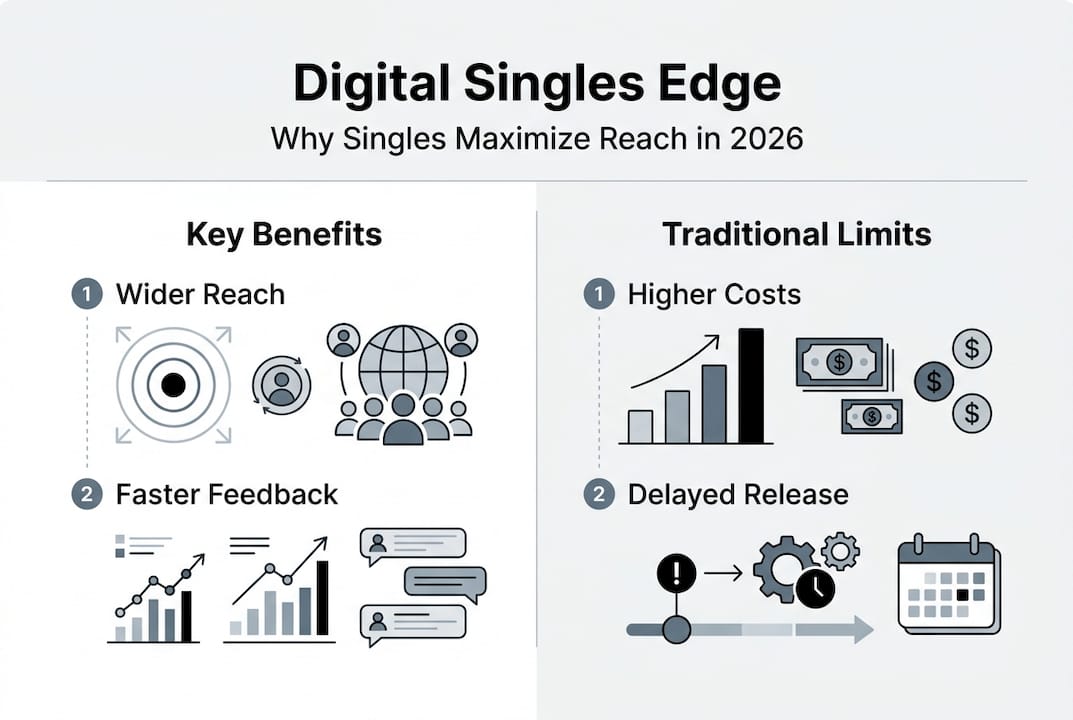
Releasing singles also gives you a feedback loop that albums simply can’t provide. Drop a track, watch the data, read the comments, and adjust. That kind of real-time creative intelligence is genuinely valuable. Checking out why feature top releases matter can help you understand how visibility compounds over time. For a broader view, music promotion tips offer practical ways to amplify each release.
Pro Tip: Release a single, then use the streaming analytics to identify your top listener cities. Target those locations with social media ads for your next release to build a concentrated, loyal fanbase before expanding.
Potential drawbacks: When digital singles aren’t enough
Of course, every release strategy has trade-offs. Here’s what to watch for when focusing on singles. Singles are powerful, but they’re not a perfect solution for every artist or every moment in a career.
Potential downsides to a singles-only approach include:
- Fan fatigue can set in if you release too frequently without enough variation or quality control
- Press coverage is harder to secure for singles because many music journalists and blogs prioritize album reviews
- Merchandise opportunities are often tied to album campaigns, which create a stronger narrative around a product
- Storytelling depth is limited when each release stands alone, making it harder to build a cohesive artistic identity
- Streaming revenue per track is modest, and without the volume of an album, income can feel slow to grow
“Albums still hold a unique power for artists who want to make a bold artistic statement, build a press cycle, or create a world that fans can live inside for weeks.”
The smartest artists treat singles and albums as complementary tools, not competing ones. Singles build momentum, grow your audience, and keep algorithms happy. Albums consolidate that momentum into a cultural moment. An EP can serve as a middle ground, offering more depth than a single while remaining more manageable than a full album. Exploring the role of top singles in a broader release strategy helps you find the right balance for your specific goals.
Best practices: Making the most of digital singles in 2026
Ready to release? Tie your strategy together with these battle-tested steps for digital singles in 2026. The difference between a single that disappears and one that gains traction often comes down to preparation and timing.
Here are the essential steps to maximize your digital single release:
- Plan your release date at least four to six weeks in advance to allow time for playlist pitching and pre-save setup
- Set up pre-saves on Spotify and Apple Music to build early momentum and signal demand to algorithms
- Pitch to editorial playlists through your distributor’s built-in tools or directly through Spotify for Artists
- Create a content calendar around the release, including teasers, behind-the-scenes clips, and lyric videos
- Leverage short-form video on TikTok, Instagram Reels, and YouTube Shorts to drive organic discovery
- Monitor your analytics in real time to understand listener demographics, skip rates, and save rates
- Collect royalties globally using split payment features available through most digital distributors
Digital distribution enables data analytics, pre-saves, split payments, and automated royalty collection from day one, giving independent artists tools that were once reserved for major label acts. Knowing how to showcase new music effectively can boost your plays significantly and help each release build on the last.
Pro Tip: After your single drops, wait 48 hours before analyzing performance data. Early numbers can be misleading. Look at the seven-day and 28-day trends to make smarter decisions about your next release.
Connect your singles with fans—unlock new music opportunities
Set your music up for the broadest possible impact. Here are resources to help make your next release a success. You’ve got the strategy, the data, and the steps. Now it’s about finding the right home for your music and your story.
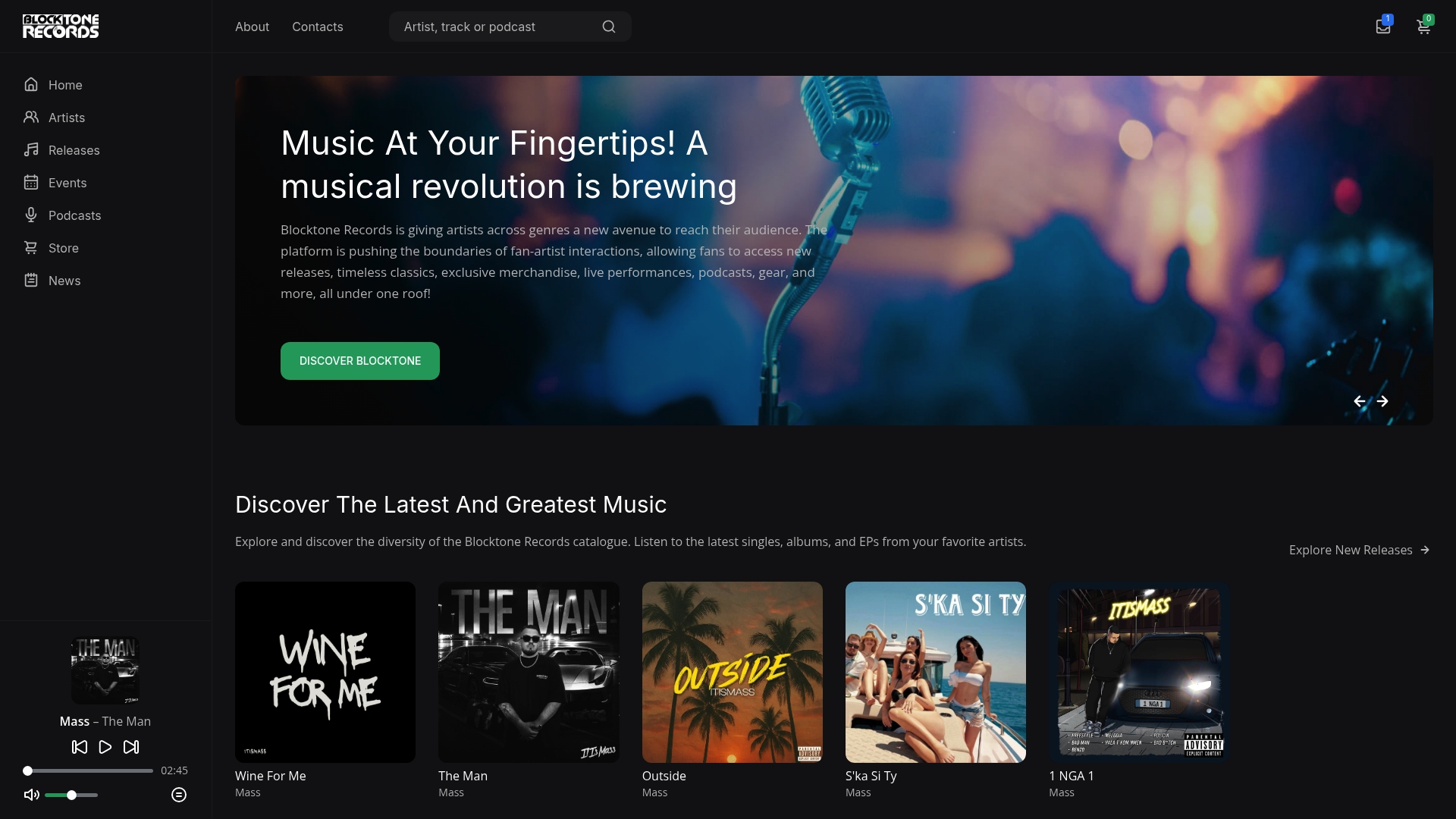
BlockTone Records is built for artists who are serious about growing their reach and connecting with fans on a deeper level. Whether you’re dropping your first single or your fiftieth, the platform offers tools for music discovery for artists that put your music in front of the right listeners. From artist profiles and exclusive releases to real-time engagement features, BlockTone gives your singles the stage they deserve. Explore music distribution tips to sharpen your approach and make every release count. Your next single could be the one that changes everything.
Frequently asked questions
Why are singles more effective than albums for indie artists in 2026?
Singles enable frequent engagement and algorithmic rewards, making them ideal for building momentum without the cost and complexity of a full album. They match how listeners actually discover and consume music today.
How often should I release digital singles to maximize impact?
Aim for a release every four to eight weeks. Streaming platforms reward frequent releases but releasing too fast without quality control risks burning out your audience.
What are the main risks of releasing only singles?
Over-frequent singles may limit press coverage and reduce your ability to tell a deeper artistic story, which albums and EPs handle much better.
How do digital platforms support royalty payments for singles?
Digital music enables split payments and global royalty collection automatically, so you get paid from every platform where your single streams from day one.
Can digital singles succeed without a record label?
Absolutely. Digital aggregators democratize access for emerging and independent artists, making it possible to distribute and promote singles worldwide without any label involvement.