“Dead Fresh” by Lil Baby: When Success Becomes a Uniform
The Quick Read: What Is “Dead Fresh” Really About?
“Dead Fresh” is Lil Baby’s celebration of moving from financial instability into a life defined by designer clothing, luxury vehicles, international performances, and financial power. Beneath that confident display, however, the song raises a more uncomfortable question: would the people around him remain loyal if his money and status disappeared?
That tension makes the track more than a conventional luxury anthem. Lil Baby presents wealth as visible evidence that he escaped his former circumstances, but he also suggests that success has not erased the suspicion, urgency, or survival instincts he developed before becoming famous.
The official release announcement describes “Dead Fresh” as a rags-to-riches record in which Lil Baby reflects on his journey and enjoys the rewards of his upgraded lifestyle. That description provides the clearest factual foundation for interpreting the song, while the lyrics reveal that his transformation is not entirely psychological or emotional. (Universal Music Canada)
From a Paris Runway to an Official Release
Lil Baby released “Dead Fresh” on July 17, 2026, through Quality Control Music and Motown Records. The 2-minute-and-37-second track was issued as a standalone hip-hop and rap single rather than as part of a confirmed album. At the time of publication, no larger project containing the song had been officially announced. (Apple Music)
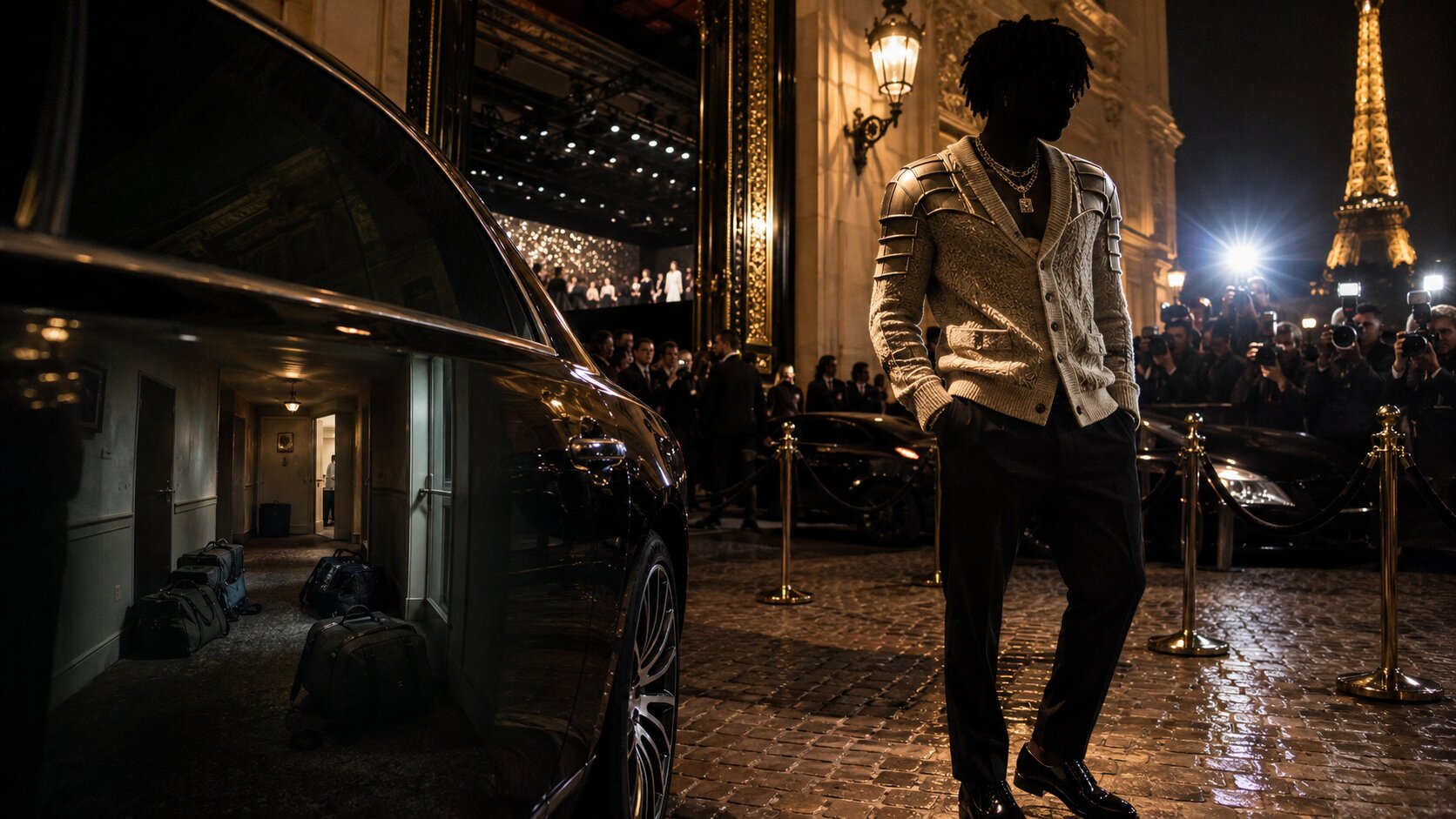
The song received a prominent preview several weeks before its streaming release. Pharrell Williams debuted it during Louis Vuitton’s Spring-Summer 2027 Men’s Show in Paris on June 23, 2026, with Lil Baby attending the event from the front row.
That setting was especially appropriate for a record built around fashion, wealth, and entry into exclusive cultural spaces. Its first major public presentation did not happen through an ordinary social media preview or nightclub performance. It happened inside one of the world’s most influential luxury-fashion institutions. (Rolling Stone Australia)
Pharrell produced and co-wrote “Dead Fresh,” making it the first officially released collaboration between him and Lil Baby. The official credits identify Pharrell Williams and Dominique Jones, Lil Baby’s legal name, as the song’s composers and lyricists.
Pharrell also received mixing credit. Leslie Brathwaite and Mike Larson were among the engineers involved in the recording, while Colin Leonard handled mastering. The production places Lil Baby’s clipped, conversational flow over a sparse instrumental that leaves room for the fashion references, punchlines, and contrasts between his past and present.
The official music video, directed by Kid Art, extends the song’s luxury aesthetic through scenes involving tennis, golf, high-end streetwear, expensive vehicles, and front-row fashion imagery. Rather than presenting wealth only as money, the visual emphasizes access: access to private spaces, cultural institutions, leisure activities, and a lifestyle that once appeared distant from Lil Baby’s upbringing. (Universal Music Canada)
Why “Fresh” Means More Than Looking Good
The phrase “dead fresh” functions as an intensified way of saying that someone looks exceptionally stylish. The word “dead” is not being used literally. It strengthens the adjective that follows it, suggesting that Lil Baby is not merely well dressed but dressed at an almost untouchable level.
Clothing in the song is rarely just clothing, however. Every cardigan, jacket, pair of shoes, watch, and fashion-show invitation operates as evidence. These objects publicly confirm that Lil Baby has moved from instability into privilege.
This distinction becomes important because the song repeatedly places his current lifestyle beside memories of deprivation. He recalls living in a hotel with his mother and sisters, then contrasts that experience with motorcades, designer wardrobes, luxury vehicles, and global bookings.
The emotional point is not simply that he can now afford expensive products. The clothes and cars measure the distance between the life he inherited and the life he created. Fashion becomes a visible uniform of victory.
At the same time, that uniform appears to offer protection. Lil Baby surrounds himself with unmistakable symbols of success while wondering whether someone close to him would remain dependable if those symbols disappeared.
The question exposes the insecurity underneath the performance. Wealth attracts attention, admiration, business opportunities, and relationships, but it cannot automatically reveal which connections are sincere.
“Dead Fresh” therefore operates in two emotional registers. On the surface, it is celebratory, stylish, and self-assured. Beneath that surface, it remains alert to betrayal, legal danger, loss, and the possibility that affection may be conditional.
How the Record Unfolds: Hook, Memory, and Momentum
“Dead Fresh” does not follow a traditional pop structure built around a separate pre-chorus, bridge, and dramatic closing section. Instead, it uses a recurring hook around two extended verses. That compact arrangement keeps returning the listener to the same central combination of images: fashion, money, family advancement, and uncertainty about loyalty.
Opening Hook: Style as a Status Report
The hook establishes Lil Baby’s appearance before explaining his history. He introduces himself through high-end clothing, coordinated presentation, and the spectacle of arriving with other financially successful people.
Style functions as a public status report. Before the listener hears where he came from, the hook displays the result of his transformation.
The references move rapidly between designer clothing, floral and religious imagery, money transfers, luxury gifts, and relatives benefiting from his success. Instead of telling a linear story, Lil Baby constructs a collage of abundance.
Two family-centered ideas are particularly important. He describes putting his nanny in designer clothing and placing his grandmother in an ultra-luxury vehicle. Those gestures expand the meaning of wealth beyond personal consumption.
His success allows him to change what other members of his family and household can experience. Designer products become symbols of provision as much as symbols of status.
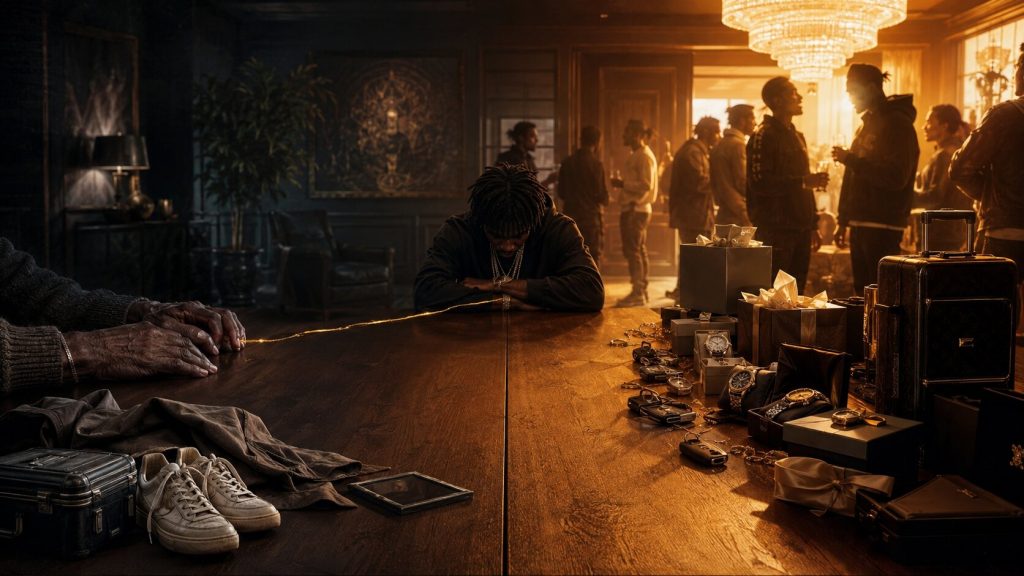
The hook then changes direction by asking whether someone would remain loyal if he lost everything. This is the emotional hinge of the song. The expensive items show what he currently possesses, while the question asks what would remain if those possessions disappeared.
The acknowledgment of Pharrell’s production also fits the song’s wider meaning. Pharrell is not only a celebrated producer but also a major figure in contemporary luxury fashion. His presence connects the record’s sound, runway premiere, and fashion-centered message.
First Verse: The Distance Between Hotel Rooms and Front Rows
The first verse expands the song’s transformation narrative. Lil Baby discusses purchasing expensive items for a romantic partner, performing around the world, raising his appearance fees, and receiving invitations to major fashion shows.
These details represent several forms of access. Money gives him purchasing power, fame gives him global mobility, and cultural influence gives him entry into rooms that are unavailable to most people.
His casual description of arriving at fashion events communicates comfort rather than intimidation. He no longer presents luxury environments as places he is fortunate to enter. He behaves as though he naturally belongs inside them.
The verse becomes more emotionally significant when Lil Baby remembers staying in a hotel with his mother and sisters. That detail gives the surrounding luxury references their scale.
Without the memory of instability, the designer names might sound like interchangeable flexes. With it, the fashion and vehicles become a measurement of distance traveled.
Lil Baby also compares the scale of his achievement to a historically exceptional rise. The comparison is best understood symbolically rather than politically. He presents himself as someone who overcame improbable barriers and became a representative figure for the environment that produced him.
The remainder of the verse combines contemporary luxury, jewelry, classic sneakers, cars, cash, and older streetwear influences. This mixture shows that his definition of being “fresh” is not limited to current runway fashion.
His style combines Atlanta street culture, hip-hop nostalgia, personal history, and the luxury institutions he can now enter. The old identity has not been discarded; it has been incorporated into the new one.
The Returning Hook: A Question Money Cannot Answer
When the hook returns, the designer imagery is familiar, but the question about losing everything becomes more noticeable.
Repetition changes its function. On the first appearance, the loyalty question can sound like one line within a rapid collection of boasts. On its return, it begins to feel like an unresolved concern that the expensive surroundings cannot silence.
Lil Baby can calculate income, booking fees, clothing prices, gifts, and vehicle values. Loyalty cannot be measured in the same way. It can only be tested through pressure, absence, or loss.
This creates the song’s central contradiction. His success gives him more control over his environment, but it may also make the intentions of the people around him more difficult to understand.
Second Verse: The Hustler Mentality Survives the Upgrade
The second verse shifts toward customized vehicles, expensive interiors, alcohol, legal expenses, investments, and the continued presence of street-oriented thinking.
One of its most revealing ideas is that Lil Baby remains focused on finding the next opportunity even though he is already wealthy. Financial success has not switched off the mentality that helped produce it.
That mindset can be interpreted positively as ambition, discipline, and a refusal to become complacent. It can also suggest that survival mode is difficult to leave behind.
Someone who spent years searching for the next source of money, safety, or progress may continue searching even after achieving financial security. The conditions change, but the instinct remains.
The image of an older car with a highly luxurious interior captures this dual identity. The exterior represents heritage, memory, and street credibility, while the interior represents refinement, customization, and financial advancement.
Like Lil Baby himself, the vehicle combines where it came from with what it has become.
References to lawyer fees and possible trouble complicate the celebration further. He has reached global stages and fashion shows, but legal pressure and the consequences associated with his earlier environment remain part of his mental landscape.
The verse does not describe success as a clean escape into an entirely different world. It depicts old risks, old instincts, and new privileges existing at the same time.
Final Hook: No Neat Resolution
The song concludes by returning to the hook rather than introducing a separate outro or final explanation.
There is no direct answer to the loyalty question. There is no guarantee that the wealth will last, and there is no indication that Lil Baby has stopped looking for the next financial opportunity.
Instead, the central images reset: clothes, cars, family upgrades, financially successful associates, and uncertainty all remain in place.
That lack of resolution is appropriate because “Dead Fresh” captures an ongoing condition rather than completing a conventional story. Lil Baby has escaped his former material circumstances, but the emotional habits created by those circumstances are still traveling with him.
Carlton, Cars, and the Song’s Symbolic Vocabulary
One of the song’s most noticeable possible cultural references appears when Lil Baby connects being fresh with the name Carlton.
The line most likely alludes to Carlton Banks from The Fresh Prince of Bel-Air. The word “fresh” creates an immediate connection to the series title, while Carlton is remembered for his polished, preppy wardrobe, including cardigans and country-club clothing.
If that interpretation is correct, the reference works on several levels. It supports the song’s fashion theme, evokes a recognizable style of upper-class presentation, and recalls a television story involving movement between different social environments.
Lil Baby has not publicly confirmed that explanation in the available official release materials, so it should be treated as a likely cultural reference rather than a verified statement of intent.
Cars provide another important symbolic language. An ultra-luxury vehicle represents arrival at the highest level of financial success, while the customized older car in the second verse represents continuity with Lil Baby’s past.
The family gifts symbolize responsibility. His money is meaningful not only because it changes his own surroundings but also because it allows him to provide comfort and prestige for people connected to his upbringing.
Designer labels function as external proof. They make an internal transformation involving confidence, influence, access, and power visible to strangers.
Pharrell’s name adds another layer of validation. Lil Baby is not only discussing high fashion; he is working with a producer whose music and fashion careers are closely connected. The collaboration turns the song’s luxury aesthetic into part of its actual creative history.
Is “Dead Fresh” About One Real Person or Incident?
There is no verified evidence that “Dead Fresh” is centered on one specific romantic partner or a single documented event.
The song is autobiographical in style. Lil Baby refers to family hardship, career growth, wealth, legal costs, and relationships in the first person. Those details are consistent with the broader public story of his rise from difficult circumstances to international success.
Autobiographical rap should not automatically be treated as a literal diary, however. Artists frequently combine genuine memories, recurring experiences, compressed timelines, exaggeration, and image-building language within the same verse.
The question about whether someone would stay after he loses everything may have been inspired by a real relationship, but no official interview or statement identifies a particular person.
The safest interpretation is that the line expresses a broader fear of conditional loyalty rather than documenting one confirmed breakup, betrayal, or private dispute.
A Familiar Lil Baby Story in a New Fashion Setting
“Dead Fresh” fits naturally into Lil Baby’s catalog because he has frequently used money, clothing, vehicles, and professional success to measure personal progress.
Records such as “Sum 2 Prove” emphasize turning ambition into visible results. “Woah” transforms movement, fashion, and vehicles into rhythmic spectacle. “Emotionally Scarred” explores how financial success does not automatically remove distrust or emotional damage.
“Dead Fresh” combines elements of all three approaches. It contains the material display of Lil Baby’s celebratory songs, the self-justification of his motivational records, and a brief but significant trace of emotional suspicion.
What changes most noticeably is the setting.
The Louis Vuitton premiere, Pharrell production, and fashion-centered video place Lil Baby’s familiar rags-to-riches narrative within an explicitly global luxury context. He is no longer only proving that he became a commercially successful rapper.
He is presenting himself as an active participant in the fashion institutions that might once have appeared distant from his upbringing.
The single also follows Lil Baby’s 2025 projects WHAM and The Leaks. Universal Music described “Dead Fresh” as the beginning of a new chapter, although no official source had confirmed the title or release details of a related full-length project at the time of publication.
What the Song Ultimately Leaves Behind
The most convincing interpretation of “Dead Fresh” is that it presents luxury as both celebration and emotional armor.
Lil Baby wants the listener to notice the clothes, cars, jewelry, global performances, financial circle, and improvements he can provide for his family. They are symbols of a life he built after experiencing uncertainty and deprivation.
His pride is genuine, and the song is deliberately designed to feel confident and triumphant.
The repeated question about losing everything prevents the record from becoming completely carefree, however. The deeper concern is not whether his clothes are expensive enough. It is whether the relationships surrounding that lifestyle are strong enough to survive without it.
That tension explains why the song can resonate beyond its designer references. “Dead Fresh” captures the excitement of becoming successful while recognizing that money cannot erase survival instincts, guarantee loyalty, or make the past disappear.
FAQs About “Dead Fresh”
What does “Dead Fresh” by Lil Baby mean?
“Dead Fresh” is about Lil Baby displaying the wealth, clothing, vehicles, and influence that came with his rise from poverty. Beneath the celebration, he questions whether the people around him would remain loyal if he lost his success.
What does the title “Dead Fresh” mean?
The title is an intensified way of saying that someone looks exceptionally stylish. “Dead” strengthens the word “fresh,” suggesting an extreme level of fashionable presentation rather than referring to literal death.
Why does Lil Baby mention Carlton in “Dead Fresh”?
The name most likely references Carlton Banks from The Fresh Prince of Bel-Air, who is associated with polished cardigans and preppy clothing. Lil Baby has not officially confirmed this interpretation, so it remains a likely cultural reference.
Who wrote “Dead Fresh”?
“Dead Fresh” was written by Dominique Jones, professionally known as Lil Baby, and Pharrell Williams.
Who produced “Dead Fresh”?
Pharrell Williams produced the song. It is the first officially released collaboration between Pharrell and Lil Baby.
When was “Dead Fresh” released?
The single was officially released on July 17, 2026. It had previously been previewed during Louis Vuitton’s Spring-Summer 2027 Men’s Show in Paris on June 23, 2026.
What album is “Dead Fresh” from?
At the time of publication, “Dead Fresh” was listed as a standalone one-track single and had not been officially attached to a named Lil Baby album.
Is “Dead Fresh” based on a true story?
The song contains autobiographical themes involving Lil Baby’s upbringing, family, career, and wealth. However, no official source confirms that it describes one specific event, romantic relationship, or documented betrayal.
Sources Used
- Universal Music Canada – Lil Baby and Pharrell Williams announce “Dead Fresh”
- Universal Music Canada – official “Dead Fresh” music video announcement
- Apple Music – Dead Fresh – Single page
- Lil Baby’s official YouTube channel – “Dead Fresh” video and credits
- Rolling Stone Australia – Pharrell’s Louis Vuitton show and song premiere coverage