

Inside KATSEYE’s “Animal”: Desire, Secrecy and a Hidden Self
The Secret at the Center of “Animal”
KATSEYE’s “Animal” is fundamentally about discovering the uninhibited version of another person that most of the world never gets to see. The attraction in the song comes not simply from physical chemistry, but from being trusted with access to a private identity: the impulsive, instinctive and less controlled self hidden beneath a polished exterior.
That reading is strongly supported by the people behind the track. Co-writer Ed Sheeran explained that the chorus centers on other people briefly seeing a side of someone that the narrator normally gets to witness in private. The official release announcement similarly describes “Animal” as exploring the tension between the polished versions people present publicly and the freer energy that emerges behind closed doors. (People – Ed Sheeran on writing KATSEYE’s “Animal”)
That distinction makes the title important. Calling someone an “animal” is not primarily an insult in this context. It becomes shorthand for instinct: the version of a person that stops managing appearances and begins responding through desire, movement and impulse.
The song’s central question is therefore bigger than simple attraction. It asks what someone becomes when they no longer feel watched, judged or expected to perform a socially acceptable version of themselves.
How “Animal” Opened the Door to KATSEYE’s WILD Era
“Animal” was released on July 24, 2026 through HYBE x Geffen Records. It serves as a pre-release track from KATSEYE’s third EP, WILD, which is scheduled for August 14, 2026. The song follows “PINKY UP” in establishing the identity of the group’s new era. (Universal Music Canada – official “Animal” release announcement)
The track also has an unusually prominent songwriting connection. “Animal” was written by Ed Sheeran, Johnny McDaid, Blake Slatkin and Omer Fedi, with Fedi and Blake Slatkin handling production.
Sheeran’s involvement developed after he heard KATSEYE’s “Gnarly” while in Mexico. He later said he liked the song enough to reach out about writing something for the group. That contact ultimately resulted in “Animal,” making his participation more than a name added after the concept had already been completed.
Musically, the song works as sleek, flirtatious pop built around rhythm, vocal attitude and a sense of controlled tension. The polished production is important to the meaning because the sound itself rarely becomes truly chaotic. Instead, KATSEYE sing about losing control while performing inside an extremely controlled pop arrangement. That contrast mirrors the subject of the lyrics.
The release also generated immediate attention. Universal Music Japan reported that “Animal” debuted at No. 4 on Spotify’s Daily Top Songs USA chart and No. 9 on the global ranking dated July 24, appearing on charts across 47 countries and territories. (Universal Music Japan – early streaming performance for “Animal”)
Attraction Is Only Half the Story
It would be easy to reduce “Animal” to a song about intense chemistry. That interpretation is certainly present, but it does not fully explain why the writing repeatedly contrasts public behavior with what happens in private.
The person being addressed appears composed, fashionable and independent. They seem to control their surroundings rather than being controlled by them. The narrator, however, claims to know another version of this person: someone more physical, spontaneous and difficult to contain.
That produces the song’s most interesting tension. The “animal” is compelling precisely because the subject is not permanently chaotic. Their public self is controlled. Their private self abandons that control.
The song therefore works on three levels at once: intimacy, performance and release. Intimacy means being allowed to witness something that strangers cannot. Performance means maintaining the identity that the outside world expects. Release happens when those expectations temporarily disappear.
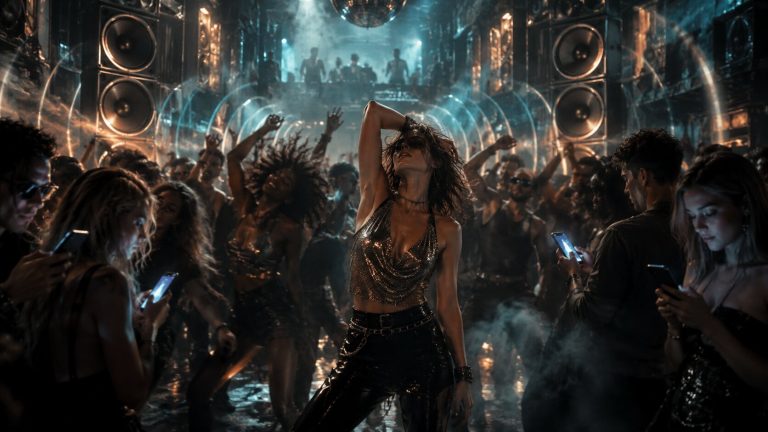
This is why the dance-floor imagery matters. It functions as a threshold between those identities. Other people may see flashes of the hidden personality in a public setting, but the narrator believes they understand the fuller version that exists beyond public observation.
The emotional appeal of “Animal” is consequently tied to exclusivity as much as desire. The fantasy is not merely that another person becomes uninhibited. It is that the narrator has privileged access to that transformation.
Following the Lyrics From Control to Instinct
The Opening: Someone Who Makes Their Own Rules
The first verse establishes the subject as self-directed rather than reckless. Details involving style, independence and personal control create the image of someone who knows how they want to move through the world.
This setup is important because the song later describes the same person as almost uncontrollable. Rather than contradicting itself, “Animal” intentionally builds two versions of one personality.
Publicly, the subject controls the image.
Privately, the subject allows instinct to take over.
The attraction exists in the distance between those identities. If the subject were wild all the time, there would be no secret for the narrator to discover.
The Pre-Chorus: Crossing Into a Private World
The pre-chorus moves away from external description and toward closeness. Its imagery suggests opposing forces beginning to overlap: visibility and concealment, freedom and secrecy, restraint and physical connection.
That shift effectively prepares the listener for the central metaphor. The narrator is no longer simply admiring another person from a distance. They are entering the private space in which the public persona starts to disappear.
There is also an implied promise of discretion. Whatever the narrator knows about this person will remain protected from the outside world.
That creates an interesting ambiguity. Secrecy can symbolize trust because it allows two people to behave without outside judgment. But secrecy can also intensify desire because it creates a world that feels separate from ordinary life. “Animal” uses both possibilities without deciding between them.
The Chorus: The Hidden Identity Becomes the Hook
The chorus contains the song’s clearest statement of purpose. Other people do not fully understand how uninhibited the subject can become. The narrator does.
That idea aligns directly with Sheeran’s explanation of the writing: the public may occasionally see a glimpse of this personality, but someone close to the subject sees much more of it in private.
The animal metaphor is therefore psychological rather than literal. An animal represents instinct without the complicated social calculations that shape human behavior. It does not worry about professionalism, reputation, fashion, politeness or how its actions will look to an audience.
In “Animal,” becoming animal-like means temporarily escaping those calculations.
Importantly, the transformation is never presented as embarrassing. The narrator finds it attractive. What might otherwise be described as a loss of restraint is reframed as authenticity, freedom and desire.
The Second Verse: Freedom With an Expiration Time
The second verse introduces a stronger sense of impermanence. The encounter feels connected to the night rather than to a clear promise about what happens afterward.
That gives the song another useful contrast. Night becomes the territory of instinct, while morning represents the return of schedules, expectations and ordinary identities.
The narrator encourages the other person to go further into that temporary freedom. Yet there is also an awareness that surrendering to impulse can create consequences once the private moment ends.
This prevents the song from becoming a conventional romantic declaration. The characters are not discussing forever. They are responding to the intensity of the present.
The Bridge and Final Chorus: The Observer Loses Control Too
As the song reaches its final stretch, the emotional position of the narrator begins to change. Earlier, the subject was presented as the wild one while the narrator occupied the role of observer: the person who understood the secret.
By the end, that separation becomes harder to maintain.
The narrator is increasingly overwhelmed by the same attraction and impulse they have been describing. In other words, the “animal” quality begins to spread across the relationship.
The final chorus therefore feels less like a description and more like participation. The narrator is no longer calmly explaining another person’s hidden side. Both people appear caught inside the same release of control.
There is no conventional narrative resolution afterward. The song does not tell listeners whether this connection develops into a relationship, causes regret or disappears in the morning. It chooses to remain inside the moment of surrender.
Why the Animal Metaphor Means More Than Wild Behavior
The title provides the most obvious symbol, but several recurring contrasts make the song richer than a simple metaphor for partying or physical attraction.
Closed doors and public spaces represent two different identities. Public environments permit only limited glimpses of freedom. Privacy allows the transformation to become complete.
Control and instinct form the song’s central opposition. The subject is interesting because they can embody both. Their wildness does not come from an inability to behave with restraint; it comes from deliberately letting restraint disappear.
Night and morning can be read as psychological spaces as much as literal times. Night creates temporary permission to ignore routine. Morning threatens to restore everyday rules.
Secret and spectacle create another layer of tension. The narrator enjoys knowing something that the surrounding crowd does not. That gives intimacy a subtle element of exclusivity and power.
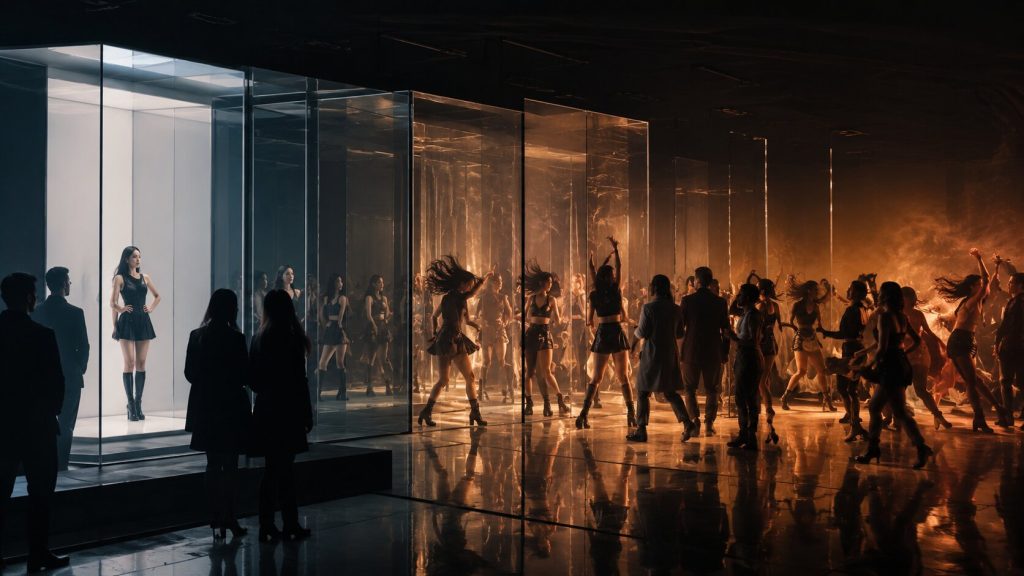
The official music video expands those ideas through observation rooms, mirrored realities and shifting personas. According to the release announcement, KATSEYE move between masculine and feminine archetypes as the boundaries between the observer and the observed begin to blur. Director Cody Critcheloe uses those changing identities to reinforce the tension between instinct and control. Demi Moore also appears in a cameo. (Universal Music Canada – “Animal” video concept and credits)
The observation-room concept is especially relevant. If the lyrics ask what someone is like behind closed doors, the video complicates that question by creating environments in which the characters may still be watched. The result turns “Animal” into a song not only about desire, but also about what performance does to identity.
Does “Animal” Point to a Real Relationship?
There is currently no verified evidence that “Animal” describes a specific relationship involving a KATSEYE member.
The publicly documented songwriting story instead focuses on Ed Sheeran discovering KATSEYE, contacting the group and developing a song for them with the other writers. No member has publicly identified a particular partner or real-life event as the subject of the lyrics.
That does not mean personal experiences cannot influence how the members interpret or perform the song. Artists regularly bring their own emotions to material they did not write alone. However, connecting “Animal” to a specific KATSEYE member’s private life would currently be speculation rather than confirmed interpretation.
The most defensible reading is therefore to treat it as a constructed pop narrative about attraction, hidden personality, intimacy and the temporary surrender of control.
From “Gnarly” to “Animal”: KATSEYE Keeps Changing the Rules
“Animal” fits KATSEYE’s broader catalog because the group increasingly favors songs built around strong identities rather than neutral pop themes.
“Gnarly” leaned into exaggerated attitude and deliberately unconventional pop energy. “Gabriela” used jealousy, rivalry and theatrical drama. “PINKY UP” continued the group’s emphasis on confidence and instantly recognizable personality.
“Animal” approaches identity differently. Instead of presenting one oversized persona, it becomes fascinated with the possibility that a person can contain two contrasting versions of themselves.
That makes the concept especially effective for a performance-focused group. KATSEYE’s public work depends on precision: choreography, styling, staging, camera awareness and carefully developed visual concepts. “Animal” imagines the opposite state, asking what remains when that precision gives way to instinct.
The idea also connects naturally to the title of WILD. Official Charts describes “Animal” as part of KATSEYE’s developing new era and confirms that the EP is due August 14 through HYBE x Geffen. (Official Charts – KATSEYE, “Animal” and the WILD era)
If BEAUTIFUL CHAOS suggested disorder made attractive, WILD pushes the idea toward deliberate freedom. “Animal” turns that concept into a character: someone whose carefully maintained exterior contains an instinctive second identity.
What “Animal” Ultimately Says
The strongest interpretation of KATSEYE’s “Animal” is that the song celebrates the thrill of knowing someone beyond their public image.
The person at its center appears stylish, independent and controlled, yet intimacy reveals another version driven by instinct. The narrator is attracted both to that freedom and to the privilege of being one of the few people allowed to witness it.
That is why secrecy matters so much to the song.
Without the polished public identity, the transformation would not feel surprising. Without the hidden identity, there would be nothing intimate for the narrator to discover. “Animal” depends on both selves existing at once.
Its central fantasy is therefore not simply losing control. It is finding a person or a private space in which maintaining control no longer feels necessary.
For KATSEYE, that makes “Animal” an effective introduction to the deeper idea behind the WILD era: polished pop stars exploring what happens when the polished surface starts to crack open.
FAQs About KATSEYE’s “Animal”
What does “Animal” by KATSEYE mean?
Who wrote KATSEYE’s “Animal”?
Why did Ed Sheeran write a song for KATSEYE?
Is “Animal” by KATSEYE based on a true story?
What is the chorus of “Animal” about?
What album or EP is KATSEYE’s “Animal” from?
What does the “Animal” music video symbolize?
Sources Used
- Universal Music Canada – official KATSEYE “Animal” release announcement
- People – Ed Sheeran on discovering KATSEYE and co-writing “Animal”
- Apple Music – Animal – Single by KATSEYE
- Universal Music Japan – “Animal” release and early streaming performance
- Official Charts – KATSEYE’s “Animal” and WILD era