
The Beatles Museum at 3 Savile Row: Opening Date, Rooftop Concert History and What Fans Can Expect
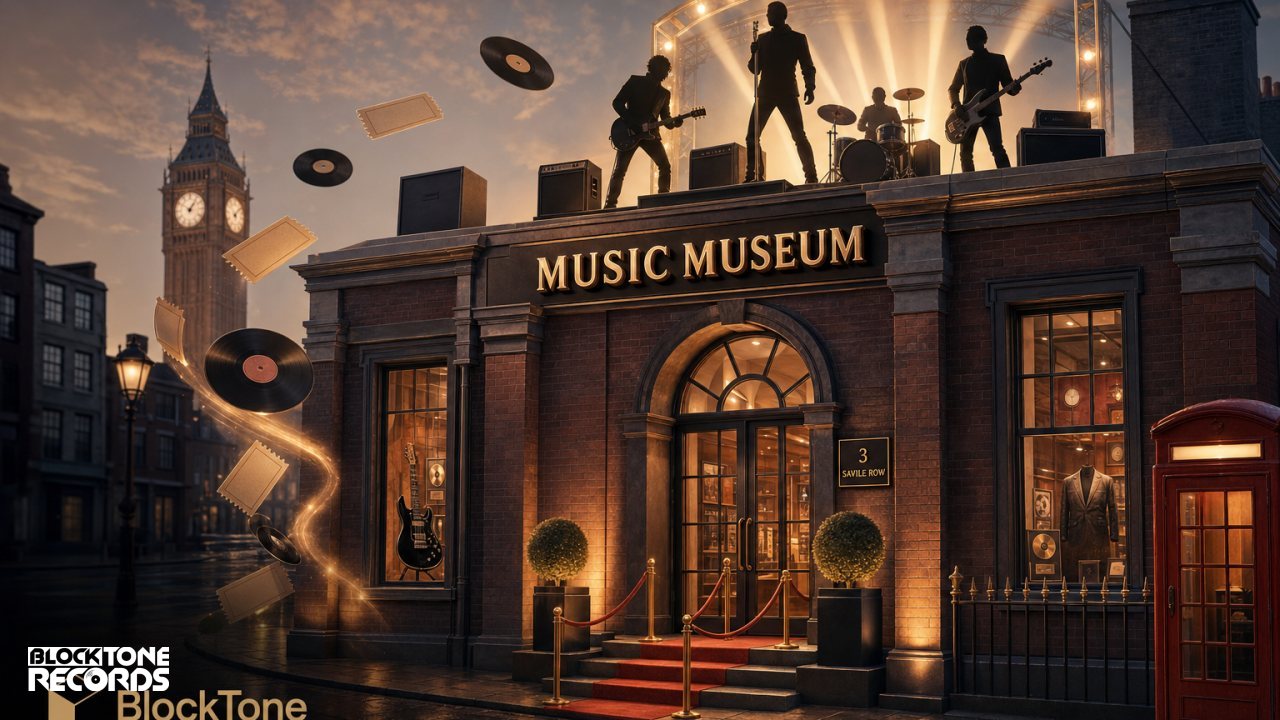
The Beatles at 3 Savile Row, a new public attraction inside the group’s former Apple Corps headquarters, is scheduled to open in 2027. An exact opening date has not yet been announced. Westminster City Council approved the plans on November 25, 2026, opening a building long defined for fans by The Beatles’ last public performance: the January 1969 rooftop concert.
The project will make the central London address publicly accessible for the first time in this form. It also comes with an important limit: while visitors are expected to be able to reach the rooftop, live music there is expected to be prohibited under noise restrictions—ruling out any official attempt to recreate the impromptu gigs that gave the site its mythic status.
The Beatles at 3 Savile Row is approved for a 2027 public opening
Apple Corps has confirmed that The Beatles at 3 Savile Row will open to the public in 2027, though no day or month has been released. The timeline follows Westminster City Council’s approval of the visitor-attraction plans on November 25, 2026.
In its announcement, Westminster City Council said the project will open the former Apple Corps headquarters to visitors. That premise gives the attraction an unusually direct connection to the band’s working history: this is not a separate exhibition borrowing the Savile Row name, but an interpretation of the building itself.
For now, the 2027 window is the full confirmed public timetable. Details such as timed-entry arrangements, ticketing and any opening-week programming have not been announced in the supplied information.
What visitors will find inside the former Apple Corps headquarters
The approved attraction will bring material from the Apple Corps archive, immersive audiovisual displays, a recreation of the basement recording studio where The Beatles worked on Let It Be, and access to the roof at 3 Savile Row, according to Westminster City Council.
The basement feature is planned as a recreation rather than an unchanged original room. The council has not specified the subjects, formats or duration of the audiovisual displays. Visitors are expected to be able to access the historic rooftop, but The Guardian reports that noise restrictions are expected to prohibit live music there, so the site will not host repeat rooftop concerts.
The January 1969 rooftop concert that defines the site
On January 30, 1969, The Beatles played their final public concert on the roof of 3 Savile Row. John Lennon, Paul McCartney, George Harrison and Ringo Starr were joined by keyboardist Billy Preston, according to Westminster’s account of the building and its history.
The performance has endured as one of rock’s most recognisable images: the group playing above a working London street, with the set eventually halted after drawing attention below. It has also become inseparable from the Let It Be era, making the address more than a former office or studio site in the Beatles story.
That history explains why rooftop access carries such weight in the attraction’s plans. Visitors will be standing at the location of the band’s final public concert, not simply viewing a film or replica of it elsewhere.
Rooftop access will not mean new rooftop gigs
Access should not be confused with a return of rooftop concerts. The Guardian reported that live music is expected to be prohibited on the roof under noise restrictions, meaning the attraction will not permit repeat rooftop gigs.
The restriction draws a clear line between preserving an historic performance space and turning it into a new concert venue. For the project, the roof is an experiential part of the visit—one tied to a specific moment on January 30, 1969—rather than a platform for tribute sets or contemporary shows.
With 2027 confirmed but no precise opening day public yet, the clearest picture is of an archive-led Beatles attraction that uses the original Apple Corps building, recreated Let It Be-era studio environment and historic roof to place visitors close to the group’s final public performance—without attempting to repeat it.