
How to distribute music: step-by-step guide for indie artists
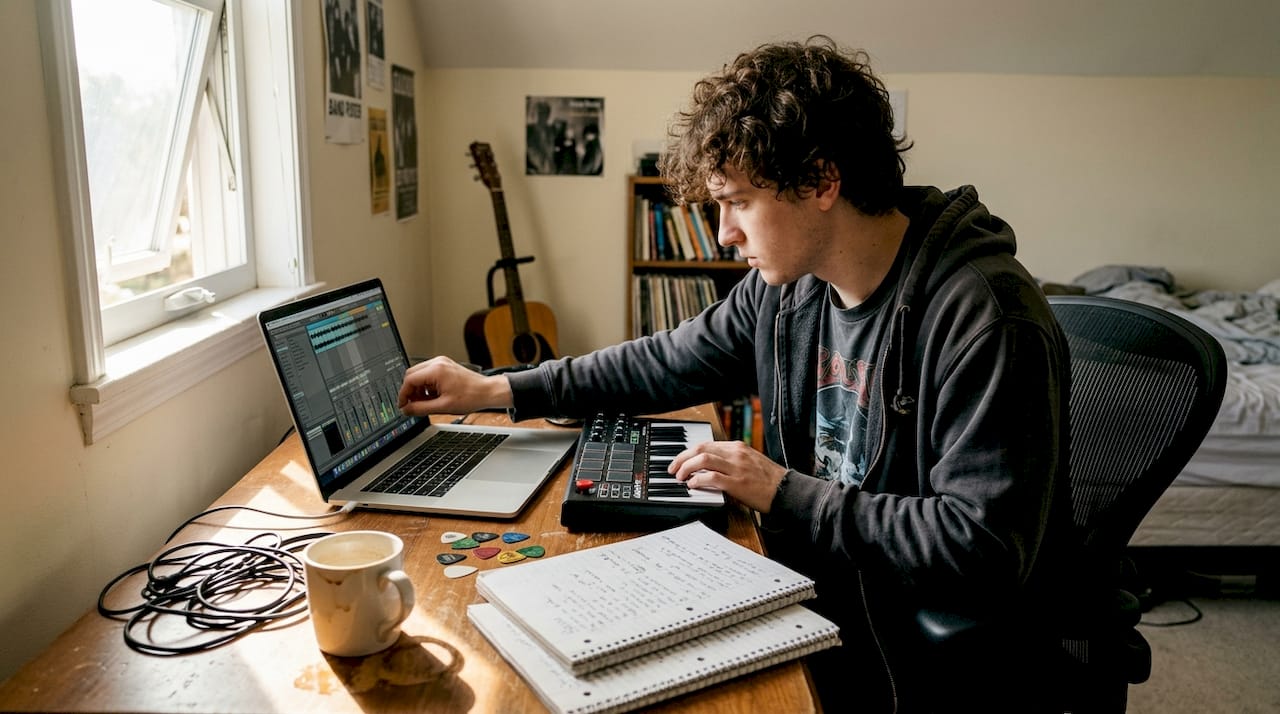
Picture an unknown artist uploading a single from a bedroom studio, and within weeks, that song racks up millions of streams across Spotify, Apple Music, and TikTok. That outcome is real, and it happens more often than you might think. But it only happens when the right distribution choices are made early. The path from recording to global listener is shorter than ever, yet also more crowded. Choosing the wrong platform, skipping key prep steps, or misreading your analytics can quietly cost you thousands of dollars and months of momentum. This guide walks you through every stage, from understanding how distribution works to measuring what actually moves the needle.
Table of Contents
- Understanding music distribution in 2026
- Preparing your music and assets for release
- Choosing the right digital distribution platform
- Executing your release: Steps for maximum reach
- Measuring results and optimizing your strategy
- A better way to approach music distribution in 2026
- Take your music distribution to the next level
- Frequently asked questions
Key Takeaways
| Point | Details |
|---|---|
| Prepare assets properly | Having the right files and metadata prevents delays and ensures a smooth distribution process. |
| Choose platforms strategically | Not all platforms are equal—match your genre and goals to maximize reach and royalties. |
| Follow smart release steps | Coordinating pre-release, launch, and initial promotion boosts your music’s momentum. |
| Track and adjust | Review your analytics and payouts to continually improve your strategy. |
Understanding music distribution in 2026
Digital music distribution is the process of getting your recorded music onto streaming platforms and digital stores so fans can find, stream, and purchase it. Think of it as the bridge between your finished recording and every listener on the planet. In the early 2000s, that bridge required a physical label deal. Today, independent artists can cross it alone.
Streaming now dominates how people consume music. The importance of music streaming has grown so dramatically that it shapes every revenue decision an artist makes. Global recorded music revenue continues climbing, and independent artists are capturing a larger share of that growth than ever before.
Here is a snapshot of what indie artists are earning per 1,000 streams across major platforms in 2026:
| Platform | Approx. payout per 1,000 streams |
|---|---|
| Spotify | $3.00 to $5.00 |
| Apple Music | $7.00 to $8.80 |
| Amazon Music | $4.00 to $6.00 |
| Tidal | $6.00 to $8.00 |
| YouTube Music | $1.00 to $2.00 |
According to per-stream rate trends tracked in Duetti’s 2024 Music Economics Report, indie per-stream rates are finally stabilizing after years of decline, which is genuinely good news for artists building long-term catalogs.
The most popular distribution approaches right now include:
- Self-releasing directly through platform artist programs
- Aggregators like TuneCore, DistroKid, and CD Baby that push your music to dozens of stores at once
- Boutique distribution deals that offer marketing support alongside delivery
Understanding the distribution channels explained in detail helps you choose the right fit before you spend a single dollar. With distribution’s impact clear, let’s look at what you need before you get started.
Preparing your music and assets for release
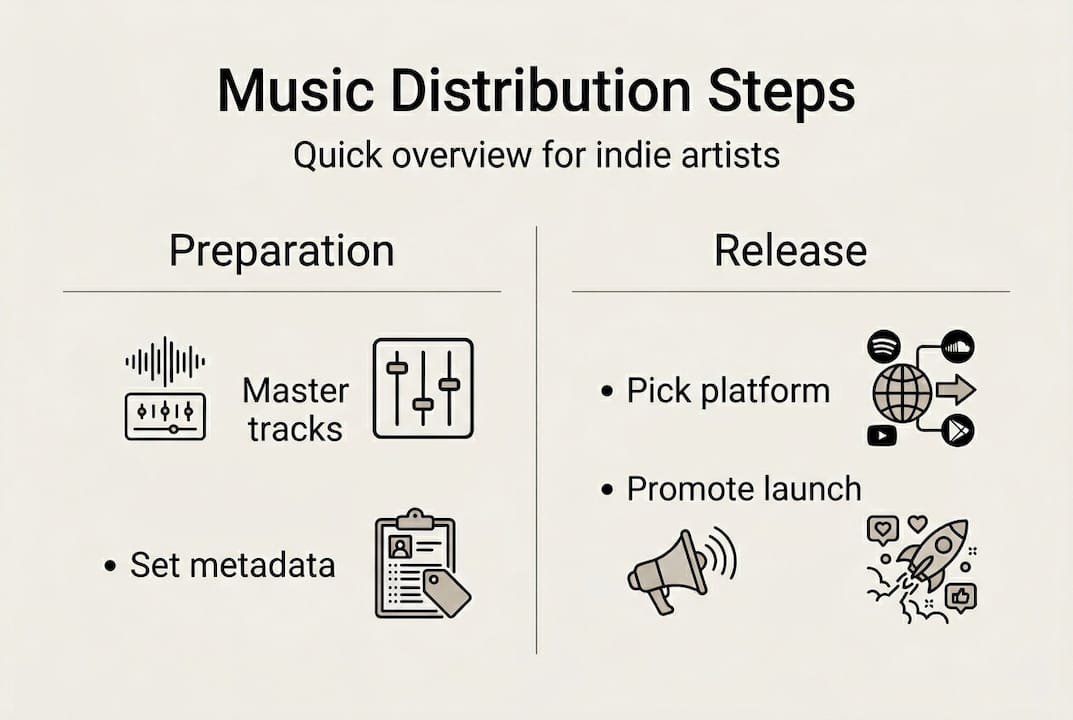
Getting your music ready for distribution is not glamorous work, but it is where most indie artists quietly lose ground. Platforms reject submissions for technical reasons every single day, and those delays push your release date back while your promotional momentum fades.
Proper preparation ensures maximum discoverability and platform acceptance, which means every detail below matters.
Here is your pre-release checklist:
- Audio files: Submit WAV or FLAC at 16-bit/44.1kHz minimum. MP3s are generally not accepted by major distributors.
- Cover art: Minimum 3000×3000 pixels, RGB color mode, JPG or PNG format. No blurry edges or text that violates platform guidelines.
- Metadata: Artist name, track title, album title, genre, release date, and language must all be consistent across every platform.
- ISRC codes: Each track needs a unique International Standard Recording Code (ISRC) for royalty tracking. Your distributor can assign these.
- Copyright clearance: Confirm you own or have licensed every element, including samples, co-written lyrics, and any interpolated melodies.
Metadata is especially powerful. When your genre tags, mood descriptors, and artist name are accurate and consistent, streaming algorithms surface your music to the right listeners organically.
Pro Tip: Treat your metadata like a search engine optimization (SEO) tool. Accurate genre tags and descriptive track titles improve your chances of landing on algorithmic playlists, which can multiply your stream counts without any ad spend.
Reviewing pre-release showcase steps before you submit gives you a practical framework to avoid the most common rejection triggers. If you are releasing a single, exploring digital single strategies can help you sequence your rollout for maximum impact. With your music and assets ready, you’re set to choose how you’ll get your songs heard worldwide.
Choosing the right digital distribution platform
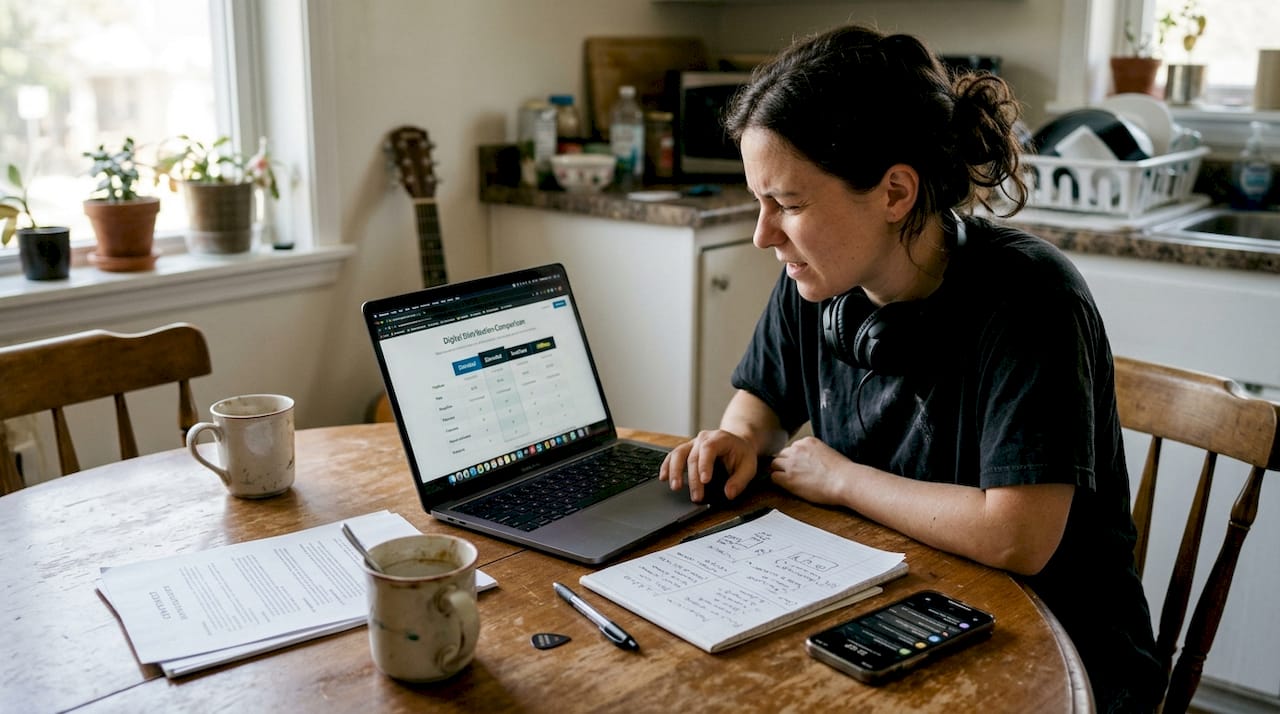
Not every distribution platform is built for every artist. The right choice depends on your release volume, budget, genre, and how much control you want over your royalties.
Here is a comparison of the top platforms in 2026:
| Platform | Pricing model | Royalty split | Key strength |
|---|---|---|---|
| DistroKid | Annual subscription | 100% to artist | Fast uploads, unlimited releases |
| TuneCore | Annual fee per release | 100% to artist | Strong publishing admin |
| CD Baby | One-time fee per release | 91% to artist | Physical distribution option |
| Amuse | Free tier available | Varies | Good for emerging artists |
| AWAL | No upfront fee | 85% to artist | Selective, label-like support |
The subscription vs one-time fee decision matters more than most artists realize. If you release more than three projects per year, a subscription model like DistroKid often costs less overall. If you release rarely, a one-time fee may make more sense.
Here is how to match your situation to the right platform:
- High release volume artists: Go with an unlimited subscription plan.
- Niche genre artists: Prioritize platforms with strong publishing admin and sync licensing connections.
- Artists building a fanbase from scratch: Look for platforms that offer promotional tools, not just delivery.
- Artists with existing audiences: Focus on royalty percentage and payout speed.
Pro Tip: Niche genres like ambient, classical crossover, and lo-fi often earn higher per-stream rates because their listeners stream more intentionally. Choosing a platform that supports sync licensing for these genres can significantly boost your annual earnings.
Exploring essential distribution tips alongside understanding why artists need music platforms gives you a fuller picture before you commit. It also helps to understand why featuring top releases on the right platform amplifies your visibility from day one. With your distribution platform decided, it’s time to launch your release strategically.
Executing your release: Steps for maximum reach
A great song released without a plan is like throwing a party and forgetting to send the invitations. Execution is where strategy meets momentum.
Follow these steps for a strong release:
- Set your release date at least four weeks out to allow time for playlist pitching and pre-save campaigns.
- Submit to your distributor at least two weeks before your release date. Some platforms require longer lead times.
- Pitch to Spotify editorial playlists through Spotify for Artists at least seven days before release.
- Launch a pre-save campaign using tools like Feature.fm or Hypeddit to build anticipation and boost day-one streams.
- Coordinate social media content to drop on release day, including short-form video for TikTok and Instagram Reels.
- Reach out to music blogs and playlist curators in your genre at least two weeks before release.
Common mistakes that hurt releases include skipping the pre-release checklist, submitting too close to the release date, and ignoring platform-specific content guidelines.
It is also worth noting that TikTok virality does not always convert to steady Spotify growth. A viral moment can spike your numbers for a week, but without a follow-up strategy, those listeners disappear.
Pro Tip: Release on a Friday, coordinate your promotional posts to go live at midnight in your primary market’s time zone, and have a follow-up piece of content ready for the following Monday to keep the conversation going.
Reading the music promotion guide for indie artists and studying platform success strategies will sharpen your execution significantly. You can also explore music discovery tips to understand how listeners find new music organically. After executing your release, it’s crucial to monitor results and optimize your next steps.
Measuring results and optimizing your strategy
Releasing music without checking your analytics is like driving without looking at the road. The numbers tell you what is working, what is not, and where your next opportunity lives.
The metrics that matter most for indie artists are:
- Monthly listeners: A broad indicator of reach and discovery momentum
- Saves and playlist adds: The strongest signal that listeners genuinely connect with your music
- Stream-to-save ratio: A high ratio means your song is resonating, not just being skipped
- Royalty reports: Break these down by platform and territory to see where your real fans live
- Follower growth rate: Steady growth between releases shows you are building a lasting audience
Here is a quick reference for interpreting your data:
| Metric | What it signals | What to adjust |
|---|---|---|
| High streams, low saves | Casual listeners, low loyalty | Focus on deeper fan engagement |
| High saves, low streams | Strong core fans, limited reach | Invest in discovery promotion |
| Strong one territory | Geographic fanbase forming | Target that region with ads or press |
| Declining monthly listeners | Release gap hurting momentum | Increase release frequency |
The inspiring part is that 1,250 indie artists earned over one million dollars on Spotify alone, proving that independent success at scale is genuinely achievable. Understanding why featuring top releases consistently matters is part of what separates those artists from the rest.
Use each release cycle as a learning loop. Review your data, identify your strongest performing track, and let that insight shape your next project’s sound, timing, and promotion plan.
A better way to approach music distribution in 2026
Here is something most distribution guides will not tell you: chasing every new platform and every viral trend is one of the fastest ways to exhaust yourself without building anything lasting.
We have seen artists spread their energy across eight platforms, post daily on five social channels, and still wonder why their fanbase feels thin. The answer is almost always the same. Depth beats breadth. A smaller, deeply engaged audience on two or three platforms will generate more consistent revenue and more genuine word-of-mouth than a scattered presence everywhere.
The artists who grow steadily are the ones who understand their genre’s natural home. A jazz artist building community on YouTube and Bandcamp will often outperform the same artist chasing TikTok trends that do not fit their sound.
Viral moments feel like a blessing, but they can also mislead you. A spike in streams from a trending sound does not mean those listeners will follow you to your next release. Real growth comes from distribution empowerment that is rooted in knowing your audience and serving them consistently.
Pro Tip: Invest in building ten superfans before you try to reach ten thousand casual listeners. Superfans share, advocate, and buy. Casual listeners scroll past.
Take your music distribution to the next level
You have put in the work to understand how distribution really functions, and that knowledge is genuinely powerful. The next step is putting it into practice with the right tools and community behind you.
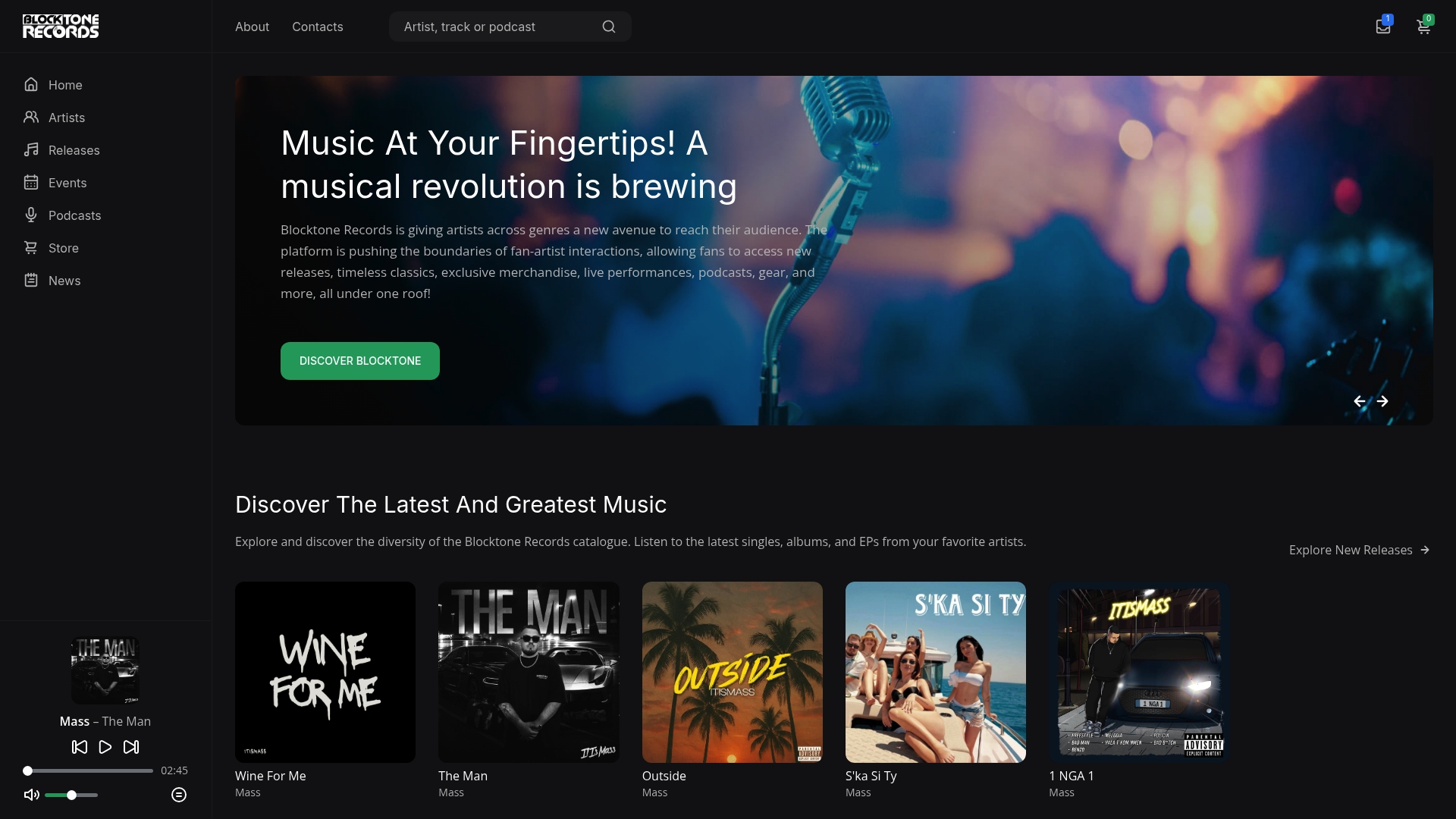
At BlockTone Records, we are dedicated to helping independent artists like you navigate every stage of the distribution journey with clarity and confidence. Whether you are looking for distribution tips for indie artists that go deeper than the basics, or you want to explore artist discovery solutions that connect your music with the right listeners, we have built resources specifically for artists who are serious about growing. Your music deserves to be heard. Let’s make sure it is.
Frequently asked questions
What is the best way to distribute music as an independent artist?
The best way is to use a digital distribution service that matches your genre, offers fair royalties, and reaches your target audience. Indie artists increasingly use a mix of aggregators for global reach and stronger royalty retention.
How much do indie artists earn per stream in 2026?
In 2026, indie artists typically earn between $3 and $8.80 per 1,000 streams depending on the platform. Streaming payouts vary significantly, with Apple Music consistently paying at the higher end of that range.
Does TikTok virality guarantee Spotify success?
Viral success on TikTok rarely translates into ongoing growth on Spotify or other streaming platforms. TikTok virality tends to produce short-term spikes rather than the sustained listener loyalty that drives long-term royalty income.
What files and materials are needed for digital music distribution?
You need high-quality audio files in WAV or FLAC format, cover art that meets platform specs, and accurate metadata for each track. Proper preparation is essential for platform acceptance and maximum discoverability from day one.