

Why Ariana Grande’s “Petal” Turns Fragility Into Defiance
What Is “Petal” About? A Song About Surviving the Spotlight
Ariana Grande’s “Petal” is primarily about the uncomfortable relationship between personal suffering, fame, and the demand to turn private pain into public entertainment. Rather than presenting herself simply as a heartbroken narrator, Grande questions what happens when an artist’s relationships, appearance, emotions, and difficult experiences become material that audiences expect to consume.
The song also carries a broader message about separating from unhealthy attachments. Grande has described the petal era as being partly about breaking away from negative forces, including internal fears, outside voices, and things that no longer serve her. That makes the title track both a critique of celebrity culture and a declaration of emotional independence. (Just Jared)
Background and Release Context: How “Petal” Arrived
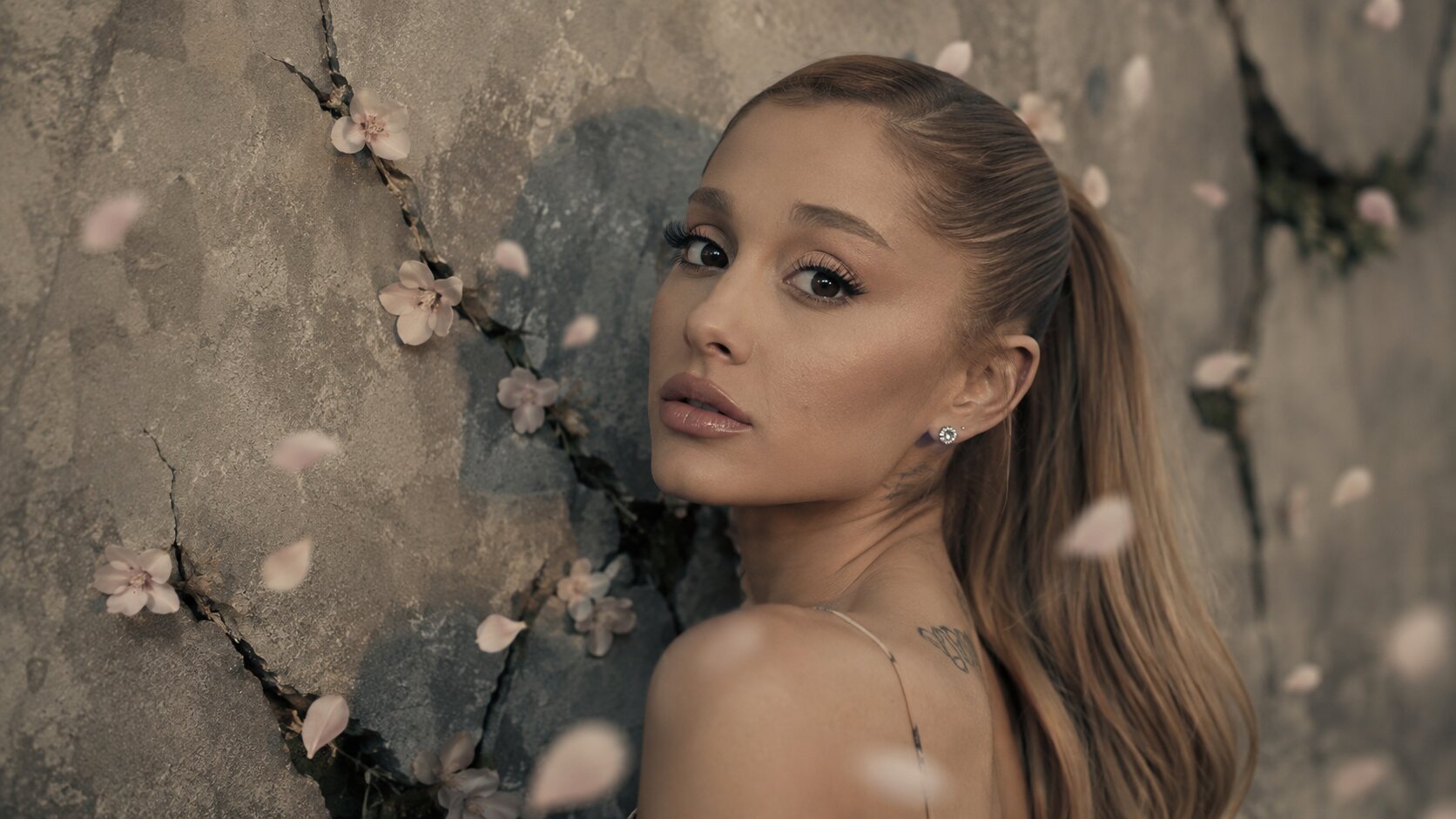
“Petal” was released on July 31, 2026, as the third track on Ariana Grande’s eighth studio album, petal. The 12-track album was issued through BabyDoll Music under exclusive license to Republic Records. Grande introduced the project with imagery of flowers emerging through cracks in hard surfaces, establishing a visual theme of delicate life surviving in an unforgiving environment. (Ariana Grande Official Store)
The title track runs for 3 minutes and 4 seconds. Grande is credited with the lyrics, while Ariana Grande, Ilya Salmanzadeh, and Max Martin are credited as composers and producers.
Musically, “Petal” avoids the obvious structure of a huge vocal power ballad. Its measured, atmospheric production gives Grande space to deliver some of the album’s sharpest ideas without turning them into an explosive confrontation. Apple Music’s editorial material for the album similarly frames the title track around the pressure of transforming pain into something that can be consumed by an audience. (Apple Music)
Grande also explained during the album cycle that much of petal emerged from what she described as “unfiltered rage.” She said she normally revises material to make it gentler, but allowed herself to be less filtered on this project. That context matters because “Petal” sounds controlled rather than explosive even while addressing deeply frustrating aspects of fame. (ELLE)
The song also made an immediate commercial impact. “Petal” debuted at No. 4 on the Billboard Hot 100, becoming Grande’s 24th career top-10 entry, while the petal album debuted at No. 1 on the Billboard 200. (Billboard Canada)
The Meaning Behind “Petal”: When Pain Becomes Product
The central tension in “Petal” is uncomfortable but clear: how much suffering does the public expect from an artist before that suffering becomes entertainment?
Grande begins with the familiar cultural idea that meaningful art must come from heartbreak. Pain becomes proof of authenticity. A breakup becomes an album cycle. Trauma becomes a headline, then a song, then a performance repeated in front of audiences who may know every detail of the story without knowing the person who experienced it.
“Petal” questions that transaction. The narrator understands that difficult experiences can inspire art, but she resists the idea that she must remain wounded in order to remain compelling. The song separates the value of her music from the public spectacle surrounding her private life.
That distinction explains one of the track’s most important ideas: Grande does not portray herself as helpless. She resists the traditional role of a wounded woman waiting for someone else to rescue her. Her sense of stability instead comes from herself and from music.
The song is also more complicated than a simple attack on fans, critics, or the media. Grande acknowledges that she benefits enormously from the system she is questioning. Fame has brought success, wealth, opportunities, admiration, and an enormous audience. “Petal” allows gratitude and discomfort to exist at the same time.
That ambiguity gives the song its emotional weight. Grande is not claiming that celebrity has given her nothing. She is asking whether success should require surrendering ownership of the person behind the performer.
Lyrics Breakdown, Section by Section: From Tears to Refusal
Verse 1 Meaning: Challenging the Myth of the Suffering Artist
The opening verse establishes the song’s central argument almost immediately. Grande addresses the expectation that an artist needs something painful enough to cry about before she can create work that audiences find emotionally convincing.
Instead of romanticizing suffering, she makes that expectation feel exhausting. The implication is that pain can become almost professionally useful: heartbreak creates songs, songs create attention, and attention creates demand for more emotionally revealing material.
The question underneath the verse is therefore larger than one particular relationship. What happens when happiness appears less commercially interesting than heartbreak?
Pre-Chorus Meaning: She Does Not Need to Be Rescued
The pre-chorus shifts from industry expectations toward self-reliance. Grande recognizes the dramatic stories people tell about pain, love, and emotional collapse, but she refuses the traditional role of someone waiting for another person to save her.
Music becomes the more enduring relationship. Romantic relationships can end, public narratives can change, and entire eras can disappear, but artistic identity remains.
This is an important distinction in “Petal.” The narrator may be emotionally vulnerable, but vulnerability is not presented as weakness. Grande can acknowledge pain without giving that pain complete control over her identity.
Chorus Meaning: The “Petal in the Pavement” Image
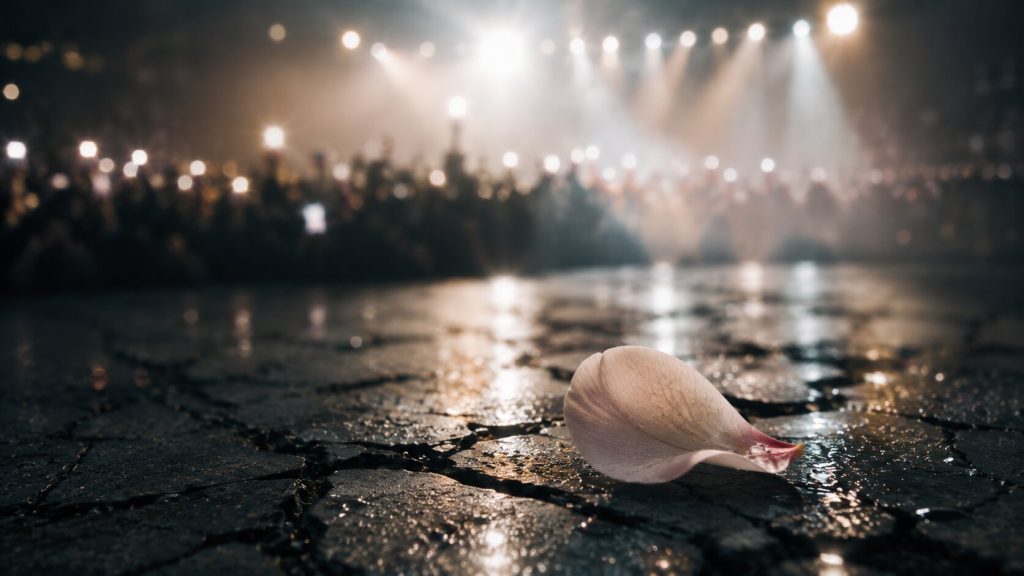
The chorus contains the defining image of the song: a petal against pavement.
A petal is delicate, temporary, organic, and easily damaged. Pavement is hard, artificial, public, and indifferent. Bringing the two images together creates a picture of softness trying to survive in a place that offers almost no protection.
The symbolism closely reflects the visual language associated with the album itself, where plant life appears against or through hard surfaces. It suggests that growth does not require ideal conditions; sometimes it happens despite hostile surroundings.
The chorus then connects that fragile image with records playing and audiences applauding. The public machine continues as long as the performer continues delivering: create the music, perform the emotion, receive the ovation, and repeat.
From the outside, celebrity may resemble paradise. Inside the song, however, paradise does not eliminate heartbreak. It simply gives heartbreak a soundtrack and an audience.
Verse 2 Meaning: Fame, Responsibility, and the Manufactured Ariana
The second verse is where “Petal” becomes especially direct. Grande questions who is responsible for the unhealthy relationship between celebrity and public consumption: the audience, the industry, or the artist who continues participating in it.
That self-questioning keeps the song from becoming a one-sided accusation. Grande recognizes her privilege and the extraordinary rewards of her career rather than positioning herself as a conventional victim.
The verse then turns toward identity. She expresses exhaustion with versions of her life that do not feel completely like her own, particularly when romantic partners and personal choices are turned into simplified public narratives.
This is why the song can be interpreted as something larger than a breakup with an individual person. The deeper separation may be from the manufactured version of Ariana Grande that exists in headlines, commentary, speculation, and audience expectations. ELLE similarly interpreted the song as engaging with Grande’s difficult relationship with pop-star fame itself. (ELLE)
Post-Chorus and Outro Meaning: The Applause Keeps Echoing
“Petal” does not use a conventional bridge. Instead, after the second verse, it cycles back through familiar material and ends with audience-like vocal reactions.
That choice is meaningful. Rather than reaching a dramatic emotional resolution, the song returns to performance. The crowd is still present. Approval continues.
The ending can therefore be interpreted as a demonstration of the cycle Grande has spent the song describing: pain becomes music, music becomes performance, performance produces applause, and applause can make it easier to overlook the person underneath the spectacle.
The song does not pretend that Grande has completely escaped this system. Instead, it shows that she recognizes it more clearly.
Hidden Meanings, Metaphors, and Symbolism: The Flower in Concrete
The most important symbol is the petal itself. A petal suggests softness, beauty, vulnerability, growth, and impermanence. Grande places that softness against pavement, a surface associated with hardness, pressure, cities, crowds, and heavily traveled public spaces.
The image works on several levels. Grande herself can be the petal. Her private identity can be the petal. Creativity can be the petal. Even music itself can represent something organic attempting to survive within the highly controlled machinery of celebrity.
The contrast between paradise and heartbreak is equally significant. Fame promises money, admiration, opportunity, access, and extraordinary privilege. Grande does not deny those advantages. Yet emotional suffering does not disappear simply because someone is successful.
The idea of applause introduces another contradiction. Applause normally represents love and approval, but in “Petal” it can also represent expectation. The performer receives affection partly because she continues providing the version of herself that audiences want to consume.
The official “Petal” music video strengthens that interpretation by depicting Grande confronting judgment and criticism. Coverage of the video connected its imagery with unrealistic expectations surrounding her appearance and public persona. (Billboard)
The title therefore carries a subtle paradox. A petal appears fragile, but surviving against pavement requires an unusual kind of strength. Grande’s softness is not presented as something she must abandon in order to survive. It is something she is trying to preserve.
Is the Song Based on a Real Person or Event?
There is no verified evidence that “Petal” is about one specific romantic partner.
The song certainly contains relationship language and can be connected to Grande’s experience of having her dating life examined publicly. However, her comments about the wider album encourage a broader interpretation involving several kinds of unhealthy attachments, including internal struggles and outside voices.
It is therefore reasonable to connect “Petal” with Grande’s real experiences of celebrity scrutiny, but naming a particular former or current partner as the song’s subject would go beyond the available evidence.
The strongest supported interpretation is that fame, public expectation, and the loss of control over one’s own narrative are central real-world influences on the song.
How This Song Fits Into Ariana Grande’s Catalog: A Sharper Boundary
“Petal” feels connected to eternal sunshine, but its perspective is noticeably different.
On songs such as “we can’t be friends (wait for your love),” Grande had already blurred the language of romantic heartbreak with the experience of being misunderstood, watched, or judged publicly. “Petal” pushes that idea further by making the relationship between artist and audience part of the emotional conflict.
Pitchfork similarly noted that petal continues Grande’s tendency to use the language of difficult relationships while exploring her relationship with fame. (Pitchfork)
The difference is the boundary Grande draws. Earlier songs often search for closure, understanding, reconciliation, forgetting, or emotional distance. “Petal” sounds less interested in explaining everything. The narrator seems increasingly aware that endlessly explaining herself may itself be part of the cycle she wants to escape.
The song also fits the album’s more restrained musical approach. Instead of relying on constant vocal spectacle, Grande often uses atmosphere, softer delivery, and controlled production. That restraint makes the frustration in “Petal” more effective because she does not need to overpower the production to communicate it.
In that sense, “Petal” represents a more guarded Ariana Grande: not emotionally detached, but increasingly determined to decide which parts of her emotional life belong to the public and which parts remain her own.
Final Thoughts: Why “Petal” Lands So Differently
The most convincing interpretation of Ariana Grande’s “Petal” is that it is a song about remaining human inside a system that can turn humanity into content.
Its flower imagery captures that contradiction perfectly. A petal is beautiful partly because it is delicate, yet Grande places it against something hard enough to destroy it. The song asks whether an artist can remain emotionally alive while relationships, heartbreak, appearance, and personal history are constantly transformed into narratives for public consumption.
What makes “Petal” especially effective is that Grande does not pretend she receives nothing in return. She recognizes success, applause, extraordinary privilege, and the opportunities fame has given her while still insisting that gratitude does not eliminate the need for boundaries.
The result is less a breakup song about another person than a breakup song about expectations.
And unlike the dramatic heartbreak stories the song itself questions, “Petal” does not conclude with somebody arriving to save her. Grande’s answer is quieter and more resilient: she intends to keep growing anyway.
FAQs About “Petal”
What does “Petal” by Ariana Grande mean?
Who wrote “Petal” by Ariana Grande?
Is “Petal” based on a true story?
What does the petal and pavement imagery symbolize?
What is the chorus of “Petal” about?
What album is “Petal” from?
How successful was “Petal” on the charts?
Sources Used
- Ariana Grande Official Store – petal album release information
- Apple Music – petal album page and editorial notes
- ELLE – Ariana Grande “Petal” lyrics and meaning analysis
- Billboard – “Petal” music video and its commentary on criticism
- Billboard Canada – “Petal” Hot 100 chart performance
- Pitchfork – petal album review and thematic context
- Just Jared – Ariana Grande’s comments on the meaning of petal