

Mac Miller’s “Cinderella” Meaning: The Night Desire Learned to Stay
Mac Miller’s “Cinderella,” featuring Ty Dolla $ign, is a long-form love song in which intense physical attraction gradually develops into emotional vulnerability. What begins as a confident fantasy of seduction becomes a confession about how deeply another person can affect someone’s mood, identity, and imagined future.
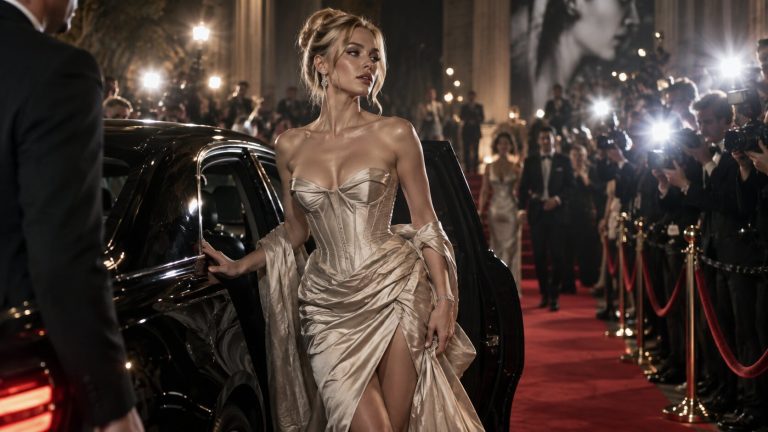
The title transforms the familiar Cinderella fairytale into an adult romantic metaphor. Miller presents his lover as someone extraordinary enough to make an ordinary night feel magical, but the song also carries an unspoken fear: what happens when the fantasy ends and real life returns?
What Is “Cinderella” Really About?
At its core, “Cinderella” is about the difference between desiring someone and becoming emotionally dependent on them. Miller initially approaches the relationship through sexual confidence, jokes, luxurious imagery, and exaggerated promises. As the song progresses, however, his performance of control begins to disappear.
By the piano-led closing section, he is no longer simply trying to impress or seduce the woman. He is acknowledging that her presence has changed the emotional atmosphere of his life. She has become associated with brighter days, emotional comfort, and the possibility of a lasting bond.
This progression gives the song its emotional weight. Attraction may create the initial excitement, but tenderness, uncertainty, and the desire for permanence are what remain after the immediate thrill has passed.
An Eight-Minute Centerpiece of The Divine Feminine
“Cinderella” appears as the fifth track on Mac Miller’s fourth studio album, The Divine Feminine, released on September 16, 2016, through REMember Music and Warner Bros. Records. The album marked a period in which Miller explored love, sexuality, vulnerability, and the influence of women more directly than he had on many of his earlier projects. (Warner Records)
The credited songwriters include Malcolm McCormick, better known as Mac Miller, Tyrone Griffin Jr., better known as Ty Dolla $ign, Aja Grant, Dacoury Natche, Jeff Gitelman, Sunni Colón, and Vic Wainstein. Production is credited to Aja Grant and DJ Dahi, with additional musicians contributing to the song’s rich, evolving arrangement. (Apple Music)
Although rooted in hip-hop and R&B, “Cinderella” refuses to remain within one fixed style. Its first half moves through slow, sensual drums, layered vocals, atmospheric guitar, and psychedelic textures. The second half strips much of that production away and places greater emphasis on piano and Miller’s exposed singing voice.
Miller explained during the The Divine Feminine era that he wanted to explore love as a complete subject rather than continue revisiting familiar themes. He also described “Cinderella” as a vulnerable song and suggested that singing gave him another way to communicate authentic feeling, even though he did not consider himself a traditionally polished vocalist. (Vogue)
When Romantic Fantasy Becomes Emotional Reality
The central tension in “Cinderella” comes from Miller’s attempt to appear completely confident while revealing that he needs reassurance. During the first half, he constructs an elaborate private world filled with pleasure, humor, travel, luxury, and spontaneous escape.
Within that fantasy, he can become almost anything the woman wants: an entertainer, host, lover, magician, protector, or adventurous companion. His imagination becomes part of the seduction because he is not only offering physical intimacy. He is offering an experience removed from routine and limitation.
However, flashes of emotional uncertainty repeatedly appear beneath the bravado. Miller thinks about the woman when she is absent, values hearing affection from her, and appears to need confirmation that their connection extends beyond physical chemistry.
His extravagant promises can therefore be interpreted as a form of emotional protection. Creating an extraordinary fantasy allows him to postpone a much simpler and more frightening question: will she remain close to him once the night is over?
From Invitation to Confession: A Section-by-Section Breakdown
The Opening Refrain: Waiting at the Door
Ty Dolla $ign opens “Cinderella” with a refrain built around anticipation. The night has been moving toward a private encounter, and his smooth invitation establishes the song’s sensual mood before Miller begins his first verse.
The repeated invitation functions like a doorway between two worlds. On one side is ordinary public life; on the other is a private space governed by attraction, fantasy, and emotional freedom.
Repetition also stretches the moment before intimacy begins. Instead of rushing forward, the song lingers over expectation, making the encounter feel important and almost ceremonial.
Verse One: Seduction as a Performance
Miller’s first verse is explicit, playful, surreal, and intentionally excessive. He portrays himself as someone capable of transforming the night through humor, confidence, fantasy, and surprise.
Images associated with magic and performance are particularly important. They suggest that romance can temporarily suspend ordinary reality. Within this imagined space, Miller can ignore responsibility, insecurity, and the possibility that the experience may eventually end.
Yet the verse is not emotionally empty. Beneath the sexual language are signs that Miller has already become attached. He is interested not only in the woman’s body but also in her voice, affection, attention, and continued presence.
This creates the first major contradiction in the song. Miller wants to sound as though he controls the encounter, but his need for reassurance shows that the relationship already has emotional power over him.
The Missing Pre-Chorus: Desire Without Reflection
“Cinderella” does not use a sharply separated traditional pre-chorus. Instead, the instrumental movement and vocal phrasing carry the listener directly back toward Ty Dolla $ign’s refrain.
That structural choice reflects the characters’ emotional state. There is very little space between anticipation and action. Attraction continuously draws them back into the same intimate moment before either person can fully consider what the relationship means outside it.
The lack of a formal transition also makes the first half feel dreamlike and cyclical. Desire repeats, time becomes less distinct, and the private room starts to feel like a world of its own.
The Chorus: More Than a Physical Invitation
On the surface, the chorus is an invitation to physical intimacy. It emphasizes privacy, anticipation, and a moment that both people have apparently been expecting.
Within the wider emotional arc, however, the invitation carries a second meaning. Miller is not merely asking the woman to enter another room. He is inviting her into his imagination, his insecurity, his private desires, and eventually his hopes for the future.
Ty Dolla $ign’s smooth performance preserves the chorus’s sensual atmosphere, but the emphasis on waiting suggests that the encounter matters beyond immediate pleasure. The narrator appears to have been waiting for a moment when desire might finally become emotionally mutual.
Verse Two: Building a World Where She Cannot Leave
The second major verse expands the fantasy beyond the bedroom. Miller imagines distant destinations, luxury, comfort, freedom, and a life protected from outside interference.
Travel functions as more than a sign of wealth or adventure. It represents emotional escape. The exact destination is less important than the promise that the couple can go somewhere ordinary pressures, responsibilities, and uncertainties cannot follow them.
Miller also seems determined to prove that he can provide an unforgettable experience. This can be heard as confidence, but it may also reveal insecurity. By making the relationship extraordinary, he hopes to make himself impossible to abandon.
At the same time, genuine admiration begins to overtake performance. The woman is treated not only as a sexual partner but as an exceptional, almost sacred presence. This connects “Cinderella” to the album’s broader interest in feminine energy as a source of beauty, knowledge, inspiration, and transformation.
The Musical Turn: When the Performance Ends
Instead of using a brief conventional bridge, “Cinderella” undergoes a dramatic transformation. The dense, sensual production gradually gives way to a quieter passage centered on piano and Miller’s vulnerable singing.
This change is the emotional turning point of the song. During the first half, Miller can hide behind rhythm, humor, sexual confidence, and elaborate imagery. Once those layers recede, he sounds less like a performer and more like someone trying to articulate an emotion he cannot fully control.
The transition suggests that physical desire was only the beginning of the story. After excitement comes reflection, and after reflection comes the realization that the relationship has become emotionally significant.
The Outro: What Remains After Midnight
In the final section, Miller addresses his “Cinderella” with greater tenderness. His focus shifts from immediate pleasure to the emotional effect she has on his life.
The fairytale metaphor becomes especially meaningful here. In the traditional Cinderella story, midnight causes the magical illusion to collapse. The extraordinary clothing, carriage, and transformed identity cannot survive indefinitely.
Miller reverses that pattern. His song begins with nighttime fantasy, but its conclusion suggests that the emotional connection remains after the most intoxicating part of the night has passed. Instead of discovering that the magic was false, he discovers that something real exists underneath it.
The outro does not guarantee a permanent happy ending. Its power comes from Miller’s willingness to accept uncertainty. Even if the relationship cannot be controlled or preserved forever, he believes it has already transformed him.

Glass Slippers, Midnight and the Symbols Beneath the Song
Cinderella as an Idealized Lover
Calling the woman “Cinderella” elevates her into a figure of rarity, beauty, and wonder. Her presence seems capable of changing the emotional atmosphere around Miller, just as magic changes Cinderella’s circumstances in the fairytale.
The comparison also exposes the narrator’s tendency to idealize her. She is both a real partner and a character within a romantic story he is constructing. Miller may be responding to the actual woman, but he is also responding to what she represents in his imagination.
Midnight and the Fear of Impermanence
Although the clock is not treated as a literal plot device, the nighttime setting naturally evokes Cinderella’s deadline at midnight. In both stories, time threatens the continuation of the fantasy.
This produces an undercurrent of anxiety beneath the sensual imagery. The private moment will eventually end, daylight will arrive, and the characters will have to determine whether their connection can survive outside the fantasy.
The Bedroom as a Separate Universe
The private room represents more than a physical location. It becomes a place where Miller can be playful, sexually open, emotionally expressive, and temporarily protected from the external world.
However, that privacy also creates tension. A relationship can feel effortless when isolated from ordinary life, but “Cinderella” quietly asks whether its emotional intensity will remain once responsibilities and outside pressures return.
Travel as Escape
The imagined journeys and distant destinations express generosity, ambition, and excitement. They can also be understood as a form of avoidance.
Rather than confronting uncertainty directly, Miller imagines moving the relationship somewhere uncertainty cannot reach. Travel, pleasure, and romance become ways of postponing difficult self-knowledge.
Changing Weather as Emotional Renewal
The closing section uses brighter and calmer imagery to suggest that the woman improves Miller’s emotional environment. She does not merely excite him; she changes the metaphorical weather surrounding his life.
This distinction completes the song’s emotional development. Physical desire creates heat, but lasting affection creates light.
Was “Cinderella” Written About Ariana Grande?
There is strong evidence that Ariana Grande was the central inspiration for “Cinderella.” In 2018, Grande publicly confirmed that the song was about her while responding to an online discussion about her relationship with Miller. (People)
That statement makes the connection more than a fan theory. However, it does not mean that every scene in the song should be interpreted as a literal account of a specific event. Songwriters regularly combine personal memories with exaggeration, fantasy, humor, composite imagery, and invented settings.
Miller also resisted reducing the whole of The Divine Feminine to one relationship. He explained that the project had already been developing before his romance with Grande became public and framed the album more broadly as an exploration of love, vulnerability, and feminine influence.
The most accurate conclusion is that Grande was the confirmed inspiration behind the song, while its fairytale narrative remains an artistic interpretation rather than a documentary record of their relationship.
How “Cinderella” Changed the Shape of Mac Miller’s Love Songs
Love and intimacy had appeared throughout Mac Miller’s earlier catalog, but they were frequently intertwined with instability, intoxication, obsession, emotional avoidance, or self-destructive behavior.
On The Divine Feminine, Miller allowed warmth, admiration, gratitude, and sensuality to move closer to the center of his writing. The album did not present romance as uncomplicated, but it gave him space to explore love as something spiritually and emotionally transformative.
“Cinderella” is one of the clearest examples of that evolution. Its opening half retains the explicit humor, charisma, and excess associated with parts of his earlier music. Its final minutes anticipate the increasingly melodic and emotionally exposed style that would become more prominent in his later work.
The song’s length is also significant. Miller does not compress the relationship into a conventional three-minute format. He allows the arrangement to evolve alongside the narrator’s feelings, turning the track into something closer to a romantic suite than a standard rap song.
That structure connects several sides of Miller’s artistry: the confident rapper, the imaginative producer, the musician fascinated by texture, and the vulnerable singer willing to sound imperfect in order to sound honest.
Why the Song Continues to Resonate
“Cinderella” resonates because it captures a recognizable progression without pretending that love is simple. Attraction begins with excitement, confidence, and fantasy, but serious attachment introduces uncertainty, dependence, and the possibility of loss.
Miller’s narrator initially tries to control the relationship by making himself irresistible. He offers pleasure, entertainment, escape, and an imagined future. By the end, he understands that genuine attachment has made control impossible.
The woman matters enough to influence his mood, his sense of time, and the way he imagines the future. What entered his life as an exciting fantasy has become an emotional reality.
The production tells that story as effectively as the lyrics. The crowded, sensual opening eventually clears into piano, exposed vocals, and reflection. By the final minutes, Miller is no longer playing the role of a prince trying to impress Cinderella. He is asking whether the feeling can survive after the magic of the night fades.
FAQs About “Cinderella” by Mac Miller
What does “Cinderella” by Mac Miller mean?
“Cinderella” is about physical attraction gradually turning into emotional devotion. Miller begins with sensual confidence and romantic fantasy, but the song ultimately reveals his need for reassurance, closeness, and a relationship that can last beyond one night.
Is Mac Miller’s “Cinderella” about Ariana Grande?
Yes. Ariana Grande publicly confirmed in 2018 that “Cinderella” was about her. However, the song still uses fantasy, exaggeration, and fairytale symbolism, so every scene should not necessarily be treated as a literal account of their relationship.
Why is the song called “Cinderella”?
The title compares Miller’s lover to a fairytale figure whose presence makes the night feel magical. It also introduces the idea that romantic fantasy may be temporary, much like Cinderella’s transformation ending at midnight.
Who wrote “Cinderella” by Mac Miller?
The credited writers are Malcolm McCormick, Tyrone Griffin Jr., Aja Grant, Dacoury Natche, Jeff Gitelman, Sunni Colón, and Vic Wainstein.
Who produced “Cinderella”?
“Cinderella” was produced by Aja Grant and DJ Dahi. The arrangement also includes instrumental contributions that help create its blend of hip-hop, R&B, soul, and psychedelic atmosphere.
Why does “Cinderella” change near the end?
The transition into a quieter piano-led section represents a change from seduction to emotional honesty. The first half emphasizes fantasy and sexual confidence, while the ending exposes Miller’s affection, uncertainty, and desire for permanence.
What album is “Cinderella” from?
“Cinderella” appears on Mac Miller’s fourth studio album, The Divine Feminine, which was released on September 16, 2016.
Sources Used
- Warner Records – Mac Miller artist and release information
- Apple Music – The Divine Feminine album page and song credits
- Vogue – Mac Miller interview about The Divine Feminine, love, and vulnerability
- People – Ariana Grande’s confirmation that “Cinderella” was about her
- Mac Miller on YouTube – official “Cinderella” music video featuring Ty Dolla $ign